AKYA Gives Turkish Submarines a Heavyweight Torpedo Built at Home

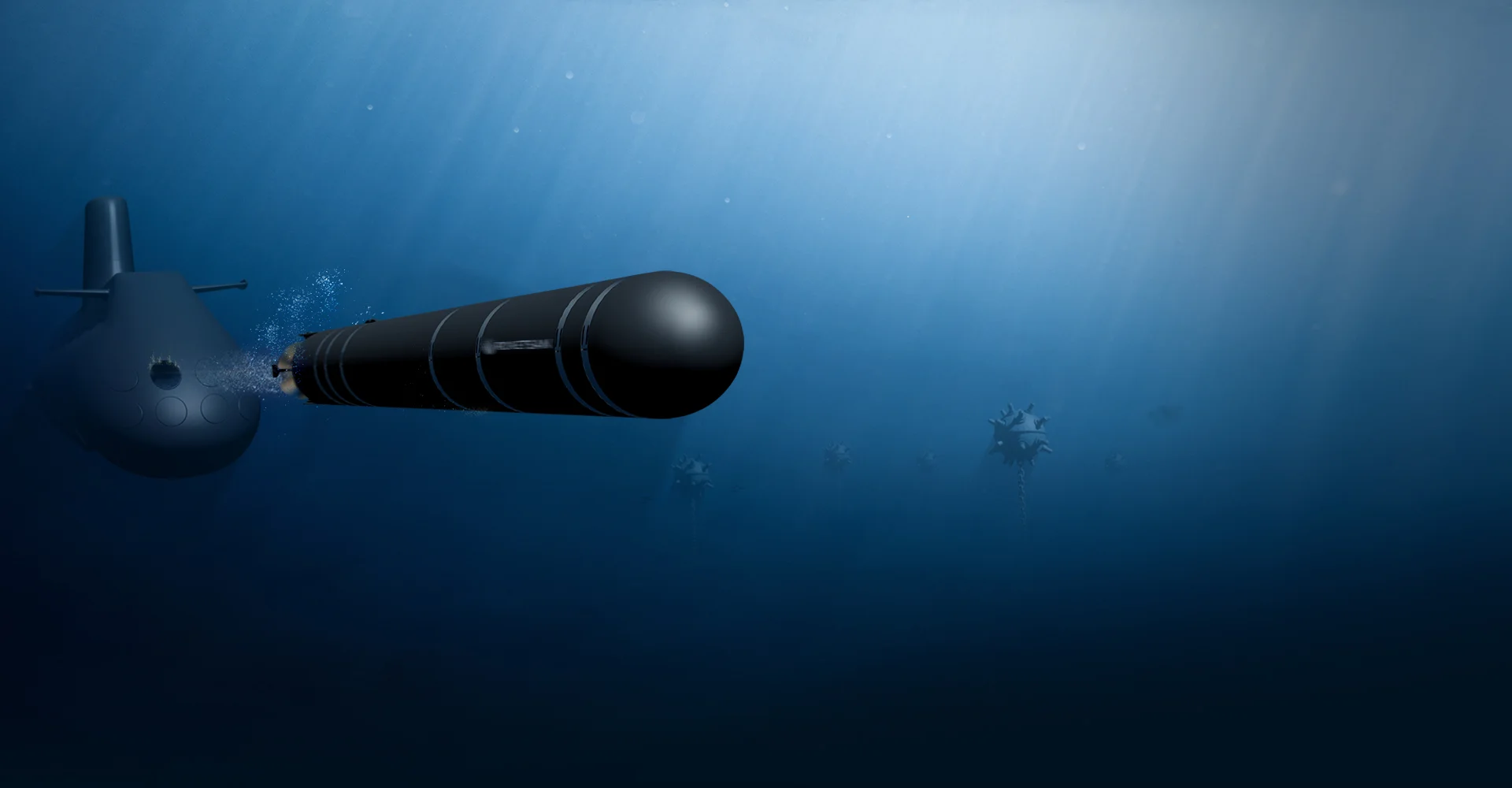
For decades, the heaviest weapon a Turkish submarine could fire was a foreign one. The Navy’s 533 mm torpedoes came from German, American and British stocks, and every spare part, software update and export licence sat in someone else’s hands. AKYA is the answer to that. It is a heavyweight torpedo designed with the Turkish Navy’s research command and built by ROKETSAN, and it is now in service.
The torpedo is worth a closer look because it ties together three things Ankara has been pushing for years: a domestic submarine fleet, a domestic combat management system and a domestic weapons line to match.
| Field | Detail |
|---|---|
| Name | AKYA (Turkish name of the leerfish) |
| Manufacturer | ROKETSAN |
| Type | Heavyweight dual-purpose torpedo (anti-submarine and anti-surface) |
| Diameter | 533 mm |
| Range | 50+ km (ROKETSAN) |
| Speed | 45+ knots (ROKETSAN) |
| Guidance | Fibre-optic wire guidance or fully autonomous; active/passive sonar homing; wake homing against surface ships |
| Propulsion | Electric motor with a high-energy chemical battery |
| Launch platform | Submarines |
| Reported weight and warhead | About 1,200 kg and a 350 to 380 kg warhead (open-source figures, not confirmed by the company) |
What Is the AKYA Torpedo?
ROKETSAN describes AKYA as a fully indigenous, new-generation heavyweight torpedo launched from submarines to engage both submarines and surface targets. It can run autonomously or be steered through a fibre-optic cable that pays out behind it, so the crew can correct the course after launch. At the end of the run it switches to its own sonar head.
Against surface ships it uses wake homing. A ship leaves a turbulent, bubble-filled track behind it, and the torpedo follows that trail and approaches from the stern. Combined with a heavy warhead, that is the method meant to break the back of a large vessel rather than merely dent it.
Power comes from a brushless electric motor fed by a high-energy chemical battery. The choice matters for submarines. An electric torpedo is quiet, leaves little wake near the launching boat and avoids the thermal trail of a fuel-burning engine. The company says the design relies on national suppliers for its subcomponents, according to a report in EDR Magazine.
How Did a 2009 Project Become a Service Weapon?
The programme began in 2009, when the Turkish Navy’s ArMerKom research command launched a heavyweight torpedo project and brought ROKETSAN in to build it. Test firings are reported to have started in July 2013. Serial production followed in 2021, after the trial phase wrapped up.
The warhead milestone came on 27 December 2023. According to Naval News, the submarine TCG Preveze fired an AKYA with a live warhead in the Eastern Mediterranean and sank the target, the former fleet tug TCG Gazal. The shot was launched and managed through the MÜREN combat management system, and the Turkish Ministry of National Defence presented it as a step toward initial operational capability. Earlier shots in January and March 2023, in the Sea of Marmara, had been run without warheads.
In May 2024, the ministry announced that the Navy had begun taking delivery of AKYA torpedoes. No public figure for how many have been delivered or ordered has been published, so treat any quantity you see online with caution.
What Did the Denizkurdu II Shot Show?
A second live-warhead firing came during the Denizkurdu II naval exercise in the Eastern Mediterranean in 2026. The Ministry of National Defence announced it, and Naval News reported that the submarine TCG Sakarya, a Preveze-class boat, fired the torpedo through the MÜREN system. The target was the former TCG Sokullu Mehmet Paşa, a retired training ship, which reportedly broke into two sections after the hit.
Naval News counted it as the first AKYA firing from Sakarya and the second live-warhead shot against a surface target overall. One secondary report puts the engagement range at roughly 10 km. The sources also disagree on the exact date of the shot, so this article does not give a day.
The same event featured an ATMACA anti-ship missile launched from the Ada-class corvette TCG Kınalıada against a former tugboat. Together the two shots showed a domestic strike chain above and below the waterline.
Which Submarines Carry AKYA?
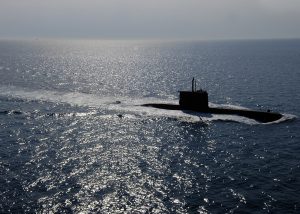
The torpedo is planned for the Reis-class, Preveze-class and Gür-class boats. The Reis class is the newest of the three: six Type 214 submarines built under licence in Türkiye with Turkish subsystems and weapons. For a closer look at what powers them, see our explainer on the fuel-cell air-independent propulsion on Reis-class boats. The older Preveze and Gür classes are Type 209 derivatives, and the 2023 and 2026 live shots were both fired from Preveze-class hulls.
Future domestic boats are expected to inherit the weapon. Our overview of Turkish submarine building, from Reis to MİLDEN covers where that programme stands.
A torpedo is only as useful as the sensors that point it at something. The submarines rely on sonar suites and combat systems for target tracking, an area covered in how Turkish sonar systems hunt submarines and mines.
What Does AKYA Replace?
Historically the fleet relied on a mix of imported heavyweight torpedoes. Open-source accounts, including Wikipedia, say AKYA is meant to replace five older types: Mk 14, Mk 23, Tigerfish Mod 2, Mk 37 and SST-4. Some commentary names the German DM2A4 and the American Mk 48 as the foreign dependency it reduces. Those claims come from secondary sources, and the Navy has not published a replacement schedule.
What is clear is the strategic logic. A nation that builds its own submarines but imports their weapons remains exposed to export restrictions. Türkiye has lived through arms embargoes and licensing delays, and domestic production lets the Navy control stock levels, maintenance and software updates without asking permission.
Why Does Wire Guidance and Combat System Integration Matter?
A wire-guided torpedo stays linked to the submarine through the fibre-optic cable. The fire-control crew sees what the torpedo’s sonar sees and can steer it toward a better target, away from a decoy, or abort the run. Fibre carries far more data than the copper wire of older torpedoes, which suits a weapon with a modern sonar head. ROKETSAN also lists acoustic counter-countermeasures, meaning the seeker is built to resist decoys and jammers, according to EDR Magazine.
The link to MÜREN is the other half of the story. In both live firings the whole sequence, from target solution to launch and cable guidance, ran through the national combat management system rather than a foreign one. A domestic torpedo on a foreign fire-control system would have kept the dependency alive, and the Navy has now demonstrated the full chain twice.
What Is ROKETSAN’s Role, and What Comes Next?
ROKETSAN is better known for missiles, rockets and the TAYFUN ballistic missile, but naval weapons have become a steady line of business. Alongside AKYA it has been developing ORKA, a 324 mm lightweight torpedo with a reported range above 25 km, aimed at ships, helicopters and maritime patrol aircraft. Together the pair would cover both the heavy and light end of undersea warfare.
Open questions remain. No export contract for AKYA has been announced. Production rates are not public. And while the 2023 and 2026 tests show the torpedo works against surface targets, no live submarine-versus-submarine shot has been publicly reported in the sources reviewed, and detailed performance data on its anti-submarine mode is thin. Those gaps are normal for a navy weapon at this stage, but they are the things to watch as production ramps up.