AKINCI and the MQ-9 Look Alike in a Brochure but Sell Very Differently

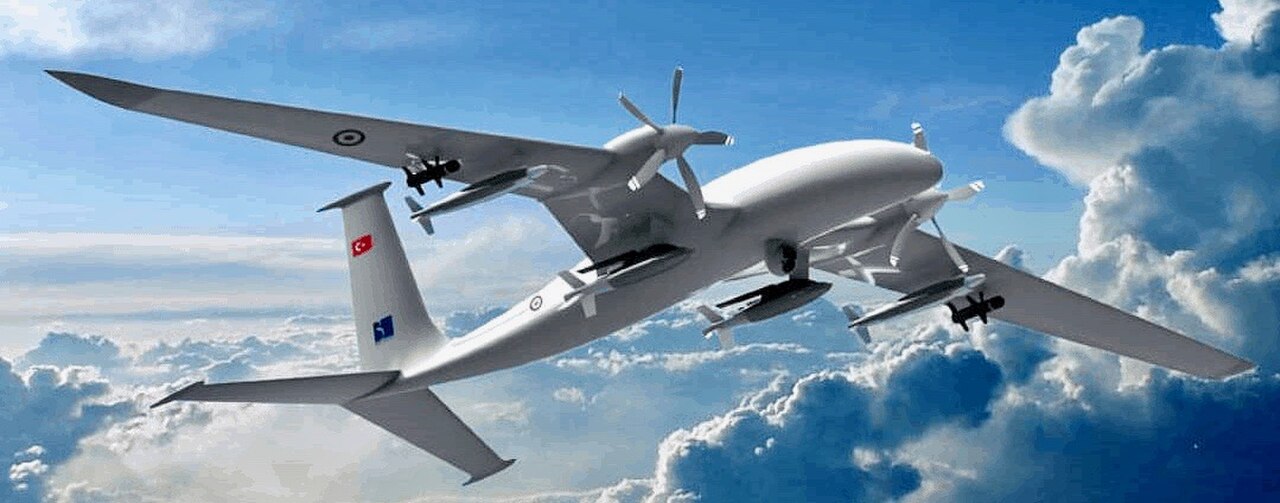
Put an AKINCI next to an MQ-9 and the first instinct is to ask which one wins. That is the wrong question, and procurement officers rarely ask it. They ask which aircraft they can actually obtain, under what conditions, and what it will cost to keep flying for twenty years.
This comparison sticks to published figures from the makers and flags the rest. Where the two programmes are hard to compare directly, we say so.
Are AKINCI and the MQ-9 the Same Class of Aircraft?
Close, but not identical. The Bayraktar AKINCI is a twin-engine, high-altitude, long-endurance armed drone built by Baykar. The MQ-9 family from General Atomics Aeronautical Systems is a single-engine design in two flavours: the MQ-9A Reaper, used by the US and a handful of allies for years, and the newer MQ-9B SkyGuardian and SeaGuardian, built around a larger wing and a certification-friendly design.
That second point matters. When buyers say “MQ-9”, they may mean the Reaper that flew over Iraq and Afghanistan or the MQ-9B now being sold to NATO and Indo-Pacific customers. The two are not interchangeable on paper.
| Parameter | Bayraktar AKINCI | MQ-9B SkyGuardian |
|---|---|---|
| Manufacturer | Baykar (Türkiye) | General Atomics Aeronautical Systems (US) |
| Engines | Two turboprops (450, 750 or 850 hp depending on variant) | One turboprop |
| Wingspan | About 20 m | 24 m (79 ft) |
| Max takeoff weight | About 6,000 kg | About 5,670 kg (12,500 lb) |
| Payload | About 1,350 kg published (400 kg internal, 950 kg external) | About 2,155 kg external plus 363 kg internal, per the maker |
| Endurance | More than 24 hours | More than 40 hours |
| Service ceiling | 40,000 ft, with a 45,118 ft record in 2022 | More than 40,000 ft |
Figures come from Baykar’s product page and General Atomics’ published spec sheet. Real-world performance depends on fuel load, weapons and weather, so treat the table as a brochure comparison, not a test result.
Where Does the MQ-9 Pull Ahead?
Endurance and payload are the clearest MQ-9B advantages on paper. Forty hours in the air and a payload that approaches two and a half tonnes give the aircraft room that AKINCI’s design does not claim. For maritime patrol, where hours on station decide whether you catch a submarine or a smuggler, that gap is real.
The other advantage is the ecosystem. The MQ-9 line has years of operational use behind it with the US Air Force, and its weapons, sensors and data links are already integrated into Western command networks. For a navy or air force that wants to plug a drone into an existing NATO architecture, that integration is worth a lot. The MQ-9B also has an airworthiness story that civil airspace regulators know how to read, which is why it appears in programmes such as the UK’s Protector.
Where Does AKINCI Pull Ahead?
Two engines mean redundancy, and AKINCI uses them to carry a heavy, varied load: air-to-ground munitions, standoff missiles and, more recently, air-to-air missiles. Roketsan’s SUNGUR test against an aerial target and the İHA-300 strike from a reported 250 km show where Baykar wants to take the airframe: a drone that attacks things well beyond a ground-control station’s horizon.
Its other edge is built in. The aircraft carries a domestically developed avionics, flight-control and satellite-communication suite, much of it from ASELSAN and Baykar’s own engineers. That means the customer is not waiting on a foreign export licence to add a new weapon or fix a software problem. For buyers who have been through a refusal or a long approval queue, that is a bigger selling point than any single performance number.
Which One Can a Country Actually Buy?
This is where the debate usually settles. MQ-9 exports run through the US government’s arms transfer process, which brings political review, end-use conditions and timelines that depend on Washington. India has reportedly signed for MQ-9B aircraft, and European customers have been working through their own purchases, but the process is slow by design. Türkiye itself has long been described as having had difficulty obtaining US armed drones.
Baykar sells under a different model: a direct government-to-government or company-led deal, fewer conditions, and faster delivery. Reported AKINCI customers beyond Türkiye include Azerbaijan, Pakistan, Indonesia and Saudi Arabia, the last of which trained its first naval crews at Baykar (first Saudi naval AKINCI crews). Our broader piece on why countries buy Turkish drones covers the commercial logic in more detail.
Price is harder. Neither side publishes a clean unit cost, and package prices vary with ground stations, spares, training and weapons. Any headline figure comparing the two should be treated with caution. Reports have generally put AKINCI below comparable Western systems, but a cheaper airframe is not a cheaper programme once support is counted.
What About Combat Record?
It is not a clean comparison. The MQ-9 has the longer history, largely in permissive airspace where air defences were limited or absent. That experience is valuable, but it also shows how vulnerable a slow drone becomes once an opponent has a working air-defence network; several have reportedly been shot down over Yemen.
AKINCI is newer, with a shorter operational history, and public information on its combat use is thinner and less independently verified. Anyone claiming a decisive edge for either aircraft from the battlefield alone is selling something.
Does the Ground Segment Change the Picture?
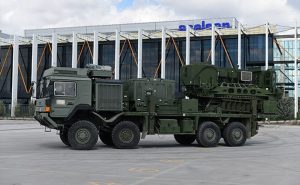
It does, and brochures tend to skip it. Both aircraft are only as good as the links that keep them connected. AKINCI uses a national beyond-line-of-sight satellite communication system and a Baykar ground control station, which the company markets as a package so that a customer gets the aircraft, the cockpit trailer and the training together. The MQ-9 series likewise relies on a ground control station and satellite links, with the added complication that many allied users depend on US-controlled components.
For a buyer, the practical questions are who maintains the software, how quickly a patch arrives and whether the aircraft can fly when a supplier’s government has a political disagreement with yours. Those are procurement questions, but they decide more contracts than airframe numbers do.
So Which One Fits Which Buyer?
A navy that wants forty-hour maritime patrols, deep NATO integration and is willing to wait for the licence will lean to the MQ-9B. An air force that wants a heavier strike drone quickly, with a supplier willing to integrate local weapons, will look hard at AKINCI. A country that already flies the lighter TB2 may see AKINCI as the next step up; our AKINCI and TB2 comparison explains how they divide the work, and the AKINCI programme profile has the full history.
The honest summary is that these two aircraft overlap more in a sales brief than in the field. The real contest is over who gets to deliver, under what terms, and on what date.