
Türkiye to Hike Defence Spending 229% Through 2029

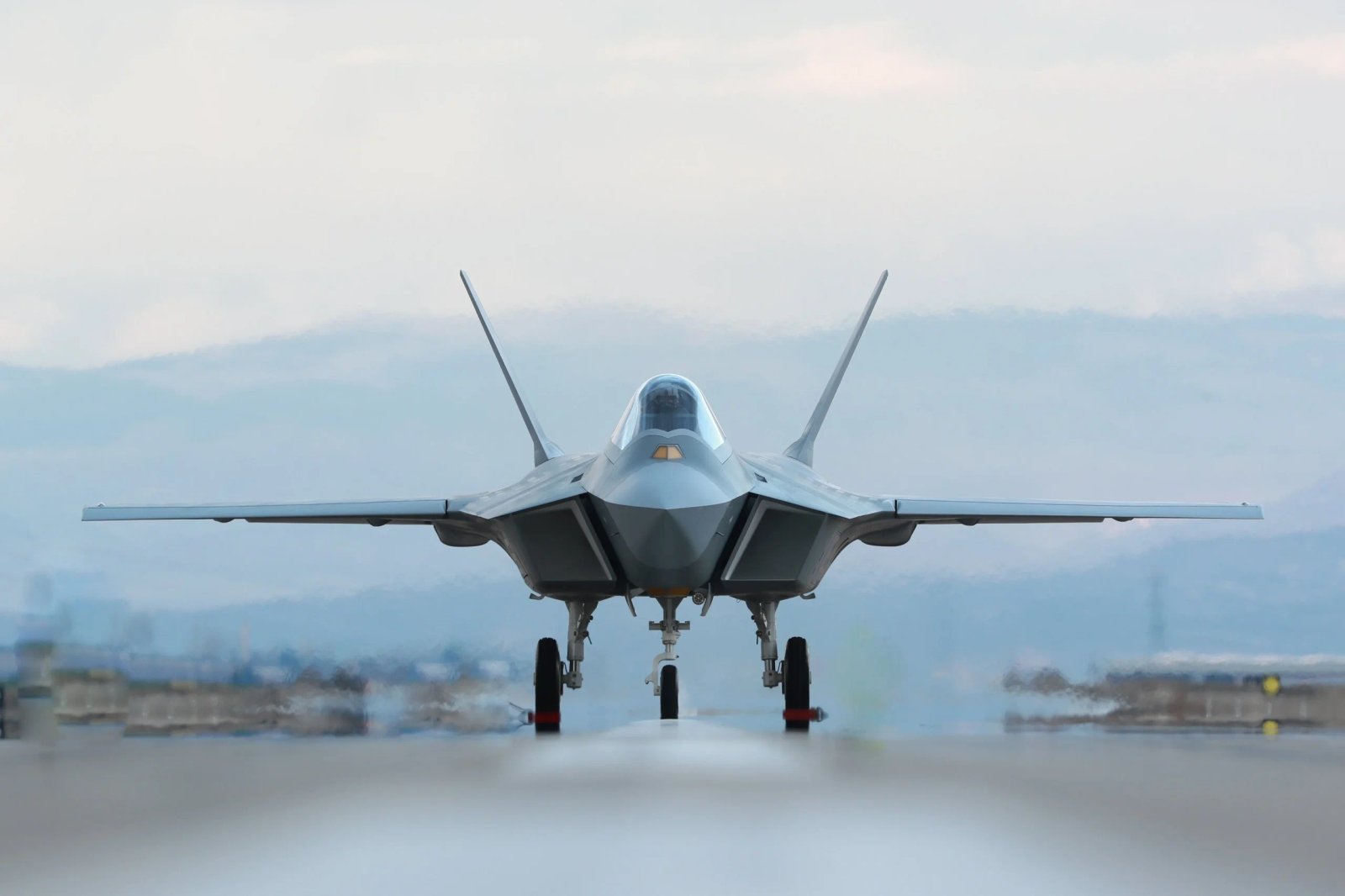
Türkiye’s government has penciled in a 229 percent increase in defence spending over the next three years, by far the largest proportional jump of any budget category in the country’s newly unveiled Medium-Term Programme (Orta Vadeli Program, OVP) for 2027-2029. Vice President Cevdet Yılmaz presented the roadmap on September 6, framing the defence allocation around a single goal: a Türkiye that “develops its own technology, meets its own needs, and produces high added value” — with officials adding that they want capabilities built for defence, from sensors to materials science, to migrate into civilian industries, health technology chief among them.
The figure immediately became the headline number from a program that otherwise reads as a partial retreat from Ankara’s disinflation timetable: growth forecasts were trimmed across the board and inflation targets were pushed out by roughly a year.
What the number actually covers
The 229 percent figure comes from the OVP document itself, but Ankara has not published the underlying baseline — it is unclear whether the comparison is to 2026 spending, to the prior three-year programme, or measured in nominal lira, which matters enormously in an economy where inflation is still running above 28 percent. Türkiye’s 2026 central government budget allocated roughly 1.2 trillion lira to defence and security; a multiple of that by 2029 is consistent with the direction officials are describing, but without a published year-by-year breakdown it is not yet possible to say how much of the increase is real growth in purchasing power for the Secretariat of Defence Industries (SSB) and the armed forces, and how much simply reflects continued lira depreciation and price inflation working through a multi-year lira-denominated budget. DefenseTurkiye will update this article if the Presidency of Strategy and Budget publishes the underlying figures.
What is clear is the direction of travel. The programme also revised its economic assumptions upward on the cost side: 2026 year-end inflation is now projected at 28.4 percent, up from an earlier 16 percent target, before the government expects it to fall to 21 percent in 2027, 13.5 percent in 2028 and 9 percent in 2029. Growth forecasts were trimmed slightly for the same years — 3.3 percent for 2026 (down from 3.8 percent), then 4.2, 4.6 and 5 percent through 2029. Yılmaz attributed part of the inflation revision to regional conflict spillover into energy and commodity prices, which he estimated added several percentage points to the outlook.
Why it matters beyond the balance sheet
Even allowing for currency effects, a defence allocation growing faster than every other category in the programme — well ahead of the next-largest increases, in social housing and geological survey investment — signals where the government wants fiscal priority to sit as it manages a difficult disinflation path. For an industry that already delivered a record $10.05 billion in exports in 2025 and is targeting more than $11 billion in 2026, sustained domestic budget growth matters as much as export contracts: SSB’s procurement pipeline is what keeps production lines for the KAAN fighter, the Altay tank, the Steel Dome air defence architecture and the MİLGEM/Istif-class frigate programme running at a scale that makes export pricing competitive in the first place. Programmes like KAAN’s indigenous TF35000 engine and the Altay’s domestic Batu powerpack — both still years from replacing foreign-sourced propulsion — are exactly the kind of expensive, slow-maturing development work that a multi-year budget commitment is meant to protect from being the first thing cut when the broader economy tightens.
It is also a signal to foreign partners and customers. A government publicly committing to outsized, sustained defence investment reinforces the pitch Turkish firms make abroad — that products like Baykar’s UCAVs, ASELSAN’s electronic warfare systems and Roketsan’s missile families are backed by a state prepared to keep funding the next generation of them, not just the current export catalogue. Whether the 229 percent materializes as budgeted, and how much of it survives contact with Türkiye’s inflation trajectory, will become clearer only when annual budget bills for 2027 onward are published and debated in parliament.
Update, September 11: the civilian-technology transfer plan in detail
Editor’s note: this article has been updated with further detail on the civilian-technology-transfer component of the Medium-Term Programme, which was announced alongside the defence budget figures on September 6 but not fully detailed in our initial report.
Vice President Yılmaz has since set out more specifically how Ankara wants defence-derived capability to flow into the wider economy. The programme directs state agencies to prioritise domestically developed, technology-intensive products in civilian procurement — extending a preference that already applies to defence contracts into hospital equipment, transport systems and public-sector IT — on the logic that guaranteed domestic demand is what let SSB-backed firms scale up in the first place. Officials pointed to traffic radars developed from defence radar technology as an existing example of the kind of civilian spin-off the programme wants to see more of, alongside urban rail signalling and other transport systems.
Three sectors were named as near-term priorities. Healthcare is intended to be the primary proving ground, with the programme calling for expanded domestic production of vaccines, pharmaceuticals, medical devices, diagnostic kits and AI-based health tools — an area where SSB-linked firms already do materials and electronics work that overlaps with medical device manufacturing. Semiconductors are the second: the programme commits to establishing domestic plants to produce microchips, starting with the chips used in national identity cards and passports before expanding into broader industrial and, implicitly, defence-relevant applications — a direct response to the chip-supply exposure that has periodically constrained defence electronics production worldwide. Artificial intelligence is the third, with a mandate to standardise data held by public institutions specifically so it can be used to train Turkish AI systems, building on work already under way at SSB through programmes connecting defence AI research — computer vision and autonomous navigation among them — to civilian applications in agriculture, logistics and manufacturing.
The programme also commits Ankara to pursuing joint production platforms with allied states, with Yılmaz drawing an explicit comparison to the multinational development model behind the US F-35 programme. No specific partner country or programme was named, but the reference point matters for how Türkiye is positioning its own combat aircraft and missile programmes: a government publicly citing the F-35 consortium as a template signals interest in exporting not just finished KAAN airframes or Roketsan missiles, but shares of their production and development work to partner nations — the same logic already visible in smaller-scale form in ASELSAN’s Polish supplier base and TUSAŞ’s component-sharing arrangements with export customers.
None of this changes the underlying uncertainty flagged in our original report about the 229 percent budget figure itself, which Ankara still has not broken down against a published baseline. The civilian-transfer plan is a policy direction backed by a single presidential-level presentation, not yet a funded programme with named projects, budgets or delivery dates; DefenseTurkiye will track it as implementing legislation and 2027 budget line items are published.
Sources: Presidency of the Republic of Türkiye / Vice Presidency (Medium-Term Programme 2027-2029 presentation, September 6, 2026), Türkiye Today, Euronews Türkiye, TRT World, Daily Sabah.
Related reading on DefenseTurkiye:


