Baykar’s Akıncı Drone Fires Roketsan’s ORKA Torpedo

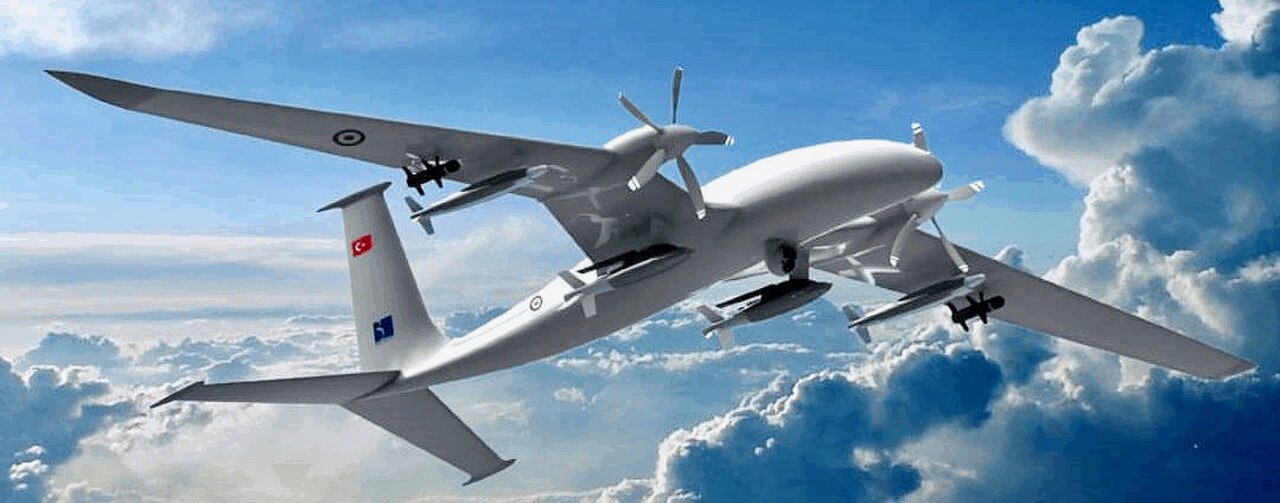
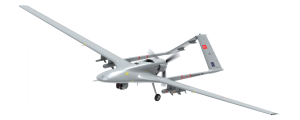
Baykar’s Bayraktar Akıncı has released Roketsan’s ORKA lightweight torpedo in flight for the first time, the two Turkish companies announced on November 22, giving Türkiye’s heaviest unmanned combat aircraft a role in hunting submarines rather than just surface and land targets.
The test took off from Baykar’s flight and training test center in Tekirdağ, with the drop itself carried out over the Gulf of Saros. According to Daily Sabah’s report, citing Anadolu Agency, ORKA separated cleanly from beneath Akıncı’s wing and entered the water at the designated point. Roketsan confirmed the result on social media: “Our next-generation lightweight torpedo, ORKA, successfully completed a test launch from the Bayraktar Akıncı platform.”
A Torpedo Built for Small Boats, Now Flying
ORKA is a 324 mm lightweight torpedo that Roketsan has developed since the project was launched at the end of 2020, with ASELSAN contributing subsystems. Türkiye’s Presidency of Defence Industries, which lists the programme on its project page, describes it as meeting the Naval Forces Command’s requirement for a torpedo that surface platforms can fire at submarines. Roketsan markets it as fully autonomous once launched, with an active/passive sonar seeker, an internal guidance system and high-speed underwater propulsion, intended to engage submarines of different classes.
Until now, that has meant frigates, corvettes and fast attack craft carrying triple torpedo tubes. Sunday’s test adds a very different launch platform: a 12-plus-tonne unmanned aircraft that can loiter for hours far from the nearest Turkish warship. Roketsan and Baykar have said previously that ORKA was designed with compatibility for heavy-payload UAVs such as Akıncı and TAI’s Aksungur in mind, but this is the first time that compatibility has been demonstrated with an actual release over water.
Neither company published performance figures from the test — depth, impact point accuracy or seeker lock-on were not disclosed, and Roketsan has not given an official maximum range or speed for ORKA in this test. Export plans and a production timeline were also not addressed in Sunday’s statements.
Closing Türkiye’s Anti-Submarine Kill Chain
The test matters less as a standalone event than as the latest piece in a pattern Baykar and Roketsan have been building for over a year. In September, Baykar’s Bayraktar TB3 dropped sonobuoys from TCG Anadolu using its SAS POD system, processing the returned acoustic data in real time. A month later, Turkish Aerospace’s AKSUNGUR carried out Türkiye’s first air-launched sonobuoy drop from a MALE-class platform. Both tests were about detection — finding a submerged contact from the air instead of relying solely on frigates’ hull-mounted and towed-array sonars.
ORKA’s release from Akıncı, which has recently also been put through highway landing and takeoff drills alongside the Bayraktar TB2, supplies the other half of that chain: engagement. A maritime patrol drone that can find a submarine and then another, or the same, drone that can prosecute it with a homing torpedo changes the economics of anti-submarine warfare for a navy that does not operate large numbers of dedicated P-8-style patrol aircraft. It complements, rather than replaces, Türkiye’s existing underwater-detection network of ASELSAN sonar systems fitted to frigates and submarines. Türkiye has framed this build-out explicitly around its “Mavi Vatan” (Blue Homeland) doctrine, which treats persistent surveillance and denial of the eastern Mediterranean and Aegean approaches as a strategic requirement.
For export customers, an air-launched lightweight torpedo would be a novel pitch. Several Baykar operators — Qatar, Saudi Arabia, Kyrgyzstan and others — already fly Akıncı in strike and ISR roles; a torpedo-capable variant would open a maritime-patrol market segment that most drone-exporting countries, including the United States, have not addressed with an unmanned platform at this price point. No customer has been named for ORKA, and Roketsan’s existing torpedo in operational use with the Turkish Navy remains the heavier, submarine-launched AKYA, a separate design aimed at larger targets from a different platform.
What comes next is less clear. Neither Roketsan nor the SSB has set a date for ORKA’s entry into serial production, and Sunday’s test was described by both companies as a single launch rather than the start of a qualification campaign. A pattern from Türkiye’s other torpedo programme offers a rough comparison: AKYA needed roughly two years between its first live-fire test against a real target and a signed mass-production contract. If ORKA follows a similar arc from this point, deliveries to either the Turkish Navy or an export customer are still some way off.