Türkiye to Lead Black Sea Mine-Clearing Drill for Ukraine

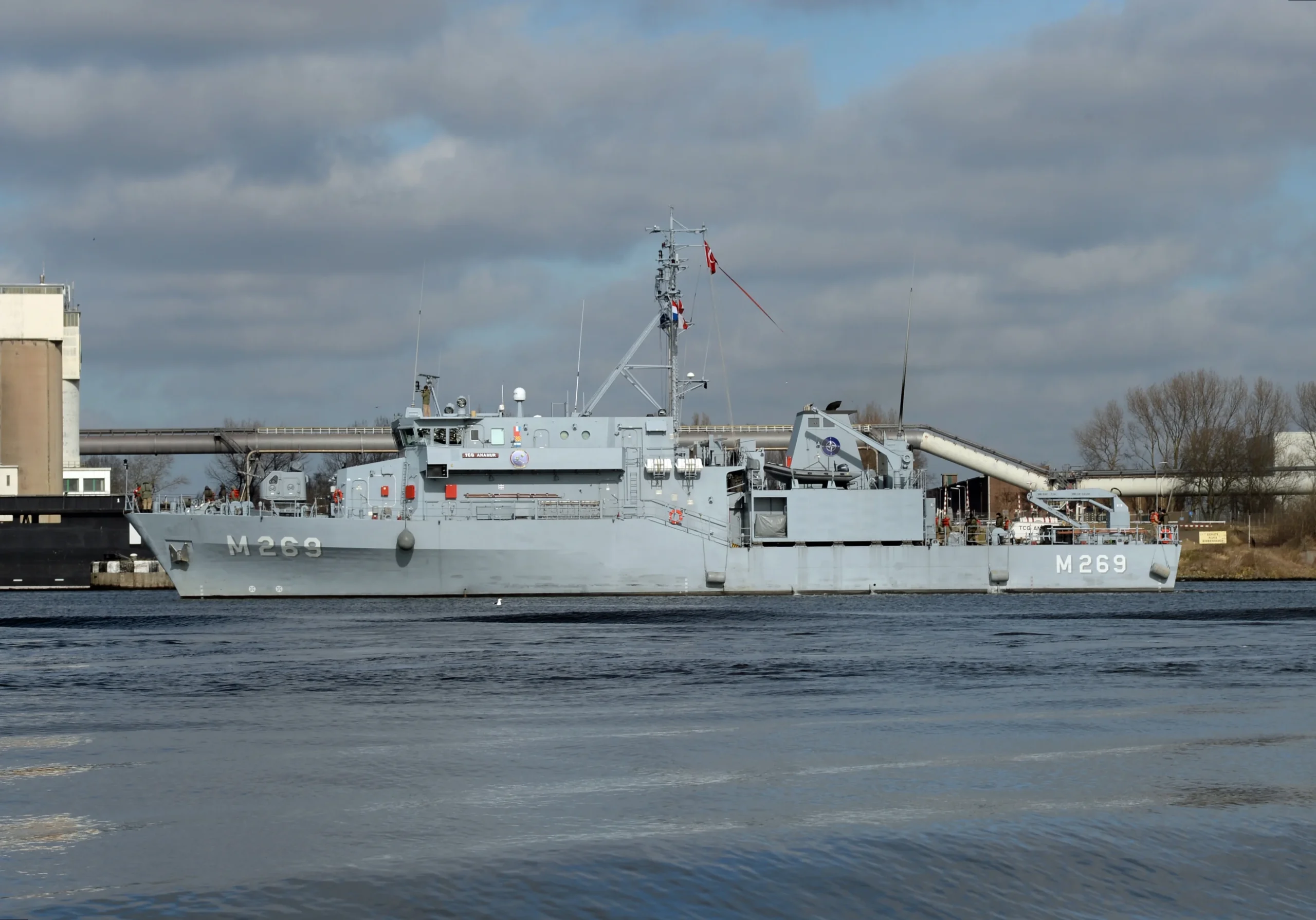
Turkish naval forces will run the maritime leg of the first large-scale exercise staged by the Multinational Force – Ukraine (MNF-U), standing up a mine-clearance command in Istanbul while roughly 2,800 troops from about a dozen European countries train on land in southeastern Poland.
The drill, codenamed Koalicja 26.2, runs from November 9 to 22 and is jointly led by the United Kingdom and France. It is billed as the first real test of the MNF-U, the military arm of the so-called Coalition of the Willing that European governments assembled through 2025 to backstop a future ceasefire in Ukraine. Most of the troops will exercise around Nowa Dęba in southeastern Poland, roughly 100 kilometres from the Ukrainian border, alongside British, French, Belgian, Estonian, German, Lithuanian, Dutch, Polish, Spanish and Swedish units. Britain is sending around 300 personnel plus RAF Typhoon jets; France is contributing the largest single contingent, about 1,100 troops.
Türkiye is not sending troops to Poland. Instead, according to a Türkiye Today report, Turkish forces are running a separate maritime strand from Istanbul, rehearsing the command arrangements needed to clear mines from Black Sea shipping lanes once a ceasefire takes hold and commercial traffic can safely return to Ukrainian ports. British Defence Secretary Wes Streeting has described the force as “not a hypothetical plan” but “a real force, ready to help Ukraine once the fighting stops.” British Lieutenant General Tom Bateman and French Major General Armel Dirou have both stressed the MNF-U has no offensive mission and will not deploy, in any form, before a cessation of hostilities.
Why Türkiye Runs the Mine-Clearing Piece
The assignment is not incidental. Türkiye, Romania and Bulgaria have operated the Black Sea Mine Countermeasures Task Group since January 2024, a non-NATO initiative under Turkish leadership that by most recent counts has neutralised more than 150 mines adrift on Black Sea shipping lanes since the war began — the bulk of them cleared by Turkish vessels, including the Aydın-class minehunters the Turkish Naval Forces use for the task. Ankara also hosted NATO’s own Black Sea mine-warfare exercise, Nusret-2026, earlier this autumn — where HAVELSAN, Meteksan and MKE showcased new mine-countermeasures and command systems — and has spent two years building the only sustained, operational mine-clearance capability any Black Sea littoral state has fielded since Russia’s invasion.
That experience gives Türkiye leverage beyond hardware. Under the 1936 Montreux Convention, Ankara controls warship transit through the Bosphorus and Dardanelles, the only route in or out of the Black Sea for any MNF-U vessel that might eventually need to operate there. Turkish officials have resisted NATO pressure to let alliance minehunters sail into the Black Sea during the war itself, citing Montreux, even as they expanded the trilateral mine-clearing arrangement with Romania and Bulgaria. Running the MNF-U’s maritime rehearsal from Istanbul lets Türkiye keep that gatekeeping role central to any postwar security architecture, rather than ceding it to a British- and French-led framework in which Ankara would otherwise have a secondary voice.
A Framework Still Waiting on a Ceasefire
The MNF-U itself remains largely notional. Set up in 2025 with an operational headquarters in Paris, it is not a NATO structure and carries little direct US involvement — a design choice that let European governments move ahead without waiting on Washington. Its stated mission covers supporting Ukraine’s armed forces, helping secure Ukrainian airspace and allowing economic activity to resume in the Black Sea, but officials are explicit that none of it activates before a ceasefire, and that it will not perform peacekeeping or front-line monitoring. Western officials say rules of engagement are still being drafted for the scenario in which Russian forces attack the force after it deploys — an acknowledgment that even a “reassurance” mission carries real risk in a theatre Russia has mined and attacked throughout the war.
For Türkiye, the exercise is as much about positioning as about procedure. A Turkish-run maritime headquarters in Istanbul, feeding into a British- and French-led coalition, keeps Ankara inside the room where any postwar Black Sea security guarantee gets drafted — while avoiding the land deployment to Poland that would tie Turkish units more closely to a specifically European command structure. It also puts Turkish mine-countermeasures expertise, built the hard way over two years of live clearance operations, in a shop window for a reconstruction effort that will eventually need minehunters, escort vessels and underwater survey platforms at a scale no single Black Sea state can supply alone — the same unmanned and crewed naval systems the Turkish Navy put through TURNAs-2026 and that underpin its broader naval cooperation with Romania.
What to Watch
None of this amounts to a contract or a confirmed deployment. The exercise tests command arrangements, not equipment sales, and no Turkish naval unit has yet been named publicly for the Istanbul-based rehearsal. Whether the drill produces a standing mine-clearance task force under MNF-U — one that could eventually complement or absorb the existing Türkiye-Romania-Bulgaria arrangement — will depend entirely on whether the Russia-Ukraine war reaches the ceasefire the whole framework is built to wait for.