Why Turkish Defence Bids Lose: Three Cases and a Pattern

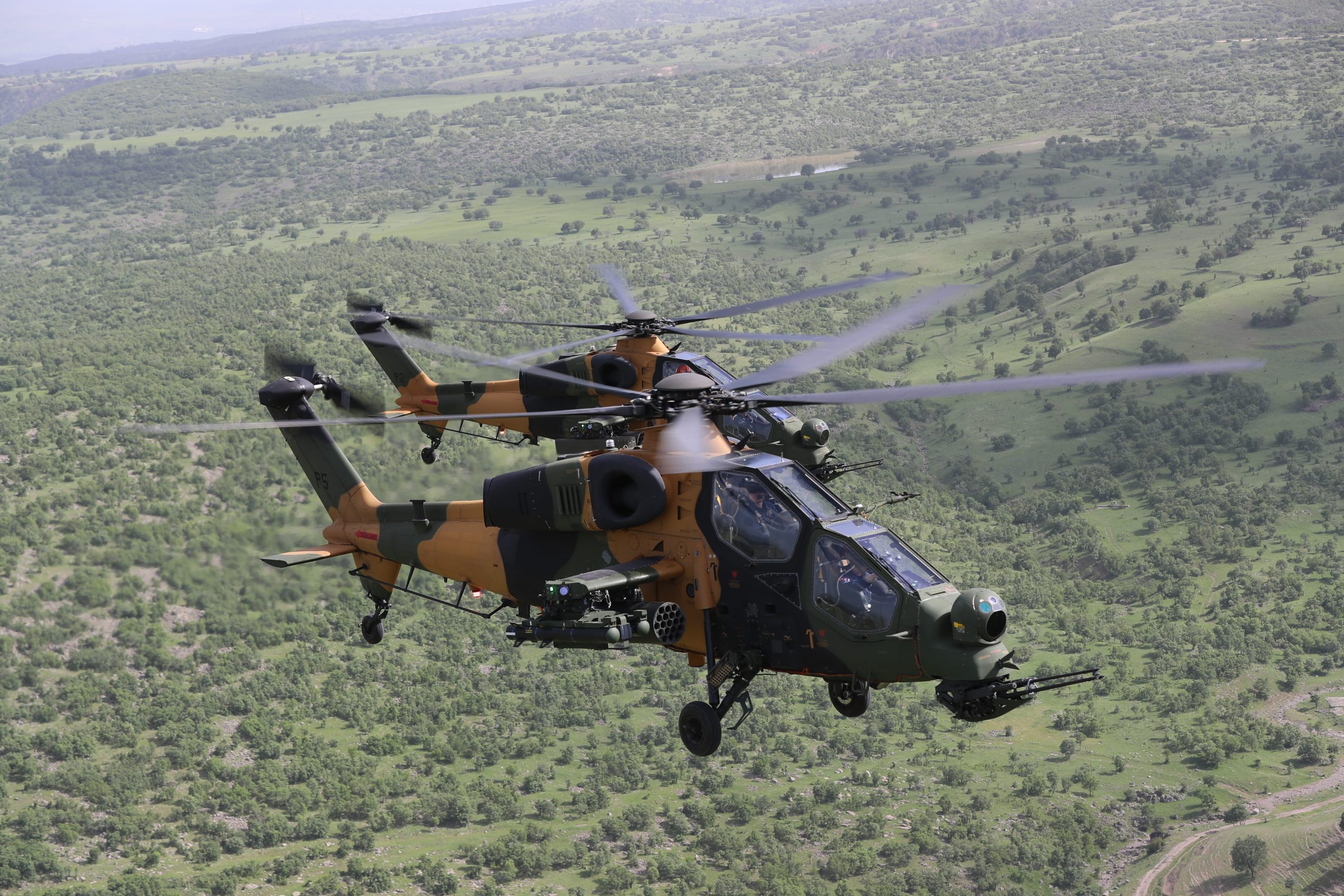
Turkish defence bids lose for three repeatable reasons, and all three are visible in the public record. A foreign-made component hands a third government a veto over the sale. A rival offers a deeper industrial and financing package than Türkiye can match. Or the Turkish product has no delivered reference customer at the moment the bid closes. Pakistan cancelled a $1.5 billion order for 30 T129 ATAK helicopters after Washington refused the engine export licence. Thailand picked South Korea over two Turkish shipbuilders in September 2026. Colombia chose a Dutch design built under licence at home. The losses explain the Turkish export machine better than the wins do.
Türkiye’s defence export story is usually told through its contracts. That telling is incomplete, and for anyone actually evaluating a Turkish offer it is the less useful half. A buyer deciding between an İstif-class frigate and a Korean one, or between a Turkish helicopter and a Chinese one, needs to know where the Turkish bid has failed before — and whether the reason that killed it still applies.
DEFENCETÜRKIYE DATA BOX — THREE DOCUMENTED LOSSES
Pakistan, T129 ATAK: 30 helicopters, $1.5bn, signed 2018, cancelled by January 2022. Cause: US engine export licence refused.
Thailand, next-generation frigate: one ship, THB 16.73bn. Hanwha Ocean named preferred bidder September 2026. Turkish bidders ASFAT and TAIS among those beaten.
Colombia, PES frigate: STM bidding since 2017. Damen’s SIGMA 10514 selected; construction contract with COTECMAR signed August 2024.
Common thread: in none of the three was the Turkish product judged technically unfit. Each was decided on licence, package or track record.
Case one: Pakistan and the engine nobody in Ankara controlled
The T129 ATAK is the clearest case because the cause is unambiguous and the buyer said so out loud.
Pakistan signed for 30 T129s in 2018 in a deal Janes valued at $1.5 billion. The aircraft is a Turkish Aerospace development of an Italian Leonardo design, and it flies on two LHTEC CTS800-4A turboshafts — an Anglo-American engine. Exporting it therefore required a US export licence that Türkiye could not issue and Pakistan could not obtain. Washington did not grant it.
Reporting its cancellation on 6 January 2022, Janes quoted Pakistan Army spokesman Major General Babar Iftikhar, asked whether the contract was still intact: “As far as the Turkish deal is concerned, we have moved on.” Negotiations were already under way with China for Z-10ME attack helicopters, and Pakistani Z-10ME deliveries have since been reported.
The detail that makes this a market lesson rather than a political anecdote sits in the same Janes report: the United States had recently granted Türkiye an export licence to sell six T129s to the Philippines. The same engine, the same manufacturer, the same year — one sale permitted, one refused. The constraint was never the aircraft. It was that a third capital got to decide who the customer could be, case by case. The T129’s current operator list is, in effect, a list of countries Washington found acceptable.
Türkiye drew the obvious conclusion. The same mechanism had already stopped the T-70 Black Hawk line at 38 aircraft with no exports at all, and the indigenous-engine programmes that followed are a direct response. But engines take longer than contracts: the lesson was learned in 2022 and the fix is still arriving.
Case two: Thailand, and losing to the competitor Türkiye most resembles
The Thai frigate decision is the more uncomfortable loss, because no foreign veto was involved.
In September 2026 the Royal Thai Navy selected Hanwha Ocean as preferred bidder for its next-generation frigate, a single ship plus integrated logistics support worth THB 16.73 billion. Naval News lists the bidders as ASFAT, Hanwha Ocean, Hyundai Heavy Industries, Navantia, ST Engineering and TAIS. Two of the six were Turkish. Hanwha’s OCEAN-40F won; the Thai Navy announced the selection publicly on 18 September 2026, and detailed negotiations followed rather than an immediate signature.
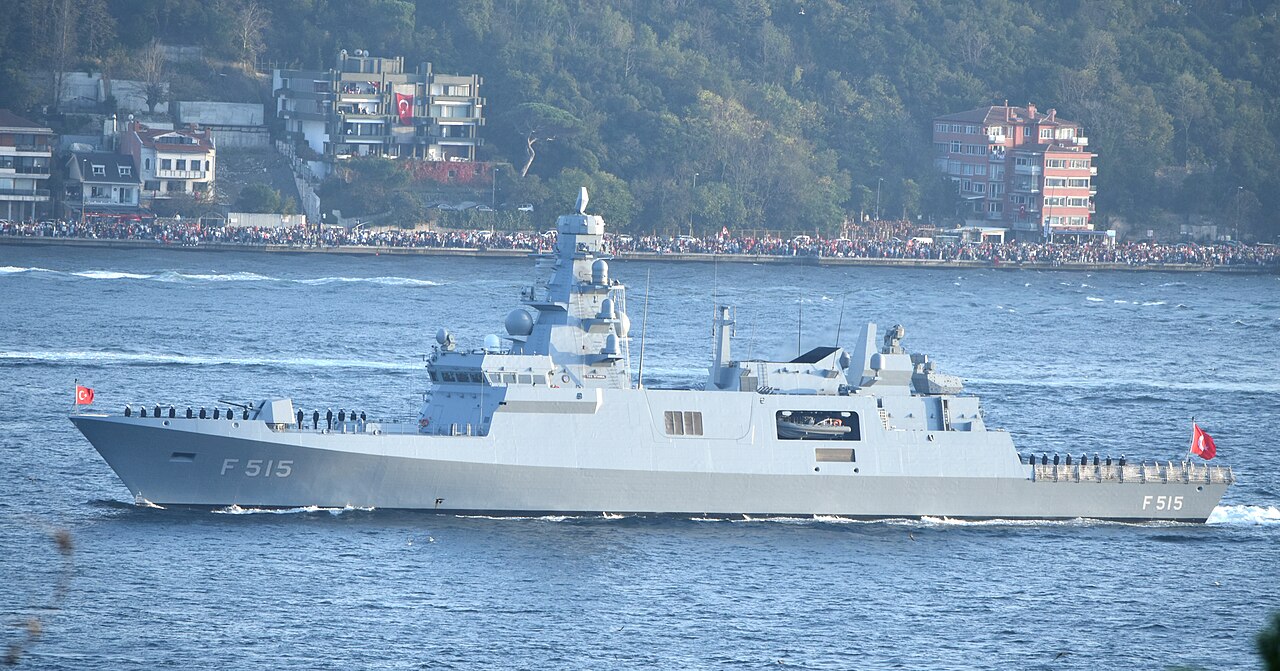
Türkiye lost that one to South Korea on the merits of the offer. Both countries sell the same proposition to the same customers — capable warships, below Western European prices, with local construction and transfer of work. Korea got there first and at larger scale, and in Thailand it had an argument Türkiye did not: an established industrial relationship and a shipbuilding group whose export order book dwarfs any Turkish yard’s. The structural comparison between the two rising exporters stops being abstract when they are ranked against each other by a navy.
This matters because the naval sector is where Turkish industry is strongest and most exposed at once. The İstif-class programme is running eight hulls across several yards, and a Turkish design is reportedly among the foreign candidates the US Navy is weighing. Capability is not the gap. Scale, financing depth and the length of the reference list are.
Case three: Colombia, and the problem of arriving second
Colombia’s Plataforma Estratégica de Superficie programme is the slowest of the three losses and the most instructive about how these decisions are actually made.
STM entered the Colombian frigate competition in 2017, reported at the time as bidding against European rivals. The award went elsewhere. Damen’s SIGMA 10514 design was selected, and in August 2024 Damen signed with the Colombian state yard COTECMAR for technical support and component supply so that the 107.5-metre ship could be built under licence in Cartagena. Damen noted that Colombia would become the third Latin American country able to build SIGMA-family vessels under licence, after Mexico and Brazil.
That last sentence is the whole competition. Damen did not win on hull form. It won because a Colombian yard could point at Mexican and Brazilian precedent for exactly the arrangement Colombia wanted, and because the licensed-build model was already proven with that supplier. Turkish yards offer local construction too — but in 2017, and arguably still, they could not show a foreign shipyard that had already built a Turkish design to a Turkish licence and delivered it.
The pattern: four gates, and where each bid died
Set the three cases side by side and a Turkish export bid looks less like a sales pitch than a sequence of gates. The deciding factor is almost never the first one a buyer asks about.
| Competition | Turkish offer | Winner | Gate it failed at | Still binding? |
|---|---|---|---|---|
| Pakistan attack helicopter, cancelled 2022 | T129 ATAK, 30 aircraft | China, Z-10ME | Third-country export licence | Yes, wherever a US or EU component remains |
| Thailand frigate, preferred bidder 2026 | ASFAT and TAIS | South Korea, Hanwha Ocean | Industrial and financing package depth | Yes, against Korean yards specifically |
| Colombia PES frigate, awarded by 2024 | STM, bidding from 2017 | Netherlands, Damen SIGMA 10514 | Licensed-build track record | Weakening, as Pakistani and Ukrainian hulls deliver |
| Philippines attack helicopter, licence granted 2021 | T129 ATAK, six aircraft | Türkiye | None — licence granted | Shows the veto is case-by-case, not absolute |
| Spain jet trainer, agreed 2025 | HÜRJET, 30 aircraft | Türkiye | None — local content offered up front | Shows the Colombia gate can be cleared |
DefenceTürkiye analysis. Competition outcomes from Janes, Naval News, Damen and Turkish official statements; gate attribution is our reading of the published record.
The useful observation is that the gates are ordered, and each one is harder to fix than the last. An export licence can change with an administration. A financing package can be improved with state credit. A reference list can only be built by delivering, which takes years and cannot be accelerated by negotiation.
WHY IT MATTERS
Turkish industry is routinely described abroad as either unstoppable or overrated. The competition record supports neither. Turkish bids are now consistently good enough to reach the final round of serious naval and aviation competitions — which is itself recent — and they are losing to the two things an emerging exporter cannot buy quickly: a clean component chain and a long delivery history. That is a different and more precise risk picture than “Turkish kit is cheap but politically awkward,” and it is the one a procurement office should be working from.
Where the same weaknesses were fixed
A loss list read on its own would be as misleading as a win list. Two of the three gates have demonstrably been cleared since.
The licence gate cleared in the Philippines. Washington granted the T129 export licence for six aircraft, and the type entered Philippine service — which is why the honest description of the US veto is that it is applied selectively, not that it is permanent. That selectivity is still a risk a buyer carries, but it is a political risk with a known shape, not a closed door. The broader mechanics are set out in our pieces on ITAR exposure in Turkish exports and on what each embargo on Türkiye actually blocked.

The industrial-package gate cleared in Spain. Spain agreed in December 2025 to buy 30 HÜRJET advanced jet trainers in a package valued at roughly €2.6 billion, with the formal export agreement signed in Madrid the following spring, and Turkish officials have since described a second phase in which Spanish industry takes a growing share of the aircraft’s content. Whatever else that deal is, it is Türkiye offering a European buyer the kind of localisation package Damen offered Colombia. Our analysis of where HÜRJET sits in the trainer market and of the European market more broadly covers how that was structured.
The track-record gate is the one still closing. Turkish yards have delivered corvettes to Pakistan and built for Ukraine, and ASFAT now bids internationally as the defence ministry’s own contractor. Each delivered hull makes the Colombia argument harder to use against the next Turkish bid.
BUYER VIEW
Ask for the component origin list before anything else. The Pakistan case turned entirely on one engine. Any Turkish offer containing a US, UK or EU-origin critical component carries a third-party approval step, and the supplier should be able to name it.
Treat “local production” claims as testable. Colombia’s decision rewarded demonstrated precedent, not an offer. Ask which foreign yard or plant has already built this design under Turkish licence, and whether the product was accepted.
Expect to be compared against Korea, not Europe. In Thailand the Turkish bids lost to a Korean yard, not a Western one. Where price and transfer of work are the buying criteria, the realistic alternative to a Turkish offer is increasingly a Korean one.
Price the support tail separately. None of the three losses turned on platform cost. Competitions in this bracket are decided on the package around the platform.
Open-source editorial analysis. DefenceTürkiye does not advise governments or companies on procurement.
What the record does not show
Two cautions belong on this page.
First, losing bidders are rarely told why in writing, and procurement authorities seldom publish scoring. Everything above is inferred from award announcements, bidder lists and contemporaneous reporting. Where a cause is stated — the Pakistani engine licence — it is stated by the buyer. Where it is not, it is our reading.
Second, Türkiye does not disclose its bid pipeline, so the denominator is unknown. There is no published figure for how many competitions Turkish firms enter or what share they win, which means no one can honestly say whether the Turkish win rate is good or bad. The claim here is narrower: that the losses which are visible cluster into three causes, and that those causes are the ones a buyer can actually evaluate. That gap sits alongside the broader problem of how much of a Turkish system is genuinely Turkish and what an offset package actually delivers.
FAQ
Why did Pakistan cancel the T129 ATAK deal?
Because the United States would not grant an export licence for the T129’s LHTEC CTS800 engine, which is of Anglo-American origin. Janes reported the cancellation of the 30-aircraft, $1.5 billion order on 6 January 2022, quoting the Pakistan Army spokesman saying “we have moved on.” Pakistan turned to the Chinese Z-10ME.
Has Türkiye lost a naval export competition recently?
Yes. In September 2026 the Royal Thai Navy selected South Korea’s Hanwha Ocean as preferred bidder for its next-generation frigate, worth THB 16.73 billion for one ship with logistics support. Naval News lists ASFAT and TAIS, both Turkish, among the unsuccessful bidders.
Do Turkish defence products lose on quality?
Not in the documented cases. In Pakistan, Thailand and Colombia the Turkish offers reached competitive consideration and were defeated by licence restrictions, package depth or the absence of a licensed-build precedent. No buyer in these three competitions has publicly cited a technical shortfall as the deciding factor.
Which US-origin components still constrain Turkish exports?
Engines are the recurring one — the CTS800 on the T129 and the T-70 Black Hawk case are both engine-driven. Avionics and certain seekers raise similar questions. The practical test is whether a given configuration needs a US licence, and that varies by system and by variant.
Is South Korea now Türkiye’s main competitor?
In the naval and trainer-aircraft segments it increasingly is. Both countries compete on capable platforms at below-Western-European prices with substantial transfer of work, and Thailand is a direct instance of the two meeting in the same tender.
Does losing a bid stop a Turkish product selling elsewhere?
No. The T129 lost Pakistan and won the Philippines in overlapping periods. Competition outcomes in this market are driven as much by the buyer’s politics and industrial requirements as by the product.
Sources
- Janes, “Pakistan cancels attack helicopter project with Turkey, opting for China,” 6 January 2022 — janes.com
- Naval News, “Hanwha Ocean Selected as Preferred Bidder for Thailand’s Next-Generation Frigate Program,” 9 September 2026 — navalnews.com
- Damen Shipyards Group, “COTECMAR and Damen sign contract for construction of frigate,” 12 August 2024 — damen.com
- Naval Today, “Turkish STM enters Colombian Navy frigate bid,” 22 March 2017 — navaltoday.com
- Envanter Medya’s English-language report on the Thai frigate award to Hanwha Ocean — envantermedya.com
- Envanter Medya’s Turkish-language record of Pakistan–Türkiye defence industry relations since 2009 — envantermedya.com