HAVELSAN Completes Mission Planning Software for HÜRKUŞ

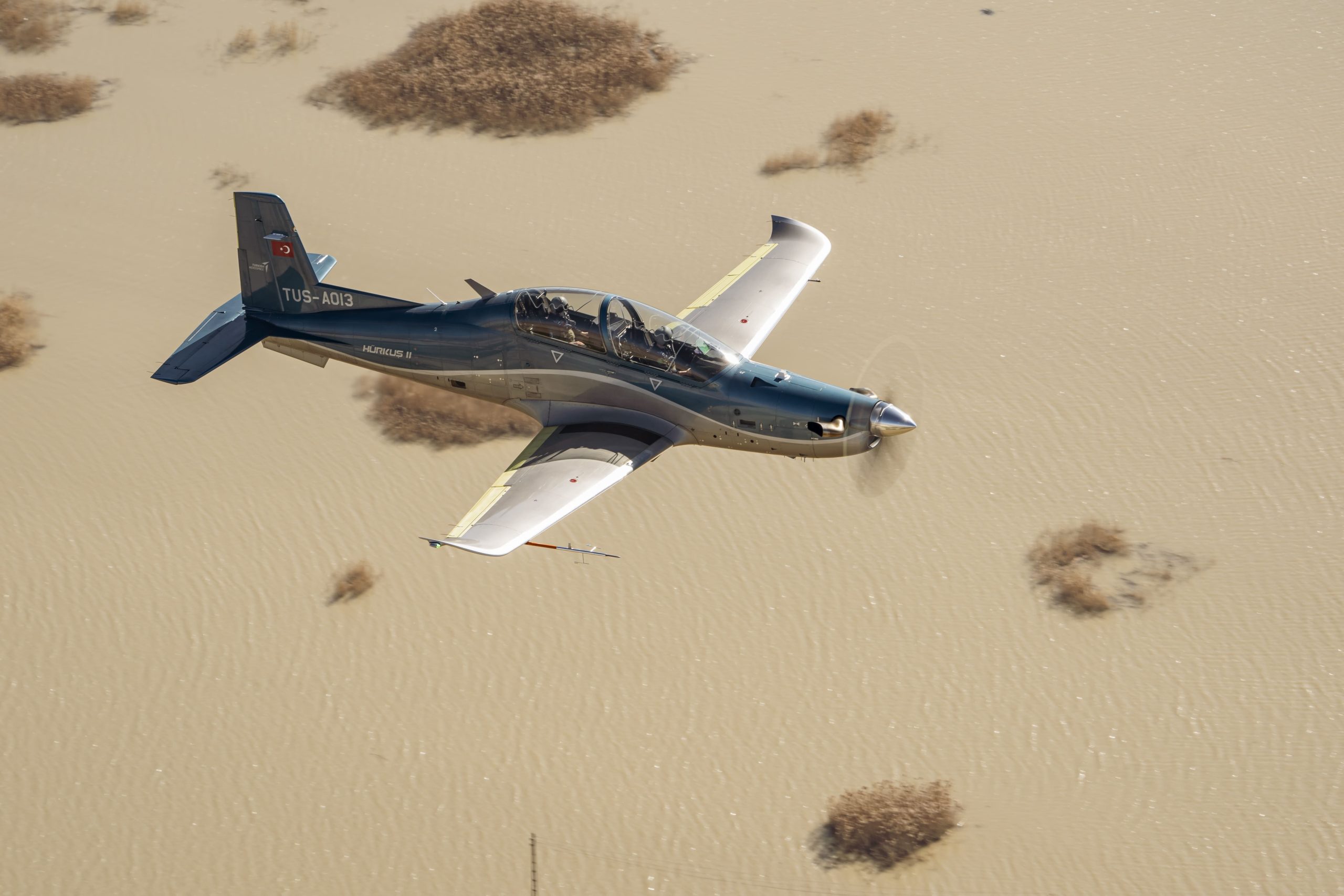
HAVELSAN has completed the acceptance process for its national mission planning software adapted to the HÜRKUŞ basic trainer, the company announced on 25 November. The milestone extends a software family that already flies on the Turkish Air Force’s F-16 fleet and has been sold abroad as part of Spain’s HÜRJET jet-trainer purchase, pulling a fourth aircraft type into Türkiye’s home-grown mission-planning ecosystem.
The software is a variant of HAVELSAN’s Fleet-Level Mission Planning system, in Turkish service since 2007 and originally developed for combat aircraft. For HÜRKUŞ, the company has added post-flight debriefing tools so instructors and student pilots can review a sortie and identify where performance fell short. On the planning side, it handles route optimisation, fuel consumption analysis, weather data and in-flight emergency planning, aimed at giving pilots and air traffic controllers faster, better-informed decisions before and during a flight.
HAVELSAN says the tool can run two ways: networked into the Air Force Integrated Command and Control System (AICCS), pulling in air tasking orders, airspace restrictions and meteorological feeds automatically, or standalone with no network connection at all — a feature that matters for a trainer fleet dispersed across multiple flight schools rather than concentrated on a handful of operational bases.
A Software Stack Built One Aircraft at a Time
HÜRKUŞ is not where HAVELSAN’s mission-planning software started, and it will not be where it ends. The underlying system began development in 2003 and entered Turkish Air Force service in 2007. Its most recent major milestone came under the ÖZGÜR Project, the Turkish Aerospace/SSB programme that is rewiring the Air Force’s F-16 Block 30 jets with domestic avionics — a national IFF system, a national mission computer, ASELSAN’s MURAD AESA radar — in place of foreign equipment. Acceptance of the mission-planning software for that F-16 upgrade was completed earlier this year, according to a Türkiye Today report on the ÖZGÜR Project.
From there the software jumped platforms rather than staying tied to fighters. In April, HAVELSAN confirmed it would export a version of the system — along with a flight simulator — to Spain as part of Madrid’s purchase of 30 HÜRJET advanced jet trainers, the first export sale of a Turkish-made jet to a NATO member. HÜRKUŞ now becomes the next aircraft in the lineup, and HAVELSAN’s own material points to KAAN, the fifth-generation fighter now entering low-rate production, as a further integration target.
The company has also built mission-planning support around specific munitions rather than just airframes, with integrations completed for the HGK and KGK guided bomb kits, the SOM cruise missile and the TOLUN glide bomb.
Why a Training-Aircraft Software Update Matters
On its own, a mission-planning acceptance for a propeller-driven basic trainer is a modest line item. What makes it worth tracking is the pattern it confirms: Türkiye has built a single national software architecture that now spans a front-line fighter undergoing avionics modernisation, an advanced jet trainer already sold to a NATO air force, a basic trainer used at the start of every Turkish pilot’s career, and — on paper — the country’s new stealth fighter. That is a different proposition for a foreign buyer than a one-off aircraft sale, because it points to interoperability and sustained software support across an entire training-to-combat pipeline rather than a single platform.
It also reduces one more point of foreign dependence. Fleet-level mission planning, debriefing and munitions-planning software is normally a proprietary layer controlled by the aircraft’s original systems supplier — the kind of capability a customer cannot simply buy off the shelf from a third party. By keeping that layer in domestic hands across its own fleet and licensing it outward, as with the Spain deal, HAVELSAN is positioning the software itself as an export product rather than a byproduct of hardware sales.
HÜRKUŞ, built by Turkish Aerospace, is Türkiye’s first domestically designed and certified basic trainer, with the armed HÜRKUŞ-C light-attack variant also in service and the type’s inventory still growing. No figures on contract value, unit cost or rollout timeline across the trainer fleet were disclosed in HAVELSAN’s announcement.
Sources: HAVELSAN; Türkiye Today.