
Turkish Operations Run on Command Software Few People Ever See

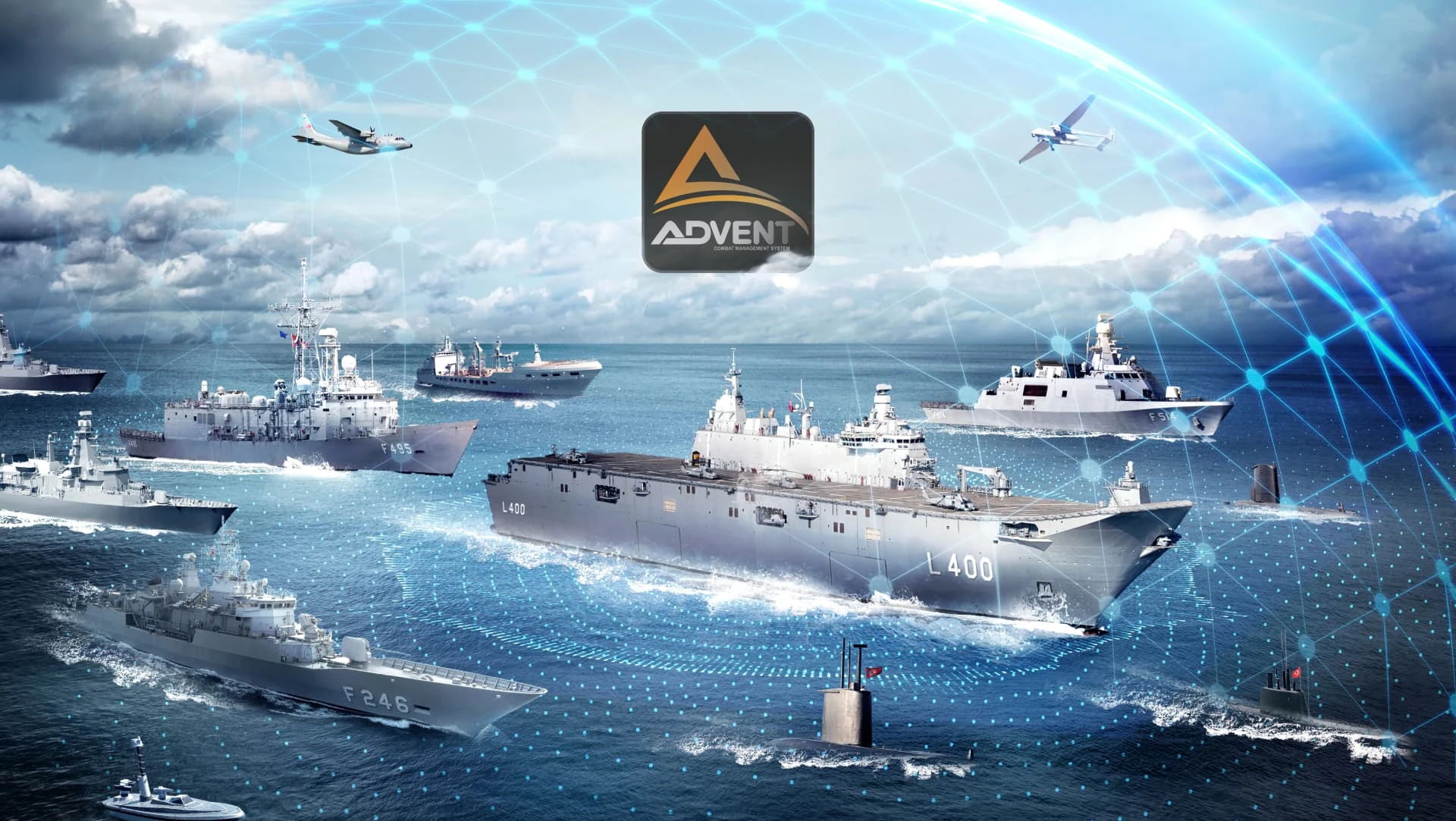
When a Turkish air defence battery engages a target, or a frigate hands a track to a drone overseas, the visible hardware is only half the story. The other half is C4ISR: command, control, communications, computers, intelligence, surveillance and reconnaissance. It is the layer that decides who sees what, who is told, and who is allowed to shoot.
In Türkiye, that layer is built mostly by two companies, ASELSAN and HAVELSAN, both linked to the Turkish Armed Forces Foundation. They split the work in a way that is rarely spelled out, so this piece lays it out.
What does C4ISR actually mean in practice?
The acronym bundles several jobs. Sensors such as radars, cameras and signals receivers collect data. Communications networks move it. Software fuses it into one operational picture. Commanders then use that picture to assign weapons and platforms.
The key product is the common operational picture, a shared screen showing friendly units, detected threats and available shooters. If a radar on a hill and a ship at sea feed the same picture, one track can be passed from sensor to shooter without a phone call. That is the whole idea of network-centric operations.
| Layer | Function | Typical Turkish suppliers |
|---|---|---|
| Sensors | Radar, electro-optical, signals intelligence | ASELSAN |
| Communications | Tactical radios, data links, relays | ASELSAN |
| Command and control software | Fusion, tactical picture, weapon assignment | ASELSAN (land, air), HAVELSAN (naval and others) |
| Training and decision support | Simulation, AI-assisted analysis | HAVELSAN |
Who builds Türkiye’s command and control software?
Two company profiles explain most of it. ASELSAN, founded in 1975 and headquartered in Ankara, covers sensors and radios as well as command-control systems. Its communications and information technologies sector handles military and professional communications, while a separate defence systems sector builds command-control products.
HAVELSAN was established in 1982 by the Turkish Air Force Foundation and is also based in Ankara. It describes C4ISR technologies as one of its four main fields, next to training and simulation, information and communication technologies, and homeland and cyber security.
The two firms have worked together before. A joint venture of HAVELSAN and ASELSAN signed the combat system contract for the MILGEM prototype corvette with the Undersecretariat for Defence Industries (now the SSB) at IDEF in May 2007, according to material published by Defence Turkey. That arrangement set a pattern: ASELSAN handles much of the sensor and hardware side, HAVELSAN the software integration.
How does ASELSAN pitch its land and air C4ISR?
At DSA 2026 in Kuala Lumpur, ASELSAN described what it calls a scalable C4ISR backbone for joint and coalition operations, as reported by EDR Magazine. The company says it connects land, air and naval assets using open standards and adaptable middleware, and that it is compatible with NATO-aligned systems.
Its Battle Management System is the centrepiece. According to that coverage, it fuses data from radars, electro-optical sensors, signals intelligence assets and unmanned platforms into a real-time operational picture, with AI-assisted decision support. The software is modular. It can run on a dismounted soldier’s tablet or inside a mobile command post, where hardened shelters combine communications suites, data links and mission-planning tools.
ASELSAN also stressed tight coupling between radar and command software, so that detections can automatically cue other sensors and engagement sequences. It showed AESA radars for medium-range air defence and ground surveillance, which are sensors built to feed exactly this kind of network. The company says most critical elements, including RF modules, signal processors and mission software, are developed domestically. That is a company claim, not an independently audited figure.
What is HAKİM 100 and why was it in the news?
HAKİM 100 is ASELSAN’s air command and control system. It is described as a domestically developed system that integrates real-time data from multiple sensors into a single air picture and supports threat assessment and weapons allocation for low-, medium- and long-range air defence platforms.
In December 2024, several outlets, among them Turkish Minute and Defence Security Asia, reported that ASELSAN had integrated the Russian-made S-400 into HAKİM 100, placing it in the same layer as the indigenous SİPER. These reports were not matched by a detailed official technical statement, and political questions around the S-400 remain unresolved, so the claim should be read as reported rather than confirmed. What is not in doubt is the design aim: a single command layer able to coordinate whatever shooters Türkiye owns. That is also the logic behind the Steel Dome concept, which depends on tying layered air defence into one network.
How do Turkish units talk to each other?
Command software is useless without a network. ASELSAN’s tactical area communications system, TASMUS, was developed to digitise the battlefield with a mobile, secure network. Defence trade reporting says its redesigned TASMUS-G version entered Turkish Armed Forces inventory in 2010, and that production was set at roughly 500 million dollars over ten years. Treat that contract value as reported.
The architecture includes the iSTAR multiband radio family, which is reported to offer electronic counter-countermeasures, low probability of intercept, built-in encryption and simultaneous voice and data. A deeper look at how these networks and the different data links relate is in our piece on Türkiye’s tactical data links.
A newer strand is the Turkish Armed Forces Multi-Band Digital Joint Radio effort. Under an agreement between the SSB and ASELSAN, software-based radios are meant to cover the tactical and strategic needs of land, sea and air elements. The 9600 series is part of that work, and the 9681 V/UHF and HF radios have been installed on platforms including the CN-235 transport aircraft, according to the sources reviewed.
Drones add another requirement. At DSA 2024 ASELSAN showed URAL, an airborne software-defined radio relay covering VHF and UHF in one unit. The company says it is aimed at UAVs and other airborne platforms for surveillance, reconnaissance and mapping, with ECCM features. It expects data rates above 100 Mbps for video, though exact specifications were not released. A relay like this extends the reach of a command network beyond line of sight.
Where does HAVELSAN fit, and what is ADVENT?
At sea, the main product is ADVENT, HAVELSAN’s combat management system developed with the Turkish Naval Forces Command and the Armerkom. It is presented as a network-enabled system designed around the force rather than a single ship, with sensor data fusion and a clear operational picture. HAVELSAN showed it at DIMDEX 2024 in Doha. The full story is in our explainer on the ADVENT combat management system.
In July 2026, Naval News reported that the Romanian Navy would be the first NATO member to field ADVENT. A combat management system is among the most sensitive pieces of a warship, and NATO navies rarely pick a foreign one lightly.
HAVELSAN has also introduced ADVENT-AI, which it describes as a modular capability for the ADVENT architecture that can reach existing platforms through software updates. Reported functions include anomaly detection, tactical picture generation, object classification and AI-supported naval gunfire effectiveness prediction. These are manufacturer claims, and no independent performance data has been published that we could find.
Why do sensors and shooters need the same network?
Consider a low-flying drone approaching a border post. A ground surveillance radar picks it up, an electro-optical camera confirms it, and a counter-drone system or air defence gun is cued to engage. Each step is quick only if the data moves automatically. When sensors, radios and weapons are tied through one command layer, the operator confirms the engagement rather than relaying coordinates by voice.
The same logic applies at sea. A ship’s combat management system is the equivalent of a command post, collecting radar, sonar and electronic support data, and deciding which missile or gun answers which track. This is why C4ISR contracts tend to be less visible than platform deals yet shape how well every platform performs once it is connected.
What are the weak points?
Public detail is thin. Both companies talk about architecture at trade shows and say little about fielded numbers, accreditation or exact interoperability with NATO standards beyond general statements. Claims of compatibility are not the same as certified interoperability, and outside observers cannot yet test them.
Integration is a harder problem than any single product. Navy, air force and army systems were bought at different times from different programmes, and joining them into one picture is slow, political work. The Steel Dome effort and the AI features both being pushed by ASELSAN and HAVELSAN are tests of whether that integration can scale. Watch for firm SSB announcements on joint command layers and for further NATO export wins, which would offer the clearest independent signal.


