STM’s ALKAN FPV Kamikaze Drone Enters Turkish Service

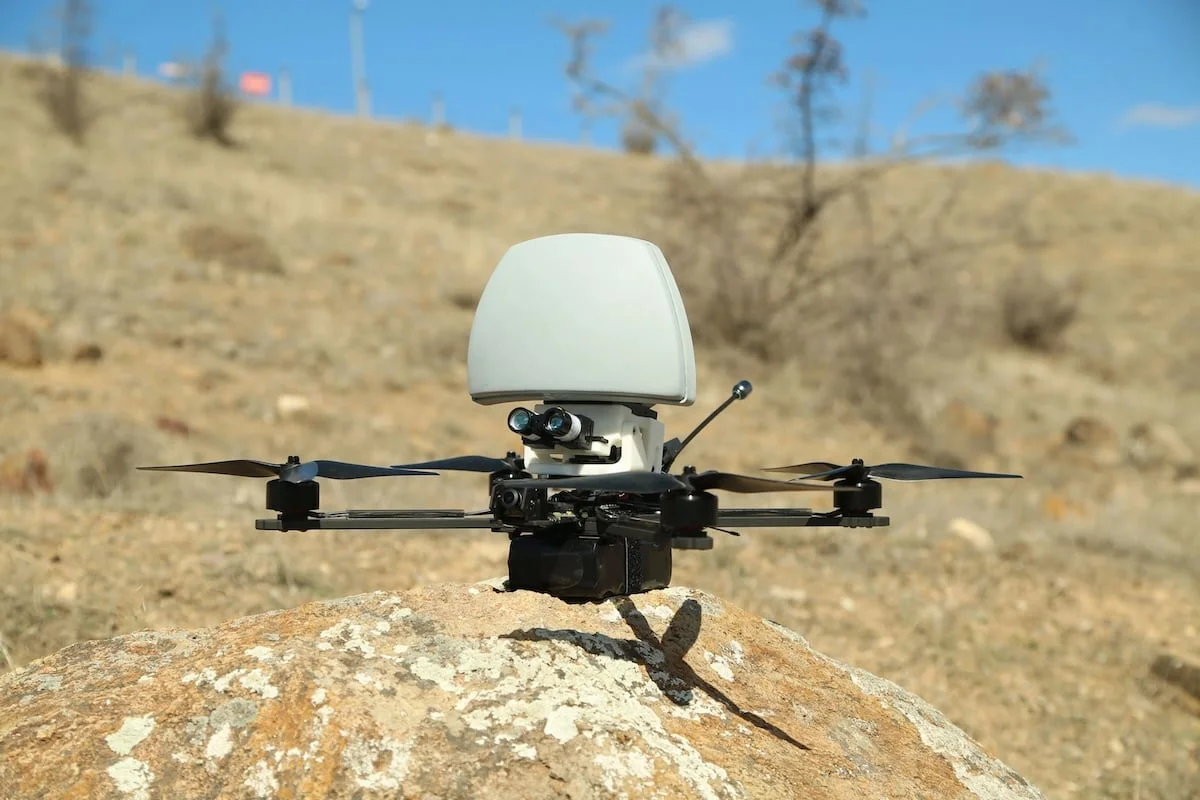
STM has delivered its first drone in the first-person-view (FPV) kamikaze category to Turkish security forces, the Ankara-based defence contractor said, marking the operational debut of a system it originally unveiled under a different name less than two years ago.
The drone, now marketed as ALKAN FPV, previously went to market as KARGUFPV. STM says “multiple systems” have entered inventory following acceptance testing, with further deliveries planned. The company did not disclose which branch of the Turkish security forces received the drones, nor how many have been delivered so far.
“This is STM’s first system in the FPV drone category, and it has now entered our security forces’ inventory after completing the necessary tests,” STM General Manager Özgür Güleryüz said, according to Defence Industry Europe, which first reported the delivery.
From KARGUFPV to ALKAN
STM introduced the drone under the KARGUFPV name in May 2025 as the company’s entry into the FPV category that has come to dominate front-line footage from Ukraine. In its first test firing, the system reportedly struck its target with full accuracy. Two months later, STM added an armour-piercing warhead alongside the original anti-personnel payload and introduced a fibre-optic control option, both of which the company said completed field trials. By October 2025, the drone had scored a live hit on an armoured vehicle using the armour-piercing warhead in what STM described as the type’s first live-fire test with that payload.
The rebrand to ALKAN FPV appears to coincide with the system’s move from testing into service, a naming pattern STM has used elsewhere in its unmanned portfolio.
What ALKAN FPV Is Built to Do
According to STM’s published specifications, ALKAN FPV has a mission range of 10 km, a top speed of 140 km/h and a mission altitude of 500 metres, with a maximum operating ceiling of 5,500 metres above sea level. Endurance runs past 20 minutes in one-way-attack configuration and up to 44 minutes when flown without a warhead in an observation role. STM says the airframe is built for low radar cross-section and day-and-night operation against both fixed and moving targets.
The operator flies the drone manually using a real-time video feed, choosing between a conventional radio-frequency link or a fibre-optic cable. STM says the fibre-optic option lets the drone continue its mission without GPS or radio-frequency signals and without being affected by electromagnetic jamming — the same vulnerability that has forced rapid adaptation on both sides of the Ukraine battlefield. Once the operator designates a target, STM’s autonomy and image-processing software can take over for an autonomous terminal dive, a feature the company says cuts down on operator workload during the final seconds of an attack run.
The warheads — anti-personnel or armour-piercing — are interchangeable with those used on STM’s existing KARGU rotary-wing loitering munition, and the fuzing includes a MIL-STD-331-compliant safety fuze for transport and handling plus a sensor allowing detonation at an adjustable stand-off distance.
Why It Matters Beyond Türkiye
FPV drones have become one of the cheapest and most consequential weapons of the war in Ukraine, and defence industries well beyond Russia and Ukraine have been racing to field their own versions, both for domestic forces and for export. STM already has a track record in that export market: the company says its KARGU, BOYGA, TOGAN and ALPAGU loitering munitions have been sold to more than 15 countries across four continents. No export customer has been named for ALKAN FPV, and STM’s announcement so far covers only delivery to Turkish forces.
Türkiye’s FPV and loitering-munition sector has become crowded in the past year. Skydagger’s kamikaze drones have already reached more than 30 countries, while a separate Turkish firm, TİTRA, signed a framework deal to supply Pakistan’s NRTC with over 100,000 Merküt FPV drones. Elsewhere in the same niche, Turkish firm Lentatek has found its first export buyer for the KARGI anti-radiation loitering munition.
The fibre-optic control link is likely to be the detail that export customers watch most closely. Jamming-resistant wired guidance has become a selling point across the FPV sector since Russian and Ukrainian forces began fielding fibre-optic drones to defeat each other’s electronic warfare, and a Turkish entrant with an already-exportable product line behind it gives STM a plausible route into that demand.
Sources
This article draws on reporting from Defence Industry Europe and STM’s own published product and press material.