AKINCI, Bayraktar TB2 Land on a Turkish Highway in Drill

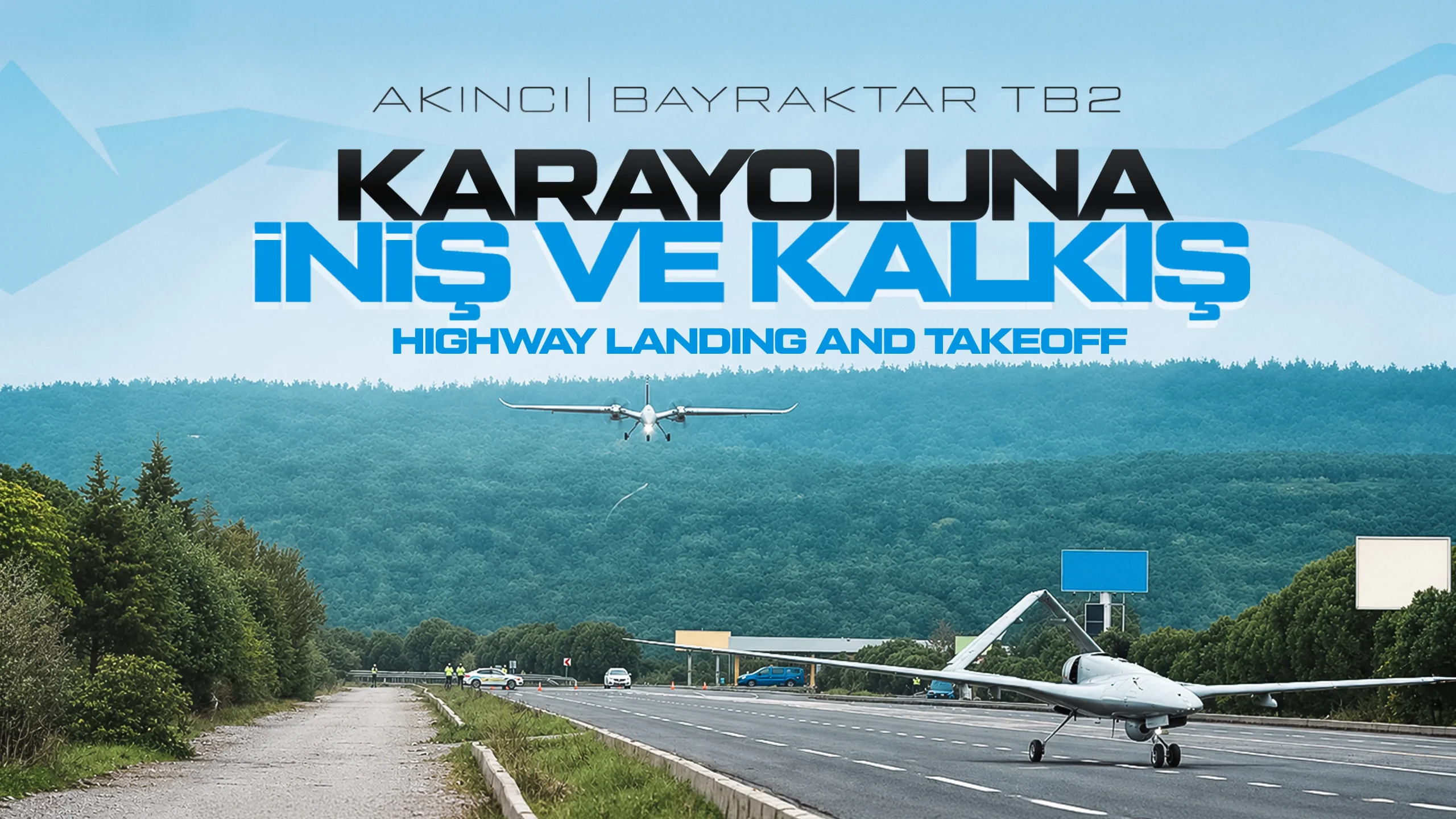
Two Baykar combat drones shut down a stretch of Turkish motorway on Friday, not because of an accident, but to prove they didn’t need an airfield at all. An AKINCI and two Bayraktar TB2 unmanned combat aerial vehicles landed on, then took off again from, the Manisa-Balıkesir Highway in western Türkiye, in a drill Baykar says was designed to test what happens when a runway isn’t an option.
The company said the exercise was coordinated with the Ministry of National Defense and the General Directorate of Highways, with the route chosen after field surveys of candidate stretches of road across the country. Security and emergency cover came from the Manisa governorship, provincial gendarmerie and police, who closed the carriageway, while fire and ambulance crews stood by. Observers from the Turkish Armed Forces and the Interior Ministry watched the drill, according to Baykar and Anadolu Agency, which both reported on the exercise.
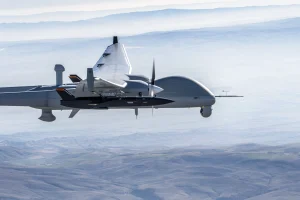
Three aircraft took part. The AKINCI flew in from Çorlu Airport in Tekirdağ, a Bayraktar TB2 came from Keşan, and a second TB2 — operated by the Turkish Land Forces — flew from İzmir. All three landed on the highway and took off again without incident.
Why a highway, and why now
Baykar framed the exercise around a single idea: that its aircraft should be able to keep flying even if their home airfields are unavailable. The company said it plans to extend the same concept to the jet-powered Bayraktar KIZILELMA unmanned fighter and to the short-takeoff Bayraktar TB3, which already operates from the amphibious assault ship TCG Anadolu without a catapult or arrestor gear.
The logic tracks a wider shift in military thinking that the war in Ukraine has sharpened. Fixed runways are easy to find and easy to hit with cruise missiles, loitering munitions or long-range drones, and a handful of successful strikes can ground an entire squadron. Western air forces have spent the past several years building “agile combat employment” doctrine around exactly this problem — dispersing jets to remote strips, civilian airports and, in Sweden’s and Finland’s long-standing doctrine, public roads. Türkiye’s demonstration puts its own unmanned fleet, rather than crewed fighters, through the same test.
For an air force or export customer weighing Turkish systems against Chinese or Western alternatives, that matters beyond the novelty of the footage. A TB2 or AKINCI that can disperse to secondary road strips is harder to eliminate in a first strike and cheaper to keep flying from austere, lightly prepared sites — a selling point Baykar has not previously demonstrated this publicly for its combat drones, as opposed to its satellite and loitering-munition payloads.
Part of a busy testing calendar
The highway drill lands in the middle of an unusually dense run of AKINCI and TB2 trials. Earlier this month, an AKINCI fired a TOLUN-P precision-guided bomb while under active electronic jamming and still hit its target, and a Bayraktar TB2 was used as a launch platform for Skydagger FPV kamikaze drones earlier in November. Baykar has also been running a steady cadence of AKINCI weapons-qualification firings through September and October, including first shots with the SUNGUR air-defence missile and the supersonic UAV-300 ballistic munition.
None of that testing tells a customer much about combat performance on its own — a successful test flight is not the same as a proven weapon in service, and Türkiye’s combat-proven claims deserve the same scrutiny as any manufacturer’s. But taken together, the pattern shows Baykar pushing its unmanned fleet through operational scenarios — jamming, austere basing, weapons integration — rather than resting on the export numbers that have already made the TB2 and AKINCI familiar names from Libya to Ukraine.
Whether highway operations become a standard part of Turkish doctrine, or a one-off demonstration aimed at export customers and NATO allies rethinking interoperability under a more contested air environment, is not yet clear. Baykar has not said whether further highway trials are planned, or whether the concept will be written into Turkish Armed Forces contingency doctrine.
Sources: Baykar, Anadolu Agency.