Skydagger’s Kamikaze Drones Reach 30+ Countries at BAMEX 2026


Skydagger, the Turkish loitering-munition and FPV drone manufacturer that emerged just two years ago, says it has now delivered roughly 75,000 kamikaze drones to more than 30 countries. The company disclosed the figures this week while exhibiting at BAMEX 2026, a defence trade fair in Bamako, Mali, where it is pushing further into the Sahel and wider African security market.
The numbers, reported by Turkey’s state-run Anadolu Agency, mark one of the largest cumulative export claims made by any Turkish drone producer outside Baykar’s own Bayraktar line — and they come from a company that did not exist before 2024.
A fast-moving entrant in the low-cost drone market
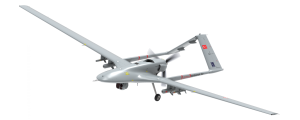
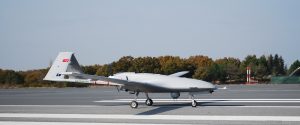
Skydagger was founded in 2024 to build small, expendable first-person-view (FPV) and fixed-wing loitering munitions — the cheaper, mass-producible end of the drone spectrum that has proliferated rapidly since the war in Ukraine normalised one-way attack drones as a battlefield staple. It is one of several smaller Turkish manufacturers that have grown up alongside Baykar rather than inside it. The company has also worked closely with Baykar’s own programmes: in a test at the Keşan Flight Training and Test Center in Edirne province on November 4, a Bayraktar TB2 carried and released 16 Skydagger FPV drones in the air, functioning as an airborne “mothership” for the smaller munitions, Baykar reported at the time. Skydagger’s own catalogue already included the longer-range TOYCA-10E, a 250 km loitering munition unveiled in September, alongside the shorter-range TOYCA-05 shown this week.
At BAMEX 2026, Skydagger showed three systems aimed at the counterterrorism, border-security and reconnaissance missions that dominate procurement thinking in the Sahel:
- RTF 10-inch FPV drone — a compact, jam-resistant FPV platform with a 10 km range, a 130 km/h top speed, 16 minutes of flight time and a 3 kg warhead.
- TOYCA-05 — a catapult-launched, fixed-wing loitering munition that Anadolu Agency says has recently entered mass production. It carries a 5 kg payload out to 70 km, with more than 45 minutes of endurance, a 115 km/h cruise speed and a 260 km/h maximum dive speed.
- HUNTER — a vertical-takeoff, four-rotor interceptor drone designed to hit aerial threats such as small UAVs, with a 300 km/h top speed and a 500 g warhead, trading payload for speed and no-runway flexibility.
BAMEX 2026 was organised with Mali’s Ministry of Defence and the Turkey-based consultancy The Peak Defense, and is one of several African trade shows where Turkish manufacturers have been building a presence over the past two years as Sahel governments look for lower-cost alternatives to Western and Chinese systems.
Export figures far outpace earlier disclosures
The scale of the new numbers stands out against Skydagger’s own earlier reporting. In 2025, the company said it had exported more than 26,000 drones to 14 countries, with Kosovo among the confirmed customers that year. The jump to roughly 75,000 units and over 30 countries in the space of about a year, if accurate, would represent a substantial acceleration — though neither Anadolu Agency’s report nor Skydagger itself named the additional customer countries, broke down the split between FPV and fixed-wing types, or gave contract values for the deliveries. The company has previously said its production line has capacity for around 120,000 drones a year, which would make the reported export volume plausible but still leaves the claim resting on the manufacturer’s own figures rather than independently verified shipment data.
Skydagger also said it is working to establish drone manufacturing plants in five countries, without naming them or giving a timeline. Local assembly and production deals have become a standard feature of Turkish drone diplomacy — Baykar has pursued similar arrangements in Ukraine and Morocco, and Turkish manufacturers have pushed a comparable mix of drones, howitzers and local production into the Balkans — and typically combine a sales pitch with technology transfer that host governments use to justify larger orders.
Why it matters beyond the numbers
Skydagger’s pitch sits at the cheap, attritable end of the drone market that has grown fastest globally since 2022: FPV kamikaze drones and small loitering munitions that cost a fraction of a cruise missile or a larger UCAV but can still be produced and exported at volume. For African security forces fighting dispersed insurgencies across the Sahel, that cost profile matters more than sensor sophistication or range.
It also illustrates how far Türkiye’s drone export base has broadened beyond Baykar’s flagship Bayraktar and Kızılelma programmes, and how that breadth feeds into the wider pattern of which countries actually buy Turkish weapons and how those sales show up in Türkiye’s defence export totals, which jumped 61% in October to pass $11.3 billion for the year. A cluster of smaller manufacturers — Skydagger among them, alongside firms such as Lentatek, which built the KARGI anti-radiation loitering munition — now compete for the lower tiers of the market, a segment where production volume and price, not technological ceiling, decide contracts. If Skydagger’s figures hold up, it would place the company among the highest-volume exporters of small attack drones from any country, competing directly with Iranian Shahed-derived systems and a growing number of Chinese and Ukrainian FPV producers for the same Sahel and sub-Saharan African customers.
The claims should still be read with some caution. Anadolu Agency’s report, like most coverage of Skydagger’s export record, draws on company-supplied figures presented at a trade fair rather than on customs data, defence-ministry disclosures or named end-user governments. The scale is plausible given the company’s stated production capacity, but it remains, for now, an unverified company claim rather than a confirmed market tally.
Sources: Anadolu Agency.