
Turkish Drones, Howitzers and an Ammunition Plant Are Spreading Across the Balkans

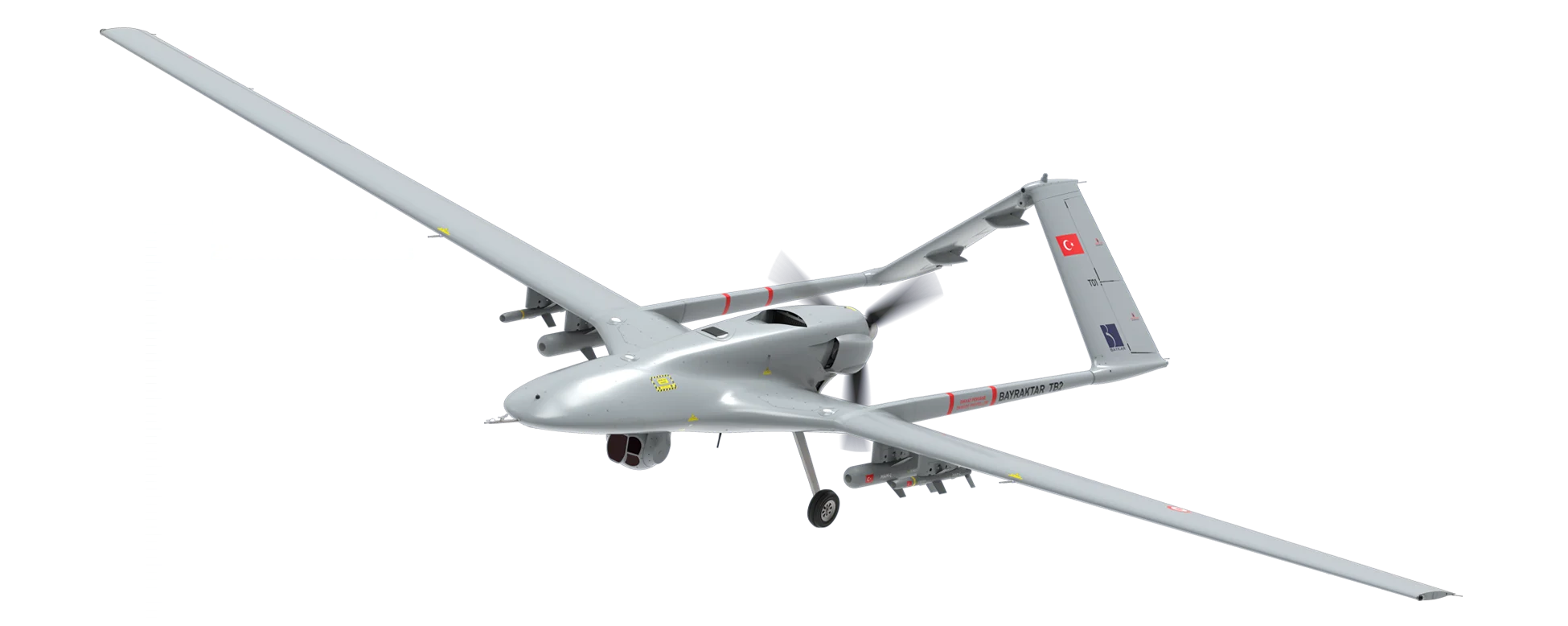
Walk through the armed forces of the Western Balkans today and a pattern shows up quickly. Budgets are thin, many inventories still rest on Soviet-era or aging equipment, and several countries are building or rebuilding capabilities almost from scratch. Into that gap, Türkiye has been delivering drones, howitzers, armoured vehicles, command systems and now an ammunition plant. No single deal is large. Taken together, they add up to a steady and mostly quiet presence.
This piece pulls the documented pieces together country by country. Figures come from government announcements and defence media, and anything that rests on a single report is marked as reported.
Which Balkan Countries Have Bought or Received Turkish Systems?
The list is longer than most people assume. Albania, Kosovo, North Macedonia and Bosnia and Herzegovina all operate Turkish-made equipment, and ASELSAN says it has sold to nearly every country in the region since it began working there in 2014. The table summarises what is publicly documented.
| Country | Turkish system | How it arrived |
|---|---|---|
| Albania | Bayraktar TB2 (three aircraft); patrol boats for the police; loitering munitions announced | TB2 contract with Baykar signed 20 December 2022; munitions pledged as a donation in October 2024 |
| Kosovo | Bayraktar TB2; Skydagger drones (reported); ammunition factory built by MKE | Purchase announced by Prime Minister Albin Kurti in 2023; factory under contract |
| North Macedonia | BORAN 105 mm towed howitzers; ASELSAN command and control systems | Contract for 18 howitzers signed 21 December 2022; first six delivered 6 June 2025 |
| Bosnia and Herzegovina | Two Bayraktar TB2; KIRPI II MRAP vehicles | Military aid agreed between defence ministers in Antalya; first four KIRPI II handed over in December 2024 |
Why Did Albania Buy the Bayraktar TB2?
Albania’s three TB2s were signed for in Tirana in December 2022, and Baykar agreed to train more than thirty personnel and support the aircraft. The stated tasks were mundane for a drone with a strike reputation: tracking wanted persons, countering drug trafficking and spotting forest fires. Baykar was also reported to be involved in training for the control centre at NATO’s new Kuçovë air base.
The sale made Albania the second NATO member to buy Turkish drones, after Poland. A second layer followed in October 2024, when President Erdoğan and Prime Minister Edi Rama announced that Türkiye would donate a “significant number” of loitering munitions. Neither the type nor the quantity was disclosed. Rama said the gesture sent a strong message while stressing that it carried no aggressive intent.
Smaller buys matter too. Albania’s police ordered five coastal patrol boats from a Turkish builder in a deal reported at around $3 million, which gave the force its first small maritime fleet.
What Did Kosovo Get, and Why Did It Cause a Stir?
Kosovo is the most politically charged case. Prime Minister Albin Kurti announced in 2023 that Bayraktar TB2s had been bought from Türkiye, saying that in two years his government had raised troop numbers by over 80 percent and the army budget by more than 100 percent. One defence outlet reported the number of aircraft as five, though the price was not disclosed. Around twenty Kosovo Security Force officers were reported to be training in Türkiye.
Belgrade reacted at once. President Aleksandar Vučić said Serbia would drop plans to buy Turkish drones, describing Türkiye as a main supplier of a “non-existent state”. Serbia instead pointed to loitering munitions from the UAE. NATO’s KFOR mission also reminded Pristina that drone operations over Kosovo fall under airspace restrictions that require prior approval from the KFOR commander for low-level use.
The deeper commitment is industrial. Kosovo selected MKE to build its first ammunition factory, planned around 5.56 mm and 7.62 mm rounds at roughly 20 million rounds a year to NATO standards, with production reported as scheduled to begin at the end of 2026. The contract is also reported to cover drone design work. For a country that has had to import its ammunition, a local plant built by a Turkish state manufacturer is a bigger shift than a handful of aircraft.
What Is North Macedonia Fielding?
Skopje chose the MKE-built BORAN, a lightweight 105 mm towed howitzer fitted with an ASELSAN fire control and navigation suite. The contract for 18 guns, with ammunition, was signed on 21 December 2022 and split into three batteries. The first six were delivered on 6 June 2025, making North Macedonia the first European country to field the system, with the remaining two batteries reported as due between 2029 and 2031. The value was reported at about 6.4 million euros. For more on the gun family, see our look at the URAN mobile howitzer and BORAN exports.
ASELSAN has also put down roots here. It opened a regional office in Skopje in September 2024 to handle marketing, business development and after-sales support. Its Balkan catalogue spans communications, radar and electronic warfare, fire control and air defence products such as the HİSAR missile family and KORKUT. The company has not published a full customer list, so the office should be read as preparation for sales and support, not as proof of specific air defence contracts.
How Did Bosnia End Up With Turkish Drones and MRAPs?
Bosnia and Herzegovina’s case is aid, not purchase. Under an agreement concluded between Defence Minister Yaşar Güler and his Bosnian counterpart Zukan Helez in Antalya, Türkiye supplied two Bayraktar TB2 aircraft with control stations and training at no cost, according to reports. Four KIRPI II armoured vehicles built by BMC were handed over in December 2024 as the first stage of a package reported at 32 vehicles. Sarajevo is also reported to have negotiated four more unmanned aircraft.
The vehicles themselves are covered in our piece on the KIRPI MRAP’s combat record and exports.
Why Does Ankara Sell So Readily in the Balkans?
Three reasons recur across deals. First, speed: Kosovo reportedly received its drones about seven months after contract signature, a timeline few suppliers match. Second, flexibility on terms, from donations to credit, a pattern we explain in how countries buy Turkish weapons. Third, history. Türkiye signed military cooperation agreements with Bulgaria and Romania in the early 1990s, including protocols on defence industry cooperation, and has kept diplomatic and military ties across the region since.
Trade numbers show how dense those relations are. Turkish goods exports to Balkan countries reached roughly $23.4 billion in 2024, according to Anadolu, with Romania and Bulgaria the largest markets. That is overwhelmingly civilian trade, but it helps explain why defence deals land in a region where commercial links already run deep. Turkish defence exports overall were reported up 67 percent to $2.2 billion in the first four months of 2025, though regional breakdowns are not published.
Where Do NATO Rules and Serbia Fit In?
Albania, Montenegro and North Macedonia are NATO members, and much Turkish equipment is built to NATO standards and already used by other allies. Our overview of which NATO members operate Turkish defence systems shows how far that extends beyond the Balkans, and the wider European picture is covered in Poland, Romania and Spain as markets for Turkish arms.
The airspace question is not trivial either. Armed drones in a region with unresolved disputes draw attention from KFOR, EUFOR and neighbouring capitals, and each new delivery is read politically as much as militarily. Suppliers who offer training, spares and a local presence tend to be preferred by buyers who cannot afford downtime, which is where Turkish firms have invested most visibly.
Serbia sits outside the pattern. Its dispute with Pristina made Turkish drones an awkward fit, as the 2023 episode showed.
The trend line points to local production and support, not only deliveries. A Kosovo ammunition plant, a Skopje ASELSAN office and BORAN deliveries stretching to the early 2030s all imply maintenance contracts and training that keep Turkish suppliers involved for years. None of these programmes is large by European standards. What stands out is how many of them are already in place.


