Türkiye and Somalia: What the Defence Deal Actually Contains

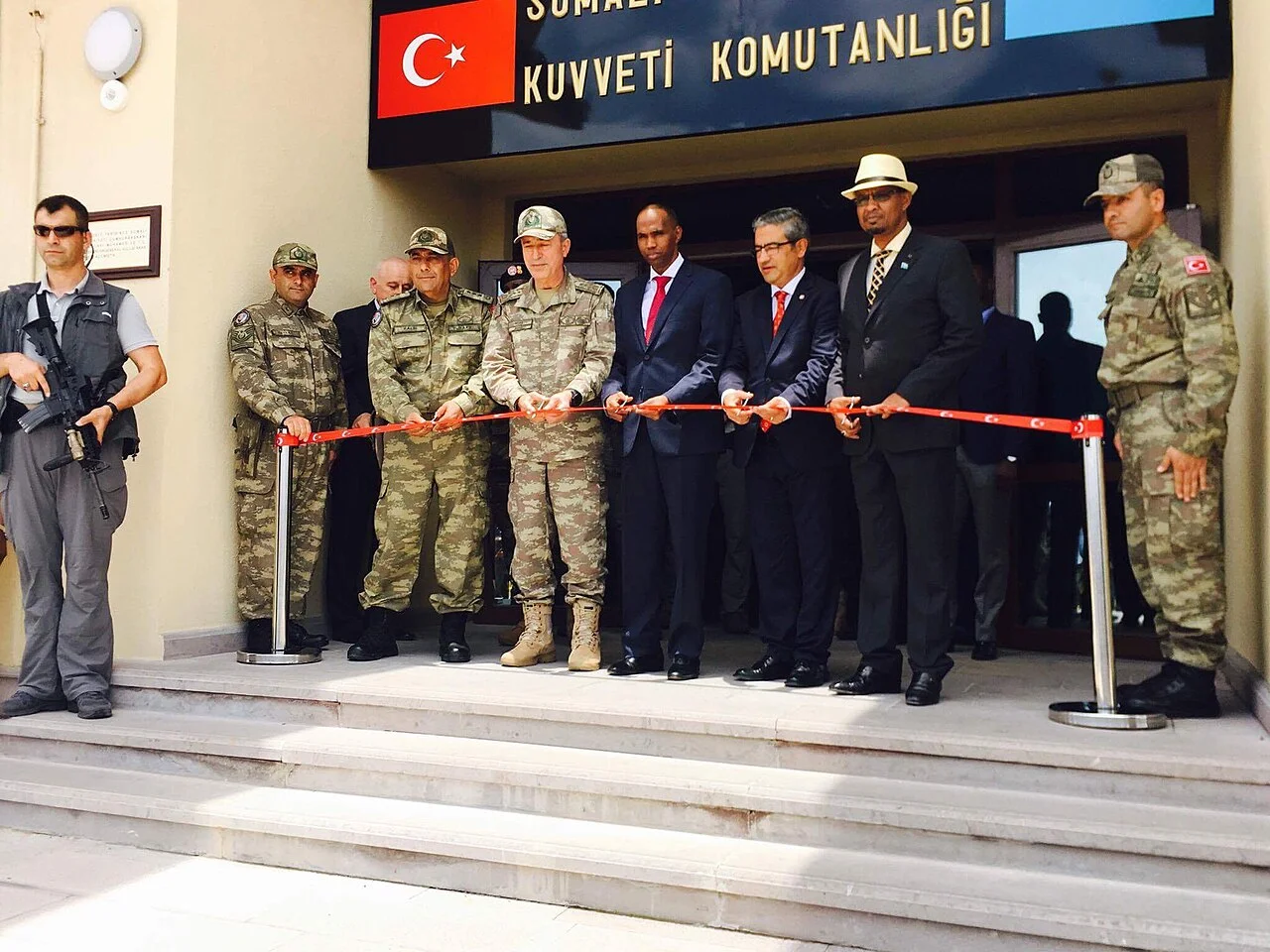
Türkiye’s defence relationship with Somalia is not an export relationship. Somalia has bought almost nothing from Turkish industry. What Ankara supplies — officer training at Camp TURKSOM, second-hand armour and MRAPs, a handful of helicopters, and a ten-year commitment to rebuild the Somali navy — moves mostly as transfer and treaty obligation, not as sale. What Türkiye takes in return is access: three offshore exploration blocks for Turkish Petroleum, a protected drilling site, a launch facility, and a standing military position on the Gulf of Aden. It is Türkiye’s largest overseas military commitment and one of its smallest defence markets, and those two facts are connected.
DEFENCETÜRKIYE DATA BOX
Governing instrument: Defence and Economic Cooperation Framework Agreement, signed Ankara, effective 8 February 2024
Duration: Ten years
Core Turkish obligation: build, train and equip the Somali navy
Turkish troop mandate: extended by parliament 21 July 2026, running to 27 July 2028
Main installation: Camp TURKSOM, Mogadishu, opened 30 September 2017
Energy track: TPAO–Somali Petroleum Authority exploration and production agreement, Istanbul, 18 July 2024, three offshore blocks
Known Turkish-origin equipment: BMC Kirpi MRAPs, M48A5T2 and M60 Patton tanks, three T129 ATAK helicopters, two naval utility helicopters
Disclosed contract values: none
What the February 2024 agreement actually commits each side to
The Defence and Economic Cooperation Framework Agreement was signed in Ankara by the two defence ministers and carries an effective date of 8 February 2024. Somalia’s Council of Ministers and parliament both endorsed it. The Somali federal government’s own cabinet portal lists it as a ten-year instrument whose purpose is to strengthen maritime security against piracy, illegal fishing and external threats, and to deepen economic cooperation in marine resources. On the Turkish side, the single operative commitment that appears consistently across official and press accounts is that Türkiye will build, train and equip the Somali navy.
What the agreement does not do is as important for anyone reading it as a procurement document. The full text has never been published by either government. The Somali cabinet page carries a summary, not the articles. The widely repeated claim that Türkiye receives 30 per cent of revenue from Somalia’s exclusive economic zone appears in press reporting and analysis, but it does not appear in the Somali government’s own published description of the agreement, and no Turkish official has confirmed it. It should be treated as reported, not as a term of the treaty.
That opacity is not only a foreign observer’s problem. When the Turkish parliament debated extending the troop mandate on 21 July 2026, CHP deputy Namık Tan objected that the motion “rests on an agreement whose contents we have still been unable to learn,” and DEM deputies said they had never been able to obtain troop figures. The motion passed with AKP and MHP votes, extending the deployment two years from 27 July 2026. More than two years after signature, the governing document of Türkiye’s largest overseas military commitment is not available to the legislature that renews the deployment under it.
WHY IT MATTERS
Somalia is the clearest working example of a model Türkiye uses nowhere else at this scale: capability supplied up front to a state that cannot pay for it, against commercial and strategic access taken on a separate track. For analysts reading Turkish expansion in Africa and the Red Sea, Somalia is the template that gets misread most often — as an arms market, which it is not, rather than as an access arrangement, which it is.
What Somalia actually operates that came from Türkiye
The inventory is smaller and older than the political profile of the relationship suggests. At least 20 BMC Kirpi mine-resistant vehicles were delivered in batches across 2020 and 2021, and further batches of Turkish-supplied armoured vehicles and heavy equipment were handed to the 21st Gorgor Brigade during a presidential visit in September 2026. On 14 February 2026 the landing ship TCG Sancaktar offloaded an estimated 10 to 15 M48 and M60 Patton main battle tanks at Mogadishu port — the M48s in the Turkish M48A5T2 standard, a 45-tonne vehicle with a 105 mm M68 gun and no modern active protection system. Three T129 ATAK attack helicopters and two utility helicopters for the navy were flown to Mogadishu, reported in mid-2025, which places Somalia in the small group of countries that now fly the T129 ATAK.
Read that list as a procurement analyst and one thing stands out: almost none of it is current Turkish industrial output sold at a price. The Pattons are American-origin vehicles drawn from a Turkish inventory of roughly 1,500 M48s, refurbished and transferred. The Kirpi is a genuine BMC product with a combat record established mainly in Ukraine, but the quantities are small and no value has been disclosed. The T129 is the one line item that represents modern Turkish industry, and three airframes is a rounding error against a programme whose export story is told in the Philippines and Nigeria. Somalia barely registers in Turkish defence export statistics, and that is not an accident of accounting — it is what the relationship is.
| Layer | What flows | How it is paid for | Counts as a Turkish export? |
|---|---|---|---|
| Training | Camp TURKSOM courses; commando training in Isparta | Turkish defence budget; no Somali payment disclosed | No |
| Equipment | M48/M60 Pattons, Kirpi MRAPs, T129 and utility helicopters | Mostly transfer from Turkish surplus; no values published | Largely no |
| Naval construction | Build, train and equip the Somali navy; Cadale training base | Treaty obligation under the 2024 framework | Not yet — no hulls contracted |
| Asset protection | Frigate rotations, drillship escort, tanks guarding sites | Turkish cost, protecting Turkish commercial interests | No |
Camp TURKSOM and the training pipeline
Camp TURKSOM opened in Mogadishu on 30 September 2017 at a ceremony led by Somali Prime Minister Hassan Ali Khaire and General Hulusi Akar, then chief of the Turkish General Staff. It covers roughly four square kilometres and is Türkiye’s largest overseas military installation. Turkish officials have said more than 10,000 Somali soldiers were planned to pass through it; reporting on actual throughput speaks of thousands of graduates, and one account puts current Turkish personnel at the camp above 300. Precise cumulative figures are not published, and claims that a third of the Somali National Army is Turkish-trained come from Turkish official statements rather than from audited Somali data.
The training has changed character since 2024. The Gorgor (“Eagle”) commando formation now runs a dual-track curriculum — instruction at TURKSOM in Mogadishu and specialist commando schooling at Isparta in Türkiye — covering heavy armour mechanics, tactical manoeuvre and maintenance of Turkish-supplied equipment. That is a deliberate shift from counter-insurgency skills toward conventional armoured manoeuvre, and it is what the Patton transfer was for. Türkiye is not only supplying a Somali unit; it is building a Somali unit in a Turkish doctrinal image, which is the part of the arrangement with the longest half-life. This is the same logic, taken further, that underlies the way Turkish arms sales across Africa begin in the classroom.
The naval commitment, and the ships that are actually there
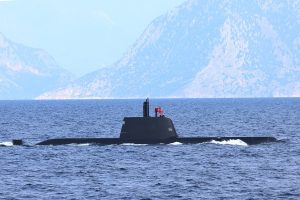
The navy clause is the heaviest obligation Türkiye has taken on, and the least advanced. A Somali naval training base was established near Cadale in early 2026. Turkish naval forces have donated patrol and amphibious craft since the Somali navy was re-formed, and ONUK MRTP-16 patrol boats of Turkish origin appear in Somali inventories. What has not happened is a contract for new hulls. There is no publicly reported order for Turkish-built patrol vessels or offshore patrol ships for Somalia, and no Turkish yard — Dearsan, which has built its export record on exactly this class of customer, included — has announced one.
What Türkiye does maintain is a rotating naval presence. On 28 October 2026 the Ministry of National Defence announced through spokesperson Rear Admiral Zeki Aktürk that the frigates TCG Gökçeada and TCG Yıldırım would begin transiting to Somalia on 30 October to resupply units in the region and conduct a watch handover. Earlier in 2026, a task group of TCG Sancaktar, TCG Gökova and TCG Bafra escorted the drillship Çağrı Bey, which reached Mogadishu on 9 April 2026 after a 53-day transit from Istanbul to drill the Curad-1 well some 372 km offshore. The ministry did not say whether the October supplies were destined for Somali forces or Turkish personnel.
The defence framework came first; the commercial access followed on separate instruments. Dates from the Somali cabinet portal, Daily Sabah, Turkish parliamentary records and the Turkish Ministry of National Defence.
What Türkiye takes instead of money
The economic half of the “defence and economic” framework runs on separate instruments. Türkiye and Somalia signed an intergovernmental hydrocarbons cooperation framework on 7 March 2024. On 18 July 2024 in Istanbul, Energy Minister Alparslan Bayraktar and Somali Petroleum and Mineral Resources Minister Abdirizak Omar Mohamed oversaw a Hydrocarbon Exploration and Production Agreement between TPAO and the Somali Petroleum Authority. Bayraktar said TPAO “will carry out exploration activities in three different blocks in the Somali maritime areas” — two roughly 50 km offshore and one about 100 km out, in water depths around 2,000 m. The seismic vessel Oruç Reis ran the 3D survey; the drillship followed. A separate onshore seismic agreement was signed in Ankara in April 2025.
This is the exchange that makes the relationship legible. It sits outside every normal route by which countries actually buy Turkish weapons, whether by cash contract, state credit or licensed production. Türkiye is not selling Somalia equipment and booking revenue. Türkiye is underwriting a security architecture — training, armour, a naval mandate, warships on station — in a country that cannot pay for it, while acquiring exploration rights in that country’s waters and then protecting its own drillship with its own frigates. Whether the exploration ever pays is unresolved: Curad-1 is a deep, technically demanding well and no commercial discovery has been announced. The terms are also contested, and because neither government has published the agreements, the disputes about what they contain cannot be settled from the public record.
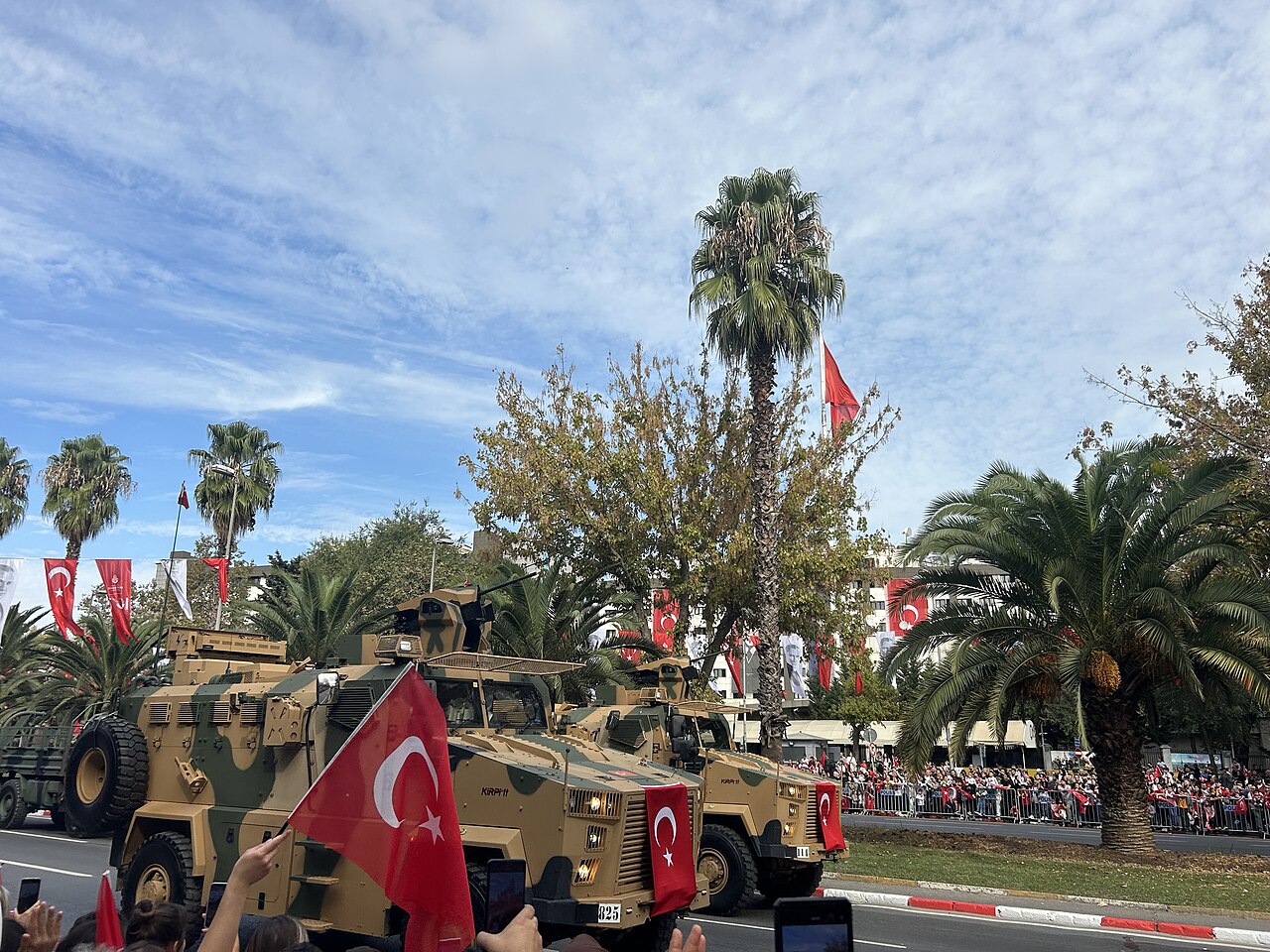
BMC Kirpi MRAPs, the one line of current Turkish industrial production delivered to Somalia in meaningful numbers — at least 20 vehicles across 2020 and 2021. Photo: DefenceTürkiye media library.
Why Somalia is not a reference customer for Turkish industry
This matters practically for anyone assessing Turkish defence exports. Somalia cannot be cited as evidence about Turkish products, in either direction. A Somali M60 says nothing about Turkish armour manufacturing, because the vehicle is an American design transferred from Turkish stocks. Somali satisfaction with Turkish training says little about Turkish systems, because the training largely precedes the systems. And the absence of large Turkish orders from Mogadishu is not a commercial failure — Somalia’s defence budget cannot support them, and the arrangement was never structured to require it.
The inverse error is more common in English-language coverage: treating Somalia as proof of a Turkish arms export surge in Africa. Türkiye’s genuine African export cases run on different mechanics — Nigeria’s move from purchases toward joint manufacturing, Morocco’s drone orders, Egypt’s MKE subsidiary. Somalia is the outlier in that set, not the archetype. Anyone building a picture of Turkish export performance from where Türkiye actually sits in arms exporter rankings will find Somalia contributes almost nothing to the number.
BUYER VIEW
For a government considering a comparable arrangement with Ankara, the Somali case shows what the model offers and what it costs. What you get: capability without a cash outlay, fast — a trained brigade, armour, rotary aviation and a naval mandate inside three years, with no competitive tender and no Western end-use approval chain.
What you give: resource or territorial access on a parallel instrument, negotiated bilaterally and not published. The Somali precedent is that the defence text and the energy text stay out of public view, and that the host legislature’s own oversight of the terms is limited.
What to check before signing: whether equipment arrives as surplus transfer or as new production, since sustainment economics differ sharply; whether the naval or industrial build-out has contracted hulls behind it or only treaty language; and whether the agreement constrains your own future regulatory and fiscal choices. This is open-source editorial analysis, not procurement advice.
What Türkiye does not supply: the fighter question
Somalia’s pursuit of combat aircraft is the clearest sign that this is a partnership, not a dependency. Since February 2026 there have been consistent reports that Somalia is negotiating to buy up to 24 JF-17 Block III fighters from Pakistan for about $900 million, with pilot training, logistics and weapons integration in the package. Reporting in April 2026 described the deal as finalised; reporting in October 2026 said neither government had confirmed a contract, and that the figures from February cannot be assumed to describe whatever is now on the table. Some accounts have suggested Saudi Arabia and Türkiye as possible financial backers, which is unconfirmed.
Treat the whole thing as reported and unconfirmed — no contract has been announced by either state. But the direction is informative. Türkiye has no fighter to offer Somalia; HÜRJET is a trainer and light combat aircraft still building its first export deliveries, and KAAN is years from any export. Somalia going to Islamabad for fast jets, potentially alongside Turkish money, fits the pattern of the Türkiye–Pakistan defence relationship rather than cutting against it. It also underlines a limit Ankara has run into elsewhere: Türkiye’s portfolio is deep in drones, armour, munitions and increasingly warships, and still thin at the top of the air domain. Envanter Medya’s Turkish-language file on the reported Somali JF-17 Block III negotiations with Pakistan tracks that story in detail.
Limitations and what is not public
Four gaps should qualify any assessment of this relationship. First, no contract values exist. Not for the tanks, the MRAPs, the helicopters, the training, or the naval commitment. Nothing in the Somali file can be priced. Second, the treaty texts are unpublished — the defence framework and the hydrocarbon agreements alike — so every claim about revenue shares, compensation clauses or basing rights rests on press reporting or leaks. Third, troop numbers are withheld, as Turkish opposition deputies noted in the July 2026 mandate debate. Fourth, the purpose of the February 2026 tank deployment is disputed in the sources themselves: Garowe Online reported the tanks were positioned to protect Turkish facilities near Warshiikh, roughly 60 km north of Mogadishu, while Somali Today described them as part of the Gorgor training expansion. Neither the Somali defence ministry nor the Turkish embassy issued a statement resolving it.
There is also a domestic Somali dimension that bears on durability. Turkish engagement has drawn criticism inside Somalia over the opacity of the oil terms, and the relationship is bound up with federal–regional friction and with Ankara’s position on Somaliland. None of that is a defence-industrial question, but it is the political ground the agreements sit on, and a ten-year instrument is only as durable as that ground.
What comes next
Three things are worth watching, and only one of them is a weapons story. The first is whether Curad-1 produces a commercial discovery; a strike would convert the access Türkiye has taken into revenue and would almost certainly deepen the security commitment protecting it, while a dry hole would leave Ankara carrying the military costs without the return. The second is whether the naval clause finally generates contracted hulls — a Somali order at a Turkish yard would be the first time this relationship produced a conventional export, and its absence after nearly three years is itself data. The third is the mandate renewal due before 27 July 2028, which will show whether the arrangement survives Turkish parliamentary scrutiny in a form that is any more transparent than today.
For readers tracking the wider Turkish position in the Horn, the launch facility near Mogadishu sits in a separate programme and is covered in our piece on Türkiye’s space programme and its Somali launch site. Envanter Medya maintains a Turkish-language profile of Somalia’s defence sector and military procurement that catalogues the Somali inventory in more technical detail than this analysis attempts.
FAQ
Does Türkiye have a military base in Somalia?
Yes. Camp TURKSOM in Mogadishu opened on 30 September 2017 and is Türkiye’s largest overseas military installation, covering roughly four square kilometres. It functions primarily as a training facility for the Somali National Army. Turkish personnel there have been reported at more than 300, though official figures are not published.
What did Türkiye and Somalia sign in 2024?
A Defence and Economic Cooperation Framework Agreement with an effective date of 8 February 2024, running ten years, under which Türkiye undertook to build, train and equip the Somali navy. Separately, an intergovernmental hydrocarbons framework was signed on 7 March 2024 and a TPAO–Somali Petroleum Authority exploration and production agreement for three offshore blocks on 18 July 2024.
Does Türkiye really get 30 per cent of Somalia’s offshore revenue?
Unconfirmed. The figure is widely repeated in analysis and press reporting, but it does not appear in the Somali government’s own published summary of the framework agreement, no Turkish official has confirmed it, and the treaty text is not public. It should be cited as a reported claim, not as a term of the agreement.
What Turkish weapons does Somalia operate?
At least 20 BMC Kirpi MRAPs delivered in 2020–2021 with further batches since, an estimated 10 to 15 M48A5T2 and M60 Patton tanks landed in February 2026, three T129 ATAK attack helicopters and two naval utility helicopters, plus ONUK MRTP-16 patrol boats. Most of the armour is transferred Turkish surplus of American origin rather than new Turkish production.
How long can Turkish troops stay in Somalia?
The Turkish Grand National Assembly extended the deployment mandate on 21 July 2026 for two years, running to 27 July 2028. The motion lets the president set the size, scope, timing and rules of the deployment, and authorises operations on land and in Somali maritime areas.
Is Somalia buying Turkish fighter jets?
No. Somalia has been reported since February 2026 to be negotiating for up to 24 Pakistani JF-17 Block III fighters at about $900 million, with no confirmed contract as of late October 2026. Türkiye does not currently offer an exportable fighter; HÜRJET is an advanced trainer and light combat aircraft, and KAAN is not available for export.
Is Somalia a major market for Turkish defence companies?
No. Despite being Türkiye’s largest overseas military commitment, Somalia contributes very little to Turkish defence export revenue. No contract values have been disclosed for any Somali transfer, and the bulk of the equipment moved as surplus transfer rather than commercial sale.
Sources
- Federal Government of Somalia, Cabinet portal: Framework Agreement on Defence and Economic Cooperation between Türkiye and Somalia
- Türkiye Today, 21 July 2026: Turkish parliament votes to extend Somalia military mission by two years
- Daily Sabah, 18 July 2024: Türkiye, Somalia sign deal on cooperation in hydrocarbons field
- Military Africa, May 2026: Turkey provides tanks and training to Somalia’s elite Gorgor Commandos
- Military Africa, May 2026: Turkey secures offshore drilling in Somalia
- Hiiraan Online, 29 October 2026: Turkey to send two warships carrying military equipment and supplies to Somalia
- The Defense Post, 12 October 2026: Somalia nears JF-17 jet purchase from Pakistan