ASELSAN Signs €523 Million Air and Missile Defence Contract With SSB

ASELSAN signed a new contract worth 523 million euros with Türkiye’s Presidency of Defence Industries (SSB) on October 26 for the development of what the company’s regulatory disclosure describes only as a “new-generation air and missile defense system.” The filing, posted on the Public Disclosure Platform (KAP) and reported by Turkish financial media including Yeni Şafak, names no specific product, discloses no delivery schedule, and gives no detail beyond the euro figure and the counterparty.
That reticence is now routine. ASELSAN has disclosed a string of large SSB air-defense contracts in rapid succession this autumn, and Monday’s filing is already the sixth of its kind since late September. Taken together, they outline one of the heaviest concentrations of domestic air-defense spending Türkiye’s industry has disclosed in a single stretch:
- September 23: €1.234 billion with Roketsan for air-defense subcomponents
- October 1: just over €1.0 billion for additional long-range air-defense serial production
- October 2: €488.5 million for an air-defense export to an undisclosed foreign end user
- October 5: €2.46 billion for “hybrid air defense systems” supplied to SSB
- October 7: $195 million for radar systems
- October 26: €523 million for the new-generation air and missile defense system
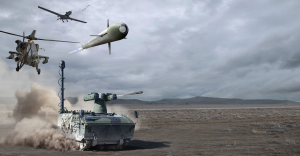
None of these filings name a specific SİPER, HİSAR or GÜRZ variant, and ASELSAN has not linked Monday’s contract explicitly to Çelik Kubbe, the layered national air-defense architecture that SİPER, HİSAR and KORKUT are built to feed. But the pattern fits the architecture’s logic: SSB has spent the past several years layering short-range gun systems, medium-range missiles and long-range interceptors under one command structure, and ASELSAN sits inside nearly every layer, supplying radars, command-and-control software, electro-optics or the missiles themselves.
Why the vagueness
Turkish defense firms routinely disclose contract values to meet Borsa İstanbul reporting requirements while withholding the system name, customer, or delivery timeline on national-security grounds. That pattern holds here: Monday’s KAP filing discloses the euro figure because ASELSAN is a listed company obligated to inform shareholders of material contracts, not because SSB has chosen to publicize what is being built. Readers should treat “new-generation air and missile defense system” as the company’s own description, not an independent confirmation of a new program name.
What is clear is the financial scale. The six SSB-linked contracts disclosed since September 23 total roughly €5.7 billion, plus the separate $195 million radar deal — a run rate that, if it continues, would make the final quarter of 2026 one of ASELSAN’s largest for domestic air-defense bookings, and a meaningful slice of the $15 billion in new defence contracts Türkiye’s industry has booked so far this year. ASELSAN’s management has said repeatedly this year that it is trying to compress product development cycles and scale up manufacturing lines to keep pace with SSB’s order flow, and Monday’s contract adds to a backlog that will keep factories in Ankara running for years regardless of what the specific system turns out to be.
Context: a buildup with an external trigger
The spending comes against a backdrop that gives it added weight for an international audience. NATO air defenses intercepted three Iranian ballistic missiles over Turkish territory in March 2026, prompting the alliance to reinforce Patriot coverage in southern Türkiye. SİPER, the indigenous long-range interceptor at the top of the Çelik Kubbe stack, completed a live-fire qualification test at Sinop in late October with senior military leadership in attendance, though as DefenceTürkiye has reported, SİPER’s own ballistic-missile-defense role still has real limits. Against that backdrop, a further half-billion-euro commitment to an unnamed “next-generation” layer reads less as a one-off deal than as continued execution of a program Ankara has decided it cannot afford to slow down.
For export customers watching ASELSAN’s catalogue — Poland, Qatar and other Gulf states among them, and the buyer behind ASELSAN’s recent $442.5 million radar and counter-drone export deal — the SSB contracts are also a proxy indicator. Systems first developed and fielded domestically under SSB funding, such as KORKUT and HİSAR before it, have historically migrated into ASELSAN’s export line within a few years once initial production runs are established. Monday’s contract gives no indication of which, if any, element of this new work will eventually reach that stage.
ASELSAN has not issued a separate English-language statement on the October 26 contract beyond the KAP filing, and SSB has not issued its own release. DefenceTürkiye will update this report if either releases further detail on the system involved or its delivery timeline.