ASELSAN Signs $442.5 Million Radar, Counter-Drone Export Deal

ASELSAN has signed a $442.5 million export contract covering radar, counter-drone and command-and-control systems for an international customer, the company disclosed to Borsa İstanbul’s Public Disclosure Platform (KAP) on October 23. As with almost every Turkish defence export filing, the buyer’s identity was not released.
The disclosure describes the deal only in broad terms: a direct sales contract for radar systems, UAV countermeasure (counter-drone) systems and command-and-control systems, with a total value of $442.5 million. ASELSAN said the contract would positively affect its 2026 turnover, the standard language Turkish listed defence firms use to flag a material export win without giving delivery dates, unit numbers or the customer’s name.
A Month of Back-to-Back Export Filings
The $442.5 million deal is the fourth export contract ASELSAN has disclosed in October alone. On October 2, the company announced a €488.5 million air defense export contract read by analysts as a Steel Dome-architecture package built around layered gun, missile and radar systems. That was followed on October 6 by a $157.9 million contract covering electronic warfare, electro-optics, reconnaissance and communications equipment, and on October 8 by a $125 million sale of weapons and electronic warfare systems to a separate foreign end user.
Taken together, the four filings put well over $1.3 billion of new export business on ASELSAN’s books in three weeks, on top of a backlog the company has already described as its largest ever. ASELSAN’s foreign order book stood above $1.4 billion for the first nine months of 2026 even before this run of October contracts, and the company has said it wants exports to make up half its revenue by 2030, a target it has tied partly to a push into new markets such as Japan.
Why Radar and Counter-Drone Systems Are Selling
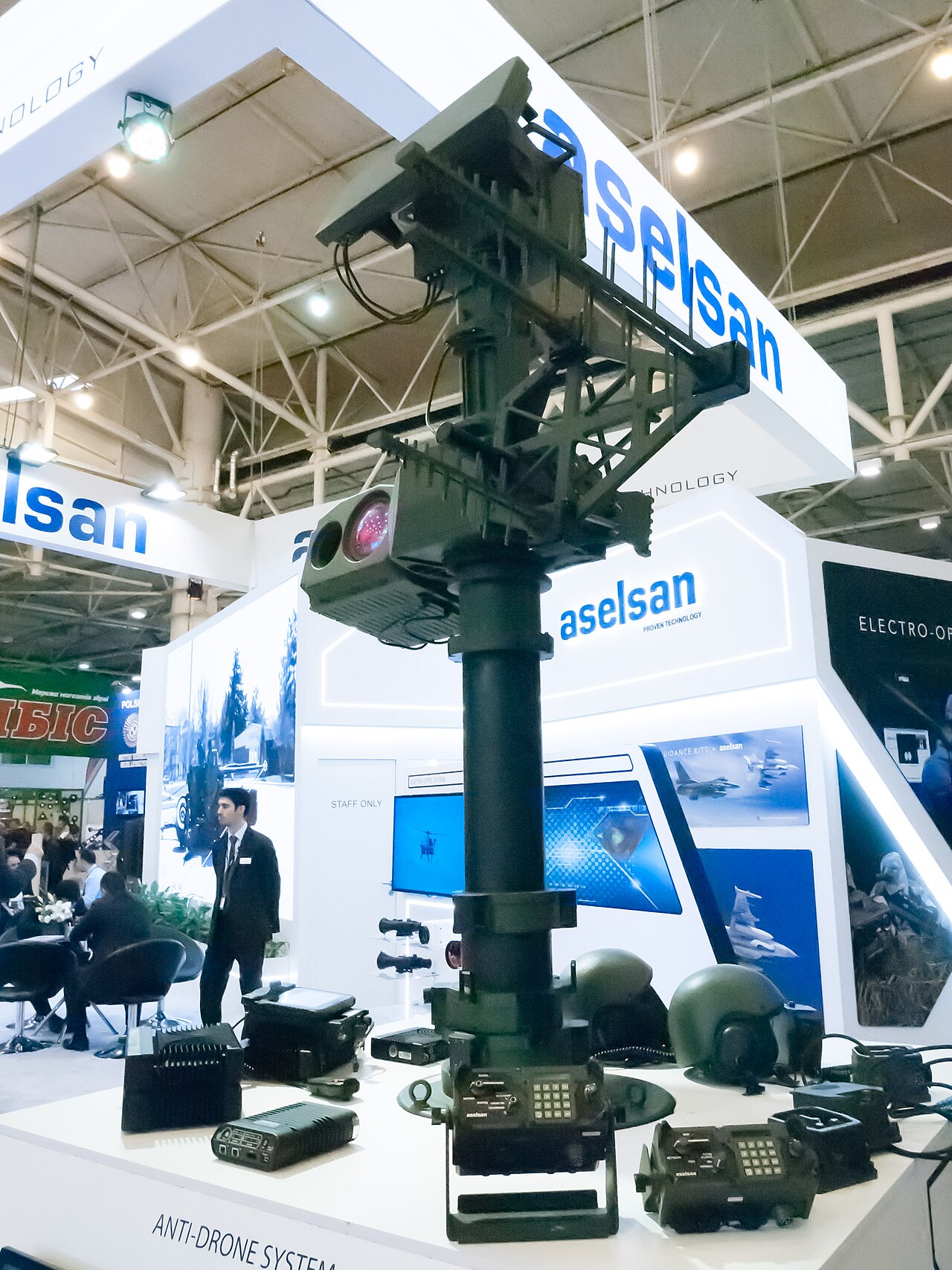
The specific combination named in this filing, radar, counter-UAV and command-and-control, tracks a demand pattern that has become familiar across export markets since 2022: militaries buying systems to detect and defeat cheap, mass-produced drones, then tying those sensors into a command layer that can cue a response. ASELSAN’s own counter-drone catalogue spans several tiers, from the jamming-based İHTAR system that detects and disrupts small UAVs without firing a shot, to gun- and missile-based interceptors for drones that jamming alone cannot stop. Whether this contract draws on any specific named system was not disclosed, and Turkish outlets reporting the KAP filing did not go beyond the official wording.
Radar sales carry their own logic. ASELSAN has built an export track record in ground-based and naval radar separate from its counter-drone business, including a $195 million radar contract with Türkiye’s own SSB earlier in the same month, and its surveillance and fire-control radars have become a selling point in markets that cannot access comparable Western systems quickly or affordably.
The Usual Silence on the Buyer
Türkiye publishes no annual arms export report, and confidentiality clauses in the underlying contracts are the main reason buyers go unnamed in KAP filings. Capital Markets Board rules require ASELSAN to disclose information that could move its share price, not the customer’s identity, and foreign governments routinely insist on that silence as a condition of the sale. The practice leaves outside observers able to track the pace and scale of Türkiye’s defence exports in granular detail, deal by deal, while the actual map of who is buying stays largely private unless a customer government chooses to confirm a purchase itself.
For a non-Turkish reader, the figure matters less as a single transaction than as a data point in a broader trend: Turkish defence and aerospace exports rose 15.6% year-on-year through the first nine months of 2026 to roughly $6.9 billion, according to SSB figures reported earlier this month, and ASELSAN’s radar and counter-drone lines are increasingly part of that growth rather than a side business to its domestic Steel Dome and Turkish Armed Forces work.
Sources
- ASELSAN KAP disclosure, October 23, 2026, as reported by Ekonomist
- Borsamatik.com.tr, October 23, 2026