Turkish Defence Delivery Times: How Fast Is Türkiye Really?

Türkiye does not deliver weapons in weeks. On the export contracts where both dates are public, the gap between signature and the first hardware handed over runs from about five months at the fast end to two or three years at the slow end, with most large deals landing between seven and seventeen months. That is quicker than a Patriot battery or an F-35 order placed today, and slower than South Korea managed for Poland in 2022. The more useful finding for a procurement officer is what the gap depends on: Turkish primes ship early units off a line that is already running for their own armed forces, which is why first deliveries arrive fast and why the advantage shrinks as the order book fills.
DEFENCETÜRKIYE DATA BOX
Subject: Contract-to-first-delivery intervals on Turkish defence export contracts
Fastest documented case: Morocco, 13 Bayraktar TB2 — about five months (reported, not officially confirmed)
Slowest documented case: ASELSAN ARSUS sensor sets for Poland — signed September 2026, deliveries stated for 2028–2029
Typical large-contract interval: roughly 7–17 months to first delivery
Key constraint: order backlog. ASELSAN’s book stood at $23.2bn at mid-2026 against 2025 revenue of about $4.11bn
Buyer-stated reason for choosing Türkiye on speed: none found in official customer statements
Data current to: 21 October 2026
What the public record actually shows
Delivery speed is the most repeated claim about Turkish defence exports and the least measured. The claim is usually made by analysts rather than by buyers, and it is almost never attached to a date pair. So here are the date pairs that exist in the public record, for deals where both the signature and the first physical handover have been reported.
| Contract | Signed | First delivery | Interval |
|---|---|---|---|
| Morocco — 13 Bayraktar TB2, reported at about $70m | April 2021 (reported) | September 2021 (reported) | ~5 months |
| Romania — 1,059 Otokar COBRA II, about €857m excl. VAT | November 2024 | June 2025 | ~7 months |
| Undisclosed customer — Otokar wheeled vehicles, $1.47bn | 1 October 2026 | 2027 (stated) | ~15 months or more |
| Poland — 24 Bayraktar TB2 in four systems, about $270m | May 2021 | October 2022 | ~17 months |
| Poland — 24 ASELSAN ARSUS sensor sets for AMZ Kutno | 8 September 2026 | 2028–2029 (stated) | ~24–39 months |
| Comparator: Poland — K2 tanks and K9 howitzers, South Korea | July–August 2022 | December 2022 | ~4–5 months |
Compiled by DefenceTürkiye from company disclosures, customer-government announcements and contemporary reporting. The Moroccan dates and value are from regional reporting; neither Baykar nor the Moroccan government has confirmed the terms.
Two things stand out. The intervals are not uniform, and they are not short in the way the sales pitch implies. A buyer signing a serious Turkish contract today should plan on a year to eighteen months before anything arrives, and longer if the item is a sensor or an air-defence component rather than a vehicle or an airframe.
Why the fast cases were fast
The five-month and seven-month cases have the same mechanism behind them, and it is not a manufacturing secret. In both, the customer was buying something Türkiye’s own forces were already taking delivery of, from a line that did not have to be started.
Morocco’s TB2s came out of a Baykar production run that was at that point building aircraft for the Turkish Armed Forces, the Gendarmerie and a growing export list. Romania’s first COBRA IIs were built at Otokar’s Sakarya plant and trucked to Mediaş — fourteen vehicles in June 2025, seven months after signature — while the Romanian line at the former Automecanica works was still being stood up. Of the 1,059 vehicles ordered, a first tranche of about 278 was allocated to Turkish production precisely so that deliveries could begin before the local plant existed. By late 2026, Romanian reporting and Otokar statements put cumulative deliveries at roughly 290 to 300 vehicles, with 216 planned for 2026 alone. Counts vary slightly between sources.
That is the real Turkish delivery model, and it is worth naming plainly: ship from the running line, localise behind it. It compresses the number the customer’s political timetable actually cares about — time to first delivery — without requiring any unusual industrial capacity. Our page on where Turkish defence companies build outside Türkiye covers the second half of that model in detail.
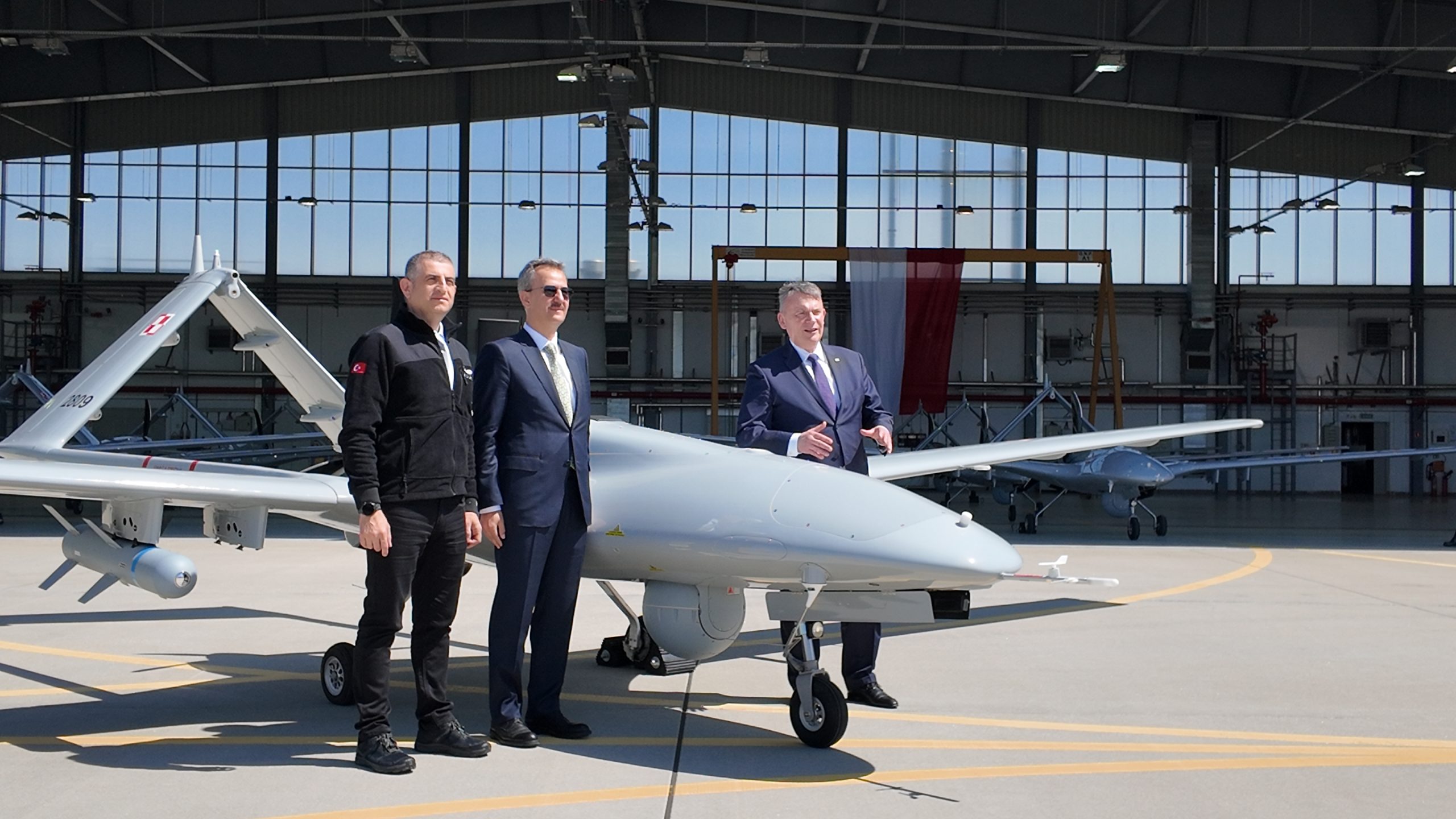
It also explains the exception. Poland’s TB2 order took seventeen months despite being an urgent-operational-need purchase signed without a tender, because it was not a straight repeat of a Turkish configuration: it bundled four complete systems, ground control stations, MAM-L and MAM-C munitions, two simulators, spares and training for 192 personnel. Training and infrastructure, not airframes, set that schedule. The full 24-aircraft order then ran to a final handover on 16 May 2024, three years after signature.
The number that changes the answer
Here is the part of the delivery question that almost no English-language coverage touches. Whatever Turkish industry’s throughput looks like, the queue in front of a new customer is now long, because Turkish primes have been winning work faster than they can bill it.
ASELSAN is the clearest case because it discloses. The company closed 2025 with an order backlog of $20.4bn, up 46 per cent year on year, on revenue of TL 180.4bn — about $4.11bn — and new order intake of $9.6bn. Six months later, at the half-year, the backlog had reached $23.2bn, up 45 per cent, after $4.9bn of new contracts in the first half alone.
Put those two disclosures side by side and the arithmetic is uncomfortable. In six months ASELSAN booked more new work ($4.9bn) than it billed in the whole of 2025 ($4.11bn). Its order book is now equivalent to roughly five and a half years of 2025 revenue. A customer signing an ASELSAN export contract in late 2026 is not joining a short line.
Türkiye’s procurement authority has put a figure on the wider picture. Speaking in Bursa on 18 October 2026, Presidency of Defence Industries (SSB) head Haluk Görgün said Turkish defence firms had signed roughly $15bn of new contracts during 2026 and expected about $20bn by year-end, and that the five largest contractors had placed more than $20bn of orders with over 16,000 domestic suppliers in three years, of which more than $13.4bn was still outstanding. We covered those numbers when they were announced, in Türkiye’s $15 billion contract year. Read as a delivery indicator rather than a growth indicator, $13.4bn of unfilled domestic subcontractor orders is a measure of how much work is queued ahead of anything a new foreign customer signs.
How the Turkish queue compares with the Western one
None of this means Turkish lead times are bad. It means they should be compared with the alternatives a buyer actually has, which in 2026 are worse.
Ground-based air defence is the extreme case. A Foreign Policy Research Institute analysis published in May 2026 put the PAC-3 MSE interceptor’s production lead time at 24 months and its solid rocket motor’s at 30, noted that Lockheed Martin delivered 620 interceptors in 2025, and calculated that the foreign order book of more than 4,300 rounds amounts to roughly seven years of output at that rate. A January 2026 framework aims to lift production to 2,000 missiles a year by 2030. Those are interceptors, not batteries; a battery is a longer wait again.
Combat aircraft are not much better. Envanter Medya’s Turkish-language estimate of how long a new F-35 order would take to reach a customer today puts first delivery three to five years out and full operational capability at five to seven, using Germany’s 2022 signature and around-2029 completion as the worked example. Treat that as an estimate rather than a programme commitment, but the order of magnitude is not controversial.
Against those numbers, a Turkish seven-to-seventeen-month interval on vehicles and drones is a genuine commercial argument, and a two-to-three-year interval on sensors is no worse than normal. What has changed is that the gap is narrowing from the Turkish side. ASELSAN’s 2028–2029 delivery window on a September 2026 Polish contract is the kind of schedule Western suppliers were criticised for in 2022.
And Türkiye is not the fastest supplier in this market. South Korea delivered ten K2 tanks and 24 K9 howitzers to Gdynia in early December 2022, four to five months after Poland signed, using the same mechanism — diverting hardware from a running domestic line. Whatever Turkish industry does on schedule, Hanwha and Hyundai Rotem did it faster, at greater tonnage, in the same market, for the same customer.
What buyers actually say
This is the part that should temper the whole narrative. We looked for a customer government that has publicly stated it chose Turkish equipment because of delivery time. We did not find one.
Delivery speed appears in analyst commentary, in trade coverage and in manufacturer marketing. It does not appear in the procurement statements of the ministries that signed. What those sources do cite, repeatedly, is availability without political conditions, price per capability, and local production or technology transfer — the three arguments set out in our analysis of why countries buy Turkish drones and in the parallel piece on Turkish armoured vehicles. Speed is best understood as a consequence of those choices rather than a selling point in its own right: a supplier that does not require an export-licence review in a third capital can start building sooner.
WHY IT MATTERS
Delivery time is the variable that decides whether a capability arrives inside a government’s term of office, and it is the one most often asserted without evidence in coverage of Turkish exports. The measurable record is more modest than the reputation and more useful than it: Turkish first deliveries are quick when the item is already in Turkish service, and ordinary when it is not. For procurement staff comparing bids, that distinction is worth more than any headline interval, because it is predictive.
Where the model is under strain
Three pressures are working against Turkish lead times at once, and all three are visible in open sources.
The first is the order book itself, described above. The second is the shift from selling finished hardware to selling local production, which lengthens the path to volume even while it shortens the path to the first vehicle. Romania’s contract is the template: 278 vehicles built in Türkiye, then more than 780 produced at Mediaş over five years. First delivery in seven months, full delivery across half a decade. Buyers who read only the first number will be surprised by the second.
The third is the mix. Türkiye’s growth is increasingly in air defence, electronic warfare and naval systems rather than in tactical drones and 4×4s. Those are integration-heavy products with qualification programmes, and they behave like Western products on schedule because the physics and the test regimes are the same. Our page on Turkish air defence exports tracks that shift in the customer list.
There is a countervailing factor, and it is real: capacity. Turkish primes have been adding plant and suppliers at a rate that few mid-sized exporters match, which is the subject of our assessment of how much Türkiye’s defence industry can actually build. Whether that investment lands ahead of the backlog is the open question of the next three years, and it is answerable only with delivery data, not with announcements.
BUYER VIEW
Ask for the production-slot date, not the delivery clause. Contracts state a delivery year; what determines it is when your units enter the build schedule. On a backlog of ASELSAN’s current size that distinction is months to years.
Check whether what you are buying is in Turkish service. If it is, early units can come off the existing line and the short intervals in the table above are achievable. If it is a new configuration, assume Western-normal timelines.
Separate first delivery from full delivery. Poland received its first TB2s 17 months after signature and its last 36 months after. Romania will take five years to complete a contract that began delivering in seven months.
Price the local-production trade-off explicitly. A domestic assembly line is usually worth more politically than a faster handover, but it is a schedule cost, not a schedule saving.
Note the conditions precedent. Otokar’s October 2026 disclosure makes the contract effective only after official approvals, letters of guarantee totalling about $441.6m and an advance payment. The delivery clock on a Turkish export contract typically starts at that point, not at signature.
This is open-source editorial analysis for general readers. DefenceTürkiye does not advise governments or companies on procurement.
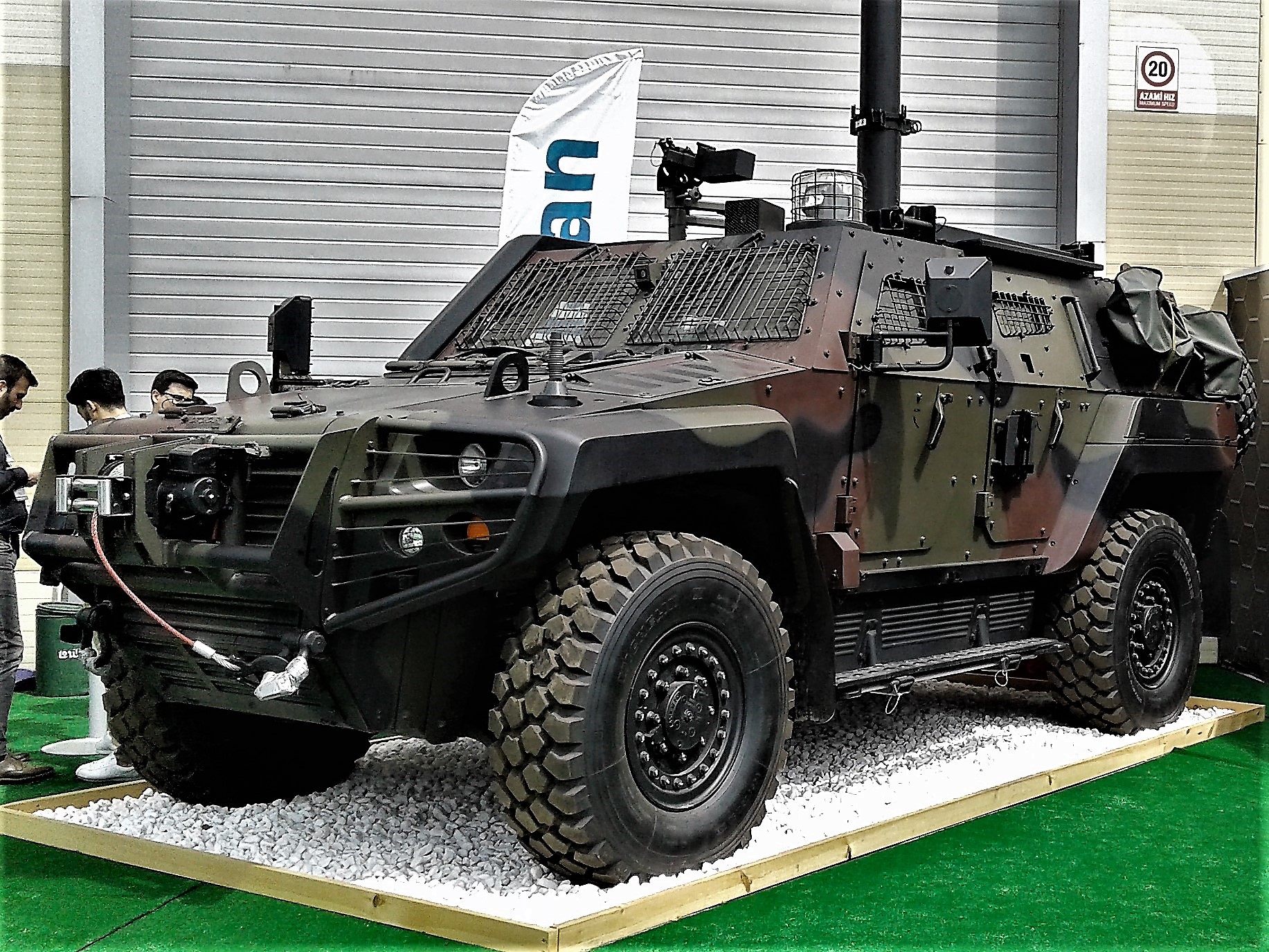
An Otokar COBRA II at IDEF 2019 in Istanbul. Romania’s order for 1,059 of the type began delivering seven months after signature, from Otokar’s Turkish line, while the Mediaş plant was still being prepared. Photo: CeeGee, CC BY-SA 4.0, via Wikimedia Commons.
What comes next
The next test of the delivery argument is already dated. Otokar’s $1.47bn contract, signed on 1 October 2026 with an undisclosed customer, states deliveries beginning in 2027 and running in batches over three years inside a seven-year contract. If the first batch ships in early 2027, the sequencing model has survived an order roughly 70 per cent larger by value than the Romanian one. If it slips to late 2027, the backlog argument in this piece is the better explanation.
The second test is ASELSAN’s ARSUS deliveries to Poland in 2028–2029, which will be the first chance to see whether a Turkish prime holds a multi-year sensor schedule inside an EU customer’s own programme. Our country file on Türkiye–Poland defence cooperation tracks that contract and the Kleszcz vehicle programme it feeds.
The third is structural, and it will not produce a headline: whether Turkish primes begin publishing delivery performance the way they publish order intake. At present the sector discloses what it has won and very little about what it has handed over. Until that changes, the honest answer to “how fast does Türkiye deliver?” has to be assembled from customer-government announcements one contract at a time, which is what the table above does.
FAQ
How long does it take to receive Turkish weapons after signing a contract?
On publicly documented export contracts, about five to seventeen months to first delivery for drones and armoured vehicles, and two to three years for sensor and air-defence components. Full delivery of a large order typically runs three to five years. Intervals are shortest when the equipment is already in Turkish service.
Is Türkiye faster than Western suppliers?
On current evidence, yes for vehicles and tactical drones, and roughly comparable for complex sensors. An F-35 ordered today is estimated to arrive in three to five years, and the foreign order book for PAC-3 MSE interceptors equates to about seven years of 2025 output. Turkish intervals are shorter than both, though the gap is narrowing.
Is Türkiye the fastest defence supplier?
No. South Korea delivered K2 tanks and K9 howitzers to Poland four to five months after contract in 2022, using the same method of diverting from a running domestic line. Turkish intervals on comparable deals have been longer.
Why are Turkish first deliveries so quick?
Because early units generally come off production lines already running for the Turkish Armed Forces, rather than from a line started for the customer. That is a sequencing advantage, not a manufacturing-rate advantage, and it disappears when the customer wants a new configuration.
Has any country said it chose Turkish equipment because of delivery speed?
We have not found a customer government that has stated this publicly. Delivery speed is cited by analysts and in trade coverage. The reasons buyers themselves give are availability without political conditionality, cost, and local production or technology transfer.
What is ASELSAN’s order backlog and why does it matter to a buyer?
$23.2bn at mid-2026, up 45 per cent year on year, against 2025 revenue of about $4.11bn — roughly five and a half years of billings. The comparison is approximate, because the backlog is a company-stated dollar figure and includes long-tail support work, but it indicates how much committed work sits ahead of a new contract.
Do Turkish contracts start the delivery clock at signature?
Often not. Otokar’s October 2026 disclosure makes the contract effective only after official approvals, letters of guarantee of about $441.6m and an advance payment. Buyers should establish which date the schedule runs from.
Does local production make delivery faster or slower?
Faster to the first unit, slower to the last. Romania received its first COBRA IIs from Türkiye within seven months, but more than 780 of the 1,059 vehicles are scheduled for production at Mediaş over five years.
Sources
- ASELSAN 2025 results as reported by Breaking Defense, 25 February 2026 (revenue TL 180.4bn / $4.11bn, backlog $20.4bn, order intake $9.6bn, export contracts over $2bn).
- ASELSAN first-half 2026 results as reported by TurDef (backlog $23.2bn, new orders $4.9bn, revenue TL 88.5bn), and in Envanter Medya’s Turkish-language account of the same half-year disclosure.
- Otokar’s $1,472,080,360 export contract disclosure of 1 October 2026, reported by Hürriyet Daily News.
- Start of Romanian COBRA II deliveries, June 2025, and the Mediaş production split reported by C4Defence.
- Poland’s May 2021 Bayraktar TB2 contract, Defense News, and the final handover of 16 May 2024, Defence Industry Europe.
- First South Korean K2 and K9 consignment at Gdynia, December 2022, Polish Press Agency (PAP).
- PAC-3 MSE production lead times and foreign backlog, Foreign Policy Research Institute, May 2026.
- SSB President Haluk Görgün’s remarks in Bursa, 18 October 2026, reported by Anadolu Agency and Daily Sabah; see our own report at Türkiye’s $15 billion contract year.
- Moroccan TB2 order and delivery dates are from regional reporting and are not officially confirmed by Baykar or the Moroccan government.