Can Türkiye Shoot Down a Ballistic Missile? SİPER’s Limits


Not on its own, and not yet. Türkiye can shoot down aircraft, drones and cruise missiles with systems it builds itself. It cannot yet shoot down a ballistic missile with a Turkish-made interceptor. The proof is recent and it is not theoretical: between 4 and 30 March 2026, four ballistic missiles fired from Iran were destroyed over or near Turkish territory, and every one of those intercepts was made by NATO-operated systems, not by Turkish ones. The anti-ballistic layer of Türkiye’s Çelik Kubbe (“Steel Dome”) architecture — the SİPER-A and SİPER-4 interceptors announced in May 2026 — is in development. Nothing in it has been fielded.
That gap is the single most important thing a foreign procurement officer, a defence attaché or an investor should understand about Turkish air defence in 2026. Everything else about the programme — the contract values, the export interest, the EFES demonstration — sits on top of it.
DEFENCETÜRKIYE DATA BOX
| Architecture | Çelik Kubbe (Steel Dome), approved by the Defence Industry Executive Committee on 6 August 2024 |
| Prime contractors | ASELSAN (sensors, command and control, guns, lasers), ROKETSAN (interceptors), HAVELSAN (software), TÜBİTAK SAGE (design) |
| Fielded against | Drones, helicopters, aircraft, cruise missiles |
| Fielded against ballistic missiles | Nothing, as of October 2026 |
| Anti-ballistic programmes | SİPER Blok-3 (in development), SİPER-A (lower tier, announced May 2026), SİPER-4 (upper tier, announced May 2026) |
| Who covers the gap today | NATO — three allied Patriot batteries in Türkiye plus the AN/TPY-2 radar at Kürecik |
| Announced funding | About $6.5bn in contracts signed November 2025; a further $24bn announced by President Erdoğan in July 2026 |
| Export status | Short- and medium-range layers exported; no confirmed export of the long-range layer |
| Current milestone | ASELSAN’s €2.46bn hybrid air defence contract with the SSB, disclosed 5 October 2026 |
What happened in March 2026, and why it answers the question
On 28 February 2026 the United States and Israel opened Operation Epic Fury against Iran’s nuclear and missile infrastructure. Türkiye was not a participant. It became a transit corridor anyway.
On 4 March a ballistic missile launched from Iran crossed Iraq and Syria on a track towards Türkiye. NATO air and missile defences in Türkiye and the Eastern Mediterranean destroyed it, and interceptor debris came down in the Dörtyol district of Hatay. Open-source video analysis pointed to an RIM-161 Standard Missile 3 fired by a US Navy Arleigh Burke-class destroyer; Spain said its Patriot battery in Türkiye assisted. Neither attribution has been officially confirmed. A second missile was downed over Gaziantep on 9 March. A third was intercepted near İncirlik Air Base on 13 March, and on 30 March the Ministry of National Defence confirmed a fourth. There were no casualties.
Reuters, the Wall Street Journal and Anadolu Agency reported the individual incidents; NATO and Turkish statements confirmed the interceptions. What none of them record is a Turkish-built interceptor firing at any of the four. The missiles were detected with help from the AN/TPY-2 radar at Kürecik, outside Malatya, which has fed NATO’s integrated air and missile defence architecture since 2012, and they were engaged by allied systems.
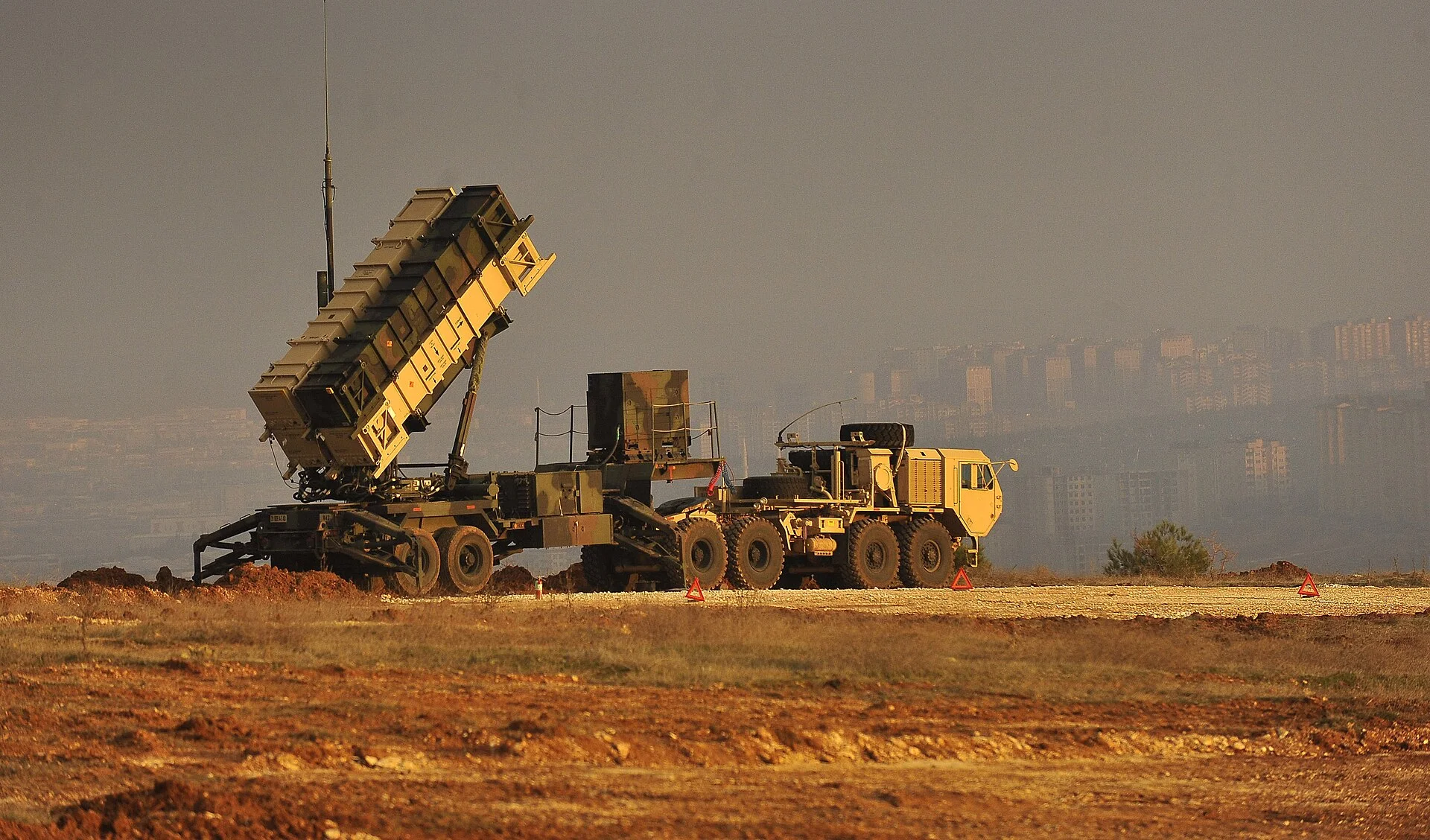
Ankara’s own response was to reinforce rather than to substitute. NATO Allied Air Command at Ramstein authorised an additional Patriot battery for İncirlik on 18 March, bringing allied Patriots in Türkiye to three: two at İncirlik and one near Kürecik, as Defense News reported at the time. On 24 June a German-operated battery took over the Kürecik mission from the American one.
What Çelik Kubbe actually covers today
Türkiye’s layered architecture was approved by the Defence Industry Executive Committee in August 2024 and brought together as one system for the first time in public at the EFES 2026 exercise, over 20–21 May 2026, at the Doğanbey live-fire area near Seferihisar in İzmir, in front of delegations from some 50 countries. SİPER provided the long-range layer, HİSAR-O the medium, HİSAR-A the short and SUNGUR the very short, with MKE’s TOLGA folded into the daytime phase. It worked as an integrated architecture. It was also, in effect, an air defence demonstration rather than a missile defence one.
The table below sets out what each layer is built to stop, and whether a ballistic missile is in its target set. The status column uses the language the manufacturers and the SSB use, which matters: announced, in development, in testing and in service are four different things.
| Layer | System | Built to stop | Ballistic? | Status |
|---|---|---|---|---|
| Very short range | SUNGUR (ROKETSAN) | Helicopters, low-flying aircraft, drones. 8 km range, 4 km altitude per ROKETSAN | No | In service |
| Very short range, gun | KORKUT 35 mm (ASELSAN) | Drones and low-flying aircraft at about 4 km | No | In service |
| Short range | HİSAR-A+ | Aircraft, cruise missiles, drones at about 15 km | No | In service |
| Short range, hybrid | GÜRZ (ASELSAN) | Drones, helicopters and cruise missiles, gun and missile on one vehicle | No | First live-fire September 2026 |
| Medium range | HİSAR-O+ | Aircraft and cruise missiles beyond 25 km | No | In service |
| Long range | SİPER Blok-1 | Aircraft and cruise missiles. 100+ km range, 20 km ceiling per ASELSAN and ROKETSAN | Not claimed | In service |
| Long range | SİPER Blok-2 | Same target set, greater reach. 150+ km range, 30 km ceiling | Not claimed | Testing and early production |
| Anti-ballistic, lower tier | SİPER-A | Short-range ballistic missiles in the terminal phase, inside the atmosphere | Yes, by design | Announced May 2026, in development |
| Anti-ballistic, upper tier | SİPER-4, also reported as Blok-4 | Longer-range ballistic missiles at high altitude | Yes, by design | Announced May 2026, in development |
| Directed energy | GÖKBERK, ALKA, TOLGA | Small drones at very short range | No | Trials and small numbers |
| Naval | TF-2000 destroyer | Fleet and area air defence, with an anti-ballistic role intended | Intended | Under construction |
Compiled by DefenceTürkiye from ASELSAN and ROKETSAN product data, SSB statements and the EFES 2026 demonstration. “Not claimed” means the manufacturer does not advertise the capability.
Why SİPER Blok-1 and Blok-2 are not ballistic missile interceptors
This is where most English-language coverage goes wrong. SİPER is routinely described as Türkiye’s answer to the Patriot, and the comparison is half right. Blok-1 and Blok-2 are long-range surface-to-air missiles with roughly the reach of a PAC-2 or an Aster 30. Reach is not the issue.
Altitude is. ASELSAN gives SİPER Blok-1 a 20 km flight ceiling and Blok-2 a 30 km ceiling. A short-range ballistic missile on a normal trajectory climbs far above that — open-source estimates put a typical apogee somewhere between 50 and 150 km, and medium-range weapons go higher still. An interceptor with a 30 km ceiling can therefore only meet a ballistic missile in the last seconds of its descent, when it is travelling at well over a kilometre a second and has very little sky left in which to be caught. That terminal-phase engagement is a different engineering problem from shooting down an aircraft: it needs far higher acceleration, a seeker that can track a small hot object against a cold background, and usually hit-to-kill accuracy rather than a proximity-fused warhead.
Nothing in the publicly available ASELSAN or ROKETSAN material for Blok-1 or Blok-2 claims that capability. The chart below shows the problem at a glance.
DefenceTürkiye chart. Ceilings as published by ASELSAN and ROKETSAN; HİSAR ceilings are not officially published and are left out. The apogee band is an open-source estimate for standard trajectories, not a Turkish or NATO figure.
The anti-ballistic tier Türkiye announced in May 2026
Two months after the March interceptions, at a signing ceremony for additional air defence procurement involving the SSB, ASELSAN and ROKETSAN, SSB President Haluk Görgün named two new interceptors. SİPER-A is described as the lower tier of the anti-ballistic branch of Çelik Kubbe, an endo-atmospheric terminal interceptor against short-range ballistic missiles, with an AESA radio-frequency seeker and quick-reaction performance — conceptually the role a PAC-3 plays in a Patriot battery. SİPER-4, reported in some accounts as Blok-4, is the upper tier, intended for higher-altitude engagements against longer-ranged ballistic missiles.
Three things should be said plainly about those announcements.
The naming is not settled. Different outlets render the upper-tier weapon as SİPER-4 and as SİPER Blok-4, and the relationship between SİPER Blok-3 — previously described as an anti-ballistic variant with a 180 km goal — and the newly named pair has not been clarified by the SSB. Anyone reading a specification table on these systems is reading reconstruction, not disclosure.
Almost all of the technical detail traces to a single report. The descriptions of multi-stage propulsion, thruster-manoeuvred kill vehicles and infrared seekers that circulate in English come from one Turkish trade publication’s account of Görgün’s remarks. They are plausible and they are consistent with what the role requires. They are not official figures, and no range, altitude or in-service date has been published for either weapon.
There is no announced timeline. Türkiye has not said when SİPER-A or SİPER-4 will fly, enter testing or enter service. For comparison, SİPER Blok-1 took from its 2018 contract to its first battery delivery in 2024 and formal operational service in January 2026 — roughly seven years for a long-range SAM built on an established national missile base. A hit-to-kill ballistic missile interceptor is a harder problem than that, not an easier one.
WHY IT MATTERS
Türkiye is now one of the few countries that exports a complete layered air defence architecture while still depending on allies for the top of its own. That is not a contradiction a buyer should ignore, and it is not a scandal either — Poland, Romania and most of NATO are in the same position. What it changes is the sales conversation. A government buying Çelik Kubbe in 2026 is buying a very capable counter-air and counter-drone system from a supplier with spare industrial capacity and few political strings. It is not buying ballistic missile defence, whatever the architecture’s name suggests, and any proposal that implies otherwise should be read closely.
The S-400 that cannot help
Türkiye does own a long-range system with a declared anti-ballistic capability. It bought four S-400 battalions from Russia in 2017, paid for them with its removal from the F-35 programme and a set of US sanctions under CAATSA, and has never integrated them. The S-400 does not talk to the HAKİM command network and it does not talk to NATO’s air picture; it has been described by Turkish officials as a possible standalone asset and by the US ambassador as not actually used. During the March 2026 interceptions it played no reported part.
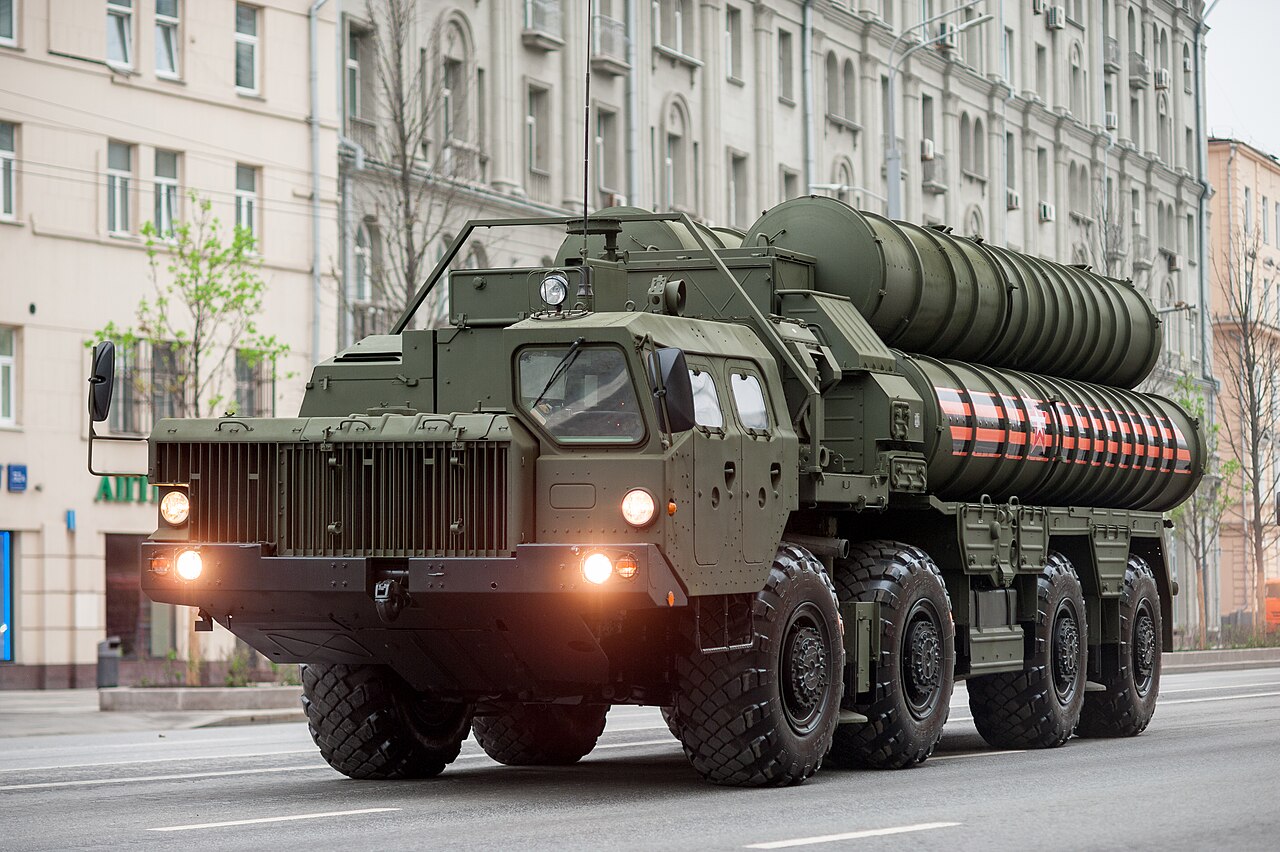
That is the practical reality behind the long-running speculation about a transfer. Reports through mid-2026 suggested Ankara was exploring a sale to the United Arab Emirates, with Russian Foreign Minister Sergei Lavrov saying Moscow could consent to a move to a friendly country under conditions. No government among Türkiye, the UAE, Russia and the United States has confirmed it, and the Ministry of National Defence has said only that “multi-track work” on the system continues. For the purposes of this article the point is narrower: a system that is not plugged into the national command network is not part of the national missile defence, whatever its brochure says. Readers who want the Turkish-language background on how the purchase came about will find it in Envanter Medya’s Turkish explainer on the S-400 and how Türkiye came to buy it.
Who is actually defending Turkish airspace against ballistic missiles
NATO is, and Türkiye says so openly. At the Ankara summit on 7–8 July 2026, President Erdoğan thanked the United States, Spain, Germany and Italy for deploying additional batteries to Türkiye in the same speech in which he announced a further $24 billion for Çelik Kubbe and urged allies to lift restrictions on defence industrial cooperation. A head of state thanking four allies for an air defence contribution is about as clear an admission of a capability gap as diplomacy produces.
The architecture on Turkish soil has three parts. The AN/TPY-2 X-band radar at Kürecik provides early detection and tracking of ballistic missiles launched from the Middle East and cues interceptors across NATO’s integrated air and missile defence network. Allied Patriot batteries — Spanish at İncirlik since 2015, plus the two added in March 2026 — provide the terminal engagement. Naval assets in the Eastern Mediterranean provide the upper tier. None of it is Turkish.
The money, and what it is buying
Funding is not the constraint. The SSB signed roughly $6.5 billion of Çelik Kubbe contracts with ASELSAN, HAVELSAN and ROKETSAN on 26 November 2025. President Erdoğan’s July 2026 announcement added $24 billion, a figure that rests on his own statement rather than on a published budget line. Then came an unusually dense autumn.
Between late September and early October 2026 ASELSAN disclosed a chain of air defence contracts: a €1.23 billion joint award with ROKETSAN on 24 September, a €488.5 million air defence export contract on 2 October, a €2.46 billion hybrid air defence contract with the SSB on 5 October — the largest single order in the company’s 51-year history — and a $195 million radar contract days later. None of the filings disclosed quantities, configurations or delivery schedules, which is normal practice for Turkish air defence procurement and unhelpful for anyone trying to model delivery rates.
What that money is visibly buying is breadth at the bottom and middle of the architecture. GÜRZ passed its first live-fire test in September 2026. ASELSAN showed a 10 kW version of the GÖKBERK laser and an updated EJDERHA at SAHA 2026 in May. MKE’s TOLGA made Türkiye’s first live laser drone kill at the Ateş Serbest-2026 exercise in October, and ASELSAN’s GÖKALP interceptor drone destroyed a target by direct impact in an Ankara demonstration the same month, cued by the AURA radar through the DRONEDEF command layer.
Every one of those is a counter-drone capability. They are genuinely useful, they address the threat Türkiye actually faces most often, and they are exactly the systems a buyer can have quickly. None of them moves the ballistic problem.
BUYER VIEW
What is available now. SUNGUR, KORKUT, HİSAR-A+ and HİSAR-O+ are in Turkish service and have export customers. Delivery timelines are short by the standards of the market and ASELSAN has been expanding capacity continuously since 2025.
What is not available. No Turkish anti-ballistic interceptor can be ordered, because none exists. SİPER itself has no confirmed export customer, so a buyer of the long-range layer would be a launch customer with all that implies for support and spares.
Price. Unit costs are not disclosed for any layer. The published contract values cover undisclosed quantities, so no credible per-battery figure can be derived from them.
Interoperability. The command layer, HAKİM, is Turkish, and SİPER has been demonstrated working through HAVELSAN’s ADVENT. A NATO buyer should ask specifically how a Turkish battery would exchange tracks with allied systems, because Türkiye’s own S-400 experience shows how hard that is to retrofit.
Political risk. Low on the Turkish side — Türkiye has sold air defence to NATO and non-NATO states without visible restriction. The relevant risk for a buyer is the opposite one: whether buying Turkish complicates access to US or European upper-tier systems later.
Open-source editorial analysis by DefenceTürkiye. Not procurement advice.
What has to happen before Türkiye can claim a missile shield
Five things, in rough order of difficulty.
- A flight test. Neither SİPER-A nor SİPER-4 has been shown firing. The first public test will be the moment the programme becomes real rather than announced.
- An intercept against a ballistic target. Hitting a manoeuvring drone, as SİPER Blok-2 did against a Banshee in June 2026, is a different problem from hitting a re-entering warhead. Until there is a ballistic intercept, there is no capability.
- Independent early warning. Terminal interception needs minutes of warning, and today those minutes come from Kürecik, a NATO asset, and from allied satellites. A national over-the-horizon or space-based warning capability is the quiet precondition nobody advertises.
- Integration into HAKİM. The command network must fuse warning, tracking and engagement fast enough to matter. This is the part Türkiye is actually good at, and the part ASELSAN and HAVELSAN contracts have been funding hardest.
- Enough interceptors to matter. Ballistic missile defence is an arithmetic problem. Saturation defeats thin inventories, and nothing in the public record indicates the planned magazine depth.
Limitations, stated plainly
Türkiye has no fielded ballistic missile defence and no announced date for one. Its long-range layer has no export customer. Its one purchased anti-ballistic system, the S-400, is disconnected from the national network and may be sold. Its early warning depends on an allied radar on its own territory that it does not control. The directed-energy and interceptor-drone work that has produced most of 2026’s headlines addresses drones, not missiles. And Çelik Kubbe’s full architecture, on the most commonly cited assessments, is not expected to be complete until some point in the 2030s.
Against that: the industrial base is real, the funding is committed at a scale few middle powers can match, and the gap between announcement and fielding on previous Turkish programmes — HİSAR, SİPER Blok-1, ATMACA — has consistently closed, if later than first promised. Türkiye has not yet built a ballistic missile interceptor. There is no strong reason in the record to assume it cannot.
What comes next
Watch for three signals. The first public SİPER-A firing would be the clearest marker that the anti-ballistic branch has left the drawing board. A first export order for SİPER Blok-1 or Blok-2 would tell you whether the long-range layer is competitive on price and delivery against the Korean, Israeli and European systems that currently win those competitions. And the TF-2000 destroyer programme is worth watching for a reason that has nothing to do with the navy: it is where an area-defence interceptor and the ÇAFRAD radar have to work together against fast targets, and whatever is learned there will land ashore.
Readers who want the Turkish-language programme history behind all of this — how the air defence effort ran from the first HİSAR decision in 2007 to the SİPER-2 work of 2025 — will find it in Envanter Medya’s Turkish dossier tracing eighteen years of Türkiye’s air shield, from HİSAR to SİPER.
FAQ
Can Türkiye shoot down a ballistic missile?
Not with a Turkish-built system. As of October 2026 no Turkish interceptor has been fielded against ballistic missiles. The SİPER-A and SİPER-4 interceptors announced in May 2026 are intended to provide that capability and remain in development, with no published test, range or service date.
Is SİPER Türkiye’s Patriot?
Only in range. SİPER Blok-1 and Blok-2 cover roughly the same distances as a Patriot battery against aircraft and cruise missiles, but their published 20 km and 30 km ceilings put them well below the altitudes at which ballistic missiles fly, and neither is advertised as a ballistic missile interceptor. The PAC-3 role in the Turkish architecture is the one SİPER-A is being developed to fill.
Who intercepted the Iranian missiles over Türkiye in March 2026?
NATO systems. Four ballistic missiles were destroyed between 4 and 30 March 2026, with debris falling in Hatay and the engagements taking place over Gaziantep and near İncirlik. Open-source analysis attributed the 4 March intercept to a US Navy SM-3, and Spain said its Patriot battery in Türkiye assisted. No Turkish-built system is reported to have fired.
Does the S-400 give Türkiye ballistic missile defence?
No, in practice. The S-400 has a declared capability against some ballistic threats, but Türkiye’s batteries are not integrated into the HAKİM national command network or into NATO’s air picture, and they played no reported role in the March 2026 interceptions. Reports through 2026 suggest Ankara has explored transferring them to the United Arab Emirates; no government has confirmed this.
What is Çelik Kubbe, and is it the same as Iron Dome?
Çelik Kubbe, or Steel Dome, is Türkiye’s layered national air defence architecture, approved in August 2024, which ties SUNGUR, KORKUT, HİSAR, GÜRZ and SİPER together through a common command network. It is not an equivalent of Israel’s Iron Dome, which is a specific short-range rocket defence system. Çelik Kubbe is an architecture, and its anti-ballistic layer does not yet exist.
How much is Türkiye spending on air and missile defence?
About $6.5 billion in contracts was signed with ASELSAN, HAVELSAN and ROKETSAN in November 2025, and President Erdoğan announced a further $24 billion for Çelik Kubbe at the NATO summit in Ankara in July 2026. ASELSAN separately disclosed more than €4 billion of air defence contracts between late September and early October 2026, none of them with published quantities.
Has Türkiye exported its long-range air defence system?
No confirmed export of SİPER has been announced. Short- and medium-range Turkish air defence systems have export customers, and ASELSAN disclosed a €488.5 million air defence export contract on 2 October 2026 without naming the buyer or the systems.
Sources
- Defense News — Turkey deploys third NATO Patriot system to repel Iranian missiles
- Defense News — NATO sends Patriot system to protect key air defense radar in Turkey
- Reference compilation of the March 2026 interceptions, with Reuters, WSJ and Anadolu Agency citations
- Hudson Institute — Can Kasapoğlu on Operation Epic Fury
- Quwa — Steel Dome deployed as a layered architecture for the first time at EFES 2026
- Army Recognition — SİPER-1 integrated into the Steel Dome network
- SİPER programme reference, citing ASELSAN and ROKETSAN product data
- Defence Industry Europe — ASELSAN’s €2.46 billion Steel Dome contract
- Defence Industry Europe — GÖKALP interceptor demonstration with AURA and DRONEDEF
- EDR Magazine — ASELSAN demonstrates GÖKALP’s drone-hunting capabilities
- Unmanned Airspace — ASELSAN updates EJDERHA and GÖKBERK
- Turkish Minute — analysis of Türkiye’s ballistic missile defence gaps
- Turkish Minute — Erdoğan at the NATO Ankara summit, July 2026
- European Security & Defence — reports of a Turkish S-400 sale
- The Defense Post — SİPER completes serial production testing
- Reference on the Kürecik AN/TPY-2 radar station