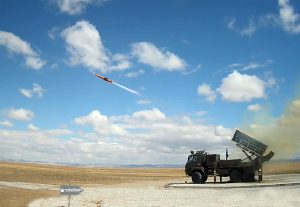
MKE’s TOLGA Laser Downs a Drone in Turkish Directed-Energy First


A laser weapon built by Turkish state manufacturer Makina ve Kimya Endüstrisi (MKE) destroyed a drone target during a live-fire exercise near Ankara on October 13, in what Turkish defence media are describing as the type’s first confirmed hard-kill with its directed-energy module active. The engagement took place at the General Nahit Şenoğlu Firing and Training Area in Polatlı, as part of the wider Ateş Serbest-2026 exercise attended by Defence Minister Yaşar Güler and the chiefs of general staff of Turkey, Azerbaijan and Qatar’s land forces.
The weapon is TOLGA, a short-range air defence system MKE has been developing as a layered counter to small and medium drones. Multiple Turkish outlets reported that the laser-equipped variant destroyed a drone target at a range of roughly 760 metres, though exact figures vary between reports and have not been confirmed in an official MKE statement with that specific engagement distance attached.
What TOLGA actually is
TOLGA is not a single weapon but an integrated mount combining radar, electro-optic sensors, a jamming suite and a tier of hard-kill options — originally guns in calibres up to 35mm, now joined by the laser module. According to MKE’s own product material, the system’s fibre laser delivers 20 kilowatts of power, built up from four 5-kilowatt laser modules firing in combination, and is designed to offer three distinct effects against a drone: dazzling its optical sensors, permanently blinding them, or inflicting physical structural damage sufficient to bring the target down. The turret traverses a full 360 degrees using linear-motor actuation, which MKE says allows it to track fast, manoeuvring targets with more precision than a conventional geared mount.
The reported engagement ranges for each of those three modes differ from one Turkish outlet to another — some place the dazzle range as far out as 4,500 metres and the destructive range as close as a few hundred metres, others give different figures for the same categories — so readers should treat any specific range band beyond the 760-metre test result as provisional until MKE publishes a consolidated specification sheet. TOLGA has gone through earlier live-fire campaigns using its kinetic and electronic-warfare layers, including a widely reported trial in July 2026 in front of roughly 100 to 150 military observers, so the October 13 test marks the laser module’s debut rather than the system’s first live fire overall.
Turkey’s entry into a short list
Operational laser weapons that have destroyed real aerial targets, rather than fixed test rigs in a lab, remain rare worldwide. The United States Navy has used its laser weapon systems against drones and small boats at sea; Israel has pushed its Iron Beam laser air-defence system toward operational use against rockets and drones; and the United Kingdom has run trials of its DragonFire laser. A confirmed hard-kill against a drone with a Turkish-built, vehicle-mounted laser places MKE in that same small group of programmes with demonstrated results rather than only announced capability — even allowing for the fact that one live engagement at a known range is a long way from a fielded, combat-ready system with a settled logistics and maintenance footprint.
The appeal of directed-energy weapons for counter-drone work is mostly economic rather than purely technical: each laser shot costs a fraction of a missile intercept, and a system that never runs out of “ammunition” short of a fuel or power failure is attractive against the kind of cheap, swarming drone threat that has driven demand for Turkish and foreign counter-UAS systems alike over the past two years. TOLGA sits in that market alongside other Turkish short-range options such as ASELSAN’s GÜRZ gun-and-missile air defence vehicle and the laser-jammer combination fielded on Roketsan’s ALKA, all of which form part of the lower tiers of Türkiye’s wider Çelik Kubbe air defence network, alongside the gun-based SUNGUR system covering the very short range band.
What is not yet confirmed
MKE has not disclosed whether the laser module will be standard on future TOLGA production units, offered as a retrofit, or deployed only on a limited number of evaluation vehicles. No contract, production quantity or delivery schedule tied specifically to the laser variant has been announced, and the Presidency of Defence Industries (SSB) and Ministry of National Defence have not issued an English-language statement on the test as of publication. The 760-metre figure and the laser’s listed 20-kilowatt output are the two data points reported consistently enough across Turkish sources to be treated with reasonable confidence; range figures for the system’s dazzle and permanent-blinding modes should be read as indicative rather than settled until MKE confirms them directly, for instance through its own publications on the MKE TOLGA product page.
Sources: MKE; Anadolu Agency; Yeni Şafak; Sabah; Habergo.