Türkiye Is Buying Its Eurofighters in Three Steps, From Qatar to Warton

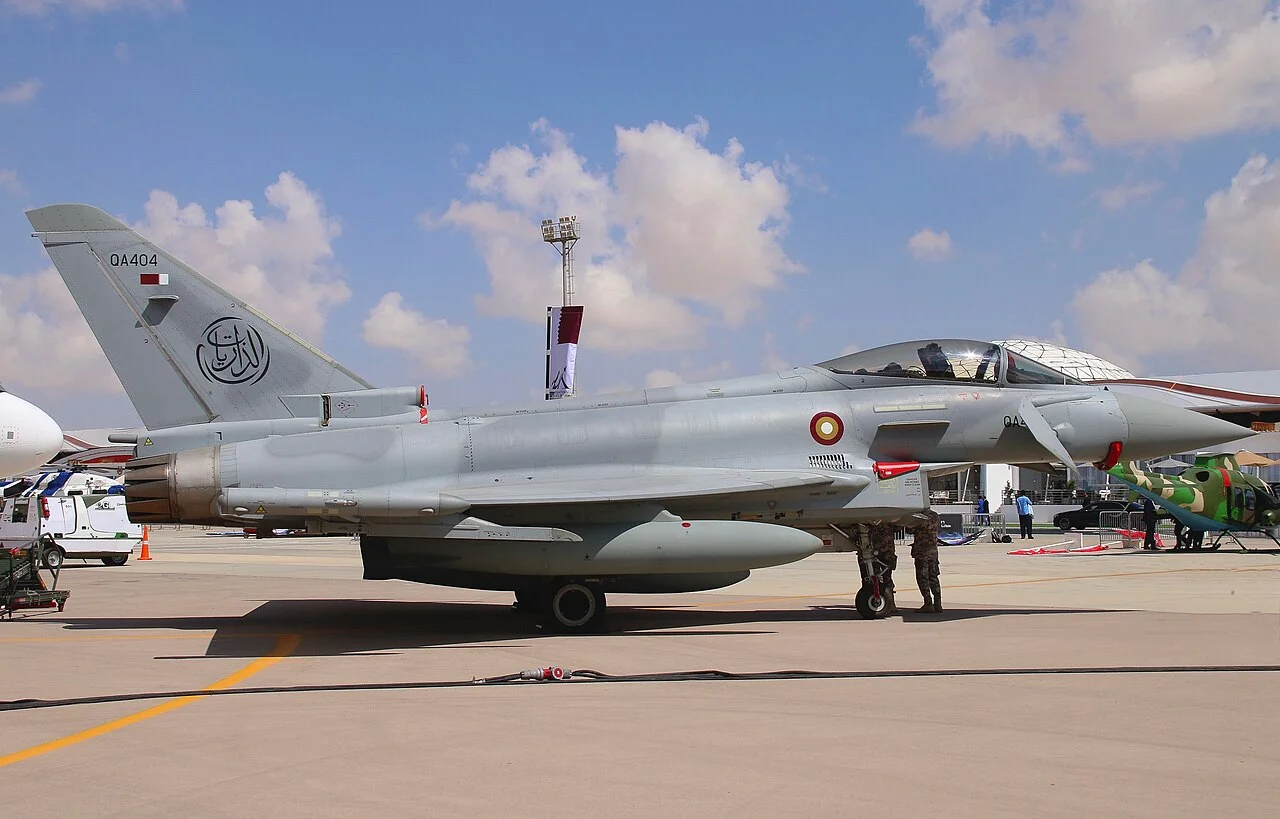
Türkiye did not simply order a fighter. It assembled a package: 20 new Eurofighter Typhoons from the United Kingdom, a reported 12 lightly used jets from Qatar, a further batch under discussion with Oman, and a training pipeline that runs through RAF Coningsby. Taken together, the Turkey Eurofighter deal is a stopgap built in layers, meant to keep the Turkish Air Force flying modern aircraft until the indigenous KAAN arrives in numbers.
The sections below sort out what has been signed, what is still described only in press reports, and why the order of those steps matters.
What Did Türkiye Actually Sign With the United Kingdom?
On 27 October 2025, UK Prime Minister Keir Starmer and President Recep Tayyip Erdoğan signed a contract in Ankara for 20 new-build Eurofighter Typhoons. The value was given as £8 billion, roughly $10.7 billion. Defense News described it as the first UK Typhoon order since 2017, and Türkiye became the tenth operator of the type.
BAE Systems carries the airframe work, with final assembly at Warton in Lancashire. The package includes the MBDA Meteor beyond-visual-range missile. The British government said the deal would help sustain about 20,000 jobs, and BAE was reported to expect around £4.6 billion in revenue from it. First deliveries are scheduled for 2030, which is why the interim steps below exist at all.
| Item | Detail (as reported) |
|---|---|
| New-build order | 20 Eurofighter Typhoons, signed 27 October 2025 in Ankara |
| Reported value | £8 billion (about $10.7 billion) |
| Prime contractor | BAE Systems, final assembly at Warton |
| Weapons | MBDA Meteor included in the package |
| First delivery | 2030 |
| Used jets from Qatar | 12, reported |
| Oman | Talks on additional used jets, reported |
Why Did Germany, Italy and Spain Have a Say?
The Eurofighter is a four-nation program. The UK, Germany, Italy and Spain share ownership of the aircraft, so an export to a new customer needs consortium sign-off. According to Al Jazeera, the three partners approved the arrangement in July 2025, when a preliminary deal covering 40 jets was first announced.
That approval mattered politically as much as legally. It cleared the way for the October signature and gave the four production lines a rare new order. Ankara’s own stated aim, reported at the time, was to field around 120 fighters before KAAN becomes operational. The Typhoon is only one piece of that number.
Where Do the Qatari Jets Fit?
Twenty jets arriving in 2030 do nothing for a fleet that is wearing down now. That gap is where Qatar comes in. Turkish Defence Minister Yaşar Güler said Ankara planned to take 12 Typhoons each from Qatar and Oman, with the Qatari aircraft expected early in 2026.
The Aviationist reported that the Qatari jets are Tranche 3A aircraft in the P3E(b) configuration, the first standard able to operate the ECRS Mk0 AESA radar. They also carry Litening 5 targeting pods and integrate Meteor and Brimstone. Türkiye was reported to be taking 12 of the 24 Typhoons in Qatari service, with the first expected by late February 2026, and Turkish pilots were already training on the type.
Oman is a different case. Its Typhoons are Tranche 3A but, according to the same report, keep the mechanically scanned CAPTOR-M radar and are believed to be in an older configuration. If that holds, the Omani jets would be a less capable interim asset than the Qatari ones.
Treat the used-jet numbers with care. Press reports have used figures ranging from 12 to 24 for Qatar and about 10 to 12 for Oman, and the Turkish government has not published a single consolidated schedule. The 12-jet Qatari figure is the one repeated most consistently by Turkish officials and aviation outlets.
How Are Turkish Pilots and Technicians Being Trained?
The training deal is the least glamorous part of the package and probably the most important. On 25 March 2026, Güler and UK Defence Secretary John Healey signed a training and support agreement in London. Its value was not disclosed; Defense News noted that estimates of about £2.6 billion were inferred from the overall figure rather than stated.
BAE Systems will provide spares and support equipment, high-fidelity simulators, electronic warfare capabilities, and technical support for an initial three-year period from entry into service. Under separate arrangements with the RAF, 10 Turkish instructor pilots and nearly 100 maintenance technicians will train at RAF Coningsby.
The stated goal is an indigenous training pipeline. In other words, the first cohort teaches the next one at home. Turkish officials also want to perform depot-level maintenance in Türkiye once aircraft arrive, and the UK side named Leonardo UK, MBDA, Rolls-Royce and Martin-Baker among the suppliers tied to parts and component work.
Flight training itself has since begun. Our report on the first Turkish pilots flying the Typhoon in the UK covers the course structure: ground school first, then an eight-month flight course and an instructor qualification block.
Why train in the UK at all, rather than on the Qatari aircraft in the Gulf? The reporting points to a pipeline logic. The 20 new jets will be the long-term fleet, and the RAF holds the syllabus, the instructors and the simulators that BAE is supplying. Qatari-sourced aircraft give early flying hours, but the training pathway is being built around the UK-delivered standard.
Maintenance is the quieter test. Roughly 100 technicians is a small number against the demands of a fleet that may eventually pass 40 aircraft across several configurations. Running Qatari, Omani and new-build jets side by side would stretch spares and software support, which is one reason the planned in-country depot capability matters.
Does the Typhoon Replace the F-35 Hole?
Not in capability terms. Türkiye was removed from the F-35 program in 2019 after buying the Russian S-400 system. The Typhoon is a capable fourth-generation multirole fighter, but it is not a stealth aircraft. Ankara has treated it as a bridge, not a substitute.
The bridge has company. A separate F-16 purchase from the United States, reported at about $7 billion for 40 jets, has faced delays, according to Al Jazeera. Meanwhile the existing fleet is being upgraded at home, as covered in our piece on the ÖZGÜR F-16 Block 30 modernization. Erdoğan has also raised a return to the F-35 with President Trump, though no agreement has been announced.
What Does This Mean for KAAN?
The Typhoon buy and KAAN are linked in timing rather than competing for the same money. Turkish Aerospace has signed for a first batch of KAAN jets, as set out in our explainer on how many KAAN fighters Türkiye will build, and the current KAAN program status shows early production using a foreign-supplied engine.
The engine is the sticking point. TUSAŞ has said an indigenous powerplant will not be ready before 2032, as we reported in KAAN’s indigenous engine delay. That timeline explains why Ankara wanted Typhoons in the inventory first: a fleet bridge that lasts into the 2030s needs a modern aircraft with a credible weapons package, and the Meteor missile gives it one.
There is a reasonable industry argument that exposure to a four-nation program will help Turkish Aerospace. TUSAŞ has a long record as a Western aerostructures supplier, and Erdoğan said joint defense industry projects with Britain could follow. No specific industrial-participation package has been published, so that remains a statement of intent.
What Is Still Open?
Three questions are unresolved in public sources. The exact number and delivery schedule of used Qatari and Omani jets has not been confirmed in a single official statement. The value of the training and support contract was never disclosed. And the configuration of the 20 new aircraft, including the radar standard, was not specified in the coverage reviewed here.
What is established is the shape of the plan. A British order for 2030, Gulf aircraft sooner, an RAF-led training pipeline, and KAAN as the end state. If the Qatari deliveries and the Coningsby course both keep to schedule, the Turkish Air Force will have Typhoon pilots and aircraft in service years before the first new jet rolls out of Warton.