Four Companies Share Türkiye’s Armored Vehicle Business and Each Sells Something Different

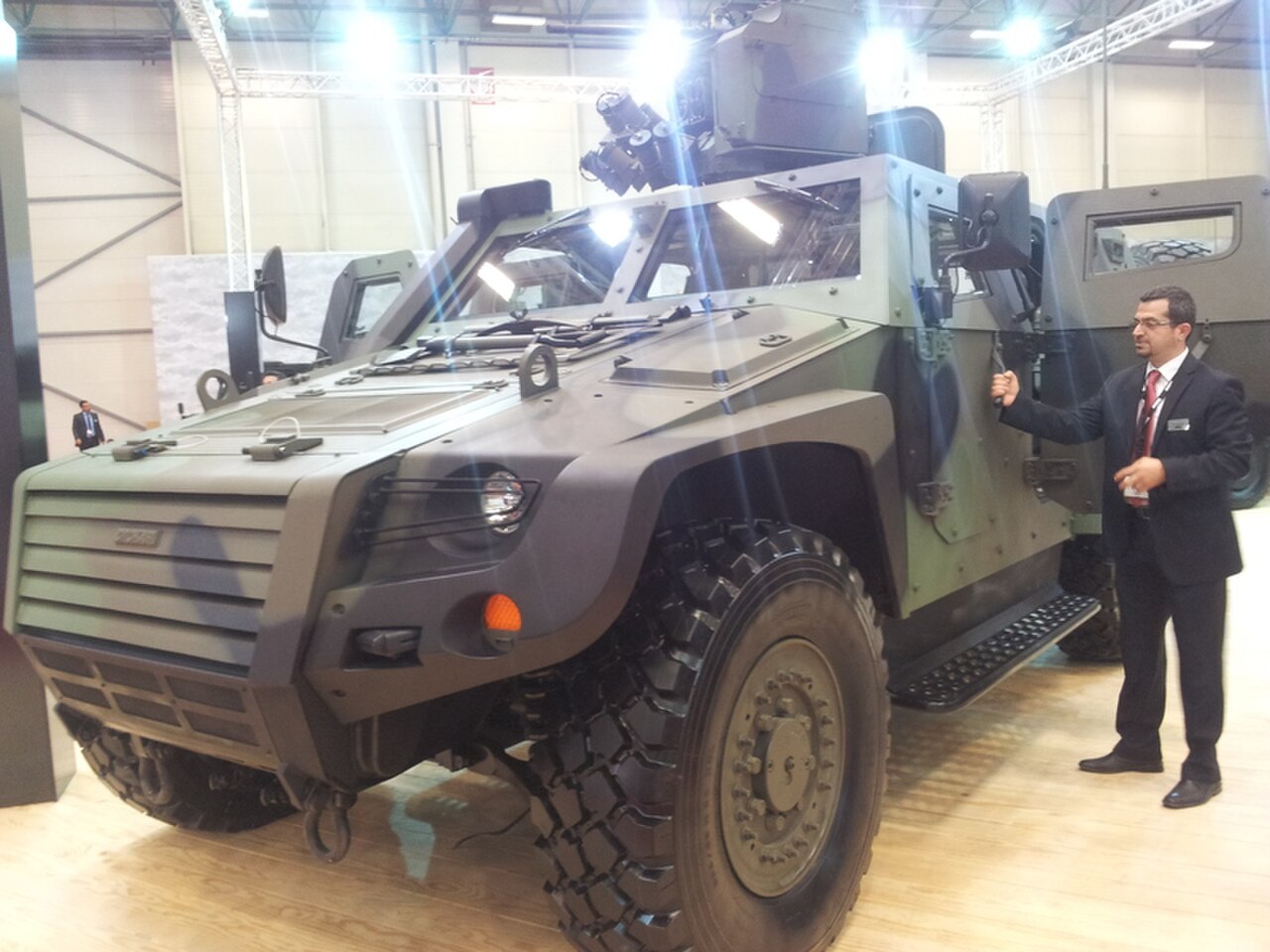
Ask a procurement officer in Tallinn, Bucharest or Kuala Lumpur where Turkish armored vehicles come from and the answer will not be a single name. Four companies, Otokar, FNSS, BMC and Nurol Makina, account for most of what Türkiye builds and sells. They rarely compete head to head, and that is the point of the sector’s shape: each sits in a different corner of the market.
The numbers give a first sense of the split. According to the Turkish trade publication Defence Turkey, the land platforms sector exported roughly $500 million worth of vehicles in 2023. BMC was reported at about $255 million of that, or around 52 percent, with Otokar next at roughly $192 million. The two together dwarf everyone else, even though neither one is the oldest name in the business.
Who Actually Builds Türkiye’s Armored Vehicles?
The sector is built on private companies. Defence Turkey lists Otokar, FNSS, BMC, Nurol Makina, Katmerciler and Tümosan among the backbone firms. Armada International, writing in 2021, called FNSS and Otokar the two largest armored vehicle contractors in the country, a ranking that has since been complicated by BMC’s rise.
| Company | Core business | Best-known vehicles | Ownership (reported) |
|---|---|---|---|
| Otokar | Wheeled and tracked vehicles, 4×4 to 8×8 | COBRA II, ARMA, TULPAR | Koç Group company |
| FNSS | Tracked and wheeled combat vehicles, amphibious vehicles | PARS, KAPLAN, ZAHA | Nurol Holding, 100 percent |
| BMC | MRAP vehicles, main battle tank prime contractor, engines | KIRPI, VURAN, ALTAY | Turkish-Qatari joint venture |
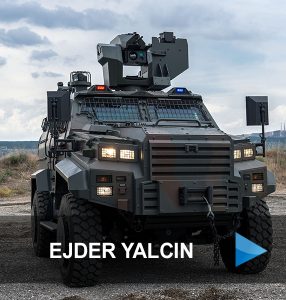
| Nurol Makina | 4×4 tactical armored vehicles | EJDER YALÇIN, NMS | Nurol Holding |
What Does Otokar Sell, and Where?
Otokar is the volume player. Armada International put its output at about 33,000 vehicles by early 2021, sold to 36 countries, with more than 4,000 COBRA 4×4 vehicles built by March 2021. Those figures are dated, and the company’s order book has grown since, but they show a manufacturer that treats exports as the default rather than the exception.
Its largest recent wins are in Europe. In October 2023 Estonia’s Centre for Defence Investment signed a contract worth around 130 million euros for ARMA 6×6 armored personnel carriers, with deliveries planned from the second half of 2024. In November 2024 Romania signed for 1,059 COBRA II vehicles, a deal reported at roughly 852 million euros. Otokar formed a 50-50 joint venture with Rheinmetall Automecanica to build around 800 of them in Romania, and Romania’s defence ministry has published the arrival of the first locally built vehicles. Reported deliveries stood at 276 vehicles by mid-May 2026.
For the company’s wider record, see our profile of how Otokar built an export business on four continents.
Why Is FNSS Different From the Others?
FNSS grew out of the Turkish infantry fighting vehicle program. It built 2,249 TIFVs in four configurations, according to Armada, which gave it a tracked-vehicle heritage the wheeled specialists lack. Its catalog now runs from the PARS 6×6 and 8×8 family to the KAPLAN tracked platform and the ZAHA marine assault vehicle, with the 8×8 PARS ALPHA rolled out at World Defense Show in February 2024.
Ownership changed too. For about 35 years FNSS was a joint venture, with Nurol holding 51 percent and BAE Systems 49 percent. Nurol Holding bought out BAE and now owns the company outright, according to EDR Magazine and Defence Turkey. The export list that came out of the partnership includes the ACV-15 and ACV-19 for Malaysia, the UAE and Saudi Arabia, PARS 8×8 vehicles for Malaysia and Oman, and Indonesia as the first customer for the KAPLAN medium tank, as listed by Armada.
FNSS also supplies the platform side of programs where other firms supply the turret or the weapon. The 2023 Defence Turkey survey describes its weapon carrier program of 186 KAPLAN-10 based vehicles and 76 PARS 4×4 based vehicles, and its 100-vehicle special purpose tactical wheeled armored vehicle contract. More detail sits in our FNSS profile and in the report on pre-delivery tests of the first KAPLAN APC for Indonesia’s PT Pindad.
How Did a Truck Maker Become the Export Leader?
BMC is the odd one out. It started as a truck and bus company, and Armada called it a newcomer to armored vehicles in 2021. Defence Turkey describes it as a Turkish-Qatari venture. The turning point was the ALTAY main battle tank, for which BMC is the prime contractor, and the 2019 lease of the Arifiye main maintenance factory in Sakarya, which gave it a large production base. Defence Turkey reports that the factory’s efficiency rose from 50 percent in 2020 to 99 percent in 2022, and that the Ankara facility was planned for up to 100 tanks a year, 25 to 30 of them for export.
The money, though, comes from the KIRPI MRAP. Armada lists Libya, Qatar and Somalia among its early customers, and Turkish business press quotes BMC chairman Ethem Sancak saying other armies want the vehicle and are waiting in line. BMC also reports roughly 95 percent localization on KIRPI and VURAN, including the engine, and has begun series production of its 400 horsepower TUNA diesel, according to Turkish reporting. Building engines in-house is what separates BMC from vehicle makers that still buy their powerpack abroad.
Two of our existing pieces cover this ground: BMC’s role as the company Türkiye trusts with its tanks and the ALTAY program status.
What Is Nurol Makina’s Niche?
Nurol Makina was established in 1976 and is headquartered in Sincan, Ankara. It moved into armored vehicles in 1992 after starting out in general machinery. Today it concentrates almost entirely on 4×4 tactical vehicles, the EJDER family (YALÇIN, KUNTER, TOMA) and the NMS line. It says it exports to more than 20 countries.
The European business is where it has made the most noise. Estonia signed in October 2023 for about 100 NMS 4×4 vehicles, a contract reported at 70 million euros, and Defence Turkey describes Estonia as the second NATO country and fifth overall to buy the NMS after Hungary. Deliveries of the 100 vehicles were reported complete in March 2025. Nurol also runs a Hungarian subsidiary that co-produces the Gidrán with Rába and a UK arm in Leamington Spa, with British production planned from 2026 through a joint venture with NP Aerospace.
Because Nurol Holding also owns FNSS, the group effectively covers the heavy end through FNSS and the light end through Nurol Makina. Read more in Nurol Makina’s narrow bet on 4×4 armour.
How Do the Four Companies Avoid Stepping on Each Other?
Look at the product lines side by side and the overlap is thinner than it first appears.
- 4×4 light tactical: Otokar COBRA II, Nurol NMS and EJDER YALÇIN, BMC KIRPI and VURAN. This is the crowded segment, and the only place where the companies meet in the same tender.
- 6×6 and 8×8 carriers: Otokar ARMA, TULPAR and ARMA II, FNSS PARS, BMC’s ALTUĞ 8×8 under the next-generation vehicle project.
- Tracked vehicles: FNSS KAPLAN and ACV family, plus Otokar’s design work on the ALTAY prototype.
- Main battle tanks: BMC as ALTAY production contractor.
- Amphibious vehicles: FNSS ZAHA, built for Turkish marines.
Subcontractors tie the sector together. ASELSAN supplies fire control and optronics, and MKE supplies guns and ammunition, as Armada notes. That shared supply chain is one reason a vehicle from any of the four can show up with the same remote weapon station on its roof.
Why Do Buyers Keep Coming Back?
The pitch is less about a single feature than about a package: reasonable price, quick delivery, vehicles that have already seen use, and a willingness to set up local assembly. Romania’s deal is the clearest example, with a large share of the work moving to a local joint venture. Estonia and Hungary show that NATO members are now buying from both Otokar and Nurol rather than treating Turkish armor as a niche option. We unpack that logic in why countries buy Turkish armoured vehicles.
The sector’s next test is whether the heavier programs follow the light ones. The KAPLAN’s first export customer is still in the testing and delivery phase, the PARS ALPHA is newly rolled out, and ALTAY serial production depends on an engine program still being finalized. The 4×4 business has already proved itself. The 8×8 and tracked business is where the next round of contracts will show whether the four-company model scales.
Export figures cited above come from Defence Turkey and Armada International reporting and are not audited totals. Deal values are as reported by buyers and trade press.