Fidan Says US Political Will Exists to Resolve CAATSA


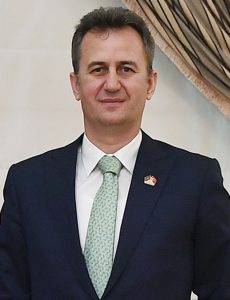
Foreign Minister Hakan Fidan said Ankara and Washington have the political will to resolve their outstanding defence disputes, but that the Trump administration’s ability to act is constrained by US law — the clearest public signal yet on where the long-promised lifting of CAATSA sanctions on Türkiye actually stands.
Speaking to Turkish broadcaster TGRT Haber on November 21, in remarks relayed by Yeni Şafak, Fidan said some previously stalled matters have already moved. “There were certain delays [to resolve disputes] based on the authority of the administration,” he said. “We now see that those have been lifted regarding some long-stalled ammunition purchases.” On the larger sanctions question, he was more cautious: “the administration has no authority on legislated matters; its room for maneuvering is very limited.”
What CAATSA Has Cost Türkiye’s Defence Industry
The Countering America’s Adversaries Through Sanctions Act penalties were imposed on Türkiye’s Presidency of Defence Industries (SSB) in December 2020, after Ankara took delivery of the first S-400 air defence components from Russia in July 2019. The same dispute saw Türkiye removed from the F-35 programme that year, ending Turkish Aerospace’s role as a production partner and blocking delivery of jets Türkiye had already paid into the programme for.
The sanctions sit on top of — and are distinct from — separate US export-control questions that have slowed items such as F-16 Block 70 deliveries and modernisation kits. Resolving CAATSA would not automatically unlock every blocked programme, but it would remove the single biggest legal obstacle cited whenever a US component, sub-system or export licence touching Turkish defence firms comes up for review.
Fidan’s remarks build on a pledge President Trump made in person. At a one-on-one meeting with President Erdoğan on the sidelines of the NATO summit in Ankara on July 7, Trump said: “We’re going to be taking the sanctions off… We don’t want to sanction friends.” Erdoğan said at the time that Trump had also made a commitment on the long-frozen F-35 question, after Ankara had already paid for an initial batch of jets before its removal from the programme. Fidan said Saturday that he and Erdoğan have had roughly a year and a half of accumulated political will from the US side on the issue, and that both governments have effectively agreed to take CAATSA off the day-to-day bilateral agenda while the legal process plays out.
Congress, Not the White House, Holds the Next Move
The gap between a presidential pledge and an actual lifting of sanctions is procedural rather than political. CAATSA sanctions on a specific entity cannot simply be waived by executive order; US law generally requires the administration to certify to Congress that the sanctioned party has taken steps that significantly reduce its Russian defence holdings, or Congress itself must act to repeal or amend the designation. Members of Congress, including Senate Republicans who have previously defended the sanctions regime, have signalled they would scrutinise any move closely — which is the “legislated matters” constraint Fidan referred to.
Fidan was blunter about why he believes the sanctions have persisted this long despite the diplomatic thaw. He attributed continued resistance to lobbying by what he called “predictable networks” seeking to “exclude Türkiye from US defense cooperation,” naming Israeli and Greek lobbying efforts specifically and describing the dynamic as “lobby wars.” He also argued the sanctions were applied unevenly, asking why Washington had not imposed comparable measures on other countries that have purchased Russian-made defence systems.
Why It Matters Beyond Washington
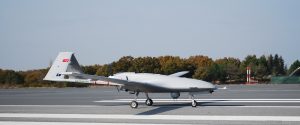
A CAATSA resolution would have knock-on effects well beyond the S-400 dispute itself. Turkish-made platforms sold to NATO and partner air forces — including the HÜRJET trainer now under contract to Spain and the KAAN fighter programme Türkiye is marketing to Indonesia and other buyers — rely in varying degrees on components, software or certification pathways that touch US-origin technology or US allies’ export-control comfort levels. A formal sanctions exit would also remove a recurring talking point for competing suppliers in markets where Turkish firms are bidding against American, European and Korean rivals, in a sector where Türkiye itself remains a US arms customer on several other programmes.
For now, Fidan’s comments amount to a status update rather than an announcement: some administrative blockages have cleared, the structural legal process has not, and neither government has set a public timetable for when — or whether — a formal congressional step will follow the mutual “political will” both leaders have claimed since July.