Türkiye’s Air Force Fleet of HÜRKUŞ Trainers Grows to Four Aircraft

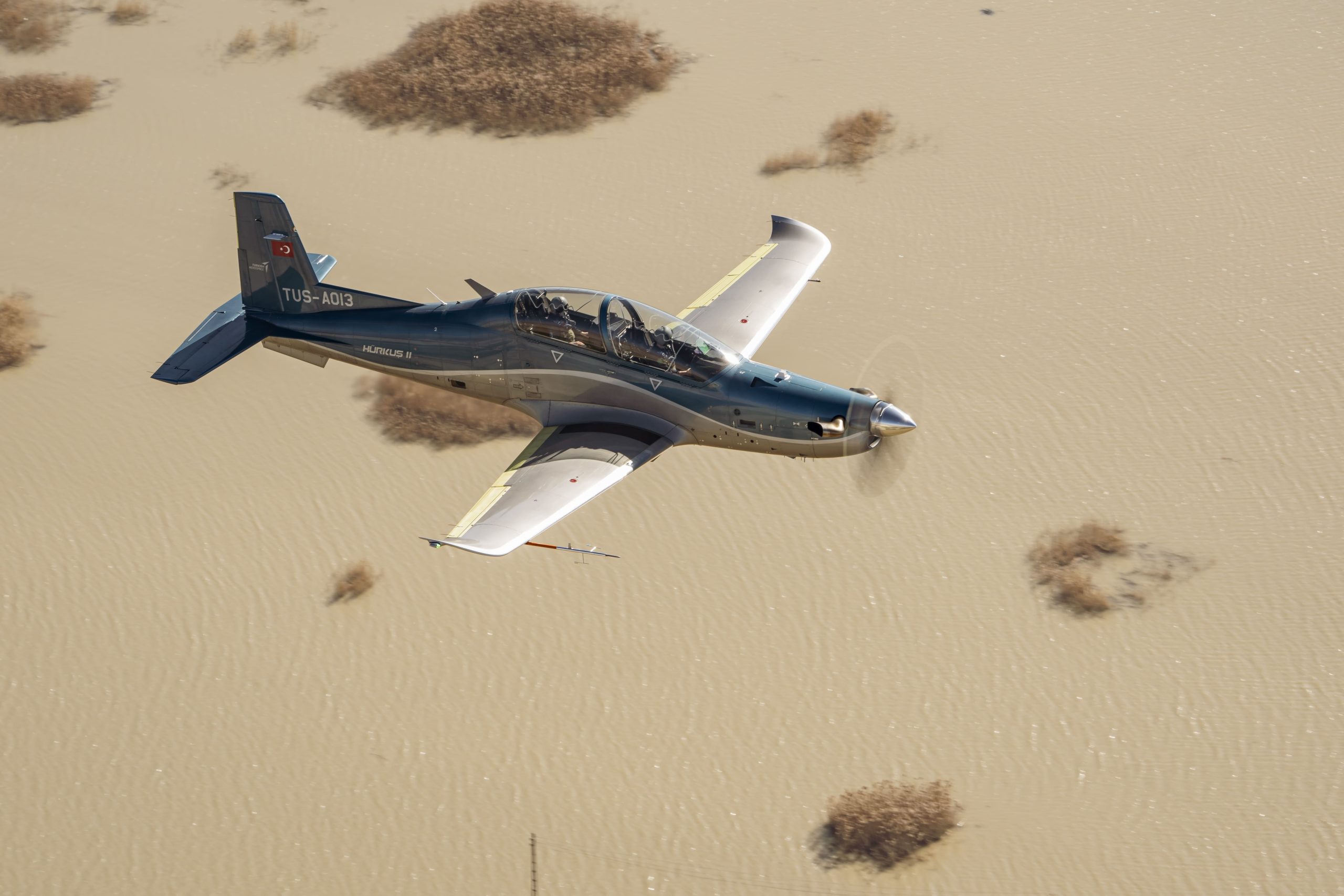
Türkiye’s Air Force has taken delivery of two more HÜRKUŞ basic trainers, bringing the type’s in-service fleet to four aircraft, the Presidency of Defence Industries (SSB) said Wednesday.
SSB President Haluk Görgün announced the acceptance on social media, posting a photo of the two aircraft in Ankara. “The trace of our HÜRKUŞ aircraft is growing in our free skies,” Görgün wrote, adding that deliveries are continuing “as planned” and that the aircraft “will train the pilots of the future.” The SSB statement did not name the receiving unit.
A 55-aircraft programme, delivering through 2028
The two new aircraft are being delivered under a 55-aircraft contract between Turkish Aerospace Industries (TAI) and the SSB. Twelve more HÜRKUŞ are scheduled for delivery between now and the end of 2026, after which the delivery rate is set to rise to two aircraft a month from 2027, with the full programme targeted for completion in 2028. At that pace, the jump from four aircraft in service today to 55 over the next two years represents one of the busier near-term production schedules among Türkiye’s aerospace programmes.
HÜRKUŞ is Türkiye’s first indigenously developed manned military trainer, designed by TAI under SSB coordination as the entry point to a three-stage pilot training pipeline: basic training on HÜRKUŞ, advanced jet training on the HÜRJET, and eventual conversion to frontline types including the KAAN fifth-generation fighter once it enters squadron service. The aircraft is a tandem two-seat turboprop powered by a Pratt & Whitney Canada PT6A-68T engine rated at 1,600 horsepower, with a service ceiling of 30,000 feet and a top speed of 320 knots calibrated airspeed.
Despite the foreign-sourced engine, the aircraft carries a substantial Turkish supply chain. ASELSAN provides the avionics suite, HAVELSAN supplies the digital video recording system, TASECS makes the environmental control system, and KAREL supplies standby flight instruments, alongside flight control and systems work from TAI itself and domestic partners ANDAR and TAAC.
An export track record ahead of a bigger ramp-up
TAI has used the HÜRKUŞ family to build one of Türkiye’s steadier aerospace export records, well before HÜRJET or KAAN reached the market. Niger became the programme’s first export customer in 2021, followed by orders from Chad and Libya for the armed HÜRKUŞ-C variant. The most recent addition, reported around this year’s ADEX exhibition in Azerbaijan, is a Turkish-Azerbaijani agreement covering roughly a dozen HÜRKUŞ aircraft as part of a package reported at more than $500 million. Türkiye Today’s report on this week’s delivery cited TAI export contracts with three countries for the HÜRKUŞ-B variant, without naming them or disclosing values — a reminder that, as with much of Türkiye’s defense trade, several of these deals remain only partially disclosed.
Why a trainer aircraft matters beyond the classroom
A basic trainer rarely makes headlines the way a missile test or a frigate launch does, but HÜRKUŞ sits at the base of a pipeline Türkiye has built almost entirely from scratch over the past decade. Every pilot who eventually sits in a HÜRJET or a KAAN cockpit will have logged early hours on a HÜRKUŞ, and every export sale of the type — to Niger, Chad, Libya or Azerbaijan — gives Türkiye a foothold with air forces that may later look to Ankara for more advanced aircraft, maintenance support or training packages. For customers wary of the cost and political strings attached to Western trainer aircraft, HÜRKUŞ offers a lower-cost, less politically encumbered alternative — part of the broader training packages Türkiye now bundles with its defense exports — even if its propulsion still comes from a Canadian supplier.
The slower-than-ideal pace of deliveries to Türkiye’s own Air Force — just four aircraft in service against a 55-unit contract — also illustrates a pattern common across Turkish aerospace delivery schedules: production ramps that look modest in the early years before compressing into a much faster delivery tempo, as is now planned for 2027 and 2028.
Source: Presidency of Defence Industries (SSB) statement; Türkiye Today.