Erdoğan’s Seoul Visit: Türkiye and South Korea Pledge Deeper Defence Ties

President Recep Tayyip Erdoğan traveled to Seoul on November 3 for his first state visit to South Korea in eight years, and came away with a fresh set of pledges to deepen defence-industrial cooperation between the two countries. Meeting President Lee Jae Myung at the presidential office in Seoul, the two leaders agreed to expand joint production and technology work in defence and to explore joint entry by Turkish and South Korean companies into third-country markets, alongside new paperwork on nuclear-plant financing.
Neither side released a defence-specific memorandum of understanding or named a dollar figure, and Lee gave no further detail on what “joint production” would cover beyond existing programmes. But the visit adds another layer to a defence relationship that already underpins one of Türkiye’s most important armoured vehicle programmes, and it comes as Ankara is actively shopping its export diplomacy around Asia.
What Was Actually Agreed
According to Korea Herald and Turkish Minute, which cited AFP, Lee said the two countries “agreed to deepen defense cooperation by expanding joint production and technological cooperation,” and that both sides would look at ways for Turkish and South Korean firms to enter third-country markets together. Erdoğan, for his part, said the strategic partnership had already produced tangible results in defence and called for more successful joint projects going forward.
On the civilian side, the two governments signed a second memorandum covering financing cooperation for nuclear power projects, intended to help South Korean firms take part in Türkiye’s nuclear build-out — chiefly the planned second plant at Sinop on the Black Sea coast. That builds on a November 2025 memorandum of understanding between Türkiye’s state nuclear authority and Korea Electric Power Corporation (KEPCO), signed when Lee made a reciprocal state visit to Ankara. Erdoğan also said Türkiye is interested in South Korean expertise in semiconductors, and the two sides noted bilateral trade reached a record $10.7 billion last year under the free trade agreement in force since 2013.
The Altay Connection
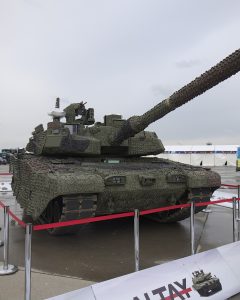
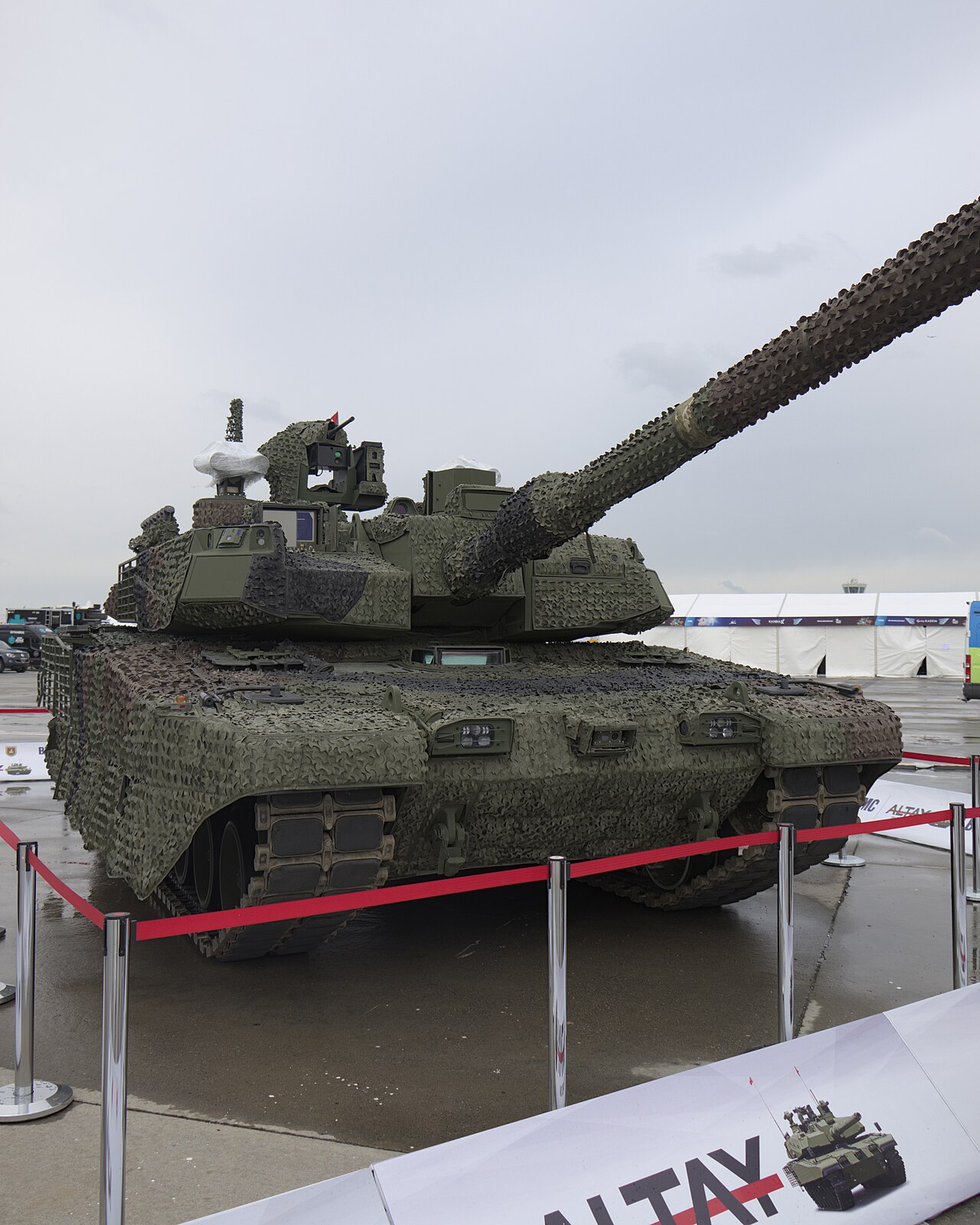
The defence relationship Lee and Erdoğan were building on is not abstract. Türkiye’s ALTAY main battle tank, now in delivery to the Turkish Army from BMC’s Ankara plant, runs on a South Korean-sourced powerpack: a Doosan DV27K diesel engine paired with an S&T Dynamics transmission, supplied under a 2021 agreement after Germany’s MTU and RENK declined to approve their engine and transmission for export over end-use concerns. Ankara has been developing an indigenous replacement, the BMC-designed BATU engine, but it remains years from qualification, and Lee cited Altay directly as the showcase example of what the two countries’ industrial cooperation looks like in practice.
That dependency has made South Korea a working defence-industrial partner rather than just a diplomatic one, and it explains why successive Turkish and Korean leaders keep returning to the relationship at the head-of-state level — this is the second such meeting in just over a year between Erdoğan and Lee’s governments, following Lee’s November 2025 visit to Ankara.
Why It Matters Beyond Ankara and Seoul
For an international audience, the more interesting line is the one about third-country markets. Türkiye and South Korea compete directly in several of the same export lanes — armoured vehicles, naval combatants, trainer aircraft and air defence systems — selling into many of the same customer governments across the Gulf, Southeast Asia and Africa. A formal push to co-market or co-produce for third countries, if it materialises beyond today’s statement, would be unusual: most of Türkiye’s current partnership-based export diplomacy, from the Qatar-Pakistan-Indonesia Badr memorandum to its Canada strategic partnership, has paired it with buyers or Western suppliers, not with another mid-tier arms exporter chasing the same customers.
It also fits a broader pattern in Turkish defence-export strategy this year of looking east. SSB President Haluk Görgün has said Türkiye’s new export contracts signed in 2026 have already reached roughly $15 billion, with a target of $20 billion by year-end, and ASELSAN has separately set a goal of lifting exports to half its revenue by 2030, with Japan named as a priority market. A working relationship with South Korea — a country with its own globally competitive defence-export machine in K2 tanks, K9 howitzers and FA-50 jets — gives Ankara both a technology supplier and, potentially, a competitor turned partner in Asian and Gulf tenders.
What to Watch
No contract, MoU text or specific joint programme was published alongside today’s statements, so the defence-cooperation language should be read as a diplomatic commitment rather than a concluded deal. The practical test will be whether it produces a signed agreement — on the BATU-to-DV27K transition, on a specific export market, or on a new joint venture — in the coming months, the way the 2025 Ankara summit’s nuclear-financing language eventually turned into Tuesday’s follow-on memorandum.
Sources: Korea Herald, Turkish Minute (via AFP).