Canada and Türkiye Sign Strategic Partnership, Confirm Defence Bank Role

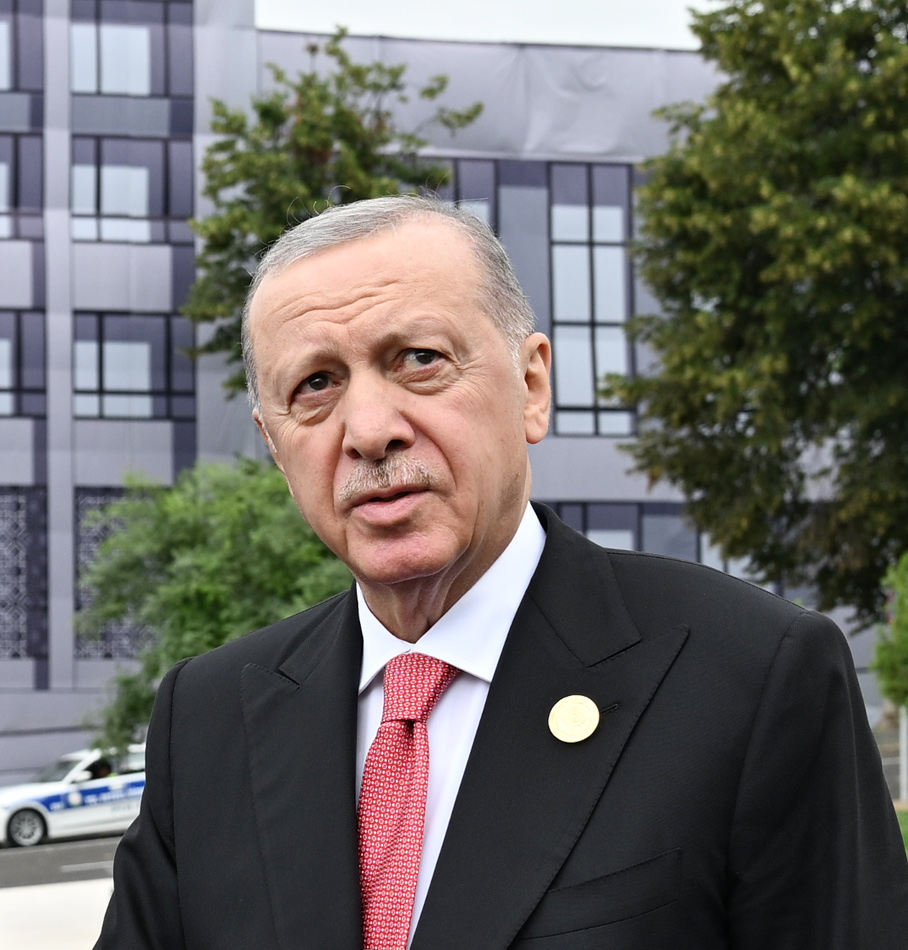
President Recep Tayyip Erdoğan and Canadian Prime Minister Mark Carney launched a Canada-Türkiye strategic partnership in Ankara on October 22, the first dedicated bilateral visit by a sitting Canadian prime minister to Türkiye. Built around a three-year action plan, the agreement folds defence and security cooperation into a broader economic relationship that both sides had let drift for the better part of two decades.
“We have today overcome the disconnect that had persisted between Türkiye and Canada for many years,” Erdoğan said after the talks. Carney’s framing was narrower and pointed more at supply chains than diplomacy: “Our goal is not self-sufficiency; it is collective resilience.”
Four Pillars, One Defence Track
The joint statement organizes the relationship around four areas: trade and investment, defence and security, energy, and people-to-people ties. Working committees are to be set up under each pillar to draft concrete action plans in the coming months. On defence specifically, the two governments committed only to “deepen bilateral and multilateral cooperation,” with reference to shared interests in the Euro-Atlantic region, Ukraine, the South Caucasus and the Middle East, including Gaza. No individual contract, munitions deal or platform sale was announced alongside the statement, despite pre-visit reporting that drones and naval systems would be on the table.
That omission matters for how the visit should be read. Reuters and other outlets reported ahead of Carney’s trip that Canadian officials were expected to discuss ammunition production, drone and counter-drone cooperation, and naval programmes, building on Ottawa’s unusually large 28-company delegation to the SAHA EXPO defence fair in Istanbul earlier this year. None of that translated into a named agreement during the Ankara stop, and it stands apart from Türkiye’s recent run of signed export contracts, including Otokar’s $1.47 billion armoured vehicle deal and the Badr defence MoU with Qatar, Pakistan and Indonesia signed days earlier. What did move forward with Canada is the financial architecture that could eventually underwrite such deals.
Türkiye’s Role in Canada’s Defence Bank
Carney used the visit to reconfirm Türkiye’s position as a founding member of the Defence, Security and Resilience Bank (DSRB), the multilateral financing vehicle he first unveiled at the NATO summit in Ankara in July. The bank is designed to pool the credit strength of member governments to raise roughly £100 billion (about $134 billion) for lower-cost loans and guarantees supporting defence production, supply chains, cybersecurity and related infrastructure across member states. It sits outside NATO’s formal structure, though it was launched on the sidelines of the alliance’s summit, and backers hope it can begin operating as early as 2027 once member states complete domestic ratification.
Türkiye’s path to membership was not a straight line. A Turkish official told Reuters in mid-July that Ankara had notified Ottawa it would join, reversing an earlier decision to withhold commitment — the third position Turkish officials had taken on the bank since Carney first announced it. Canadian officials have said membership remains open to additional countries, and the initial group of roughly ten founding members notably includes few other G7 economies, which could constrain how much capital the bank can eventually raise.
For Turkish industry, a functioning DSRB would open a financing channel that doesn’t run through Washington or Brussels — relevant for a sector that has spent years navigating U.S. arms-export politics tied to the 2019 S-400 purchase and the resulting CAATSA sanctions. It would also sit alongside, rather than inside, the EU’s own SAFE defence fund, which Türkiye has separately been negotiating access to from outside the bloc. Whether the Canadian-led bank actually lowers financing costs for ASELSAN, Roketsan, Baykar or TUSAŞ exports to third countries will depend on terms that have not yet been published, and on how buyers typically finance purchases of Turkish equipment in the first place.
Trade Targets and the Free Trade Track
Alongside the defence language, the two leaders set numerical trade targets: bilateral trade, currently around $3 billion, is meant to reach $5 billion in the near term and $10 billion over the longer run. Formal free trade agreement talks, launched at the July NATO summit, are due to begin their first negotiating round in Ankara next month, with both sides aiming to conclude a deal before the end of 2026 — an ambitious timeline for any bilateral FTA.
The timing lines up with a strong year for Türkiye’s defence sector generally: the SSB reported $15 billion in new domestic contracts for 2026 in mid-October and expects that figure to reach $20 billion by year-end, independent of whatever the Canadian relationship eventually produces.
The energy pillar carries its own defence-adjacent angle. Ministers are to examine a feasibility study for Canada’s CANDU reactor technology at a planned nuclear plant on Türkiye’s Black Sea coast, alongside potential Turkish purchases of Canadian liquefied natural gas and critical minerals — the kind of resource access that increasingly factors into NATO members’ defence-industrial planning.
A Relationship With a Complicated Recent History
The current warmth follows a genuine freeze. Canada suspended export permits for L3Harris Wescam electro-optical sensors to Türkiye in 2020 over concerns the equipment, fitted to Bayraktar TB2 drones, was being used in Azerbaijan’s war with Armenia. Ankara’s engineers responded by accelerating ASELSAN’s own CATS targeting system, reducing Baykar’s dependence on Canadian components before Ottawa lifted the embargo in 2024 following Türkiye’s ratification of Sweden’s NATO accession. That episode is a useful reminder that defence-industrial cooperation between the two countries has previously been reversed on short notice over third-country conflicts, and nothing in this week’s statement forecloses that risk recurring.
Carney continued on to Istanbul on October 23 for meetings with Turkish business leaders and investors, including firms with defence and energy interests, but no additional agreements had been confirmed as of this writing.