ASELSAN Signs $1.1 Billion Air Defense Export Deal


ASELSAN told Turkey’s Public Disclosure Platform (KAP) on Tuesday that it has signed a $1.1 billion export contract for air defense systems with an international customer whose identity it did not disclose. The filing is the latest in a string of undisclosed-buyer deals the company has booked since late September, and it lands alongside third-quarter results that show Türkiye’s largest defense electronics maker growing faster than at almost any point in its history.
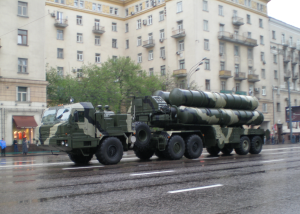
The company gave no detail on which systems are covered by the $1.1 billion contract, when deliveries begin, or where the equipment is headed. That is consistent with how ASELSAN has disclosed nearly all of its recent export business: large dollar or euro figures filed with KAP, attributed only to “a foreign end user,” with the buying country withheld at the customer’s request. Türkiye’s publicly known air defense export line now includes the medium-altitude HİSAR-O, the short-range HİSAR-A, the truck-mounted GÜRZ hybrid gun-and-missile system and the KORKUT 35mm gun, any of which could plausibly sit inside a contract this size — but without a KAP product breakdown or customer confirmation, DefenseTürkiye is not attaching a specific system or country to this deal.
A Pattern of Undisclosed Deals
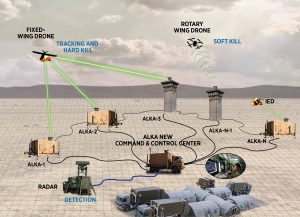
The $1.1 billion contract is not an isolated announcement. Over the five weeks before it, ASELSAN filed a run of export disclosures: a $157.9 million sales contract on October 6, a $125 million weapons and electronic warfare deal on October 8, a €488.5 million air defense export around the start of October, and a $442.5 million contract on October 22–23 covering radar, counter-drone and command-and-control systems for an undisclosed customer. Added together, the October filings alone put new export business for the month comfortably above $1 billion before Tuesday’s contract is even counted.
ASELSAN General Manager Ahmet Akyol tied the export run to a broader acceleration in the company’s order book. “We turn orders into capacity, and capacity into the future,” he said, pointing to a third quarter in which the company’s dollar-based growth reached 42%. Akyol also noted that ASELSAN climbed to 40th place on the Defense News Top 100 list and highlighted ASTRALINK, the company’s low-Earth-orbit satellite communications project, as a priority investment area.
The Numbers Behind the Deal
ASELSAN’s first-nine-months 2026 results, released alongside the KAP filing, show why the export pace matters beyond any single contract. New export contracts rose 34% year-on-year to $1.9 billion. Total new orders across the business reached $14 billion, pushing the company’s order backlog above $30 billion for the first time — a milestone DefenseTürkiye covered in late October when the backlog first crossed that line. Revenue rose 28% to ₺151.5 billion (about $3.03 billion), and EBITDA rose 38% to ₺40.6 billion ($812 million), a 26.8% margin. The third-quarter book-to-bill ratio — new orders against revenue booked in the same period — stood at 4.4, meaning the company is taking in new work several times faster than it is billing for completed deliveries.
Investment spending rose sharply, up 228% to $684 million, as ASELSAN expands production capacity to work through the backlog. R&D spending rose 36% to $1.3 billion, consistent with a company trying to keep pace with demand for newer systems rather than just scaling up legacy production lines.
| Metric (9M 2026) | Value | YoY Change |
|---|---|---|
| New export contracts | $1.9 billion | +34% |
| Total new orders | $14 billion | — |
| Order backlog | >$30 billion | First time above $30B |
| Revenue | ₺151.5 billion (~$3.03B) | +28% |
| EBITDA | ₺40.6 billion (~$812M) | +38% |
| Investment spending | $684 million | +228% |
| R&D spending | $1.3 billion | +36% |
Why Buyers Keep Their Names Off the Filing
ASELSAN’s practice of naming the dollar figure but not the customer is standard across most of Türkiye’s defense electronics export business, and DefenseTürkiye has previously examined why: many buyers, particularly in the Gulf and parts of Europe, treat the identity of their air defense supplier as sensitive information, and non-disclosure terms are often a condition of the sale rather than a Turkish preference. The practice makes it hard for outside analysts to map exactly who is buying what, but the aggregate trend is unambiguous — ASELSAN’s export contracting has accelerated through the second half of 2026, not slowed.
The International Context
The timing fits a period in which NATO members and Gulf states alike are rebuilding layered air defense inventories faster than Western primes can supply them, after the Ukraine war exposed how quickly ground-based air defense missiles are consumed in sustained conflict. Türkiye has positioned ASELSAN’s product line — generally cheaper than Western equivalents and increasingly combat-tested through Turkish Armed Forces use — as a credible alternative for countries that cannot get near-term delivery slots from the United States or major European suppliers. Whether that positioning is enough to move Türkiye into the very top tier of global arms exporters remains a separate question, but deals of this size, arriving roughly every two to three weeks, are the clearest evidence yet that demand for Turkish air defense hardware is real rather than aspirational.
ASELSAN has not said when it will next update the market on the contract’s scope. DefenseTürkiye will update this report if the company, the Presidency of Defence Industries (SSB) or a buying government discloses further detail.