Korkut Air Defence Reaches Nine Countries, Ukraine Among Them

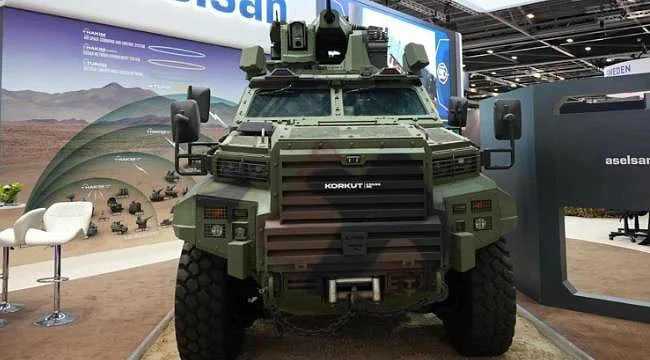
ASELSAN’s KORKUT gun-based air defence system is now in service in nine countries, including Ukraine, the Turkish state-owned electronics maker’s chief executive has told the Financial Times, in one of the most direct public accounts yet of how Türkiye’s cheapest air defence export has spread since the system’s combat debut earlier this decade.
In an interview published October 22 by the FT’s John Paul Rathbone and Fabrice Deprez, ASELSAN General Manager Ahmet Akyol said KORKUT has destroyed “maybe hundreds” of drones across its user base. Both figures are the company’s own tally rather than an independently audited count, and ASELSAN has not published a breakdown by country. Akyol did confirm, however, that Türkiye’s own armed forces were the first operator, and that Gulf states and several eastern European countries now make up the rest of the client list. Ukraine’s air force told the FT separately that one of its units has received an undisclosed number of KORKUT systems, the first on-the-record confirmation from Kyiv of a relationship that had previously surfaced only through unofficial reporting.
From unconfirmed deliveries to an official acknowledgment
Reports that Türkiye had quietly supplied Ukraine with a small batch of KORKUT systems first circulated in Turkish and international media earlier this year, citing unnamed Ukrainian officials who described the system as broadly effective against Shahed-type one-way attack drones, with some early teething problems that were later fixed. Middle East Eye reported at the time that Kyiv was interested in buying more units if the price was right. None of that reporting carried an on-the-record confirmation from either government. Akyol’s remarks to the FT, paired with the Ukrainian air force’s own statement, move the story from an open secret to an acknowledged export relationship, even if the exact numbers, contract value and delivery dates remain undisclosed.
That distinction matters for how the deal should be read. Türkiye has not officially confirmed the transfer through SSB or the Ministry of National Defence, and this report treats the Ukrainian air force’s statement, not a Turkish government announcement, as the operative confirmation of deployment. Whether the system was supplied directly by the state or through a commercial export licence has not been disclosed.
The pitch: a $10,000 kill against a drone threat that keeps getting cheaper
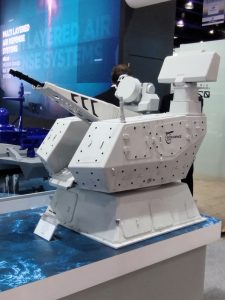
KORKUT is built around twin 35mm cannons firing programmable airburst ammunition, designed primarily against low-flying aircraft, cruise missiles and drones in the 700–900 km/h range. Akyol’s case for the system rests on cost rather than raw performance: he told the FT that knocking down a Shahed-style drone with KORKUT costs under $10,000, with the FT separately estimating the programmable 35mm round itself at around $1,000 apiece. That compares with interceptors like the Patriot PAC-3 or IRIS-T, which the paper put at anywhere from the low hundreds of thousands to several million dollars per shot. For air forces and ground units burning through expensive missiles to stop cheap loitering munitions, a gun-based system with a sub-$10,000 cost-per-kill is a different proposition entirely, and it’s the argument ASELSAN has leaned on at successive defence fairs over the past two years.
One caveat Akyol did not address: jet-powered Shahed variants now flying at roughly 600 km/h sit near the edge of what a gun system can reliably engage, and no public record shows a KORKUT intercepting one. Wood & Company analyst Atınç Özkan, cited in the same FT report, said that should not be a challenge for the system in theory, though it has not been demonstrated publicly. The FT also noted that European defence analysts see uneven quality across different Turkish systems, a reminder that KORKUT’s reputation is being built deal by deal rather than assumed.
Part of a bigger export push
Akyol framed KORKUT’s spread as one piece of a broader shift in ASELSAN’s business. He described the Gulf as “a very important and very huge market” and pointed to Türkiye’s August defence pact with Saudi Arabia and Pakistan as an advantage for future sales there. He also said NATO allies remain ASELSAN’s core customer base, citing a $410 million electronic-warfare contract signed with Poland last year. The company’s Çelik Kubbe (Steel Dome) layered air defence architecture, which KORKUT sits underneath as the short-range layer, was described by Akyol as modular and “plug and play,” a pitch aimed at buyers who want to add Turkish systems to an existing NATO-standard air defence network rather than replace it wholesale.
The numbers behind that push are large. Akyol told the FT that ASELSAN’s order backlog is close to $30 billion, that international sales now make up roughly a quarter of revenue, up from 8% in 2023, and that the company is targeting a 50% export share by 2030 — the same target reported last week in connection with ASELSAN’s push into Japan. ASELSAN, founded in 1975 and roughly 74%-owned by the Turkish Armed Forces Foundation, now carries a market value of about $32 billion, according to the FT’s reporting.
Why it matters beyond one gun system
KORKUT’s spread to nine countries, confirmed Ukrainian use among them, is a useful marker for where Turkish air defence exports now stand. The system was first deployed abroad in Libya in 2020, and ASELSAN has steadily added live-fire demonstrations for foreign delegations and combat-representative testing against Shahed-style targets at home since. A Ukrainian air force statement confirming use of a Turkish counter-drone gun, even without specifying numbers, gives Ankara something harder to claim with a simple product brochure: a system that has reportedly been tested against the exact threat — mass Shahed-type drone raids — that has driven most of Europe’s recent interest in low-cost air defence. For a company whose own CEO is publicly setting a 50% export target, having that story confirmed by a wartime customer’s own air force is a more valuable advertisement than another trade-show demo.
Sources: Financial Times, “Turkey markets cheap drone defences in export boom,” John Paul Rathbone and Fabrice Deprez, October 22, 2026 (subscription required); Middle East Eye.