Türkiye’s Incoming C-130J Fleet Gets a New Contractor Owner

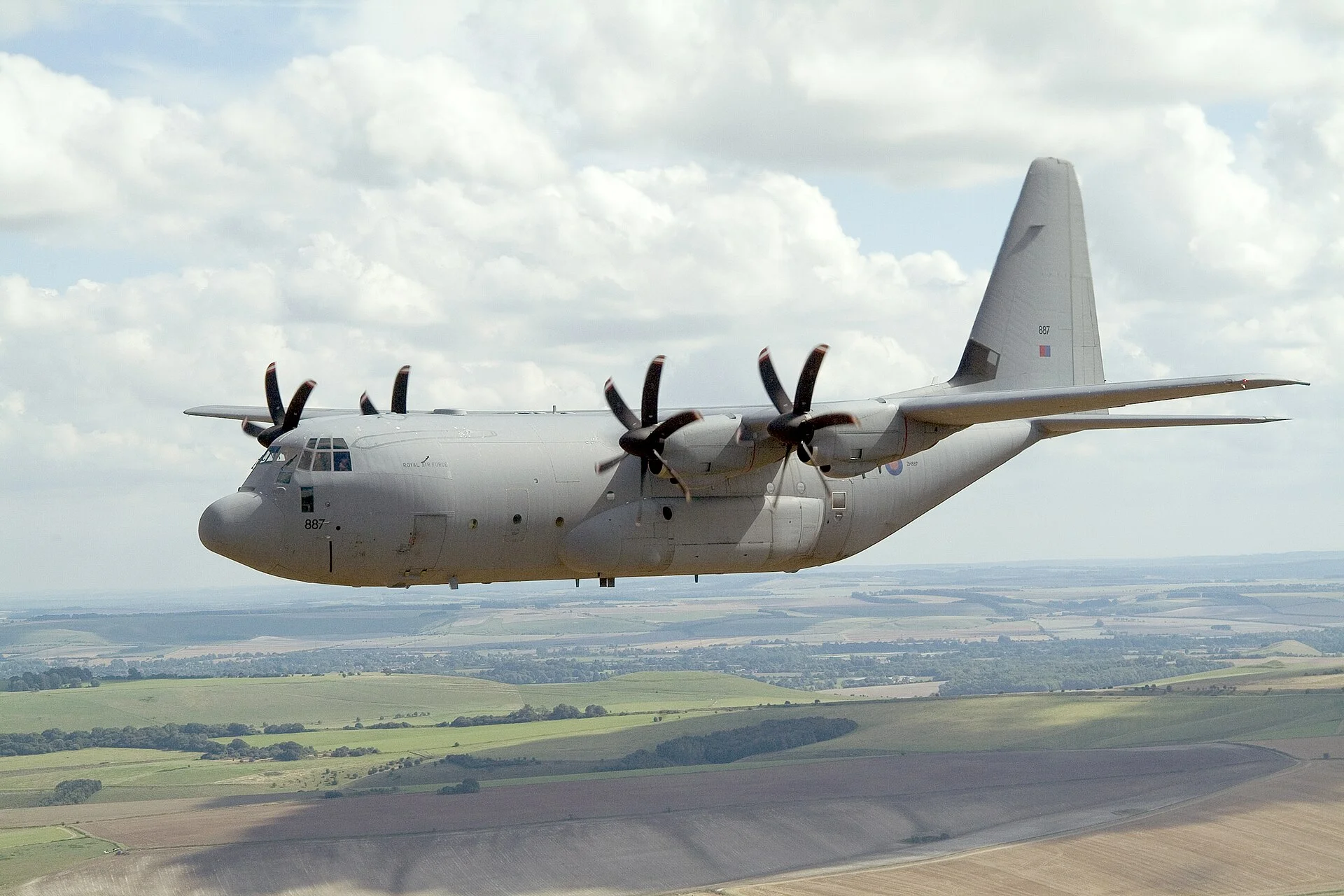
The UK contractor overhauling a dozen former Royal Air Force C-130J Hercules transports for the Turkish Air Force has changed owners just as the first aircraft near delivery. Marshall Aerospace, the Cambridge-based company carrying out the work, was acquired by Germany’s AURELIUS, a private equity investor, in a deal that closed on October 8 and separates Marshall Aerospace from the wider Marshall Group. The price was not disclosed.
The ownership change does not alter the program itself, according to Marshall, which says its existing maintenance, repair and overhaul work will continue uninterrupted. Marshall CEO Bob Baxter called the sale an important milestone and said AURELIUS brings the resources to support the company’s growth, naming delivery of current defence programs — including the Turkish fleet — as a stated priority going forward.
What Türkiye Is Actually Buying
Under a multi-year contract awarded by Türkiye’s Ministry of National Defence in October 2025, Marshall is preparing 12 surplus RAF C-130J Super Hercules for Turkish Air Force service. The work goes well beyond a fresh coat of paint: it includes centre wing box replacements, deep structural inspections and maintenance at Marshall’s Cambridge facilities, spare parts and specialist tooling, and training intended to build an indigenous Turkish C-130J maintenance capability rather than leave Türkiye permanently reliant on UK support — a model broadly consistent with how Türkiye typically structures after-sales support on imported platforms, insisting on technology transfer and local sustainment rather than accepting open-ended foreign dependency. Marshall also assisted the UK Ministry of Defence’s Defence Equipment & Support organization with the resale of the aircraft out of RAF service.
Buying used C-130Js rather than new-build aircraft is a pragmatic route to expanding tactical airlift capacity. The RAF has been drawing down its own C-130J fleet in favor of the A400M Atlas, freeing up airframes that are still well within their service life and considerably cheaper than ordering new production from Lockheed Martin. For Türkiye, which currently operates older C-130B and C-130E variants alongside the A400M, the ex-RAF J-models offer a capability upgrade — longer range, six-bladed composite propellers and a modern digital flight deck — without the years-long wait and cost of a new-build order. It is a smaller-scale version of the logic behind Türkiye’s own engine-overhaul and component-sustainment industry, which has spent decades building capacity to service imported airframes rather than simply operate them.
Delivery Timeline
Turkey’s Ministry of National Defence announced on October 1 that the first two aircraft are scheduled for delivery in December 2026, with the full batch of 12 due by 2029. Personnel training is already underway: six Turkish pilots and six technicians are training in the United States, while 29 maintenance personnel are training in the United Kingdom. Marshall told the UK trade outlet ADS Advance on October 17 that the program remains on that schedule.
Why the Ownership Change Is Worth Watching
AURELIUS specializes in acquiring non-core or carve-out industrial units and has no prior footprint in military aerospace sustainment at this scale. Marshall Group had already begun restructuring ahead of the sale, disposing of roughly 700 acres of its historic Cambridge Airport property in June 2026, with a full relocation from the airport planned for 2029 — the same year the last of Türkiye’s C-130Js is due to arrive. Marshall separately holds a 14-year agreement with Thales covering Royal Navy Sonar 2076 and 2087 components, giving a sense of the company’s broader defence workload beyond the Turkish contract.
None of this is reason for alarm on its own — contractor ownership changes are routine in European defence-industrial consolidation, and Marshall has publicly committed to continuity. But a program this dependent on a single UK facility, one that is itself relocating mid-contract, is worth tracking as deliveries ramp up toward the 2029 deadline. A slip in the first two aircraft due in December would be the clearest early signal of trouble.
Marshall Aerospace traces its origins to 1909, making it one of the oldest names in British aviation; the Turkish C-130J contract is among its largest current defence workloads. The deal sits alongside a broader run of foreign procurement and sustainment contracts the SSB has signed through 2026, even as Türkiye keeps expanding its own aircraft production capacity, including Turkish Aerospace’s new ANKA-3 production line, with an eye toward relying less on refurbished foreign airframes over the long run.