Turkish Defence Exports Pass $7.4B as HÜRJET Goes NATO

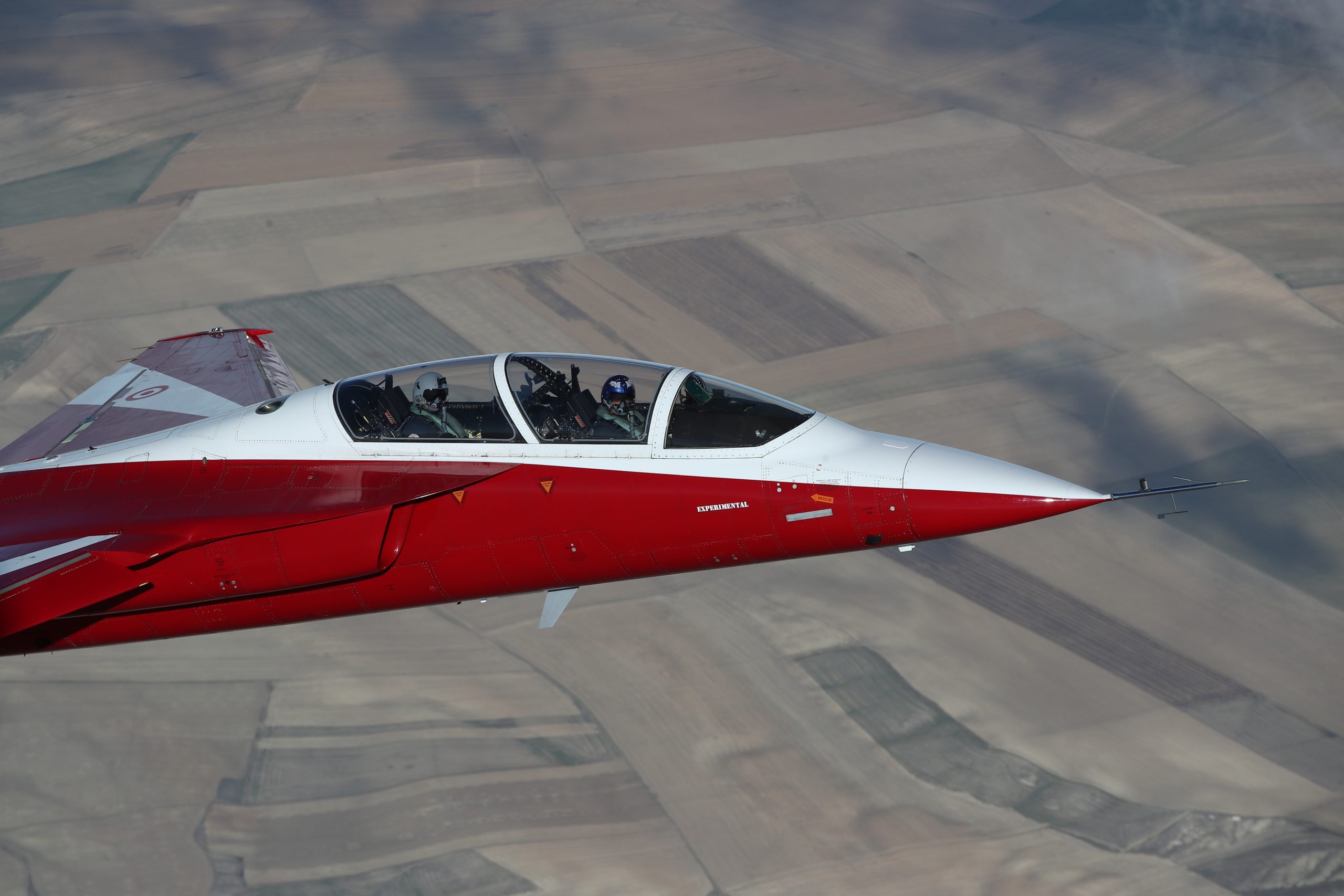
Türkiye’s defence and aerospace exports have passed $7.4 billion so far this year, and the HÜRJET jet trainer sold to Spain is about to get a Spanish-built sibling aimed at the rest of NATO, the head of Türkiye’s Presidency of Defence Industries (SSB) said this week.
Haluk Görgün made the comments at the opening of IDA Türkiye 2026, a new industrial-cooperation event that ran October 14–16 at the ATO Congresium in Ankara, in front of Turkish and Spanish officials, company executives and SME representatives. The export figure and the HÜRJET announcement were reported by multiple Turkish outlets, including the financial news service BorsaninGündemi and the daily Sabah, and separately confirmed in English-language coverage by Türkiye Today.
A Spanish-built version of HÜRJET
The centrepiece of Görgün’s remarks was an update on Türkiye’s export agreement with Spain for the HÜRJET advanced jet trainer, TUSAŞ’s twin-seat, supersonic-capable design that is also meant to replace older aircraft in Türkiye’s own pilot-training pipeline. Spain agreed in December 2025 to buy 30 HÜRJETs in a package valued at roughly €2.6 billion ($3.05 billion at the time), with the formal export agreement signed in Madrid the following spring. The contract bundles the aircraft with ground systems, simulators, maintenance infrastructure and a long-term support arrangement, and Turkish officials have called it Türkiye’s first export of a jet aircraft to a NATO member in Western Europe.
Görgün said the programme is now moving into a second phase in which Spanish industry takes on a growing share of the aircraft’s content — a process some Turkish reporting has labelled “Spanification” — swapping in Spanish-made subsystems and running additional certification work inside Spain. The resulting “Spanish version” of HÜRJET, he said, is intended to be offered not just to Spain’s own air force but to other NATO allies and partner nations once it clears certification.
That is a meaningful shift from a straightforward export sale to a joint-production arrangement that could open a second route into a European trainer-aircraft market that Turkish firms have been courting country by country, alongside the aircraft TAI builds and sells directly from Türkiye. Neither SSB nor TUSAŞ has published a timeline for when a Spanish-built HÜRJET would be ready for a formal rollout, and Görgün’s remarks did not name which additional countries are being targeted.
Export figures, with a caveat
Görgün also told the Ankara audience that Türkiye’s defence and aerospace exports have already topped $7.4 billion for the year, a total he said matches the sector’s export level reported for all of 2025, with the final quarter of the year typically adding a disproportionate share of annual sales. He put the industry’s current size at more than 4,000 companies and close to 130,000 employees, with an average worker age of 34. The figure builds on a year that has already produced $634 million in exports in September alone, part of a longer climb that Turkish officials now regularly compare with export leaders such as South Korea.
The $7.4 billion year-to-date figure sits below the roughly $10 billion in full-year 2025 defence and aerospace exports that President Recep Tayyip Erdoğan cited in December, a reminder that export totals quoted by different officials at different events do not always share the same scope, reporting period or methodology — whether they cover signed contracts, invoiced deliveries, or defence exports alone versus combined defence-and-aerospace figures. SSB has not published a detailed breakdown reconciling the two numbers, and this report treats both as officials’ own stated figures rather than independently verified totals.
A fair-sized industrial matchmaking event
IDA Türkiye 2026 itself is a change in format rather than a trade show in the traditional sense. It replaces the ICDDA platform that Ankara’s OSTİM Defence and Aerospace Cluster (OSSA) had run since 2013, and it is built around pre-scheduled business-to-business meetings arranged through an AI-assisted matchmaking platform rather than static exhibition stands. The stated goal is to connect large prime contractors — Turkish and foreign — with the smaller subcontractors and parts suppliers that make up most of the sector’s company count, rather than showcase finished platforms.
Spain’s presence in Ankara was not incidental. A Valencia regional government delegation attended, led by deputy industry minister Felipe Javier Carrasco Torres, who invited Turkish firms to a reciprocal event in Valencia next September. That event, IDA Spain 2027, will be the first international edition of the IDA brand and is backed by the Valencian government’s own defence-industry support programme, which has named the sector one of its four strategic industrial priorities. The Valencia visit follows an online cooperation meeting held in July that drew more than 70 Turkish company representatives, according to a Defence Turkey account of the bilateral programme.
Why it matters beyond Türkiye
For buyers and competitors alike, the HÜRJET-Spain relationship is the more interesting data point of the two. A Turkish trainer aircraft being re-engineered with a partner nation’s subsystems and certified for onward sale to other NATO members is a different proposition than a one-off export contract — it is closer to the model European and American manufacturers have long used to secure political buy-in and industrial support inside a partner’s own defence-procurement system. If SSB and TUSAŞ can make the Spanish-built variant credible to other European air forces, it gives HÜRJET a foothold in NATO trainer-replacement competitions that a Türkiye-only production line would struggle to match on local-content grounds alone — the same logic now shaping TUSAŞ’s pitch for KAAN export customers further down the line.
The export figures carry a simpler message: Turkish officials are continuing to describe 2026 as a record or near-record year for the sector regardless of which specific number is used, and they are framing events like IDA Türkiye explicitly as supply-chain and SME-level diplomacy rather than headline contract-signing ceremonies. For the companies and governments watching Türkiye’s defence exports — whether as customers, competitors or potential partners — the more durable signal from this week in Ankara may be the shift toward joint development deals like the Spanish HÜRJET, rather than the export total itself.