
Who Supports Turkish Weapons After the Sale? Spares and MRO

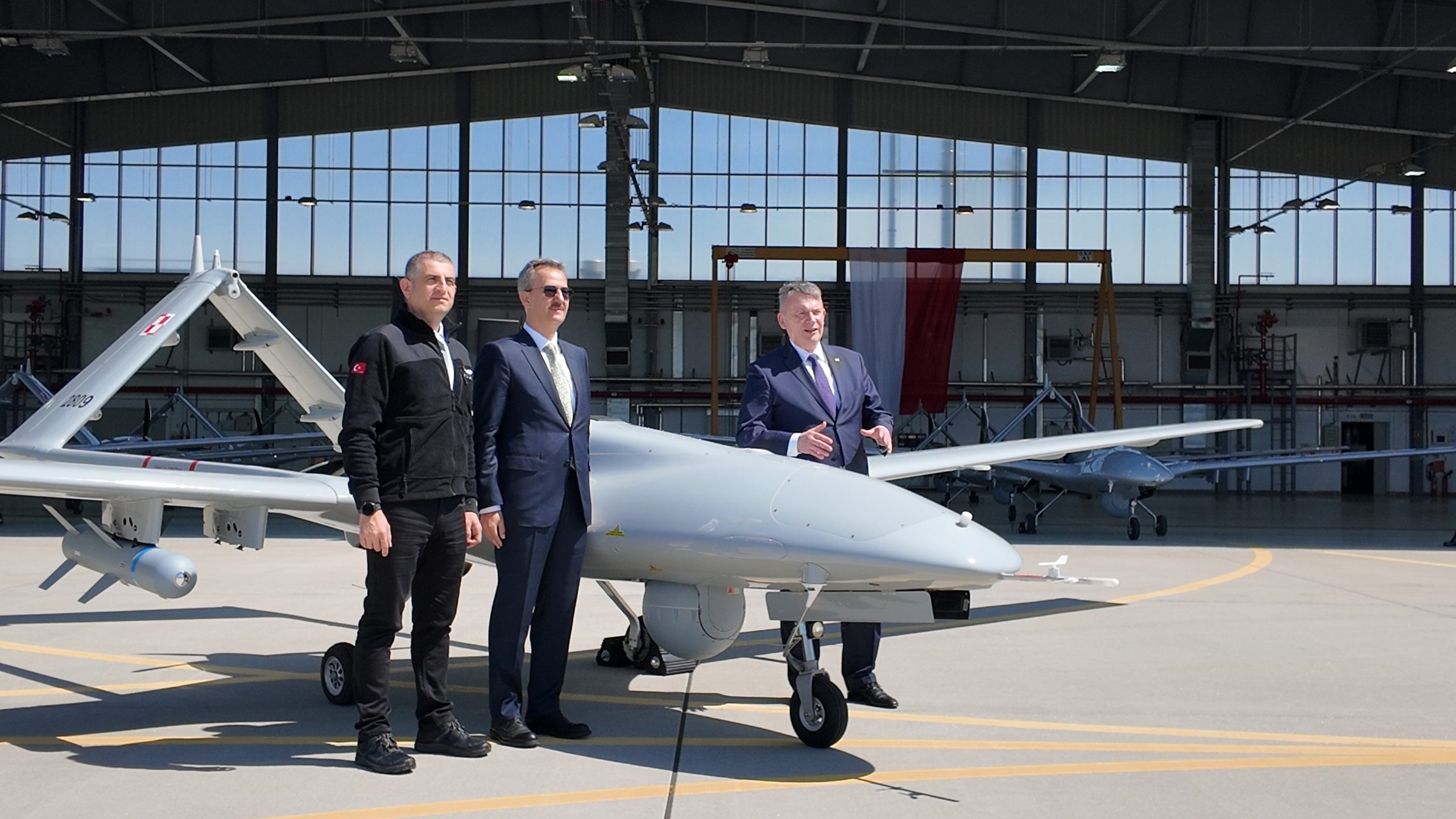
Five different structures, and which one a buyer gets depends on the deal rather than on the product. A Turkish exporter can ship parts out of Türkiye, register a local company because the customer’s own law demands it, hand the work to a partner firm in the country, buy a maintenance business inside the customer’s region, or let NATO’s support agency run the contract. Poland’s 24 Bayraktar TB2 aircraft now sit in that last category. Their logistics and service support runs through an outline agreement the NATO Support and Procurement Agency signed with Baykar in October 2024 — not a bilateral arrangement with Ankara.
That matters more than most buyers realise, because support is where arms relationships usually fail. A system that cannot be repaired is not a capability, and the question a foreign procurement officer asks after the ribbon-cutting is simple: in year ten, who sends the part?
DEFENCETÜRKIYE DATA BOX — TURKISH AFTER-SALES SUPPORT
Who provides it: the manufacturer (Baykar, ASELSAN, Otokar, ROKETSAN), state-owned ASFAT, local partners, or a third-party agency
Models in documented use: five (factory-direct, mandated local entity, local MRO partner, acquired regional facility, multinational agency)
Largest publicly documented arrangement: NSPA–Baykar outline agreement for Poland’s 24 TB2s, signed 18 October 2024, three years plus a possible two-year extension
Dedicated overseas MRO centres: ASELSAN Qatar MRO Centre (2021), ASELSAN Ukraine (2021), ASELSAN Bakü (1998)
State depot operator: ASFAT, running Ministry of National Defence military factories and naval shipyards
Published fleet availability data: none, for any Turkish system, in any market
Current milestone: integrated logistics support written into the headline value of Otokar’s $1.47bn export contract disclosed 1 October 2026
Why the support question is now the deciding one
Turkish exports have grown faster than the structures that keep exported equipment running. Haluk Görgün, head of the Presidency of Defence Industries (SSB), said on 4 August 2026 that defence and aerospace exports over the preceding twelve months had reached $11.2bn. Full-year 2025 came in around $10bn, against $7.15bn in 2024. Rockets, missiles and smart munitions accounted for roughly $3.7bn of the 2025 figure and unmanned aircraft about $2.1bn.
Those are delivery numbers, and each one creates a thirty-year obligation on the other side: spares, repairs, software updates, obsolescence management, trained technicians. The installed base abroad has grown far faster than the network that keeps it serviceable.
WHY IT MATTERS
For a buyer outside Türkiye, this is the single largest uncosted risk in a Turkish offer. Hardware price is published often enough to compare. Support is not: no Turkish company publishes availability rates, spares price lists or guaranteed turnaround times, and Türkiye has no equivalent of the US Foreign Military Sales sustainment case that locks a supplier into a defined service standard. What exists instead is five different structures, negotiated deal by deal, with very different risk sitting on the buyer.
Model one: ship it from Türkiye
The default. Parts move from Kahramankazan, Çorlu or Akyazı to the customer, technicians fly out when something serious breaks, and the buyer holds a spares package bought up front. It is the cheapest arrangement to set up and the most exposed. Turnaround depends on freight, on customs, and on the political weather — a Turkish export licence covers spare parts as much as it covers the original platform, which is the point our analysis of how countries actually buy Turkish weapons makes about the contracting architecture more broadly.
Most first-time customers start here. Few stay, because the arrangement gives the buyer no leverage and no local employment — and the second tranche of any serious fleet usually arrives with a demand for something more permanent, as the pattern behind repeat Turkish drone orders shows.
Model two: a local company the buyer’s own law requires
Baykar registered a Moroccan subsidiary, Atlas Defence, on 5 December 2024, with paid-up capital of 2.5 million dirhams — roughly $680,000. The Moroccan Official Gazette lists its activities as drone design, production and manufacturing, and the registration was widely read abroad as a factory announcement.
Middle East Eye reported, citing a source familiar with the arrangement, that the entity exists for a narrower reason: Moroccan regulations require foreign companies to establish a local entity before they can provide maintenance and spare parts services inside the country, and Baykar needed one to support the drones it had sold in 2021. The capital figure is consistent with that reading. A production line costs considerably more than $680,000.
This model is worth understanding because it is frequently mislabelled. A registered local entity is not evidence of technology transfer, and a buyer should not price it as such. It is a service vehicle created to satisfy the buyer’s own rules — which is useful, but it is a compliance structure, not an industrial one. Our page on where Turkish companies actually own plants abroad separates the two categories in detail.
Model three: hand the work to a local partner
This is where Türkiye has done the most building. ASELSAN opened its first overseas subsidiary, ASELSAN Bakü, in Azerbaijan in February 1998. In 2021 it added ASELSAN Ukraine, an office in Pakistan and a wholly owned Qatar MRO Centre, established as a Qatar Science and Technology Park branch and disclosed to Türkiye’s Public Disclosure Platform on 19 January 2021. The Ukrainian entity was set up with after-sales support, maintenance and repair as its stated purpose.
Qatar then went a step further. At DIMDEX in March 2022, ASELSAN and Barzan Maintenance Shield — a Barzan Holdings subsidiary — agreed that the Qatari firm would supply spare parts, training and technical support for the maintenance and repair of ASELSAN systems fitted to Qatari Armed Forces fighting and armoured vehicles. The Turkish company keeps the engineering authority; the Qatari company does the work and holds the inventory.
Azerbaijan shows the customer-funded version. Baykar announced in February 2024 that Azerbaijan had opened a training facility and a hangar for its Bayraktar AKINCI aircraft, with the hangar functioning as the type’s maintenance centre. The ceremony on 9 February was attended by Selçuk Bayraktar and President İlham Aliyev. The first Azerbaijani AKINCI crews had completed training in October 2022.
The logic repeated again at ADEX 2026 in Baku on 30 September 2026, where Otokar and MKE both signed logistics support agreements with the Azerbaijani firm MİRAS, inside a package of Türkiye–Azerbaijan defence agreements worth more than $500m.
Model four: buy a support business inside the customer’s region
Baykar’s acquisition of Piaggio Aerospace’s business complexes, completed in 2025, is usually discussed as a production move — TB2 and AKINCI assembly inside the European Union. The sustainment half is at least as important. The Genoa site houses Piaggio’s Aerospace Service Centre, an existing aircraft maintenance, upgrade and repair operation, and Selçuk Bayraktar has said the company intends to run a maintenance centre there for both airframes and engines.
For a European customer, that changes the answer to the only question that matters: the part comes from Liguria, inside the single market, under EU regulatory arrangements, rather than from Anatolia on an export licence. No other Turkish company has bought this kind of asset.
Model five: let a multinational agency run it
On 18 October 2024, the NATO Support and Procurement Agency signed an outline agreement with Baykar, at a ceremony in Istanbul, to provide logistical and service support for Poland’s fleet of 24 Bayraktar TB2 aircraft. The contract was set up in coordination with Poland’s Armed Forces Support Inspectorate, runs for three years and can be extended by two more. Its stated object is maintenance, operability and availability.
The sentence that deserves attention came from NSPA general manager Stacy Cummings, who said the framework “has been designed with the view to accommodate other Bayraktar TB2 user nations as required.”
That is a structural change, not a Polish detail. It means a Turkish platform has been admitted to the machinery NATO uses to sustain multinational fleets, and that a future European or allied TB2 operator can buy support through an agency it already deals with rather than negotiating bilaterally with a Turkish manufacturer. For buyers nervous about political exposure — the recurring worry in every market, and the reason the question of US component licences keeps resurfacing — an intermediary of that kind is worth real money.
It is also, so far, a single arrangement covering a single type for a single customer. It is a precedent, not yet a system.
| Model | How it works | Documented example | Who carries the spares risk | What to ask before signing |
|---|---|---|---|---|
| Factory-direct | Parts and technicians dispatched from Türkiye on demand | Most first-tranche export sales | The buyer, entirely | Guaranteed turnaround times, and whether spares need a fresh export licence |
| Mandated local entity | A subsidiary registered because local law requires one to service equipment | Atlas Defence, Morocco, registered 5 December 2024 | The buyer, with faster local admin | Headcount and tooling actually placed in-country, not registered capital |
| Local MRO partner | A domestic firm or local subsidiary does the work; the OEM holds engineering authority | ASELSAN Qatar MRO Centre with Barzan Maintenance Shield, 2022 | Shared | Which repair levels transfer, and who certifies the technicians |
| Acquired regional facility | The Turkish firm buys an established maintenance business in the customer’s region | Baykar at Piaggio Aerospace, Genoa and Villanova d’Albenga | The supplier | Whether your type is actually inducted there, or only built there |
| Multinational agency | A third-party agency contracts the manufacturer on the customer’s behalf | NSPA–Baykar outline agreement for Poland, 18 October 2024 | Largely the agency | Whether your nation can accede to the existing framework |
The asset nobody counts: forty years of maintaining somebody else’s equipment
Türkiye’s deepest sustainment capability was not built on Turkish products. ASFAT, the Ministry of National Defence company that runs the state’s military factories and naval shipyards, publishes a capability list that is almost entirely Western hardware. It covers depot-level maintenance, repair and refurbishment of F-16, F-4, F-5, T-38, C-130, C-160, CN-235, KC-135R and A400M airframes, engines and subsystems; of UH-1, Bell 206, Bell 212/412, AH-1, S-70 Black Hawk and AS-532 Cougar helicopters; and third-level, factory-grade work on Leopard A1/T1, M60T and M113 tracked vehicles alongside Kirpi and Cobra wheeled ones.
Read that list as a buyer rather than as a patriot and it says something specific. Turkish industry learned long-term sustainment as a customer, on other people’s aircraft, decades before it had exports of its own to support. The skills transfer: a shop that overhauls F-16 accessories can overhaul a HÜRJET’s, and the quality system behind it is the NATO government quality assurance architecture that travels across alliance borders.
ASFAT has also started exporting the capability itself rather than the product. Its own capabilities page lists naval base and military shipyard development, and names Karachi Shipyard and Pakistan Navy Dockyard alongside the Istanbul, Gölcük and İzmir naval shipyard commands. That is Türkiye building a customer’s ability to sustain its own fleet — the most durable form of support there is, and a different proposition from the one set out in our profile of ASFAT as a contracting vehicle.
What the contracts actually say
Poland’s May 2021 TB2 contract, worth about $270m, covered four systems of six aircraft each. Polish defence reporting at the time described it as including a logistics and training package and a maintenance offset agreement, with the offset work delegated to a Polish state military enterprise; Polish accounts also described two simulators, a spares package, training for 192 personnel and a 24-month warranty. Deliveries of the TB2 fleet finished on 16 May 2024. The NSPA framework followed five months later — which is the sequence worth noting. The support architecture was renegotiated after the fleet arrived, not before.
The newer pattern writes support into the original deal. Otokar disclosed to Türkiye’s Public Disclosure Platform on 1 October 2026 an export contract worth $1,472,080,360 covering several types of wheeled armoured vehicle and integrated logistics support services for them. The buyer, the models and the quantities were not identified. Deliveries start in 2027 and complete in batches over three years; the contract remains in force for seven. Otokar will post letters of guarantee totalling $441.6m.
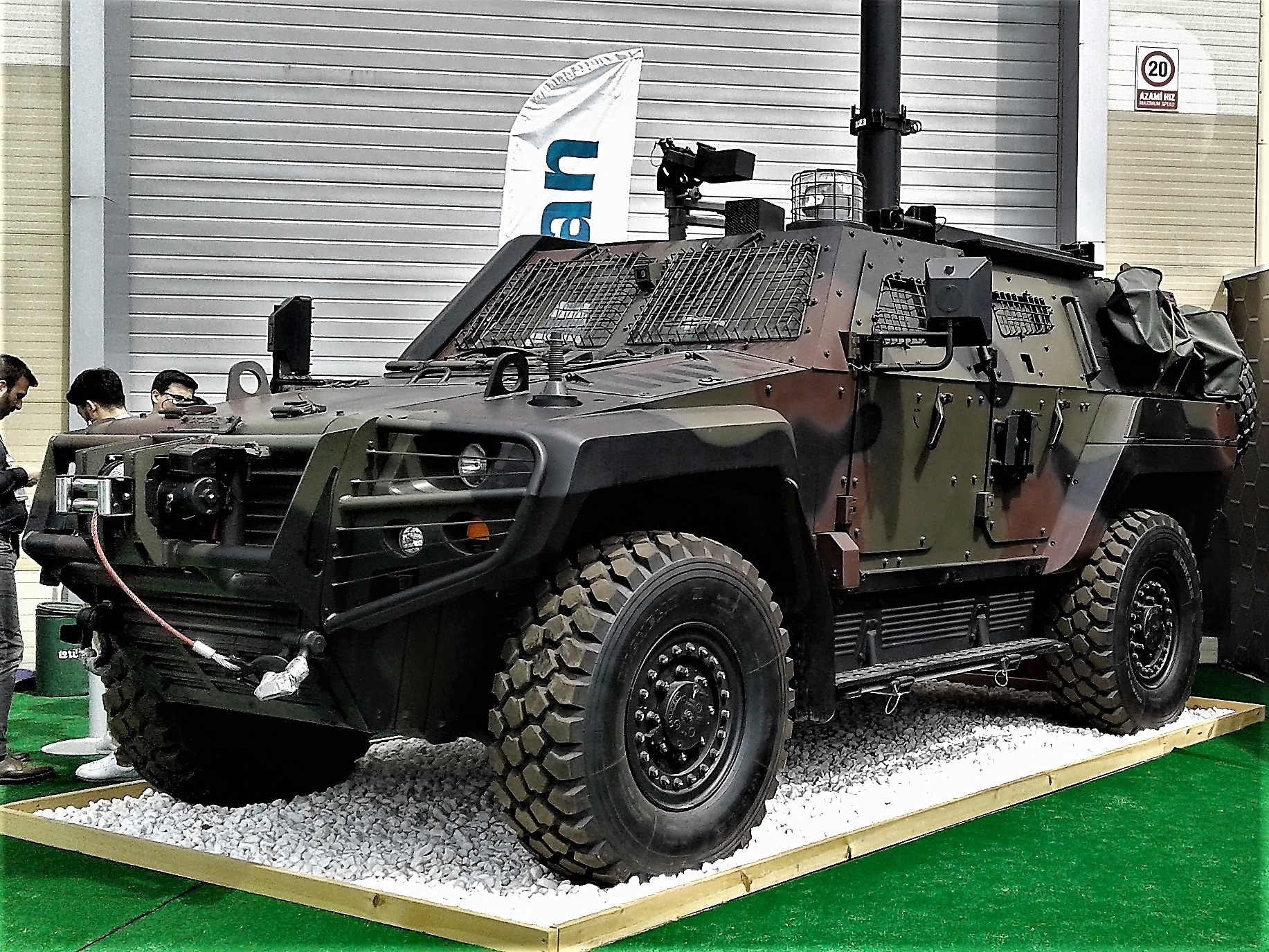
Two things follow. The contract’s seven-year life runs roughly four years past the last scheduled vehicle, and integrated logistics support is named in its scope — so a substantial part of that headline figure is service, not steel. And that makes Turkish contract values less comparable than they look: a number that bundles years of support cannot be set against a bare unit price, which is a caution worth carrying into any reading of why armoured vehicle buyers choose Turkish suppliers on cost grounds.
What is not published
Honesty about the gaps is more useful to a buyer than a sales argument, and the gaps here are real.
- No availability or serviceability figures. No Turkish manufacturer, and no Turkish customer ministry, publishes fleet availability rates for any exported system. Neither do most exporters, but the absence means a buyer cannot model operating cost from public data and must demand it contractually.
- No standard support-case structure. There is no Turkish equivalent of an FMS sustainment case: no standard offer document, no published case tracking, no defined service levels that apply across customers. Every support arrangement is bespoke.
- No published spares pricing. Catalogue pricing and escalation formulas are not in the public record, so long-run cost of ownership cannot be compared between Turkish and Western offers without going to tender.
- Third-party licences still bite. Where a Turkish system contains foreign-origin components, sustainment inherits the same export-control exposure as the original sale.
- Depth is uneven. Dedicated overseas MRO centres exist in a handful of countries. Most markets Turkish industry sells into have nothing of the kind, and a small order will be supported from Türkiye whatever the brochure implies.
Türkiye is a sustainment customer too
The useful corrective is that Ankara sits on the buyer’s side of exactly these arrangements. Türkiye and the United Kingdom signed a technical and logistics support contract for the maintenance and operation of Eurofighter Typhoon aircraft, concluded in London between defence ministers Yaşar Güler and John Healey — covered in Envanter Medya’s Turkish-language account of the Typhoon support contract. Separately, Türkiye is one of 29 countries inside a US indefinite-delivery framework for maintenance, overhaul and spare parts supply for Pratt & Whitney F100 engines, awarded across 21 firms and running to 30 September 2036, as set out in Envanter Medya’s analysis of the F100 sustainment framework.
Put those two facts next to the Turkish export story and the shape of the problem becomes clear. The US sells sustainment as a decade-long multinational framework with 29 participating states. Türkiye currently sells it one negotiation at a time. The NSPA agreement is the first sign of movement, and Turkish industry’s broader entry into NATO contracting — ASELSAN’s framework agreement with NSPA for identification-friend-or-foe systems, signed in January 2026 — points the same way.
BUYER VIEW
Open-source editorial analysis, not procurement advice. Four questions separate a serious Turkish support offer from a brochure one.
1. Which repair level transfers? Operator-level maintenance is easy to localise. Depot-level work on engines, radars and electro-optical turrets is the expensive part, and it is the part that decides whether a fleet can be kept flying without Türkiye.
2. Does the support contract have its own term? Otokar’s structure — a seven-year contract against three years of deliveries — is the pattern to look for. Support that expires with the warranty is not support.
3. Can an agency route be used? NATO members and partners should test whether the NSPA framework can be extended to their fleet before negotiating bilaterally. NSPA said it was built for that.
4. What happens to spares if relations cool? The answer is a contractual one — buffer stocks, licensed local manufacture, source-code escrow — and it should be settled before signature, not after.
What comes next
Three markers will show whether Türkiye is building a sustainment system or continuing to improvise one, and all three are checkable from open sources.
The first is a second nation joining the NSPA TB2 framework. Cummings said it was designed to accommodate other operators; the day a second flag appears on it, Turkish equipment has genuinely entered allied logistics. The second is a published support metric — any Turkish company, any customer, committing publicly to an availability figure or a turnaround time. That would be a first, and it would do more for export credibility than another airshow contract. The third is what Piaggio actually inducts: if Genoa starts taking in third-party European TB2s for depot work rather than only building new aircraft, Baykar will have something no other Turkish exporter has.
Until then the honest summary is the one a buyer should plan around. Turkish industry can deliver faster than most of its competitors and has shown it will build support structures where a customer insists on them. What it has not yet built is a standard the customer can read before negotiations start.
FAQ
Does Türkiye provide after-sales support for exported weapons?
Yes, but through five different structures rather than one standard programme: direct supply from Türkiye, a locally registered subsidiary, a local maintenance partner, an acquired facility in the customer’s region, or a third-party agency such as NSPA. Which one applies is negotiated deal by deal.
Who maintains Poland’s Bayraktar TB2 drones?
Logistical and service support runs under an outline agreement the NATO Support and Procurement Agency signed with Baykar on 18 October 2024, coordinated with Poland’s Armed Forces Support Inspectorate. It covers the 24-aircraft fleet for three years with a possible two-year extension. The original 2021 purchase also included a maintenance offset delegated to a Polish state enterprise.
Does ASELSAN have maintenance centres outside Türkiye?
Yes. ASELSAN opened a wholly owned MRO centre in Qatar in 2021, disclosed to Türkiye’s Public Disclosure Platform in January that year, and ASELSAN Ukraine was established the same year with after-sales support and repair as its purpose. ASELSAN Bakü in Azerbaijan dates from 1998. In Qatar, Barzan Maintenance Shield supplies spare parts, training and technical support for ASELSAN systems on Qatari armed vehicles under a 2022 agreement.
Can Türkiye cut off spare parts for political reasons?
Spare parts are covered by Turkish export licensing in the same way as the original platform, so in principle yes — as with any arms exporter. The practical mitigations are contractual: buffer stocks, licensed local production of consumables, and in-country repair capability. Where a system contains foreign-origin components, a third country may also be able to block sustainment regardless of Ankara’s position.
Do Turkish companies publish availability rates for their systems?
No. No Turkish manufacturer or customer ministry publishes fleet availability or serviceability figures for an exported Turkish system. Any figure circulating in open sources is an estimate, and buyers should treat it as one.
Is Turkish support cheaper than Western support?
There is no public data to answer this. Spares catalogues and escalation formulas are not published, and headline contract values increasingly bundle integrated logistics support with hardware — Otokar’s October 2026 contract is an example — which makes cross-supplier comparison unreliable without a competitive tender.
What is ASFAT’s role in supporting exported equipment?
ASFAT runs the Turkish Ministry of National Defence’s military factories and naval shipyards and performs depot-level maintenance across aircraft, helicopters, naval platforms and armoured vehicles — much of it Western-origin equipment in Turkish service. It also develops foreign naval repair infrastructure, listing Karachi Shipyard and Pakistan Navy Dockyard among its naval base and shipyard development work.
Sources
- ASFAT, Kabiliyetlerimiz (capabilities) — depot-level maintenance scope and naval shipyard development
- Baykar, Azerbaijan confirms Turkish long-range armed drone purchase
- Shephard Media, Poland boosts its Bayraktar TB2 operability with three-year support contract
- The Defense Post, Poland to enhance Bayraktar TB2 drone operability with new contract
- Defence24, Bayraktar TB2 UCAVs for the Polish military
- Middle East Eye, Turkish defence company’s Morocco drone investment isn’t what it seems
- Al Defaiya, ASELSAN and Barzan Maintenance Shield to collaborate on MRO services in Qatar
- European Security & Defence, Hangar ceremony confirms Azerbaijan has Baykar AKINCI UAVs
- Decode39, How Baykar’s acquisition of Piaggio revives Italy’s aerospace sector
- Hürriyet Daily News, Otokar signs $1.47 billion armoured vehicle export deal (Otokar disclosure to the Public Disclosure Platform, 1 October 2026)
- Al-Monitor, Türkiye’s defence exports reach record $5.79bn in first seven months of 2026 (SSB figures, Haluk Görgün, 4 August 2026)
- Joint Forces, MKE and MİRAS cooperation unveiled at ADEX 2026


