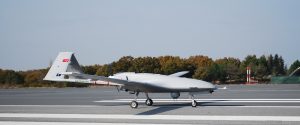
How TUSAŞ Turned a 14-Minute Test Flight Into the ANKA Drone Family

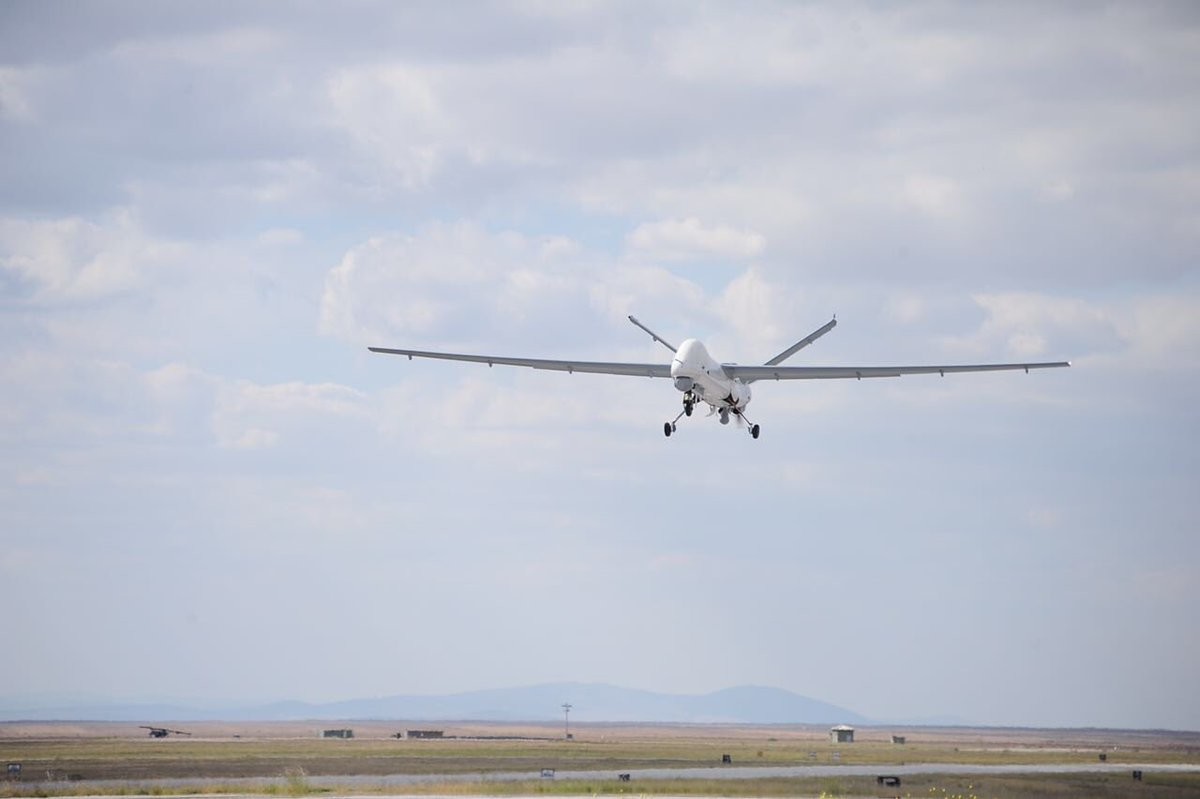
When the first ANKA took off on 30 December 2010, it stayed airborne for 14 minutes. That is a modest number for a machine that would later log tens of thousands of flight hours, fly armed missions over Syria and Libya, and end up on order in Southeast Asia and Central Asia. The story of the TAI ANKA drone is less about a single aircraft than a slow accumulation of upgrades, and it explains why Turkish Aerospace (TUSAŞ) now sells a whole line of uncrewed aircraft instead of one product.
| ANKA-S at a glance | Details |
|---|---|
| Manufacturer | Turkish Aerospace (TUSAŞ / TAI) |
| Type | Medium-altitude long-endurance (MALE) uncrewed aircraft |
| Prototype first flight | 30 December 2010 |
| Series ANKA-S | First deliveries reported in early 2017 |
| Length / wingspan | About 8.6 m / 17.5 m |
| Maximum take-off weight | About 1,700 kg |
| Payload | 350+ kg (manufacturer figure, updated in 2021) |
| Endurance / ceiling | Up to 30 hours / about 30,000 ft |
| Engine | One 170 hp TEI-PD170 diesel that also burns JP-8 (earlier aircraft used a Thielert Centurion engine) |
| Datalink | Line of sight beyond 250 km; satellite link for beyond-line-of-sight control |
| Weapons | Two underwing stations; Roketsan MAM-L, MAM-C, Cirit and L-UMTAS and the TÜBİTAK SAGE BOZOK bomb have been cited |
Where did the ANKA programme start?
The contract for an indigenous MALE drone for the Turkish Armed Forces took effect on 24 December 2004. The goal was a domestically designed aircraft with its own sensors and, eventually, its own flight computer and engine. The first phase covered three prototypes and the ground segment, planned for completion by mid-2011.
The schedule slipped, as first-of-a-kind aircraft programmes tend to. The first flight came at the end of 2010. A video of a 2.5-hour calibration sortie followed in May 2011, and by November 2011 the aircraft had flown six hours at 20,000 ft and demonstrated automatic take-off and landing for the first time. Prototypes were reported lost in accidents in September 2012 and December 2013.
The Turkish Air Force’s acceptance testing wrapped up in January 2013 with an 18-hour, 200 km ring flight near Ankara, including a night landing in poor weather. By then the aircraft had passed 140 flight hours and reached 26,000 ft. In October 2013 the procurement agency, then known as SSM, ordered 10 ANKA systems, reported at about $290 million, to be delivered in three batches.
How does ANKA-A differ from ANKA-B and ANKA-S?
The naming confuses newcomers, so it helps to read it as a sequence of capability steps.
- ANKA-A (Block A) was the original reconnaissance aircraft. It carried an electro-optical and infrared turret and little else, and it proved the airframe, the automatic take-off and landing system and the ground control architecture.
- ANKA-B (Block B) flew for the first time on 30 January 2015 and added a synthetic aperture radar with ground moving target indication, supplied by ASELSAN. Radar meant better all-weather imagery, and the heavier payload paved the way for weapons.
- ANKA-S is the series production standard. It adds a satellite communications terminal, so operators are no longer tied to a line-of-sight datalink, and a national flight control computer.
- ANKA-I is a signals and electronic intelligence version developed for Turkey’s National Intelligence Organisation (MİT).
- ANKA+A was a heavier armed concept announced in 2012, intended to carry Roketsan’s Cirit missile. It was announced but did not become a fielded type under that name.
A standard ANKA system is not one aircraft. Turkish Aerospace describes a package of three air vehicles, a ground control station, a ground data terminal, an automatic take-off and landing system, image exploitation equipment and a remote video terminal. Customers buy the whole system, which is why export contracts are quoted in “systems” and not airframes.
When did ANKA become an armed drone?
Weaponisation came in steps. In 2018, during Operation Olive Branch in Syria, the ANKA reportedly employed the Roketsan MAM-L smart micro-munition for the first time. On 17 August 2018 the defence procurement agency announced that ANKA-S had completed its first live-fire tests with MAM-L. The same month the aircraft carried out what Turkish officials described as the country’s first satellite-controlled strike. That mattered because it showed a crew could run a strike far from the launch site.
The combat record is mixed, as it is for every MALE drone. ANKA flew in Euphrates Shield, Olive Branch, Peace Spring and other operations in Syria and Iraq. During Operation Spring Shield in early 2020 it served alongside the Bayraktar TB2 (see the TB2 programme status and exports), although Syrian air defences reportedly downed ANKAs in Idlib in February and March of that year. Libyan sources reported ANKA losses around Misrata and Tarhuna in spring 2020, and a United Nations panel attributed at least one wreck to an ANKA operated for the Government of National Accord. In October 2023 an ANKA-S was reportedly shot down over northern Syria, an incident that drew attention because of the American aircraft said to be involved.
Turkish Aerospace has also used ANKA as a launch platform. It flew a ŞİMŞEK target drone from an ANKA-B, reportedly the first time a target drone had been released from a MALE-class aircraft.
What changed under the hood?
The early aircraft relied on foreign components, among them a Thielert Centurion piston engine. Much of the programme’s history since has been about replacing them.
- Engine. TEI developed the PD170, a 170 hp diesel that also runs on JP-8. ANKA flew with a domestically built engine for the first time in December 2018. The same engine family powers AKSUNGUR in a twin configuration. The wider picture of Turkish powerplants is covered in our guide to who builds Türkiye’s aircraft engines.
- Sensors. ASELSAN supplies the radar and the CATS electro-optical turret, with foreign options also listed for some configurations.
- Satellite terminals. CTech developed a satellite antenna first fitted to ANKA-S aircraft; a foreign alternative has also been offered.
- Ground segment. Savronik is credited with the ground control and datalink system for ANKA-S.
In May 2021 the manufacturer revised its headline numbers to a payload above 350 kg and endurance of 30 hours. That was a long way from the 14-minute debut, and it reflected accumulated flight experience more than a change in the airframe. The fleet was reported to have passed 90,000 flight hours by March 2021.
Is ANKA a single drone or a family now?
Since about 2019 the name has spread beyond the original airframe. Turkish Aerospace has used the architecture, meaning the avionics, the mission software and the ground station, as the basis for larger and more advanced aircraft.
AKSUNGUR, first known as ANKA-2, is a twin-engine MALE drone with a wingspan around 24 m and a maximum take-off weight of roughly 3,300 kg. It first flew on 20 March 2019 and was designed for heavier payloads, with six hardpoints and roles in maritime patrol and signals intelligence. The first unit was delivered to the Turkish Naval Forces on 20 October 2021. It keeps the ANKA control architecture, which lowers training and logistics burdens for operators who use both.
ANKA-3 is a different animal: a jet-powered flying wing intended for low observability, internal weapons carriage and work alongside crewed aircraft. It began runway tests in April 2023 and made its first flight on 28 December 2023. In 2024 it reportedly completed a first live-fire test with an ASELSAN electro-optical system and a Roketsan TEBER-82 guidance kit, and in October 2024 it was reported to have been controlled by another aircraft in a loyal-wingman test. A prototype was lost in a crash in June 2025 during the Anatolian Eagle exercise. Engines and production timelines are still evolving, so specification figures for the final aircraft should be treated as provisional. Its mission overlaps with the Bayraktar KIZILELMA, and both are discussed as companions to the KAAN fighter.
The shared ground segment is the commercial logic behind the family. A customer that buys ANKA-S can, in principle, add AKSUNGUR or later platforms without retraining on an unfamiliar control station.
Who has bought ANKA abroad?
Exports took longer than for the rival Bayraktar TB2, and several early negotiations stalled. Egypt signed a contract in 2012 for 10 ANKAs, which was later cancelled. Talks with Saudi Arabia on roughly six systems dragged on for years without a signed deal.
The later contracts were more durable. Tunisia signed in March 2020 for three ANKA-S and three control stations worth about $80 million, and received its first aircraft in November 2021. In February 2023 Indonesia announced an order for 12 aircraft with support equipment, reported at about $300 million, with half of them to be assembled in Indonesia through technology transfer. Malaysia signed for three ANKA-S at the LIMA 2023 show, for around $85 million, for maritime surveillance. Kazakhstan reportedly agreed in 2022 to buy three aircraft and co-produce more locally. In 2021 TUSAŞ and Pakistan’s NESCOM signed a co-production agreement, following earlier parts manufacture at Pakistan Aeronautical Complex Kamra. Uzbekistan was announced as a customer in January 2025, without published details. Delivery dates and quantities in several of these deals come from secondary reporting and change over time.
A fuller country-by-country breakdown is in our explainer on which countries operate the ANKA.
What did ANKA change for TUSAŞ?
ANKA is the aircraft that pushed a company best known for licence-building F-16s and assembling helicopters into designing its own air vehicles. The lessons carried forward: a national flight computer, domestic engines, satellite links and sensors integrated on a home-built airframe. The next steps, AKSUNGUR for heavier work and ANKA-3 for contested airspace, lean on that accumulated base. Whether the jet-powered ANKA-3 reaches production on schedule is the main open question, with reports pointing to multiple units by 2028.
For the original ANKA-S the picture is steadier. It serves with the Turkish Air Force, Navy and Gendarmerie according to published order-of-battle listings, and foreign customers are still taking delivery. A drone that first flew for 14 minutes has become a product line that Turkish Aerospace can export, upgrade and build on.