Inside the SSB, the Agency That Signs Türkiye’s Defence Contracts

When a Turkish ministry, a service branch or a foreign customer talks about a new weapon programme, one acronym keeps surfacing: SSB. The Turkish defence agency is the state body that turns a military requirement into a signed contract, then follows the money and the production line until delivery. It does not build the weapons itself, and it is not the army’s purchasing department in the Western sense. It sits in between.
This guide explains what the SSB is, where it came from, who it answers to and how its role shapes the way Türkiye buys and exports defence equipment.
What Is the SSB and What Does It Do?
SSB stands for Savunma Sanayii Başkanlığı, the Presidency of Defence Industries. Its own English-language website describes a set of statutory tasks. The agency concludes contracts for projects based on multi-year programmes, sets procurement programmes and financing models according to available funding, and implements decisions of the Defence Industry Executive Committee. It also plans production of modern weapons and equipment by the private or public sector, supports R&D and prototype work, monitors quality and contract compliance, and coordinates defence exports and offset trade.
| Full name | Savunma Sanayii Başkanlığı (Presidency of Defence Industries; English name changed to Defence Industry Agency in 2022, according to Wikipedia) |
|---|---|
| Established | 1985, under Law No. 3238 |
| Reports to | The President of the Republic, since the December 2017 decree |
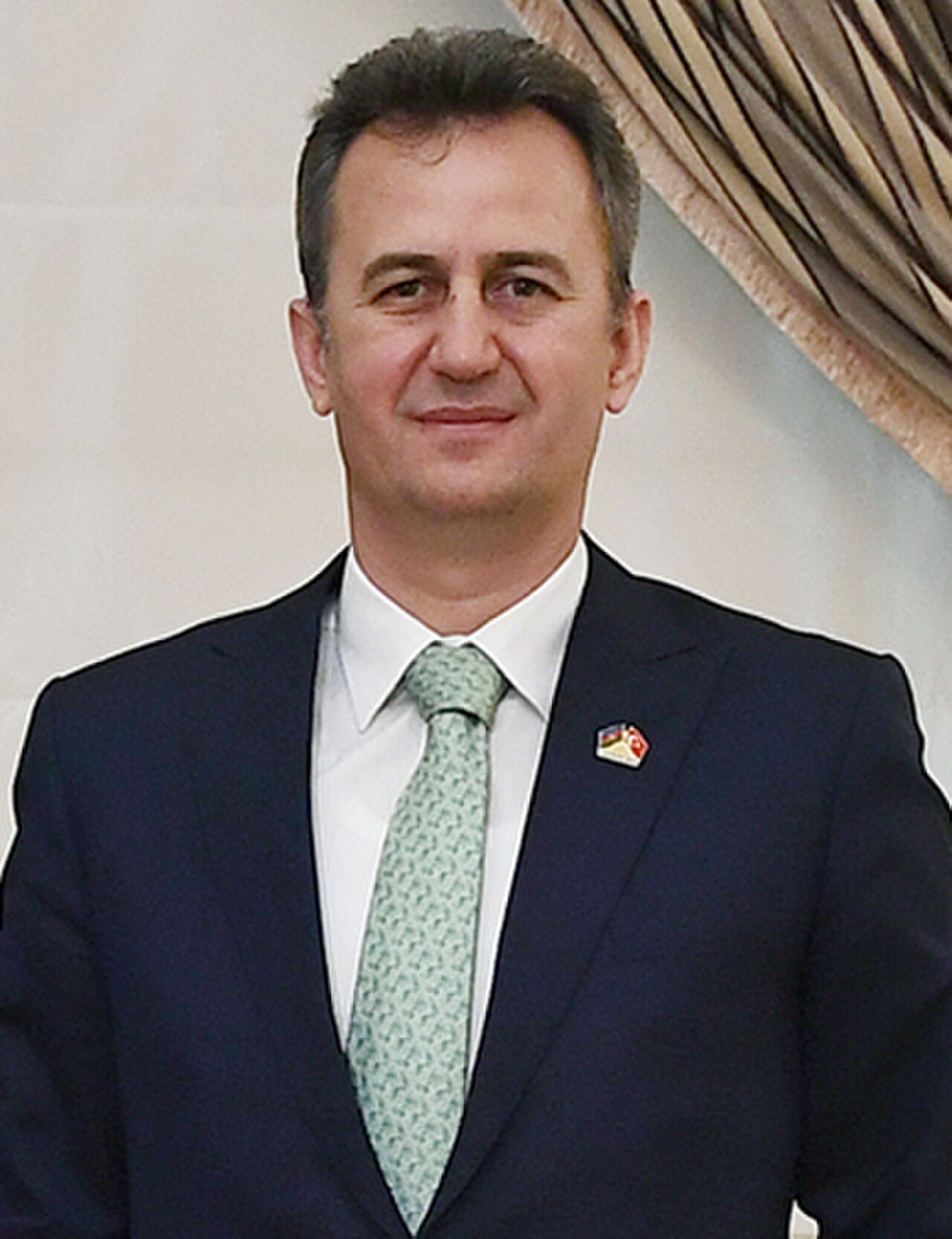
| Head | Prof. Dr. Haluk Görgün (since June 2023) |
| Core role | Contracting, programme management, financing models, quality oversight, export and offset coordination |
| Website | ssb.gov.tr |
How Did the Agency Get Here?
The origins go back to 1985, when Law No. 3238 created the Defence Industry Development and Support Administration. According to the SSB, it was restructured in 1989 as the Undersecretariat for Defence Industries, known by its old initials SSM. The SSB itself links the wider effort to the arms embargo that followed the 1974 Cyprus crisis, which pushed Ankara toward domestic production.
The biggest institutional change came at the end of 2017. Decree No. 696, issued on 24 December 2017, placed the procurement agency directly under President Recep Tayyip Erdoğan, who also took over the chair of the Defence Industry Executive Committee, as Defense News reported at the time. In July 2018 the body was renamed the Secretariat, later Presidency, of Defence Industries.
The reorganisation was not a quiet one. Observers quoted in contemporary coverage said it either formalised informal arrangements or would deepen presidential involvement in flagship programmes. Both readings have some support in how big projects have since been announced and reviewed.
Who Actually Decides What Gets Bought?
Authority is split. The armed forces and other security organisations define what they need. The Defence Industry Executive Committee, known by its Turkish initials SSIK, takes the major decisions. The president chairs it, and the defence minister and the chief of the general staff have attended its meetings. Hürriyet Daily News described one session in August 2018, the first after the agency moved under the presidency, in which 45 projects were reviewed.
The SSB then carries those decisions out. It negotiates and signs contracts, structures financing, and supervises the programme. That is why press releases about big deals often read “SSB signed with ASELSAN” rather than “the Land Forces ordered”. A recent example on this site is a new electronic warfare contract between ASELSAN and the SSB.
Defence buying also sits outside the general public tender rules. According to a Mondaq comparative guide on Turkish procurement, Article 3 of Public Procurement Law No. 4734 leaves defence procurement to the regulations of the institutions concerned, including the SSB. That gives the agency room to run negotiated, multi-year and development-stage contracts that a standard tender would not fit.
Why Does the SSB Prefer Domestic Contractors?
Its stated mission includes developing and localising national production, not just buying finished systems. According to SSB communications, the sector has moved from direct purchases to joint production and then to original designs. Analysts who track the sector note that a handful of firms, including TUSAŞ, Baykar, Roketsan, STM and ASELSAN, receive most of the agency’s projects. Our ASELSAN company profile shows how one of them is positioned inside that system.
Headline numbers reflect the strategy. Haluk Görgün has said the domestic content ratio across programmes has reached 83 percent, compared with roughly 20 percent two decades ago, and that the sector spans more than 4,000 companies and around 1,500 active projects. We covered these figures in SSB’s report on exports and localisation. They are official claims, not independently audited ones, and a high local share does not mean every sub-component is Turkish. For a sober look at the gaps, see whether Türkiye is fully independent in defence production.
What Role Does the SSB Play in Exports?
The agency’s mandate explicitly covers coordination of defence exports and offset trade. Foreign governments that want a Turkish system typically find the SSB in the loop, whether through government-to-government arrangements or support for company deals. The practical side, including credit terms and contract structures, is covered in how countries buy Turkish weapons, along with the counter-trade side in Turkish defence offsets.
SSB leaders also appear in person at trade shows and bilateral talks. At MSPO 2026 in Poland, for instance, the SSB chief held meetings with UK and Spanish counterparts, according to our report on the event.
Why Is the SSB Also Under US Sanctions?
On 14 December 2020 Washington imposed sanctions on the agency over Türkiye’s purchase of the Russian S-400 system. According to Wikipedia’s summary of the measure, they included a ban on granting specific US export licences for goods going to the SSB. The sanctions did not stop Turkish programmes, but they sharpened the push for domestic engines, electronics and subsystems. The export-control side of that story is in our explainer on ITAR and Turkish weapons.
What to Check in SSB Announcements
Three things are worth checking each time the agency makes news. First, whether a contract is for development, serial production or support, since the figures mean different things. Second, whether the buyer is a Turkish force or a foreign customer. Third, which firm is named as prime contractor, because that shows how much of the work stays with the established national champions.
Contract values are often disclosed only in part. Treat unconfirmed numbers in the press with caution, and look for the agency’s own statement or the contractor’s stock-exchange disclosure.