İstif Frigate Stretches the Ada Hull to Fix the Corvette’s Limits

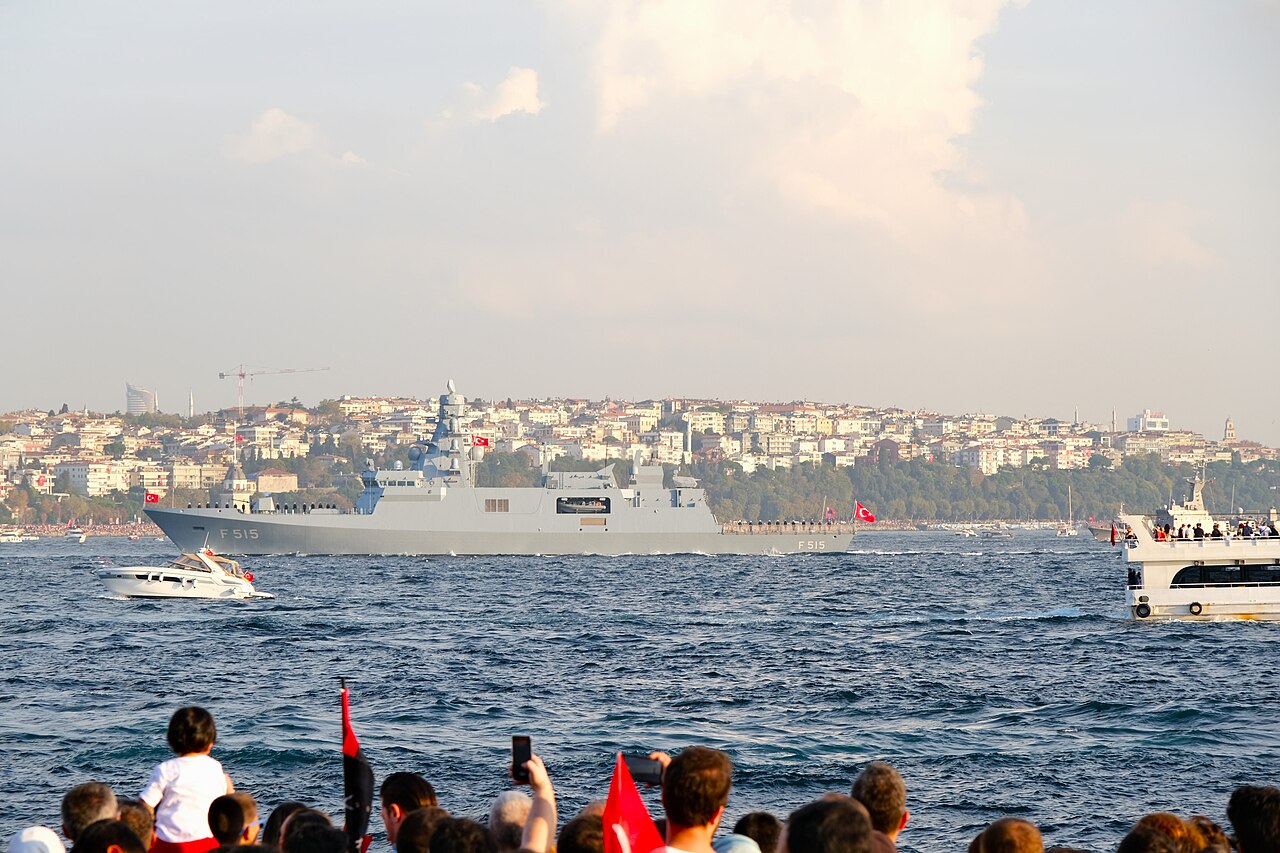
Look at an Ada-class corvette and a İstif-class frigate from a distance and you could mistake one for the other. Same hull form, same stealth-shaped superstructure, same 14.4 m beam. The differences sit in the 14 extra metres of steel, what was packed into them, and what the Turkish Navy learned after more than a decade of running the first MİLGEM ships.
The Ada class was the proof of concept. The İstif class, formally the I-class or MİLGEM II, is the correction. This piece compares the two on the points that actually changed.
How Do the Two Classes Compare on Paper?
Figures below come from open sources, mainly Wikipedia’s class entries and Baird Maritime’s review of the lead ship. Treat them as approximate, since navies and builders round displacement differently.
| Feature | Ada class (MİLGEM 1) | İstif class (I-class) |
|---|---|---|
| Role | ASW-focused corvette | Multirole frigate |
| Length | about 99.6 m | 113.2 m |
| Beam | 14.4 m | 14.4 m |
| Displacement | about 2,400 t | about 3,100 t |
| Crew | about 93 | about 123 to 125 |
| Range | about 3,500 nm at 15 kn | about 5,700 nm at 14 kn |
| Anti-ship missiles | 8 (Harpoon or ATMACA) | 16 ATMACA |
| Air defence | RAM point-defence launcher | MİDLAS vertical launch system, HİSAR-D family, SİPER planned |
| Propulsion | CODAG, gas turbine plus two diesels | CODAG, GE LM2500 plus two MTU diesels |
The beam did not change. That is the whole trick of the İstif design: designers stretched the existing hull rather than starting over, keeping the proven hydrodynamics and the shipyard experience behind it.
What Did the Ada Class Teach the Navy?
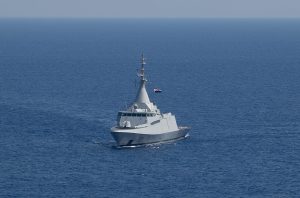
The four Turkish Ada-class ships, which entered service between 2011 and 2019, were built around anti-submarine warfare and patrol. They carry a 76 mm gun, two torpedo launchers and a short-range RAM missile launcher for self-defence. Anti-ship firepower is eight missiles, originally Harpoon and later, on newer ships, the domestic ATMACA.
That arrangement worked as a patrol and ASW platform. As a ship expected to fight in a contested air environment it was thin. A RAM launcher protects the ship itself and little beyond it. There was no vertical launch system, so no way to add a medium-range area-defence missile without redesigning the deck.
Range was the other pressure point. Roughly 3,500 nautical miles is adequate in the Aegean and eastern Mediterranean. It is less comfortable for the extended deployments the navy now conducts, a theme that matters more as Türkiye looks at the Gulf of Aden and beyond.
Where Does the Extra Length Go?
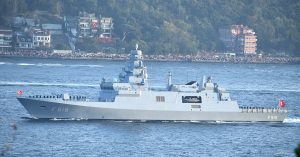
Most of the 14 metres went forward, into a vertical launch section. The MİDLAS system is an indigenous VLS developed by ROKETSAN with Turkish industry. The lead ship, TCG İstanbul, carries a 16-cell tactical-length version; later hulls such as TCG İzmir are reported to carry a larger strike-length configuration, with the strike-length version measuring about 8 m against about 6.7 m for the tactical one.
The second addition is fuel and endurance. Range rises by roughly 60 percent on the published figures, though the two numbers are quoted at slightly different speeds. The third is accommodation and growth margin: crew goes up by around 30 people, covering extra systems and operations.
Surface strike doubles from 8 to 16 missiles. Those are ATMACA anti-ship missiles, which also appear on newer Ada hulls. The change is explained in more detail in our comparison of ATMACA and Harpoon.
Which Systems Are New on the Frigate?
The sensor and weapons fit is more domestic than on the first Ada ships. Open sources list the following on the İstif class:
- ASELSAN CENK-S active electronically scanned array radar and AKREP fire-control radar, replacing the Dutch-origin search radar used on early Ada ships.
- The GÖKDENİZ 35 mm close-in weapon system as the last-ditch defence layer in place of the RAM launcher.
- HAVELSAN’s ADVENT combat management system, which also equips the later Ada-class hulls.
- A HİSAR-family missile loadout through the vertical launchers, with the longer-range SİPER reported as an option for the strike-length cells.
The aviation arrangement is similar: a helicopter deck and hangar for an S-70B Seahawk or unmanned aerial vehicles. The gun is still a 76 mm piece and the torpedo fit is two 324 mm tubes, so the ASW core of the Ada design survived. In other words, the frigate keeps what the corvette did well and adds an air-defence and strike layer on top.
Percentages for domestic content circulate widely, but they differ by source and by definition of what counts as a Turkish component, so they are left out here.
How Is Production Different?
Ada ships were built one at a time, mostly in the Istanbul Naval Shipyard, then in private yards for export hulls. The İstif programme is explicitly multi-yard. Open sources show TCG İstanbul built at the Istanbul Naval Shipyard, İzmir at Anadolu Shipyard, İzmit at Sedef Shipyard and İçel at Sefine Shipyard, with STM acting as programme lead. The planned total is reported as eight hulls for the Turkish Navy, plus two for Indonesia under a separate arrangement.
Status as of this writing, per open reporting: TCG İstanbul entered service on 19 January 2024. TCG İzmir began sea acceptance trials in August 2026, and TCG İzmit has followed it into trials. Later hulls, including the one named TCG Akdeniz, are at earlier stages. More on the yard split is in our look at the serial production plan and the guide to who builds Türkiye’s warships.
What Do Exports Tell Us About Each Design?
The Ada hull has the longer export record: Pakistan’s Babur-class ships and Ukraine’s Hetman Ivan Mazepa are built on it, and Malaysia is reported to have ordered Ada-derived Tunku-class ships. Our breakdown of the Ada-class export story covers those deals. The İstif class is newer, with the Indonesian order as its first export commitment reported so far, and US Navy interest in the design has also been reported in the press.
The honest summary is that the corvette sold because it was available, proven and affordable. The frigate is aimed at navies that want area air defence and a bigger magazine without jumping to a destroyer-sized price tag.
Does the Frigate Make the Corvette Obsolete?
No. The two serve different tiers. A corvette costs less to build and crew, fits patrol and ASW tasks, and suits navies with smaller budgets or shorter coastlines. The İstif class is the ship for task-group escort and sea-control missions where the Ada’s air-defence limits would bite.
The Ada hulls also keep being upgraded. Later ships carry ATMACA and ADVENT, narrowing part of the gap, though they cannot take a vertical launch section without a major rebuild. For the wider family history, see the MİLGEM I-class guide.