Poland, Romania and Spain Are Turning Europe Into a Real Market for Turkish Arms

For most of the last decade, selling Turkish weapons to Europe meant selling them to the edges of Europe. Ukraine bought drones in wartime, and a handful of Balkan governments bought small lots. Western Europe’s big procurement offices mostly looked elsewhere. That has changed, and the change is visible in contracts rather than speeches: a drone fleet in Poland, more than a thousand armoured vehicles for Romania, and a jet trainer order from Spain.
None of these deals is large enough on its own to redraw the market. Together they show a pattern worth reading carefully, including the places where it stops.
How Big Are Turkish Defence Exports to Europe Now?
The headline numbers depend on who is counting. Anadolu Agency, citing official data, put Turkish defence exports to Europe at $1.2 billion in 2023, up from $369 million in 2020, or roughly a fifth of the national total. A June 2026 Reuters analysis, as carried by Al-Monitor, said overall exports passed $10 billion in 2025 and that sales to Europe and the United States together nearly quadrupled since 2021 to $5.6 billion. The two figures use different baselines and cover different regions, so they should not be stacked on one chart.
What both agree on is direction. Europe has moved from rounding error to a customer base that Turkish officials now name in the same breath as the Gulf.
Why Was Poland the First Big Breakthrough?
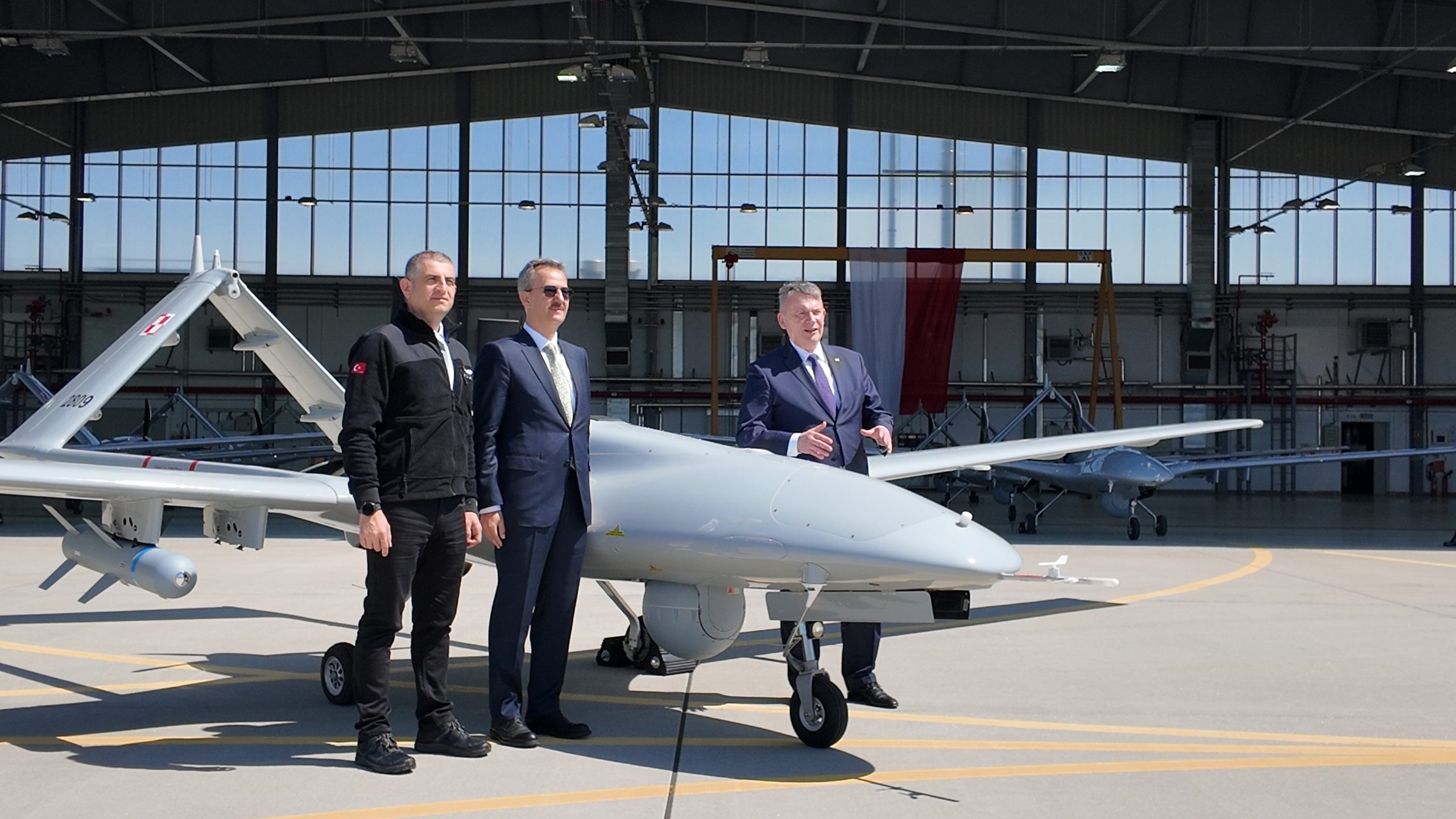
Poland was the first EU and NATO member to buy the Bayraktar TB2. The contract dates to May 2021 and, according to reports, was worth about $270 million for four systems of six aircraft each. Baykar announced the final delivery in May 2024, completing 24 aircraft. Our Bayraktar TB2 programme guide covers operators and status in more detail.
The drone deal mattered less for its size than for its precedent. Once Warsaw operated a Turkish combat drone inside a NATO force structure, the argument that Turkish systems could not be integrated into Western armed forces got harder to make.
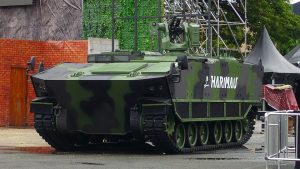
Poland then moved down the supply chain. In November 2024 ASELSAN and Poland’s AMZ Kutno agreed to cooperate on the ARSUS 100, a mast-mounted reconnaissance system that pairs a ground-surveillance radar with an electro-optical turret. Poland received the first units in November 2025, and a follow-on contract was signed at the MSPO exhibition in Kielce on 8 September 2026. Neither side disclosed the value. The sensors ride on a Polish-built Kleszcz reconnaissance vehicle, which is the point: Turkish electronics inside a Polish platform for the Polish Army. Details are in our report on the follow-on ARSUS deal.
At the same show, Poland’s president toured the Turkish stands with the head of the Presidency of Defence Industries (SSB), Haluk Görgün. Görgün also held talks with Polish, British and Spanish officials, with joint production and technology transfer on the Polish agenda. MKE and Poland’s PGZ have also signed a memorandum on the TOLGA air defence system.
What Did Romania Buy, and Where Is It Being Built?
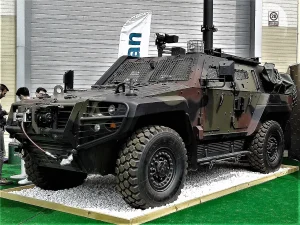
Romania produced the largest land-vehicle contract Türkiye has won in Europe. On 27 November 2024, Otokar signed with Romtehnica, acting for the Romanian Ministry of National Defence, for 1,059 COBRA II 4×4 tactical vehicles. The reported value was RON 4.26 billion, about €857 million before VAT.
The structure is as important as the price. Under the contract the first 278 vehicles are built in Türkiye and the rest in Romania, with deliveries spread over roughly five years from late 2025. A Turkish company is effectively opening a production line inside an EU country, which is the form of export European buyers increasingly prefer. The vehicle itself is profiled in our COBRA II guide.
Other Romanian business has been reported as well, including a HAVELSAN win in a maritime surveillance modernisation tender, according to Quwa and Anadolu summaries. We have not confirmed contract terms for that one.
What Is Spain Getting From Turkish Aerospace?
Spain’s HÜRJET order is the most consequential aerospace sale. Madrid’s Council of Ministers approved the purchase of up to 45 aircraft in September 2025, to replace ageing F-5 trainers, and a first contract was signed on 28 December 2025. Reported figures for that contract vary by outlet, with about €2.4 billion cited for the signed deal, so treat any single number with caution.
The industrial design matters here too. Reporting says Airbus Defence and Space leads the Spanish integrated training system, that airframes would be assembled in Türkiye before fitting out in Spain, and that around fifteen Spanish firms, among them Indra, Aernnova, Aciturri, GMV and Sener, take part. Deliveries are reported to begin in 2028. Where the jet sits against rivals is covered in our HÜRJET market piece.
Spain is the first European buyer of the type, and the first time a Turkish-built jet has been sold to an EU and NATO member.
Why Are European Buyers Willing to Look at Turkish Kit?
Part of the answer is simple supply. Since 2022, European armies have been trying to refill stocks and modernise at the same time, and Western production lines are full. Turkish industry offers products that are already in series production and, in the case of drones and armoured vehicles, have been used in real operations by other customers. For a procurement office measured on delivery dates, that counts.
Part of it is price and flexibility. Turkish firms have shown they will accept offset-style terms, local assembly and technology sharing that some larger Western primes treat as concessions. The Romanian and Spanish structures, both built around domestic production shares, are examples.
And part is NATO itself. Turkish systems are increasingly specified to alliance standards, which lowers the integration risk that once kept buyers away. The question for the next few years is not whether Europe will buy Turkish equipment, but how much of that buying can happen outside EU-funded programmes.
Which Other European Deals Round Out the Picture?
| Country | Turkish supplier | What is involved |
|---|---|---|
| Poland | Baykar | 24 Bayraktar TB2 aircraft, deliveries completed May 2024 |
| Poland | ASELSAN | ARSUS 100 reconnaissance systems on Polish vehicles, follow-on signed September 2026 |
| Romania | Otokar | 1,059 COBRA II vehicles, about €857 million reported, partly built in Romania |
| Spain | Turkish Aerospace | HÜRJET jet trainers, up to 45 approved, first contract December 2025 |
| Portugal | STM | Two logistics vessels for the Navy, agreement reported late 2024 |
| Italy | Baykar | Acquisition of Piaggio Aerospace and a production partnership with Leonardo |
Albania and Croatia have also bought the TB2, and Repkon has been reported to co-produce 155mm shells with a German partner. Baykar’s Italian moves show a different model again: buying European industrial capacity instead of only shipping product. See the Baykar company profile for the corporate side.
What Keeps Europe From Buying Even More?
Money and politics both get in the way. The EU’s SAFE loan instrument, worth €150 billion, requires most of a funded product’s value to come from EU, EEA, EFTA or Ukrainian sources, and third countries take part only through a formal security partnership. Türkiye has not concluded one. The later European Defence Industry Programme caps non-associated third-country content at 35 percent of a product’s cost. Defence Minister Yaşar Güler used an April 2026 appearance to urge EU allies to drop arrangements that exclude non-EU NATO members.
The effect is that Turkish firms win where national budgets, not EU funds, pay the bill, and where they can localise. That explains why the strongest results come through local production, joint ventures and acquisitions. Ammunition is the clearest test; our analysis of what EU rules allow for Turkish shell supply found no large publicly announced EU-state contract for finished Turkish artillery rounds as of September 2026.
Political friction counts as well. Some European capitals remain wary of Ankara over bilateral disputes and domestic politics, and that wariness shapes which contracts are politically easy to sign. Turkish officials, for their part, say they intend to double defence exports within two years, and Europe is a stated part of that plan.
What Should Be Watched Next?
Three things will show whether this is a trend or a run of one-off orders. First, whether the Romanian and Spanish programmes hit their delivery dates, since European buyers will read those schedules closely. Second, whether Poland’s follow-on ARSUS order and the TOLGA memorandum turn into larger series contracts. Third, whether Ankara and Brussels find a formal security arrangement that opens EU-funded procurement, which would change the maths for every Turkish exporter at once.
Until then, the template is already clear. Turkish firms sell to Europe by building in Europe, partnering with European primes, and arriving with products that have a combat or training record behind them.