How TÜBİTAK Quietly Powers Türkiye’s Defence Research

Most people who follow Türkiye’s defence industry know the names that appear on the hulls, wings and launchers: ASELSAN, Roketsan, TUSAŞ, Baykar. Far fewer can say where a missile’s guidance algorithm, an encrypted radio or a satellite’s camera was first worked out. In a large share of cases the answer is a public research council in Ankara, the Scientific and Technological Research Council of Türkiye, better known as TÜBİTAK.
TÜBİTAK does not sell finished weapons to the armed forces in the way a prime contractor does. It sits one step earlier in the chain. It designs, tests and proves technologies, then hands them over to industry for production or, in some programmes, shares the work with an industrial partner. That quiet position explains why the council is rarely on the front page and why its fingerprints are on so many programmes.
| Item | Detail |
|---|---|
| Organisation | TÜBİTAK (Scientific and Technological Research Council of Türkiye) |
| Founded | 1963 |
| Headquarters | Ankara |
| Structure | Around 15 research institutes and centres, according to public reference sources |
| Main defence-related units | SAGE (defence industries R&D), BİLGEM (informatics and information security), UZAY (space technologies) |
| Website | tubitak.gov.tr |
What is TÜBİTAK, and why does it matter to the defence sector?
TÜBİTAK was set up in 1963 as the state’s main body for science policy and research funding. Mathematician Cahit Arf served as its first chairman. Over the decades it grew into two things at once: a funder that supports university and industry research through grant programmes, and an operator that runs its own research institutes.
For defence, the second role is the important one. The council’s institutes employ researchers and engineers who work full time on military and dual-use problems, from propulsion and seekers to cryptology and Earth observation. Because the institutes are public, their know-how stays inside the national system instead of walking out the door with a vendor contract.
Three institutes carry most of the defence load. Each works in a different domain, and each has a different relationship with industry.
What does TÜBİTAK SAGE actually do?
SAGE, the Defence Industries Research and Development Institute, is the unit most closely tied to weapons. It was founded in 1972 in Ankara as a guided-vehicle technology and measurement centre, took its present name in 1988, and later moved its main campus to Lalahan in Elmadağ, northeast of the capital. Public descriptions mention sites in Lalahan, Beşevler and on the Middle East Technical University campus.
The institute’s portfolio, as described in its own materials and public reference works, runs across several families:
- Cruise missiles. The SOM family, including the SOM-J variant, is the best-known SAGE product. Our report on the SOM stand-off cruise missile covers how the weapon evolved.
- Precision guidance kits. HGK, KGK and related kits turn conventional bombs into guided munitions.
- Air-to-air missiles. BOZDOĞAN and GÖKDOĞAN have been reported to hit aerial targets in test firings, and the ramjet-powered GÖKHAN was shown at the IDEF fair in 2025. See our explainer on the GÖKDOĞAN and BOZDOĞAN missiles.
- Air defence. SAGE has contributed to SİPER-related munitions and, in work reported with ASELSAN, to the GÖKSUR point air defence system.
- Munitions for unmanned aircraft. Smart munitions such as BOZOK and TOGAN were developed for drone carriage.
For a closer look at the institute itself, see TÜBİTAK SAGE and the missiles Türkiye’s industry builds. The point to keep in mind here is the division of labour. SAGE typically owns the design, the aerodynamics, the guidance and control, and the test campaign. Series production then moves to a company such as Roketsan or, in other cases, another industrial partner.
How does BİLGEM fit in?
BİLGEM, the Informatics and Information Security Research Center, works mostly out of sight, because much of what it does is sensitive. It describes itself as one of Türkiye’s biggest R&D centres, with more than 50 years of experience and over 2,000 staff. Its areas include advanced electronics, cryptology, cyber security, software, electronic warfare and telecommunications.
Its structure is more telling than any single product. According to TÜBİTAK, BİLGEM groups several institutes under one roof:
- the National Research Institute of Electronics and Cryptology,
- the Cyber Security Institute,
- the Artificial Intelligence Institute,
- the Information Technologies Institute,
- the Software Technologies Research Institute, and
- the Advanced Technologies Research Institute.
The common thread is secure information. A modern force depends on encrypted links, trusted software and electronic sensors it can inspect down to the source code. A national research centre that can build those components reduces dependence on foreign suppliers, which matters when export licences can be delayed or withheld.
What has TÜBİTAK UZAY contributed to Türkiye’s space programme?
UZAY, the Space Technologies Research Institute, is the council’s space unit. Its two best-documented defence-relevant satellites are GÖKTÜRK-2 and İMECE.
GÖKTÜRK-2 was produced with Turkish Aerospace and described by TÜBİTAK UZAY as the first indigenously developed high-resolution Earth observation satellite in Türkiye. It was launched from the Jiuquan Launch Center in China on 18 December 2012 and, according to the institute, has stayed in orbit at roughly 700 kilometres altitude for more than a decade. Our overview of the GÖKTÜRK satellite series explains how the family fits together.
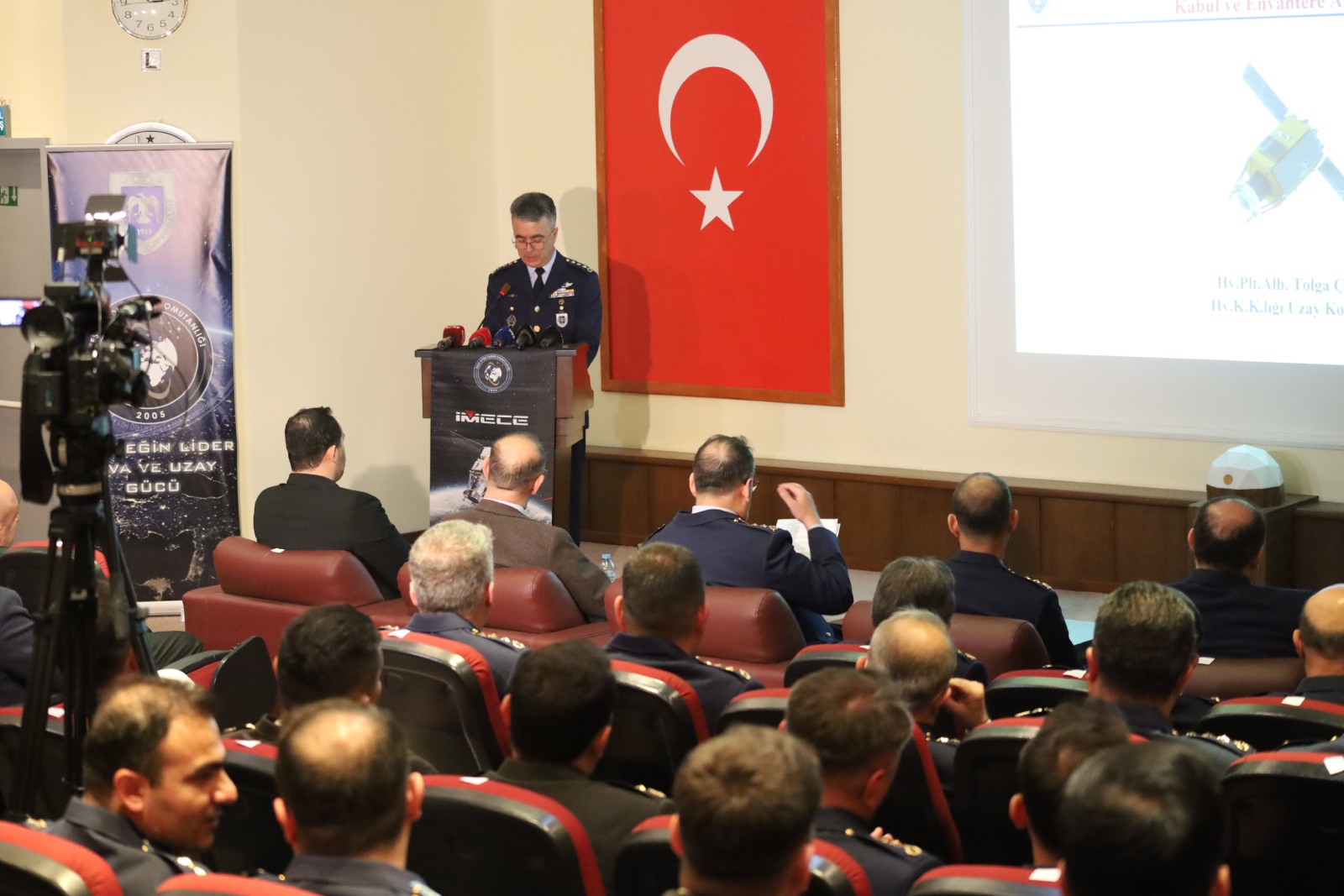
İMECE followed. The satellite was launched on a SpaceX Falcon 9 from Vandenberg Space Force Base on 15 April 2023 and returned its first test images on 29 April 2023, according to TÜBİTAK UZAY. It was accepted into the Air Force Command’s inventory on 22 May 2025 and renamed GÖKTÜRK-2B. The institute describes it as Türkiye’s first sub-metre-resolution satellite and cites a localisation rate above 90 percent.
UZAY says several subsystems were developed domestically for the first time on İMECE, including a space-qualified electro-optical camera, electric propulsion, star trackers, reaction wheels, communications and a flight computer. The satellite’s ongoing imagery work is covered in our note on data flow from İMECE.
How does the TÜBİTAK model differ from a defence company?
Three differences stand out.
Time horizon. A company answers to delivery schedules and, often, shareholders. A research institute can spend years on a seeker, a propulsion concept or an encryption scheme that has no production contract yet. That is slow and expensive, and it is how capabilities such as ramjet propulsion for air-to-air missiles get started.
Ownership of knowledge. The know-how remains in a public institution. Industry can license or co-develop it, but the underlying competence stays in the national system and can be reused across programmes.
Test infrastructure. Research institutes carry facilities, such as laboratories and measurement systems, that single companies would struggle to justify on one programme. Shared use lowers the barrier for smaller firms.
The trade-off is real. Handing a design to industry is not trivial, and the gap between a successful prototype and a reliable serial product has tripped up many countries. Public statements rarely describe how well each handover goes, so outside observers should be cautious about drawing sweeping conclusions from announcements alone.
What did TÜBİTAK show at IDEF 2025?
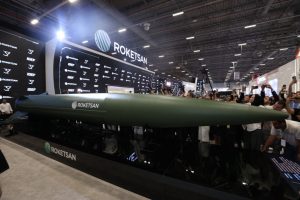
TÜBİTAK took a large presence to IDEF 2025 in Istanbul, according to the council’s own news release. The GÖKHAN ramjet air-to-air missile, being developed under SAGE leadership, drew the most attention. TÜBİTAK also reported signing a number of cooperation protocols and contracts with defence industry stakeholders, with subjects including ammunition systems, cloud computing infrastructure, new propulsion systems and sensor technologies. Contract values were not published in the sources reviewed for this article, so none are given here.
Where does TÜBİTAK’s defence work go from here?
The council’s public priorities suggest continued emphasis on propulsion, seekers, secure communications, artificial intelligence and space-based sensing. These match gaps that Türkiye’s defence planners have openly acknowledged, particularly in engines and advanced sensors, and they overlap with programmes such as air defence and the next generation of missiles.
For readers tracking the sector, the practical advice is simple. When a new Turkish missile, satellite or secure-communication system is announced, check which research institute sits behind the design. The name TÜBİTAK, or one of SAGE, BİLGEM or UZAY, appears more often than the headlines suggest.