Dearsan Built Its Export Record in Turkmenistan Before Anyone Noticed

Most people who follow Turkish naval industry think of the big names: STM, the state-backed MİLGEM yards, the shipyards building frigates for the Turkish Navy. Dearsan, a private yard on the Tuzla peninsula east of Istanbul, rarely makes that list. Yet it has been selling warships abroad longer than almost any of them, and its customers now stretch from the Caspian Sea to the Gulf of Guinea to the Persian Gulf.
The story of the Dearsan shipyard is less about one breakthrough deal than about a pattern. It starts with a small patrol boat, moves through a quiet build-up in Turkmenistan, and reaches Nigeria and Qatar only in the last few years. Along the way the yard also picked up work at home that would have seemed out of reach a decade ago.
| Dearsan at a glance | Details |
|---|---|
| Headquarters | Tuzla, Istanbul, Türkiye |
| Founded | 1980 |
| Started military shipbuilding | 2007 |
| First domestic programme | Tuzla-class patrol boats, 16 for the Turkish Navy |
| Export customers | Turkmenistan, Nigeria, Qatar; naval drone production with Azerbaijan’s MIRAS |
| Current domestic work | Four HİSAR-class offshore patrol vessels (consortium lead), one new-generation mine hunting vessel |
| Unmanned systems | SALVO armed unmanned surface vehicle, KAYRA kamikaze boat |
| Website | dearsan.com |
How Did a Commercial Yard Become a Warship Builder?
Dearsan was founded in 1980 and spent its first quarter-century on commercial hulls: dry cargo ships, tankers and fishing vessels. By Dearsan’s own count, more than 120 ships, civil and military, have come out of its yard.
The turn came in 2007, when the company won a Turkish procurement tender for a new type of patrol boat. The result was the 57-metre Tuzla class, which Dearsan describes as designed and built with its own resources. Sixteen went to the Turkish Naval Forces, with the first entering service around 2011. Naval News and Dearsan both describe it as the first Turkish private shipyard to design and build a warship, and the first Turkish yard to export one.
That last point matters for the rest of the story. The Tuzla design was not a one-off. It became the template for the company’s first export customer.
What Did Dearsan Build in Turkmenistan?
Turkmenistan is where the export record really begins. According to Dearsan, the Turkmenistan project started in 2012, and the company set up a shipyard there rather than shipping finished vessels across the Caspian. The list of deliveries, as Dearsan and independent trackers describe it, is long:
- ten 57-metre patrol vessels based on the Tuzla class, known in Turkmen service as Serhet-class border vessels
- six 33-metre fast attack craft
- ten 15-metre fast intervention boats
- a landing craft, a hydrographic survey vessel and support craft
- a 92-metre corvette, the flagship of the Turkmen Navy
Dearsan says it has built more than 40 vessels in Turkmenistan, ranging from 15 to 92 metres in length. Most of that work drew little attention abroad. Turkmenistan announces few procurement details, and analysts tracking the Caspian fleets were often working from satellite images and launch photographs.
The corvette was the exception. A contract was signed in August 2019 with a Gülhan and Dearsan joint venture, and the ship, named Deniz Han, was commissioned on 11 August 2021 at the Turkmenbashi naval base in a ceremony attended by then-President Gurbanguly Berdimuhamedow. Reports indicate the hull was assembled from sections delivered from Türkiye at a Turkmen State Border Service yard. The ship is roughly 91 metres long, displaces around 1,600 tonnes and carries an Otomat Mk2 missile launcher, a 76 mm gun and a Turkish-made 35 mm close-in weapon system, the same class of weapon covered in our look at the GÖKDENİZ naval CIWS.
A warship this size, sold to a navy with no blue-water history, is unusual for a yard that had been building patrol boats only a decade earlier.
Why Did Nigeria Choose Dearsan?
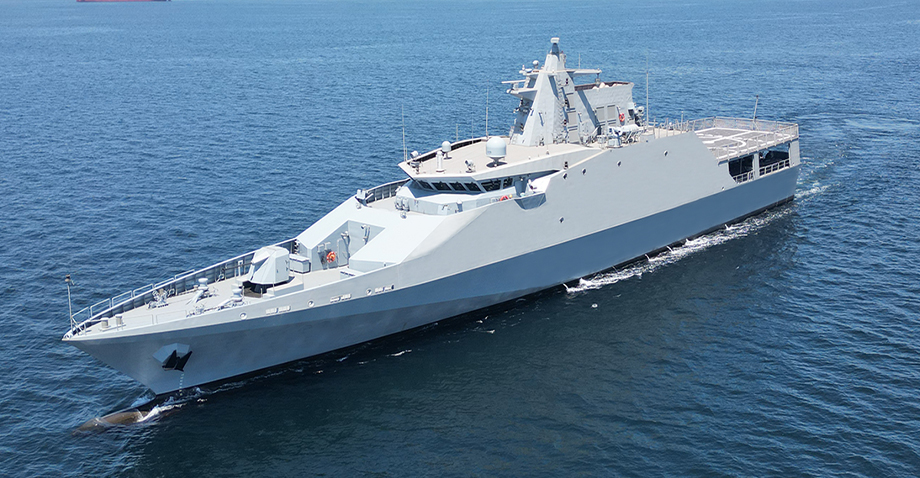
The Nigerian deal is the one that put Dearsan on the wider export map. The contract for two 76-metre offshore patrol vessels was signed on 3 November 2021 in Abuja. Dearsan calls it its first naval export to Africa. At the time of signing, Naval News reported a delivery window of 37 months.
The schedule since then has been steady rather than fast:
- keel laying for the first ship on 16 September 2022
- launch of the first vessel on 26 October 2023
- launch of the second and final vessel on 19 April 2024
- sea trials for both in 2025, with delivery scheduled for that year
The ships are around 76.9 metres long and displace roughly 1,100 tonnes. Reported top speed is 28 knots, with a range of about 2,500 nautical miles. Armament is a 40 mm Leonardo Marlin gun, an ASELSAN 30 mm remote-controlled gun, two 12.7 mm STAMP stations and two manual machine guns. Sensors and command systems come from Turkish suppliers, including ASELSAN radar and electro-optics and HAVELSAN’s ADVENT combat management system. There is a helicopter flight deck but no hangar. Published figures for length, speed and crew differ slightly between sources, which is common for ships still in trials.
The role is the practical one: anti-piracy, illegal fishing patrols, interdiction and special forces support in the Gulf of Guinea. We could not find a public confirmation of the final handover for both vessels, so the exact in-service date remains unverified.
Nigeria also placed a second, smaller order with the yard. At a ceremony in Abuja in June 2023, Dearsan announced two more jobs: the modernisation of the 1982-vintage MEKO 360 frigate NNS Aradu, built originally by Blohm and Voss, and a new 57-metre Tuzla-class patrol vessel, which Dearsan numbered as the 27th of its class. A refit contract on a German-built frigate says something about how Nigeria now sees the yard, because it means the customer trusts Dearsan with systems it did not design.
This fits a broader pattern of Turkish defence firms adapting to African buyers that want training, support and local work. The wider context is covered in our pieces on Nigeria and Türkiye’s shift to joint manufacturing and on why Turkish arms sales in Africa start in the classroom.
What Is Dearsan Building for Qatar?
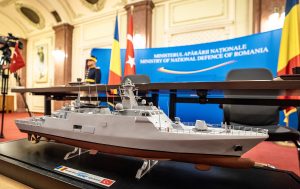
Qatar is Dearsan’s first customer in the Middle East. The contract for two 50-metre guided missile fast attack craft was signed on 21 June 2023 and publicly announced at the DIMDEX exhibition in Doha in March 2024. The Qatari project name is reportedly Halul-11.
The design is Dearsan’s own. The ships are about 50.8 metres long and 9.5 metres wide, with a top speed of 36 knots, a range of roughly 1,000 nautical miles and a crew of 33, according to Defence Turkey. Weapons are almost entirely Turkish: Roketsan ÇAKIR anti-ship missiles in two twin launchers, a four-cell Roketsan SUNGUR air defence launcher, ASELSAN 12.7 mm stabilised guns and a single Italian 40 mm Marlin.
Construction began on 12 February 2024 and the keels were laid in December 2024. The first ship, named Al Wakrah, was launched in November 2025. The second, Al Ghariyah, followed on 14 February 2026. Delivery is scheduled for mid-2027.
Qatar has talked about a total of five such boats. Dearsan has said it is ready to discuss an additional three, which are expected to have different configurations, though no follow-on contract has been announced.
What Is the Yard Doing for the Turkish Navy Now?
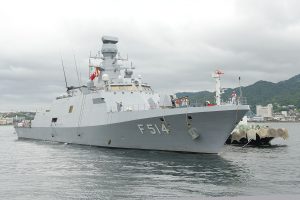
The export record explains why Ankara started giving Dearsan bigger jobs. On 3 January 2024, the Defence Industry Executive Committee, chaired by the President, assigned a Dearsan-led consortium to build four HİSAR-class offshore patrol vessels on the MİLGEM ADA-class hull, the same hull family as the corvettes discussed in our MILGEM frigate guide.
A second programme is arguably more important. Dearsan signed a contract with the Presidency of Defence Industries on 9 August 2024 for the design and construction of the New Generation Mine Hunting Vessel, which became effective on 4 November 2024. Naval News describes it as a mine warfare mothership of about 80 metres, built of non-magnetic steel, that launches unmanned boats, underwater vehicles and drones rather than sending crews into minefields. Construction of the first unit was due to begin in September 2025, with service entry expected in 2028. It is meant to gradually replace the ageing French-built Engin-class ships. Dearsan presents it as the first private Turkish yard to design and build such a vessel.
For a company that built cargo ships and fishing boats until 2007, this is a long way to travel. The place Dearsan occupies among Turkish builders is explained more broadly in who builds Türkiye’s warships.
Where Do the Drone Boats Fit?
The unmanned line is the newest part of the business and the least conventional for a shipyard. Dearsan’s SALVO armed unmanned surface vehicle completed firing tests in 2023. A production variant, SALVO SİDA, passed acceptance tests on 28 August 2025 and was handed over to the Turkish Naval Forces Command, where the yard says it is integrated with the BAHA unmanned surface vehicle.
Outside Türkiye, the clearest export-side development is in Azerbaijan. On 6 September 2026, President Ilham Aliyev toured a joint production facility run by the Azerbaijani state company MIRAS and Dearsan that builds SALVO and the KAYRA kamikaze boat. Open sources describe SALVO as a composite-hull craft of about 15 metres with a top speed near 60 knots and a range around 300 nautical miles, and KAYRA as a roughly 7-metre one-way attack boat. The number of units built and the share of work done in Azerbaijan have not been disclosed. We covered that story in more detail in Azerbaijan begins co-producing SALVO and KAYRA.
What Are the Limits of Dearsan’s Export Story?
Three caveats are worth stating plainly.
First, size. Dearsan builds patrol vessels, fast attack craft, corvette-class hulls and unmanned boats. It is not building frigates or submarines, and none of its export contract values has been made public, so the commercial scale is hard to judge.
Second, dependence on a few customers. Turkmenistan accounts for most of the hulls built so far, and several of its contracts were never publicly itemised. The Nigerian and Qatari orders are each two ships. One follow-on order would change the picture, but none has been confirmed.
Third, transparency. Many numbers in this field come from the yard itself or from trade press repeating yard material. Where figures differ, such as the length and speed of the Nigerian vessels, it is better to treat them as approximate until the navies publish their own data.
What is firm is the shape of the trend. In roughly two decades, a yard that started with one patrol boat design has built ships in a foreign country, refitted a German-designed frigate in Tuzla, delivered missile boats for a Gulf state and won the next generation of Turkish mine countermeasure ships. Delivery of the Qatari boats in 2027 and the first mine hunting vessel in 2028 will show whether that record holds under pressure.