Who Are Türkiye’s Defence Prime Contractors? A Programme Map

Türkiye has no single defence prime. It has about eight, and which one holds the contract depends on the domain rather than on the size of the company. Turkish Aerospace is main contractor for every manned military aircraft programme. STM is prime and design authority for the İstif-class frigates. BMC holds ALTAY serial production. ASFAT, owned by the Ministry of National Defence, runs the destroyer and submarine programmes. ASELSAN and ROKETSAN are prime on their own missile and electronics programmes and tier-one suppliers inside everyone else’s. Baykar sits outside the system entirely. This page maps who holds what, and why the map matters to anyone buying.
DEFENCETÜRKIYE DATA BOX — HOW TURKISH PRIME CONTRACTING WORKS
Contracting authority: Presidency of Defence Industries (SSB), under the Presidency of the Republic since 2018
Approval body: Defence Industry Executive Committee (Savunma Sanayii İcra Komitesi, SSİK), chaired by the President
How prime status is assigned: by committee decision following a tender or a direct assignment — not by open competition in every case
Published register of main contractors: none. Designations are known from company statements, decision summaries and press announcements
Offset floor for foreign contractors: not lower than 70% of contract value (SSB industrialization guideline, 7 December 2022)
Typical structure: one platform prime plus separate SSB contracts for engines, armour and mission systems
What “prime contractor” means in Türkiye, and how it differs
In most NATO procurement systems the prime contractor is the company that wins a competition, signs one contract, and then buys everything beneath it. The customer deals with one throat to choke. Türkiye does something looser, and the difference is not cosmetic.
The contracting authority is the Presidency of Defence Industries, SSB, which has sat directly under the Presidency since the 2018 restructuring. Above SSB sits the Defence Industry Executive Committee, chaired by the President. Law No. 3238, the founding statute as amended, still writes the committee into the machinery of project approval: it refers to projects “approved by the Defence Industry Executive Committee or by the committee member to whom authority has been delegated.” Programme decisions, in other words, are taken at committee level, not inside a procurement office.
That matters because main-contractor status in Türkiye is frequently conferred by a committee decision rather than won outright in a tender. The clearest documented case is ALTAY. Otokar built and tested the prototypes from 2007. The serial production role then moved: the committee selected BMC as prime contractor for the serial production phase at its 29 March meeting, and the serial production contract covering 250 tanks was signed in November 2018. No official reason for rejecting the incumbent’s bid was ever published. Envanter Medya’s Turkish-language file on the ALTAY programme from 2007 to 2026, including the power pack and the serial production decisions, tracks that sequence in detail.
Second difference: SSB does not always contract everything through the prime. On ALTAY it awarded a separate contract to BMC Power in June 2018 for the indigenous power pack. The tank’s prime did not subcontract its own engine; the state bought it alongside the tank. The same pattern recurs across programmes, and it is the single most useful thing a foreign analyst can know about the Turkish structure.
The prime contractor map
The table below is built from manufacturer statements, SSB-facing announcements and reported committee decisions. Where a designation has not been published by SSB, the column says who claims it.
| Programme | Prime / main contractor | Who physically builds it | Evidence of designation |
|---|---|---|---|
| KAAN fighter | Turkish Aerospace | Turkish Aerospace, Kahramankazan | Company states programme is “led by Turkish Aerospace as the main contractor”; agreement with SSB signed 5 August 2016 |
| HÜRJET, HÜRKUŞ, GÖKBEY, ANKA, T929 | Turkish Aerospace | Turkish Aerospace | Company product pages; single-prime model across all manned and most large unmanned aircraft |
| ALTAY serial production | BMC | BMC, Ankara | Executive Committee decision of 29 March selecting BMC for the serial phase; contract signed November 2018 for 250 tanks |
| ALTAY power pack | BMC Power | BMC Power | Separate SSB contract, June 2018 — not a subcontract under the tank prime |
| İstif-class (I-class) frigate | STM | Istanbul Naval Shipyard (lead ship); Sefine, Anadolu and Sedef yards (follow-on ships) | Selected main contractor by SSB in 2018; lead-ship contract 12 April 2019, in force 27 September 2019 |
| TF-2000 destroyer, MİLDEN submarine | ASFAT | Naval shipyard commands (Istanbul, Gölcük) | Stated by ASFAT’s general manager at DIMDEX 2026; SSB has published no designation decision |
| SİPER long-range air defence | ASELSAN and ROKETSAN jointly, with TÜBİTAK SAGE | ASELSAN, ROKETSAN | Joint-prime arrangement; no single company holds the whole system |
| Çelik Kubbe (Steel Dome) | No published single prime integrator | ASELSAN, ROKETSAN, HAVELSAN, MKE, TÜBİTAK SAGE | SSB has contracted the participants separately; the architecture is a contract family, not one award |
| Bayraktar TB2, AKINCI, KIZILELMA | Baykar — outside the prime-designation system | Baykar | Developed on company funding and sold directly, including for export |
Table: DefenceTürkiye, compiled from manufacturer statements, reported Executive Committee decisions and official programme announcements. Programmes where no designation has been published are marked as such.
Three things the map shows that the programme names do not
1. The prime is often an engineering authority, not a factory
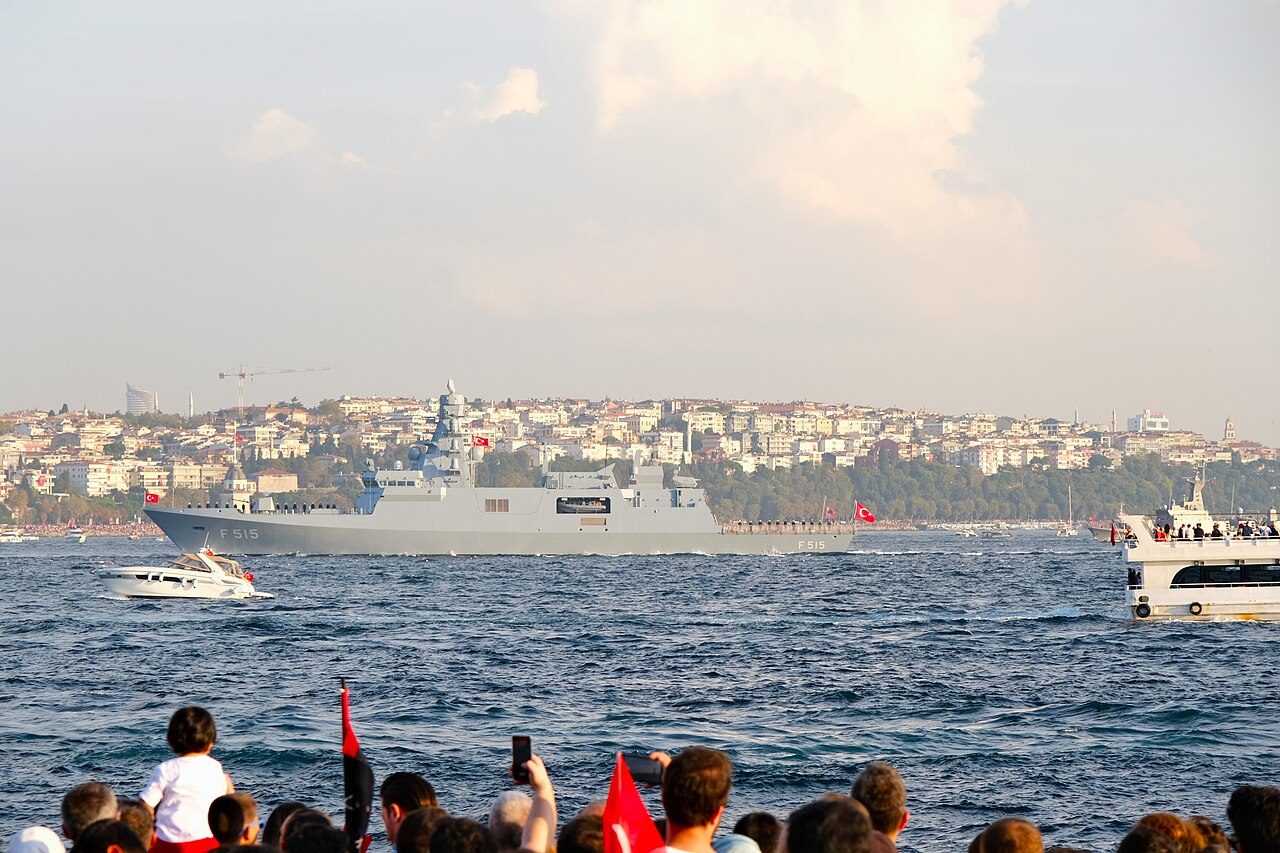
STM is the clearest example on the map. It is prime contractor and design authority for the İstif-class frigates — responsible, as Janes has reported, for the ship design, the weapons, the electronics and the main propulsion — and it owns no shipyard. The lead ship, TCG İstanbul, was built at the Istanbul Naval Shipyard, a Turkish Navy facility. The follow-on ships are being built concurrently at the Sefine, Anadolu and Sedef yards.
For a buyer, this separates two things that Western procurement usually bundles. The company that answers for the design and holds the configuration baseline is not the company whose welders cut the steel. If you want a licence-build at home, the conversation about data packages is with STM; the conversation about build rate and slipway capacity is with the yards. Envanter Medya’s Turkish-language explainer on the difference between factory acceptance testing, integration testing, qualification and certification sets out where in that chain the main contractor’s integration responsibility actually bites.
2. SSB contracts around the prime, not only through it
The ALTAY power pack is the documented case, but the pattern is structural. When the state wants to force a capability into existence — an engine, an armour package, a radar — it will often contract it directly rather than leave it inside the platform prime’s supply chain, where the prime might reasonably choose a cheaper import. That is how the ALTAY power pack programme came to exist as its own contract line.
The consequence for an export customer is concrete: when you buy a Turkish platform, you are buying the output of several contracts that the prime did not sign. Schedule risk on any one of them is not inside the prime’s control, and historically it is the separately contracted subsystems — engines above all — that have moved programme dates.
3. The same company is prime here and supplier there
ASELSAN is prime on its own air defence, electronic warfare and electro-optics programmes. It is also the sensor and mission-system supplier inside platforms where BMC, Turkish Aerospace or a shipyard holds the prime contract. ROKETSAN is prime on ATMACA and the rocket and missile families, and a subsystem supplier elsewhere — including, in the ALTAY case, on the armour system.
This is not unusual by itself; Leonardo and Thales do the same thing. What is unusual is the concentration. A small number of state-linked companies occupy both roles across almost the whole portfolio, which is why Turkish programmes rarely collapse into supplier disputes and also why the industry has very little genuine internal competition at tier one. The record of lost Turkish bids abroad shows what happens when that structure meets competitive foreign tenders.
WHY IT MATTERS
If you are evaluating a Turkish offer, the prime contractor named on the brochure is not necessarily the party that controls your delivery date, your technology transfer or your long-term support. Those three things can sit with three different companies, and at least one of them may hold a contract signed with the Turkish state rather than with you.
It also changes who you lobby. Because programme-level decisions are taken by a committee chaired by the President, a Turkish prime cannot unilaterally promise a re-prioritisation, a production slot or an export clearance. Those are state decisions wearing a company’s logo.
How SSB scores who really designed it
Turkish procurement rules contain an unusually explicit statement of what the state values, and it is not local assembly. SSB’s published industry participation and offset guideline sets out a scoring formula in which bids are ranked on three weighted components: design work given to Turkish industry, the share of work going to small and medium enterprises, and offset. Within the design component, bidders are placed on a four-step ladder.
SSB’s design-credit ladder, highest credit first
The ladder runs from indigenous design with no foreign institutional support at the top, down through design done with foreign support, through buying the rights to a foreign data package and adapting it, to the bottom step: a foreign design, built in Türkiye under a transferred production data package. Licence assembly is explicitly the lowest-credit option on the state’s own scale.
The weights attached to those four steps are not published. The guideline says they are fixed by the evaluation board before the bids are opened, which keeps bidders from reverse-engineering the score. That deliberate opacity is worth noting by anyone modelling a Turkish tender.
The current published English guideline for foreign contractors, dated 7 December 2022, hardens the same preference in two ways. It sets the offset liability at not lower than 70% of contract value, well above the 50% floor in the earlier guideline. And it refuses credit for technological collaboration unless the Turkish company gains a capability that can be used on other products — a written refusal to count build-to-print support as technology transfer. Who actually owns the technology in Turkish weapons examines what those clauses do and do not deliver, and the offset regime is covered separately.
Baykar is the exception that proves the rule
Everything above describes a state-led system. Baykar is not in it in the same way. TB2, AKINCI and KIZILELMA were developed on company money rather than as SSB development programmes with a designated main contractor, and the company markets and sells them directly, including to export customers. That is why Baykar can move faster on export decisions than companies whose programmes were state-funded, and why its contract architecture looks nothing like the ALTAY or İstif model.
It is also why the Baykar example travels badly. Foreign buyers who have dealt with Baykar and then approach a Turkish Aerospace or ASFAT programme are often surprised by how much slower and more committee-bound the second conversation is. They are not dealing with the same system.

BUYER VIEW — open-source editorial analysis
Ask who signs, and who else signed. Request the contract structure, not just the prime’s name. On platform programmes, identify which subsystems the Turkish state contracted separately; those are the schedule risks the prime cannot absorb.
Separate design authority from build capacity. If you want local production, the data package sits with the design authority. If you want early deliveries, the constraint is the yard or factory, which may be a different company or a military facility.
Expect the 70% offset floor to be a starting point, not a ceiling. SSB applies it to foreign contractors selling into Türkiye; as a buyer going the other way, your leverage is the mirror image, and Turkish industry has signed substantial local-production arrangements where the customer insisted.
Do not assume licence assembly counts as transfer. Türkiye’s own rules refuse to credit it. Apply the same test to what is offered to you.
Price and schedule data are usually undisclosed. Contract values reach the public record mainly through ASELSAN’s stock-exchange filings, because it is listed. Unlisted primes disclose much less.
What the public record does not tell you
Three limitations are worth stating plainly, because they bound everything above.
There is no published register of main-contractor designations. The Executive Committee issues decision summaries rather than full texts, so most designations are known from company announcements or trade reporting. Where this page says a role is “stated by” a company, that is the evidential status, not a stylistic choice.
Contract values are inconsistently disclosed. ASELSAN, as a company listed on Borsa İstanbul, must file material contracts with the Public Disclosure Platform, which is why its awards are visible down to the euro. BMC, Baykar, ASFAT and STM face no equivalent obligation, so the published value of an ALTAY or frigate contract is usually a reported figure rather than a filed one.
Finally, architecture-level programmes blur the picture. Çelik Kubbe is routinely described in foreign coverage as an ASELSAN programme. ASELSAN is the largest participant and supplies the command-and-control layer, but SSB has contracted the participants separately and has not published a designation naming a single prime integrator for the architecture. The distinction matters if you are trying to work out who would be accountable for integrating a foreign sensor into it.
FAQ
Who is the main contractor for Türkiye’s KAAN fighter?
Turkish Aerospace. The company states that the programme is led by Turkish Aerospace as the main contractor, under a development project agreement signed with SSB on 5 August 2016. See the KAAN programme file for status and schedule.
Which company is prime contractor for the ALTAY tank?
BMC holds serial production, after the Defence Industry Executive Committee selected it for the serial phase and a contract covering 250 tanks was signed in November 2018. Otokar built and tested the prototypes in the earlier phase. The power pack is a separate SSB contract with BMC Power. The ALTAY programme timeline has the full sequence.
Does Türkiye have a single national defence prime like BAE or Dassault?
No. Prime status is distributed by domain — aircraft to Turkish Aerospace, surface warships to STM, submarines and destroyers to ASFAT, tanks to BMC, missiles and electronics to ROKETSAN and ASELSAN. No company is prime across more than one major domain.
Who decides which company becomes a main contractor?
The Defence Industry Executive Committee, chaired by the President, with SSB running the procurement process beneath it. Designation can follow a competition or be a direct assignment, and the reasoning is not routinely published. SSB’s role is explained here.
Is ASFAT a shipyard?
No. ASFAT is a company owned by the Ministry of National Defence that acts as contractor and export vehicle for naval programmes; construction takes place in naval shipyard commands and private yards. See the ASFAT profile and who builds Türkiye’s warships.
Can a foreign company be a prime contractor in Türkiye?
Yes, on imported systems, and SSB publishes a separate industrialization guideline for foreign contractors setting their offset liability at not lower than 70% of contract value. On indigenous development programmes the prime is a Turkish company by design.
Why is Baykar not on the same footing?
Because its flagship aircraft were developed with company funding rather than as state development programmes with a designated main contractor, so Baykar sells directly rather than through the designation system.
Sources
- Turkish Aerospace, Turkish Fighter KAAN product page — tusas.com (main contractor statement; SSB agreement date 5 August 2016)
- Republic of Türkiye, Law No. 3238 as amended, consolidated text — mevzuat.gov.tr (Executive Committee project approval)
- SSB, Industrialization Guideline for Foreign Contractors, 7 December 2022 (offset liability not lower than 70%; technological collaboration credit conditions)
- SSB, Sanayi Katılımı / Offset Uygulamaları Yönergesi, 14 February 2007 (bid scoring formula; Y1–Y4 design ladder; weights set by the evaluation board before bid opening)
- Defence Turkey, BMC series production of ALTAY and its power pack — defenceturkey.com
- Defence Turkey, A Look at the İ-Class Frigate Project — defenceturkey.com (STM main contractor selection and lead-ship contract dates)
- Janes, Türkiye’s first Istanbul-class frigate starts sea trials — janes.com (STM design responsibility; follow-on yards)
- Envanter Medya, ALTAY Programı 2007’den 2026’ya — envantermedya.com
- Envanter Medya, Fabrika Kabul Testi, Entegrasyon Testi, Kalifikasyon ve Sertifikasyon Arasındaki Fark — envantermedya.com