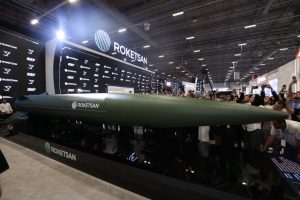
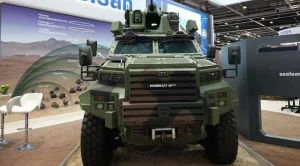
ASELSAN Signs €1.28 Billion Missile Deal With ROKETSAN

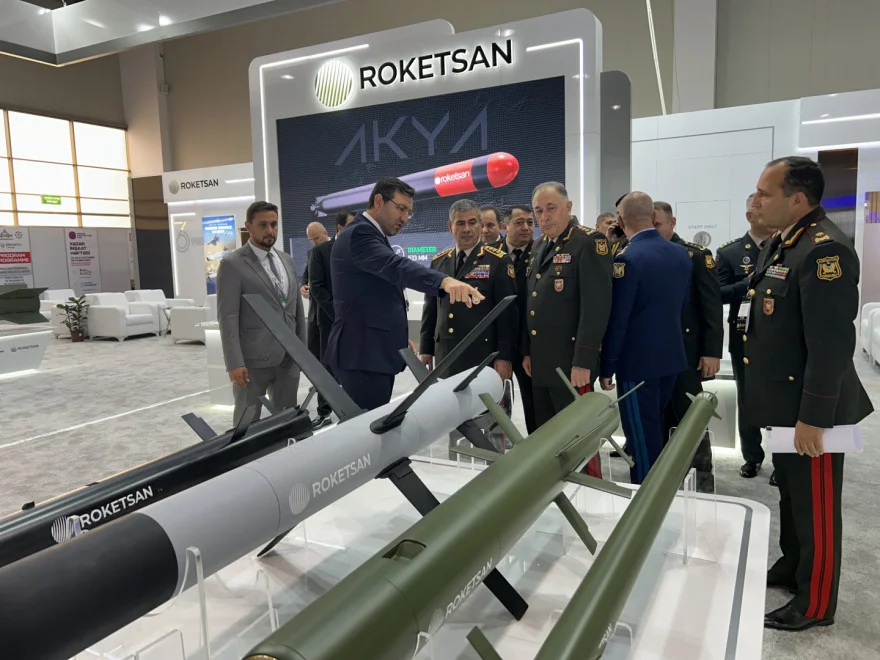
ASELSAN has signed new contracts worth €1,281,101,744 — roughly €1.28 billion — to supply ROKETSAN with missile seeker heads and missile data-link systems, the Ankara-based defense electronics maker disclosed to Türkiye’s Public Disclosure Platform (KAP) on November 16. The filing does not name the missile programs the components are destined for, the quantities involved, or a delivery schedule, which is standard practice for KAP disclosures between the two state-linked primes.
It is the second contract of this size between the companies in under two months. ASELSAN disclosed a separate €1.23 billion agreement with ROKETSAN on September 23 covering subsystems for air defense systems. Between the two filings, the companies have now signed more than €2.5 billion in intra-industry supply contracts since late September — a pace that says as much about how fast Türkiye’s missile output is scaling as any single export announcement does.
Two primes, one supply chain
ASELSAN and ROKETSAN are structurally the closest thing Türkiye’s defense industry has to a vertically split production line, a relationship mapped out in more detail in DefenseTürkiye’s guide to Türkiye’s prime contractors. ROKETSAN designs and builds the airframes, motors and warhead integration for most of the country’s guided missile families — HİSAR air defense interceptors, ATMACA anti-ship missiles, BOZDOĞAN and GÖKDOĞAN air-to-air missiles, KARAOK and UMTAS anti-tank weapons, and the TAYFUN ballistic missile line among them. ASELSAN supplies the electronics that let those airframes find and track their targets: imaging-infrared and radio-frequency seeker heads, inertial navigation packages, and the data links that pass targeting information between a missile, its launch platform and a command-and-control network in flight.
That division of labor shows up directly in ASELSAN’s financial disclosures. ROKETSAN accounted for 5.6% of ASELSAN’s net sales and 7.3% of its trade receivables in the company’s most recent published financial statements — a large enough share that a single customer relationship moves the needle on ASELSAN’s books, and a reminder that not all of the growth Türkiye’s defense exporters report to international buyers originates in export contracts. A meaningful share of it is domestic prime-to-prime business that never shows up in an export figure, because the missiles it builds toward may eventually be exported by ROKETSAN, Baykar or the Turkish armed forces rather than by ASELSAN itself.
Why seeker heads and data links specifically
Seeker heads and data links are also two of the costlier, more technically demanding line items in any guided-missile bill of materials, and they are exactly the components a buyer cannot simply bolt onto a foreign-made missile — they are tuned to the signal processing and guidance software of the specific round. Türkiye’s push to design and manufacture these subsystems domestically, rather than import them, is what has let Roketsan offer re-exportable, non-ITAR-encumbered versions of several of its missiles to customers wary of American or European end-user restrictions. The scale of this particular contract suggests ROKETSAN is placing a large forward order against anticipated production — consistent with Türkiye’s broader shift this year from qualification and small-batch output toward what officials at the Presidency of Defense Industries (SSB) have repeatedly described as a “mass production” phase across the missile portfolio.
Part of a bigger backlog
The contract lands in the middle of a strong year for ASELSAN’s order book. The company’s new export contracts rose 34% to $1.9 billion in the first nine months of 2026, and its total backlog passed $30 billion for the first time in company history, driven heavily by air-defense and electronic-warfare demand tied to Türkiye’s Çelik Kubbe (“Steel Dome”) layered air-defense program. ASELSAN has also disclosed a $1.1 billion air-defense export contract with an unnamed international customer on November 3, and a separate €523 million contract with SSB in October to develop a new-generation air and missile defense system. The ROKETSAN agreement does not carry the same export or diplomatic weight as those deals — there is no foreign flag attached to it — but it is the kind of contract that determines whether Türkiye’s export pipeline can actually be filled on schedule, a tension explored in DefenseTürkiye’s look at which countries actually buy Turkish weapons. A country can sign as many HİSAR or ATMACA export deals as it likes; whether ROKETSAN can deliver them on time depends on ASELSAN clearing exactly this sort of seeker and data-link order.
Neither company has issued a public statement beyond the KAP filing, and the companies’ English-language press pages had not posted details of the agreement as of this writing. As with most KAP disclosures, further specifics — which missile families are covered, when deliveries begin — may surface only once the relevant system itself is unveiled, tested or exported.
Sources: ASELSAN disclosure to Türkiye’s Public Disclosure Platform (KAP), November 16, 2026, as reported by AeroTime, TipRanks and Caspian Post.