Malaysia Picks Roketsan’s ATMACA to Replace NSM on Littoral Combat Ships


Malaysia has picked Roketsan’s ATMACA anti-ship missile to arm its long-delayed Littoral Combat Ships, after Norway refused to license the export of the Kongsberg Naval Strike Missile the vessels were originally designed to carry. Defence Minister Datuk Seri Mohamed Khaled Nordin announced the decision on November 12, saying Kuala Lumpur will now move into negotiations with Türkiye to finalise the purchase.
It is not yet a signed contract. Khaled described ATMACA as the preferred choice after Malaysia weighed proposals from several countries, including French and Italian missile makers, on cost and delivery timelines. A final agreement, he said, has yet to be worked out.
Why Norway’s Missile Fell Through
The Littoral Combat Ship (LCS) programme, built around the Maharaja Lela class at Lumut Naval Shipyard, was conceived with Kongsberg’s NSM as its primary strike weapon. That plan unravelled after Oslo blocked the export licence needed to ship the missiles and their launchers to Malaysia. Malaysia had already paid roughly 95% of a contract worth about $145 million, signed in 2018, and has since moved to set up a dispute resolution committee with Norway after bilateral talks failed to resolve the impasse.
The fallout has been costly for the programme’s timeline. Lumut Naval Shipyard says removing NSM launchers that were already installed on the lead ship, Maharaja Lela, contributed to pushing the vessel’s projected delivery from December 2026 to April 2027 — a delay Malaysia’s Auditor General flagged as a risk to handing over a ship without a complete weapons fit. As of late September, overall construction across the five-ship class stood at roughly 81%, about nine percentage points behind schedule. The Auditor General also noted that contracts for the class’s VL-MICA surface-to-air missiles, 57mm ammunition and decoy launching system remain unsigned.
What ATMACA Brings — and a Head Start on Delivery
Khaled said Malaysia’s missiles could arrive “ahead of schedule,” pointing to an existing order the country already has in the pipeline: 24 ATMACA rounds contracted for its separate Littoral Mission Ship Batch 2 programme, built around STM’s Ada-class corvette design. That prior order, Khaled said, means Malaysia will not be paying for a missile system from a standing start.
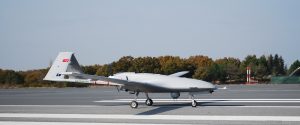
ATMACA is Roketsan’s indigenous anti-ship cruise missile, developed over roughly a decade and first shown publicly in 2019. It uses inertial and GPS guidance, flies at sea-skimming altitude with a low radar cross-section, and is already in Turkish Navy service as the planned replacement for the US-made Harpoon. Roketsan states an operational range in excess of 220 km. The missile has already found export customers beyond Türkiye: Indonesia became the first in January 2024, contracting for 45 rounds through PT Republik Defensindo, and Roketsan separately won its first export order for the land-attack coastal variant, Barbaros, from Azerbaijan in October.
The Integration Question Nobody Has Answered Yet
The cleanest part of this story is the missile. The messiest part is the combat system it has to talk to. The Maharaja Lela class runs Naval Group’s SETIS combat management system, built around French and Italian weapons, not the Turkish architectures — such as HAVELSAN’s GENESIS or ADVENT — that ATMACA normally integrates with on Turkish-built hulls. Khaled said Malaysia has received assurances that ATMACA is compatible with SETIS, but according to two people familiar with the programme cited by Naval News, the integration work is unresolved. A standalone fit, with dedicated firing consoles in the ship’s Combat Information Centre bypassing deep SETIS integration, is reportedly seen as the most practical near-term option. Tayfun Ozberk, a former Turkish Navy officer who writes on naval affairs, noted that ATMACA has been fired from a standalone console before, during early testing aboard the corvette TCG Kınalıada — but full integration into a French-built combat system would still require cooperation from Naval Group and France’s defence procurement agency, DGA.
A Pattern, Not a One-Off
For Türkiye, the Malaysia decision is less a surprise than a continuation. Roketsan has spent the past two years pitching ATMACA hard across Southeast Asia and the Gulf, and Malaysia’s navy has already been a customer of Turkish shipbuilding: DESAN launched the first of a multi-purpose mission ship series for Malaysia’s coast guard earlier this year. Losing a Western supplier over export-control friction and turning to a Turkish alternative is also a pattern buyers elsewhere have followed, part of a broader trend of countries diversifying away from suppliers with unpredictable licensing regimes toward Turkish systems with fewer political strings attached.
None of that guarantees Malaysia signs on Roketsan’s terms. The dispute with Norway is still unresolved, the SETIS integration path is still undefined, and Khaled’s own ministry has acknowledged the wider LCS programme is already behind schedule and short several other weapons contracts. What is confirmed is the direction: a NATO member’s export refusal just cost Kongsberg a sale, and a Turkish missile is the leading candidate to fill the gap.
Sources: Naval News, Bernama, Defence Security Asia.