Can Turkish Weapons Reduce a Buyer’s Dependence on the US?

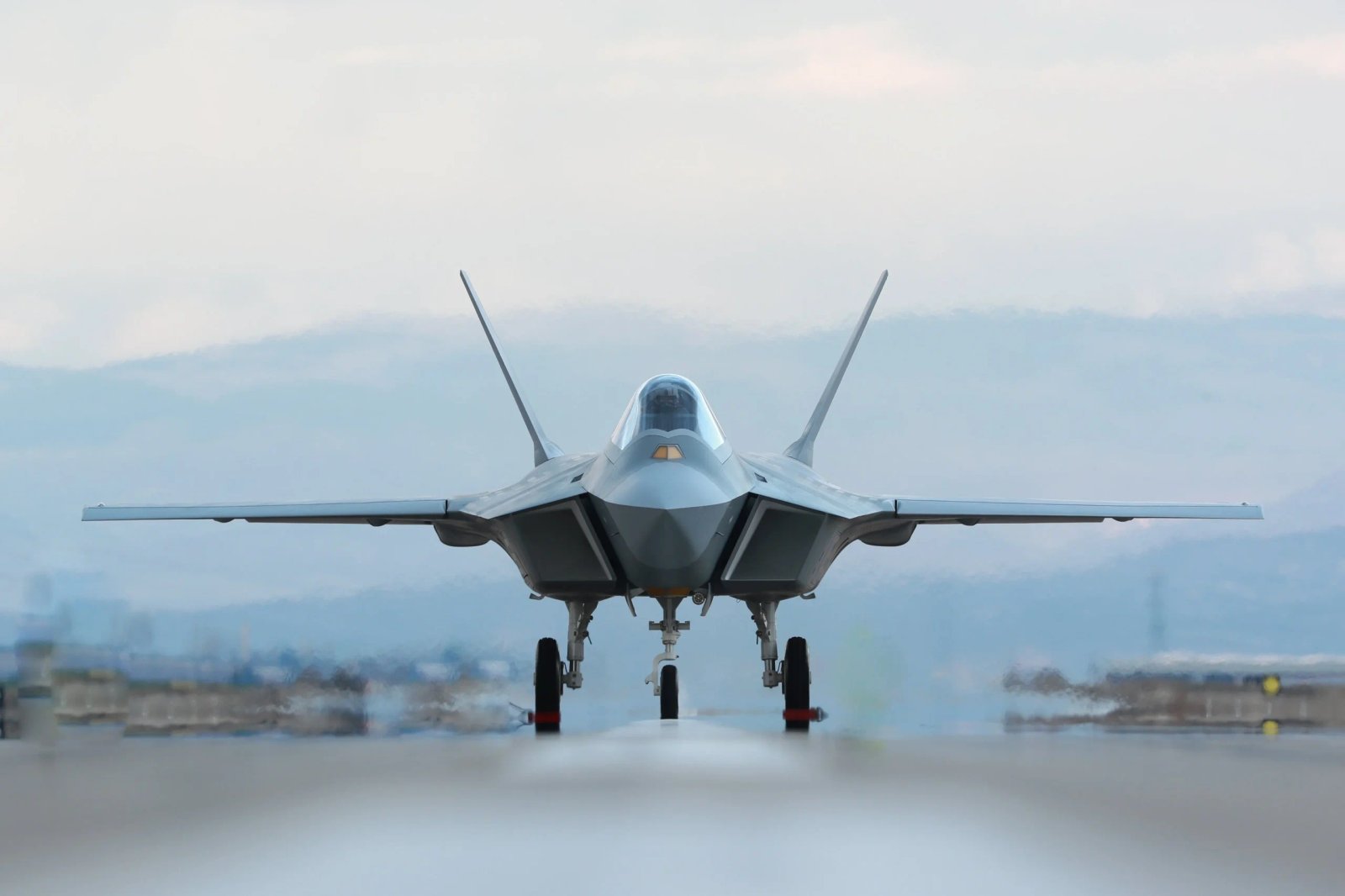
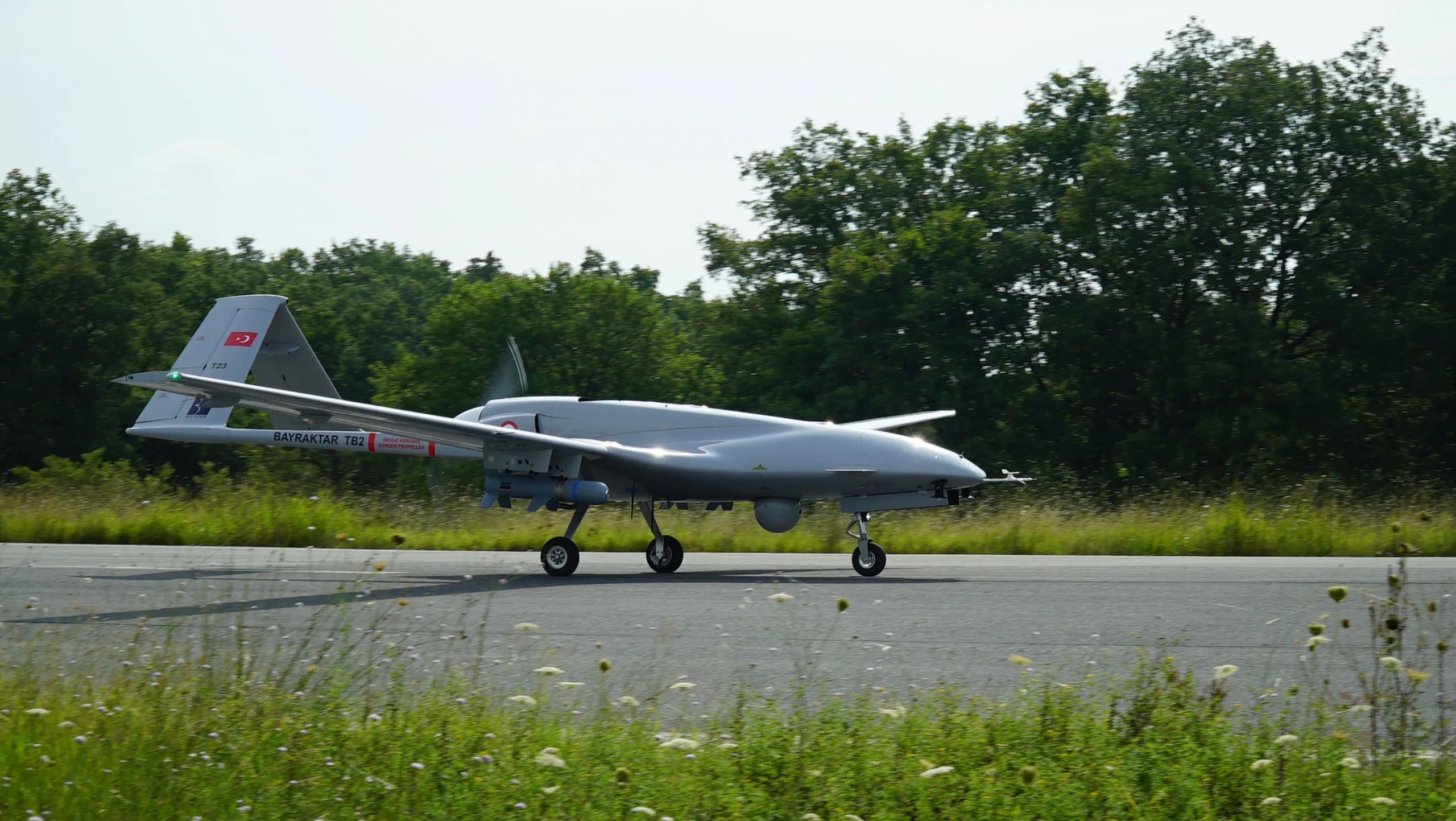
Partly — and the dividing line is the subsystem, not the flag on the airframe. A government that buys a Bayraktar TB2, an armoured vehicle or a guided rocket from Türkiye takes the United States out of the approval chain: there is no congressional notification, no Foreign Military Sales case and no American veto over the transfer. What such a buyer does not automatically escape is the supply chain underneath. Turkish industry has replaced a long list of Western subsystems after being cut off from them, but the top of its range still runs on American hardware. The KAAN fighter flies behind a General Electric engine exported under a licence issued in Washington.
That is the whole answer in one line: Turkish purchases cut political exposure to Washington at the low and middle tiers, and much less at the top tier. Everything below is the evidence for where the line actually falls.
DEFENCETÜRKIYE DATA BOX
- Question: Does buying Turkish weapons reduce a country’s dependence on the United States?
- US share of global arms exports (2021–25): 42 per cent, up from 36 per cent in 2016–20 (SIPRI)
- US share of European NATO members’ major arms imports: 58 per cent (SIPRI)
- Where Türkiye ranks: outside SIPRI’s top 10 suppliers of major arms for 2021–25
- What a Turkish purchase removes: US congressional notification, the FMS process, American re-transfer consent over the platform
- What it does not remove: foreign subsystem exposure where Western content remains
- The hard case: KAAN — General Electric F110, exported under a US licence confirmed in July 2026
- Status: substitution complete at UAV tier; unresolved at fighter-engine tier
How dependent buyers actually are
The starting point is not an opinion. In its Trends in International Arms Transfers fact sheet published on 9 March 2026, SIPRI put the United States at 42 per cent of all international arms transfers in 2021–25, up from 36 per cent in the previous five-year period. France was second on 9.8 per cent, Russia third on 6.8 per cent — down from 21 per cent — then Germany on 5.7, China on 5.6, Italy on 5.1 and Israel on 4.4.
Concentration at the buyer end is sharper still. SIPRI records the US as the source of 77 per cent of Saudi Arabia’s major arms imports in that period, 68 per cent of Israel’s, 62 per cent of Kuwait’s, 48 per cent of Qatar’s and 42 per cent of the UAE’s. Across the Middle East as a whole the figure is 54 per cent. European NATO members took 58 per cent of their major arms imports from the United States.
Those numbers explain why the question gets asked at all. For a Gulf or European ministry, a single supplier relationship carries most of the inventory, most of the sustainment and most of the political risk. Diversification is not a preference; it is a risk-management exercise with a very large denominator.
What a Turkish purchase genuinely removes
The procedural change is real and it is the strongest part of the Turkish case. An American sale of significant defence articles runs through the Arms Export Control Act: a government-to-government FMS case, congressional notification above statutory thresholds, and a standing US consent requirement before the buyer may transfer the item to anyone else. Each of those is a point at which a third party can intervene.
A Turkish sale runs through Ankara instead. The licence is issued under Türkiye’s own export-control statute, the buyer supplies an end-user certificate sealed by its own government plus an undertaking not to misuse the material, and changes of configuration, end user or destination become reportable in Ankara. We have set that machinery out in detail in who approves a Turkish arms export and who can stop it, and the commercial routes by which a state actually contracts and pays in how countries buy Turkish weapons.
So the substitution at the procedural level is genuine. One capital’s approval replaces another’s. What it is not is an absence of approval — a point buyers sometimes miss, and one that matters because Türkiye’s statute carries its own catch-all clause and its own politics.
The dependency that does not disappear: subsystems
The instructive case is documented in Canadian government records rather than Turkish ones. On 5 October 2020 Canada’s then foreign minister, François-Philippe Champagne, suspended export permits for L3Harris WESCAM electro-optical and targeting systems bound for Türkiye, following allegations that the equipment was being used in the Nagorno-Karabakh fighting. The Globe and Mail reported that permits had been issued in May 2020 for seven MX-15D turrets destined for Baykar. After a review the permits were cancelled — 29 in total, 25 of them covering WESCAM equipment — with Ottawa citing credible evidence of use in the conflict.
A buyer of the TB2 at that moment discovered something uncomfortable: the sensor that made the aircraft useful was controlled by a third government that was not party to the contract and had not been consulted about it. Canada restored exports in late January 2024 on a case-by-case basis, reserving the right to cancel permits at any time; press reporting tied the timing to Türkiye dropping its objection to Sweden’s NATO accession, and the Canadian research group Project Ploughshares described that linkage as an open secret, which is its characterisation rather than an official Canadian one.
What happened in between is the part that bears on the question. ASELSAN’s CATS turret became the domestic replacement, later joined by the larger ASELFLIR family; we have traced that line in Turkish electro-optical systems. On the propulsion side, TEI’s own product page describes the PD170 as “Türkiye’s first indigenous and national aviation engine”, records its maiden flight on the ANKA on 27 December 2018, rates it at 172 horsepower with a 45,000-foot ceiling, and states that it reached serial production in 2019 and now flies on AKSUNGUR and in flight missions on the Bayraktar TB3. Envanter Medya’s Turkish-language breakdown of the TB2 and ANKA supply chains and the firms behind them sets out the subsystem split company by company, and its side-by-side of the ASELFLIR-600 against the WESCAM MX-15D shows how far the sensor substitution has travelled.
For the tactical UAV tier, then, the honest finding is that the dependency was real, was exercised against Türkiye, and has since been engineered out. That is a stronger claim than a marketing one, because the cut-off actually happened and the replacement actually flies.
Where it breaks: the fighter-engine tier
KAAN is the exception, and it is a large one. The aircraft flies behind the General Electric F110. At Farnborough in July 2026 Turkish Aerospace chief executive Mehmet Demiroğlu confirmed the export licence had been granted, telling reporters the company could “say yes, we have the export license for the engine”, and Breaking Defense quoted him on the quantities: ten F110s already in hand for the prototypes, and eighty being bought for serial production. Breaking Defense also noted that congressional resistance to the export had stemmed in part from Türkiye’s 2019 purchase of the Russian S-400.
TEI’s own website states the structure plainly without meaning to. Its products page lists indigenous engine programmes — TS1400, TF6000, TF10000, PD170 and the rest — in one column, and “Licensed Engine Programs” including the F110, T700-TEI-701D, LEAP, CFM56, GE90 and GE9X in another. The company builds American engines under licence and designs Turkish ones alongside them. Both facts are true at once, and the second does not yet cover the fighter tier. Our guide to who builds Türkiye’s aircraft engines follows that split through TEI, Kale and TRMotor.
This matters most for the buyer who has already committed. Indonesia signed a contract for 48 KAAN aircraft at IDEF in Istanbul on 26 July 2025, following a framework agreement on 11 June that year, with deliveries phased over about ten years. Indonesia’s defence ministry did not disclose the financial terms; reporting has put the value at roughly US$10 billion, which remains an unconfirmed figure attributed to press accounts rather than either government. No published contract text addresses US content, and we are not going to infer one. The structural point stands on its own: a buyer at the fighter tier inherits whatever the engine question turns out to be, and the indigenous replacement — TEI’s TF35000 — is a development programme, not an available product. Our KAAN programme file tracks that schedule.
Where American leverage sits, tier by tier
| Tier | Example | Who must approve the export | Documented foreign leverage | Status |
|---|---|---|---|---|
| Land systems, ammunition | Otokar, BMC, FNSS, MKE products | Ankara only | None documented on the platform itself | Routine export |
| Tactical UAV | Bayraktar TB2 | Ankara only | Canadian EO permits suspended Oct 2020, cancelled, restored Jan 2024 | Substituted (ASELSAN CATS) |
| MALE / HALE UAV | ANKA, AKSUNGUR | Ankara only | Engine was the historic constraint | Substituted (TEI PD170, flying since 2018) |
| Guided munitions | ROKETSAN MAM family | Ankara, within MTCR disciplines | Türkiye is itself an MTCR member and bound by it | Widely exported |
| Air and missile defence | HİSAR, SİPER | Ankara only | Not publicly documented | SİPER has no confirmed export customer |
| Fifth-generation fighter | KAAN | Ankara and Washington | GE F110 requires a US export licence; confirmed July 2026 | 10 engines for prototypes, 80 for serial production |
Compiled by DefenceTürkiye from SIPRI, TEI and Turkish Aerospace statements, Canadian government decisions and contemporaneous reporting. “Not publicly documented” means no evidence either way, not an absence of dependency.
WHY IT MATTERS
For a ministry holding 50 to 80 per cent American inventory, the realistic question is not whether Türkiye can replace the United States — it cannot, and SIPRI’s tables say so. It is which capability tiers can be moved out of a single supplier’s consent regime at acceptable cost. On present evidence those tiers are tactical and medium-altitude unmanned aircraft, guided munitions, armour and ammunition. The fighter tier is not one of them yet.
What buying Turkish does not solve
Four limitations deserve stating plainly, because the marketing version of this argument usually omits them.
Türkiye applies its own political conditions. Swapping Washington’s consent for Ankara’s is a change of counterparty, not an escape from conditionality. Türkiye’s export statute contains a catch-all that reaches end use, and deliveries can be interrupted after signature.
Türkiye is inside the same missile-control architecture. It has been a member of the Missile Technology Control Regime since 1997. A buyer looking to Türkiye specifically to escape MTCR ceilings on range and payload is looking in the wrong place.
Scale is a real constraint. Türkiye does not appear in SIPRI’s top 10 suppliers of major arms for 2021–25, a gap between self-reported export revenue and measured transfer volume that we unpick in is Türkiye a top-10 arms exporter. It is the third-largest supplier to sub-Saharan Africa, at 11 per cent of that subregion’s imports — genuine regional weight, not global substitution capacity.
A supplier that has been embargoed can be embargoed again. Türkiye’s own history of being cut off, catalogued in arms embargoes on Türkiye, is simultaneously the best argument for its substitution record and a reminder that supplier risk is a property of politics, not of nationality. And because Turkish systems are built to work inside NATO, Western standards remain embedded by design — the subject of are Turkish weapons NATO-interoperable.
BUYER VIEW
- Ask which third states hold a licence over any subsystem before signature, not after. The Canadian case shows the exposure sits in the sensor, not the airframe.
- Treat substitution claims as datable events. ASELSAN’s CATS and TEI’s PD170 have flight dates and serial-production dates; a promised replacement does not.
- At the fighter tier, ask the engine question in writing. It is the one place where a second government’s licence currently sits inside a Turkish export.
- Do not assume ownership follows purchase. Design rights and re-transfer consent are separate questions, set out in who owns the technology when you buy a Turkish weapon.
- Price the politics. Ankara’s conditions are lighter at the moment of sale and no more permanent than anyone else’s.
This is open-source editorial analysis from published documents. DefenceTürkiye does not advise governments or companies on procurement.
What comes next
Three things will move this answer. The first is the TF35000: if an indigenous fighter engine reaches qualification, the single documented American lever over a Turkish export closes, and the tier table above loses its last row. The second is whatever Indonesia and Türkiye eventually publish about the KAAN contract’s content rules — it would be the first time a buyer’s position on foreign-controlled components inside a Turkish platform entered the public record. The third is quieter: each year that ASELSAN and TEI localise another layer of components, the honest answer shifts a little further toward yes. None of that is a prediction. They are simply the three places where the evidence will change.
FAQ
Does buying Turkish weapons avoid US congressional approval?
Yes, for the transfer itself. A Turkish export is licensed in Ankara under Turkish law and involves no Foreign Military Sales case and no congressional notification. It does not follow that the sale is unconditional: Türkiye runs its own licensing regime with an end-user certificate requirement and its own grounds for refusal.
Can the United States block a Turkish arms export?
Not the export as such. It can control American-origin components inside it. The documented instance of that structure today is the General Electric F110 engine for KAAN, which required a US export licence — confirmed as granted in July 2026.
Does the KAAN fighter depend on an American engine?
At present, yes. Turkish Aerospace has said it holds ten F110 engines for the prototypes and is buying eighty for serial production. TEI’s TF35000 is the intended indigenous replacement and is still in development.
Did Türkiye solve the Canadian camera problem?
Yes, by substitution. After Canada suspended and then cancelled WESCAM export permits in 2020, ASELSAN’s CATS turret replaced the Canadian unit on Turkish drones, and the larger ASELFLIR systems followed. Canada restored case-by-case exports in January 2024, by which point the Turkish replacement was in service.
Is Türkiye bound by the same missile-export rules as the United States?
It is bound by the Missile Technology Control Regime, which it joined in 1997. Buyers seeking to exceed MTCR range and payload ceilings will not find Türkiye a way around them.
Can Türkiye replace the United States as a supplier?
No, and the gap is not close. SIPRI puts the US at 42 per cent of global major-arms transfers in 2021–25 and does not place Türkiye in the top 10 suppliers at all. The realistic framing is partial substitution in specific capability tiers.
Sources
- SIPRI, Trends in International Arms Transfers, 2025, fact sheet, 9 March 2026
- SIPRI, Global arms flows jump nearly 10 per cent as European demand soars, press release, 9 March 2026
- TEI, TEI-PD170 Turbodiesel Aviation Engine, and Products (indigenous and licensed engine programmes)
- Breaking Defense, Turkish Aerospace CEO: US cleared KAAN fighter engines for export, July 2026
- FlightGlobal, TAI boss confident on Kaan schedule, F110 deliveries, July 2026
- FlightGlobal, Indonesia signs contract for 48 Turkish Aerospace Kaan fighters
- CBC News, Turkey claims it no longer needs Canadian military drone tech, and The Globe and Mail, Ottawa cancels 29 military export permits for Turkey, on the suspension and cancellation of WESCAM permits
- Daily Sabah, Canada resumes weapons exports to Türkiye, including drone tech, 29 January 2024
- Project Ploughshares, In lifting Turkish arms embargo, Canada politicizes arms controls