AKINCI Fires ASELSAN’s New MGK Munition for First Time

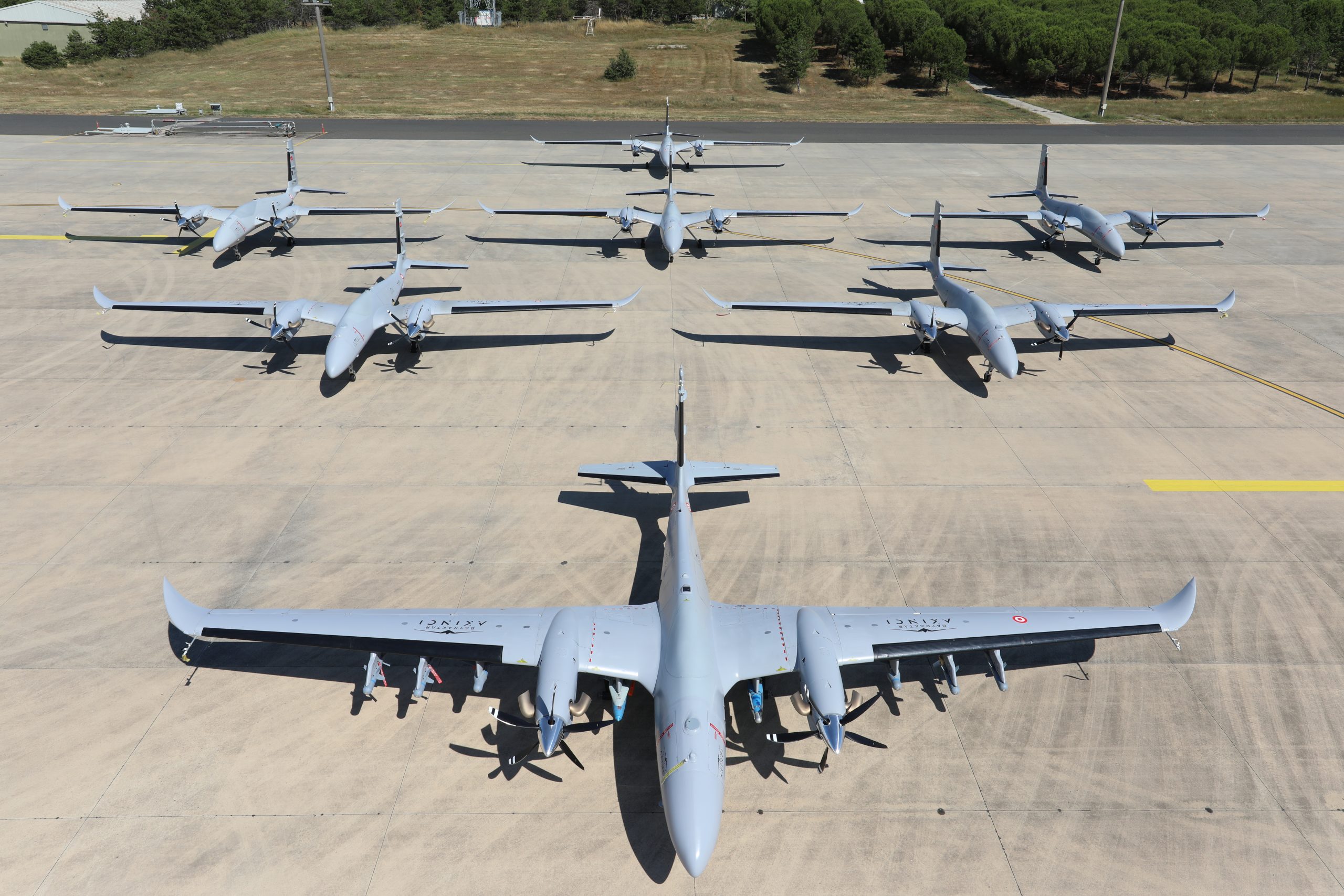
Baykar’s AKINCI unmanned combat aerial vehicle carried out its first live firing with a new Turkish-made guidance kit on October 9, scoring a direct hit over the Gulf of Saros and adding one more indigenous weapon to an already long list of munitions cleared for the platform.
The weapon is the Morfoz Guidance Kit, known by its Turkish acronym MGK and developed by ASELSAN. Defence Turkey, which first reported the test, said the kit is built “entirely with indigenous components,” though neither ASELSAN nor the test report disclosed the guidance type, seeker, range or warhead options for the munition.
A test flight out of Çorlu
The AKINCI used in the test took off from the Çorlu Flight Training and Test Center in Tekirdağ carrying two different munitions: the new MGK and the Alpagut loitering munition, a joint Roketsan-STM product that has been flying on AKINCI since 2024. After releasing both weapons over the Saros Gulf test range, the aircraft returned to Çorlu.
Alpagut itself is a 45-kilogram, electrically propelled loitering munition with an 11-kilogram warhead, built around a roughly 60-kilometer operational range and over an hour of endurance, according to STM’s own figures. It first flew on AKINCI in prototype form in 2024 and has since been released against sea targets off Sinop. Pairing it with the MGK on the same sortie suggests Baykar and its weapons suppliers are now routinely testing multiple new munitions on a single mission profile rather than dedicating separate flights to each one.
One more name on a crowded weapons list
The MGK joins a roster of indigenous munitions that Defence Turkey says AKINCI has already fired or carried, including Roketsan’s MAM-L and MAM-T smart micro munitions, TOLUN and TEBER-81/82 guidance kits, LAÇİN, LGK-81/82 and HGK-82 bombs, the GÖKÇE and GÖZDE precision munitions, the KGK-82-SİHA glide kit, the supersonic İHA-300 and İHA-122 missiles, the ÇAKIR cruise missile, the EREN loitering munition and the SUNGUR air defense missile.
That list matters more than any single test result. Since its first flight in 2019, AKINCI has functioned as much as a flying weapons-integration laboratory as a strike platform, giving Türkiye’s missile and munitions houses a large, long-endurance airframe on which to qualify new products before they are offered to export customers or added to Turkish Air Force and Navy inventories. Each successful firing shortens the list of foreign-sourced components in the country’s unmanned strike arsenal and gives Baykar another configuration to market alongside the aircraft itself.
Why it matters beyond Türkiye
AKINCI has already been sold to Saudi Arabia, Pakistan, Kazakhstan, Azerbaijan, Kyrgyzstan and several other operators, typically as a package that includes a specific munitions set. A growing and increasingly indigenous weapons catalogue gives Ankara more room to tailor export configurations without relying on partners who may be subject to third-country re-export restrictions, and it reduces the single-source risk that comes with depending on any one subcontractor for a given munition type.
No information has been released yet on when the MGK will complete qualification or enter production, and ASELSAN has not said whether the kit is intended as a direct strike weapon, a glide bomb kit fitted to an existing warhead, or something else entirely. Defence Turkey’s report, the only account of the test so far, did not include statements from ASELSAN, Baykar or the Presidency of Defence Industries (SSB).
Related coverage on DefenseTürkiye
- Baykar’s AKINCI Strikes 250 km Away With Roketsan’s New İHA-300 Missile
- AKINCI and TB2 Solve Different Problems for Baykar’s Customers
- ASELSAN Guided Munitions Hit Four for Four Before 15 Nations
- ASELSAN: The Company Behind Türkiye’s Defence Electronics
- TÜBİTAK SAGE Designs the Missiles Türkiye’s Industry Builds
Source: Defence Turkey.