Türkiye vs South Korea: Two Rising Defence Exporters

South Korea is the larger arms exporter. It is not the better-diversified one. Over 2021–25 South Korea supplied 3.0 per cent of the world’s major arms transfers and Türkiye 1.8 per cent, ranking them ninth and eleventh in SIPRI’s table of suppliers. But 58 per cent of Korea’s export volume went to a single customer, Poland, and its top three customers absorbed roughly 86 per cent of everything it shipped. Türkiye’s largest customer, Pakistan, took 16 per cent, and its top three took about 36 per cent. That difference — scale on one side, spread on the other — is the most useful thing to know about the two countries that have grown fastest in the arms market this decade.
DEFENCETÜRKIYE DATA BOX — TWO RISING EXPORTERS
Global rank, 2021–25 (SIPRI): South Korea 9th, Türkiye 11th
Share of global arms exports, 2021–25: South Korea 3.0%, Türkiye 1.8%
Change in export volume vs 2016–20: South Korea +24%, Türkiye +122%
Largest single customer: Poland (58% of Korean export volume); Pakistan (16% of Turkish export volume)
National figures for 2025: Türkiye $10.05bn of realised defence and aerospace exports and $17.8bn of new contracts; South Korea $15.4bn of new export contracts
Each country’s own arms imports, 2021–25: South Korea 93% from the United States; Türkiye 31% Germany, 29% Spain, 19% Italy
Direct industrial links: three documented Korean supply positions inside Turkish programmes; none known in the other direction
Why the headline dollar figures do not compare
Most English-language pieces that set the two countries side by side put $15.4 billion next to $10 billion and stop there. Those numbers measure different things, and a procurement analyst who treats them as equivalent will draw the wrong conclusion.
South Korea’s Defense Acquisition Program Administration (DAPA) reported defence exports of $15.4 billion for 2025, up 60.4 per cent on the year, a figure driven largely by a third execution contract with Poland for Chunmoo guided rockets worth 5.6 trillion won signed on 30 December. That is an order figure: the value of export contracts signed in the year. It fell short of Seoul’s own $20 billion target.
Türkiye’s $10.05 billion for 2025, given by Secretariat of Defence Industries (SSB) head Haluk Görgün in early January 2026, is a shipment figure: goods and services that actually left the country, $9.87 billion of goods and $184 million of services, up 48 per cent on $7.1 billion in 2024. The comparable Turkish order number was disclosed in the same briefing: $17.8 billion of new contracts in 2025, against $10 billion in 2024.
Read like for like, Türkiye signed more new export business than South Korea did in 2025. Read on deliveries, Korea is still well ahead. Both statements are true, and the gap between them is the single most important fact about Türkiye’s position: its order book has grown faster than its ability to ship.
| Measure | South Korea | Türkiye | What it actually counts |
|---|---|---|---|
| Share of world arms exports, 2021–25 | 3.0% (rank 9) | 1.8% (rank 11) | Delivered volume of major arms, SIPRI trend-indicator values — not money |
| Growth vs 2016–20 | +24% | +122% | Change in that delivered volume between five-year periods |
| New export contracts, 2025 | $15.4bn (DAPA) | $17.8bn (SSB) | Orders signed during the year, most of them delivered years later |
| Exports actually shipped, 2025 | Not published on the same basis | $10.05bn (SSB) | Turkish figure covers defence and aerospace, including civil aviation work |
| Customer concentration, 2021–25 | Top 3 ≈ 86% | Top 3 ≈ 36% | Share of each supplier’s own export volume taken by its three biggest buyers |
Compiled by DefenceTürkiye from SIPRI, Trends in International Arms Transfers, 2025 (March 2026), tables 1 and 2; DAPA figures as reported January–March 2026; SSB figures given by Haluk Görgün, January 2026. Concentration percentages are DefenceTürkiye’s addition of SIPRI’s three named recipients for each supplier.
Concentration is the real difference, and it cuts both ways
Poland reshaped South Korea’s export business almost single-handedly. The framework agreements signed in Warsaw on 27 July 2022 — 180 K2 Black Panther tanks, 212 K9 Thunder howitzers, 48 FA-50 light combat aircraft and 218 K239 Chunmoo rocket launchers — were worth roughly $12.4 billion and remain Korea’s largest arms package with any single country. Nothing in Türkiye’s export history is comparable in size. Türkiye’s biggest signed export contract is Spain’s trainer programme, authorised in October 2025 with a ceiling of €3.12 billion for up to 45 aircraft and contracted on 30 December 2025 for 30 HÜRJETs plus the training system, and even that is led by Airbus Defence and Space España rather than by Turkish Aerospace.
Concentration of that order delivers volume quickly and creates a matching exposure. Polish financing of the Korean packages has been publicly strained since 2024, with Warsaw’s ability to fund successive execution contracts repeatedly reported as the constraint on how much of the 2022 framework converts into firm orders. A supplier with 58 per cent of its volume in one country is making a bet on that country’s budget.
Türkiye’s spread is the mirror image. Pakistan at 16 per cent, the UAE at 12 and Ukraine at 8.4 is a shallower but far more stable base, and it reflects a different sales model — many mid-sized contracts across many customers, which is the pattern described in our analysis of how countries actually buy Turkish weapons. The cost of that model is that no single deal ever transforms the annual figure. The benefit is that no single customer’s budget crisis can halve it.
Both are now, above all, European suppliers
The lazy framing treats South Korea as NATO’s new armourer and Türkiye as a supplier to the Global South. The data says otherwise. Of Türkiye’s $10.05 billion in 2025 exports, $5.6 billion — 56 per cent — went to the European Union, NATO members and the United States. Four of Türkiye’s top ten export destinations were European and one was the United States. Defence and aerospace now account for 3.7 per cent of all Turkish exports, against 1.7 per cent in 2022.
Korea’s European pivot is more concentrated but points the same way: Poland alone accounts for the bulk of it, and Poland’s own arms imports in 2021–25 were split 47 per cent Korean and 44 per cent American. Two mid-sized industrial states, on opposite sides of Asia, have both been pulled westward by the same European rearmament wave — and are increasingly bidding against each other for it. Türkiye’s position in the specific European ammunition and land-systems segment is examined separately in our piece on whether Türkiye can supply Europe’s ammunition.
Türkiye retains one regional position Korea does not contest at all. SIPRI records Türkiye as the third-largest supplier of major arms to sub-Saharan Africa in 2021–25 with 11 per cent of subregional imports, behind China and Russia. South Korea does not appear in that ranking.
What each country actually sells
The portfolios overlap less than the rivalry framing suggests. South Korea’s export earnings come from heavy, conventional, high-unit-cost land and air platforms built for a large conscript army and adapted for export: main battle tanks, tracked self-propelled howitzers, multiple rocket launchers, light combat aircraft, and increasingly the Cheongung II medium-range air defence system. Türkiye’s come from a wider and lighter catalogue — armed and unarmed UAVs, loitering munitions, guided rockets and missiles, wheeled armoured vehicles, naval platforms and, lately, air defence. Weapons and ammunition alone accounted for $4.7 billion of Türkiye’s 2025 exports.
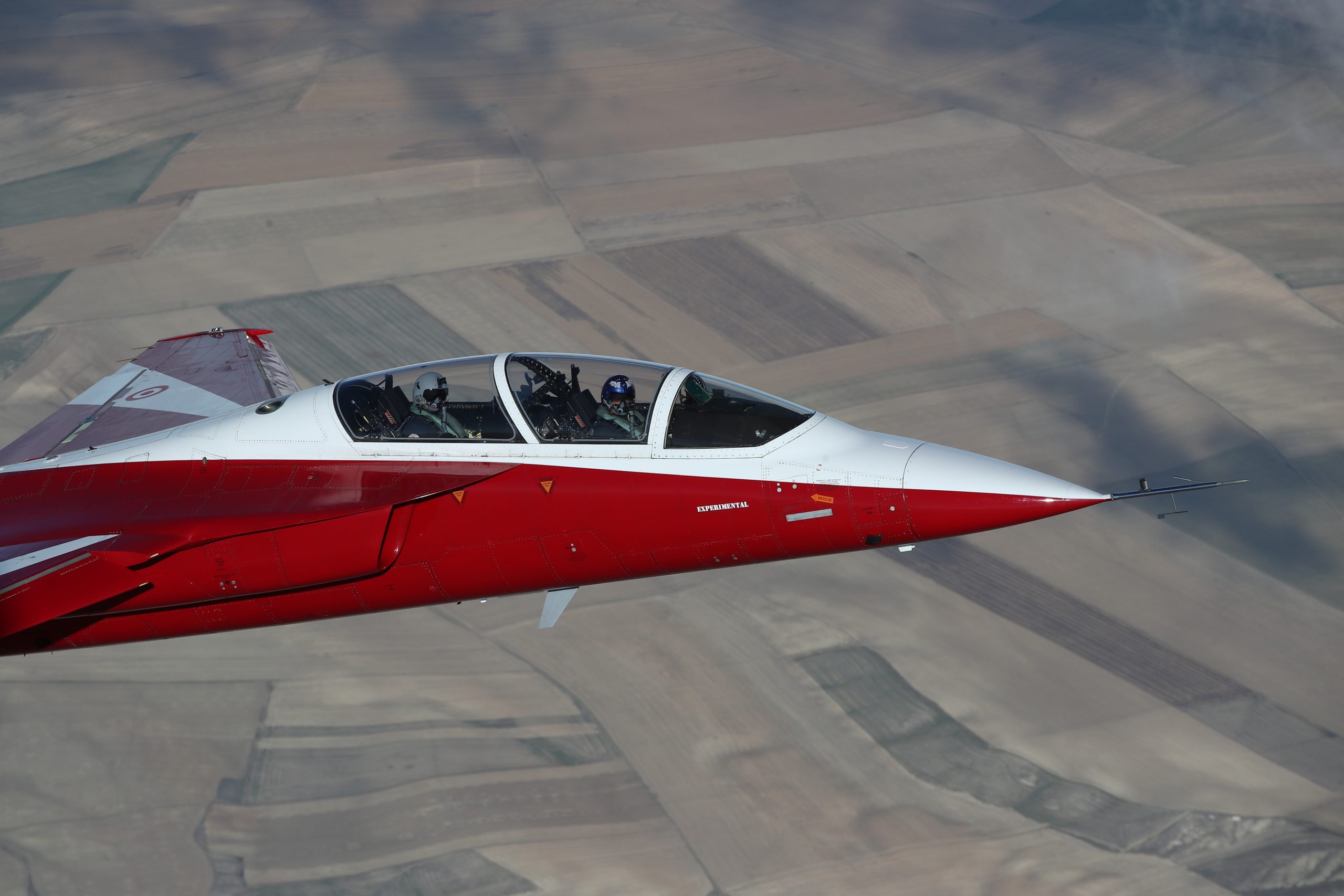
That difference matters commercially because the two catalogues answer different procurement problems. A government rebuilding an armoured corps shortlists Korea. A government that needs persistent surveillance and strike at modest cost shortlists Türkiye — the reasoning set out in our study of why countries buy Turkish drones. They collide directly in three places: advanced jet trainers, where HÜRJET meets the FA-50 (treated in detail in our page on where HÜRJET fits in the trainer market); artillery, where Turkish and Korean howitzers chase the same European and Gulf replacement programmes; and medium-range air defence, where SİPER and the HİSAR family meet Cheongung II in exactly the tier where Türkiye has not yet sold and Korea has — a gap quantified in our review of who actually buys Turkish air defence.
The dependency that shapes each export machine
Each country’s export behaviour is best explained by who can stop a sale.
South Korea’s constraint is American content. The T-50 family was developed with Lockheed Martin and uses the General Electric F404; the KF-21 uses the F414. Both fall under the US Arms Export Control Act and ITAR third-country transfer provisions, which means Washington holds a veto over onward sale. This is not theoretical: a reported $400 million T-50 sale to Uzbekistan was blocked by the United States in 2015 over technology-transfer and policy concerns, and US engine controls have been repeatedly cited as a complication in KF-21 marketing to the UAE and Indonesia. The United Kingdom has openly courted Seoul with a Rolls-Royce alternative to the F414 on exactly this argument.
Türkiye’s constraint is the same in kind and different in history, because Türkiye has already been on the receiving end of it. The ALTAY tank was designed around a German MTU powerpack and lost it to German export restrictions. Canadian optics for Bayraktar drones were halted in 2020. Türkiye was removed from the F-35 programme in 2019. The Turkish response was substitution — and, where substitution was not possible, a Korean supplier. Türkiye is not ITAR-free either: the HÜRJET flies on the same GE F404 family as the FA-50, a point we examine in our explainer on whether Turkish weapons are ITAR-free. The honest summary is that both countries sit inside the American control regime, and that Türkiye has spent a decade building exits from it while Korea has mostly not needed to.
They are already in each other’s supply chains
The most under-reported fact about this rivalry is that it is also a supplier relationship, running consistently in one direction.
| Turkish programme | Korean supplier | What is supplied | Status and date |
|---|---|---|---|
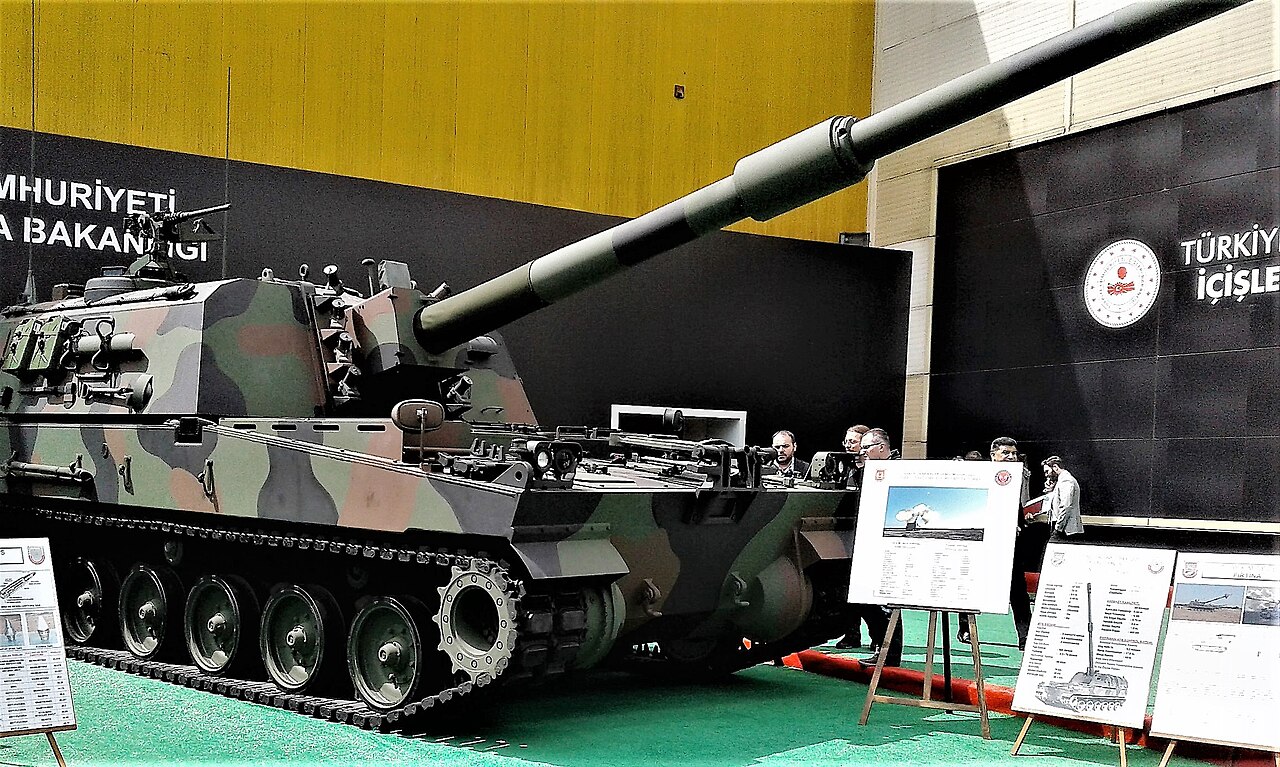
| T-155 Fırtına howitzer | Samsung Techwin (now part of Hanwha) | K9 Thunder design licence and production technology; first vehicles built in Korea, the rest in Türkiye | In service. Licence arrangements from the early 2000s |
| ALTAY main battle tank, T1 batch | HD Hyundai Infracore; S&T Dynamics | DV27K V12 diesel and EST15K transmission, supplied as a single powerpack | In production tanks. DAPA letter of intent October 2021; integration announced by SSB May 2022 |
| HÜRJET advanced jet trainer | Kencoa Aerospace | 34 machined fuselage structural components, 27 aircraft shipsets | Announced 26 September 2026; deliveries 2026–2028. Value not disclosed |
Compiled by DefenceTürkiye from SSB and DAPA announcements, company disclosures and Turkish trade reporting. No equivalent Turkish supply position inside a South Korean programme has been publicly disclosed.
The HÜRJET case is the sharpest. Kencoa Aerospace is supplying fuselage structures for an aircraft whose only export customer so far is Spain, and whose closest competitor is Korea Aerospace Industries’ own FA-50 — a competition Envanter Medya has set out system by system in its Turkish-language head-to-head of the HÜRJET and the FA-50. The contract itself is covered in Envanter Medya’s Turkish-language report on the Kencoa Aerospace shipset agreement. The ALTAY powerpack story, including what happens when the Turkish BATU engine is ready, is covered in our own page on the Korean diesel inside the ALTAY.
WHY IT MATTERS
For a government shopping outside the traditional five suppliers, Türkiye and South Korea are now the two credible alternatives, and they fail differently. Korea offers depth, delivery performance and heavy platforms, with an American veto attached and a business model currently balanced on one European customer. Türkiye offers breadth, fewer third-party approvals on most of its catalogue and more flexible terms, with less proven mass-delivery performance and a thinner export-credit apparatus behind it. The choice between them is rarely about which weapon is better. It is about which supply risk a buyer is willing to carry.
What neither set of numbers tells you
Several things are genuinely unknown, and any comparison that glosses over them is overselling.
- Neither figure is audited against the other’s definition. Türkiye’s national total bundles aerospace, including civil aviation subcontracting, with defence. Korea’s headline is contract intake. A clean like-for-like series does not exist publicly.
- A second Turkish 2025 figure circulates. Some Turkish trade reporting puts the year at roughly $10.5 billion rather than the $10.05 billion given by Görgün. This page uses the SSB number and names its source.
- Order books are not deliveries. Türkiye’s $17.8 billion of 2025 contracts will be judged on whether they ship. Korea’s 2025 orders depend on Polish financing that has already been reported as strained.
- Korea’s 2026 projection is a forecast, not a result. The Export-Import Bank of Korea has projected Korean defence exports above $27 billion for 2026; DAPA’s own $20 billion annual target is set for 2027. Neither is an outcome.
- End-use scrutiny applies to both. SIPRI records Türkiye among the suppliers of major arms to the Sudanese armed forces during the civil war that began in 2023. Export growth and export controls are separate questions, and a buyer-facing analysis should say so.
BUYER VIEW
Third-party approval: ask explicitly which US-controlled components sit in the configuration offered. For Korean combat aircraft this is decisive. For Turkish systems it varies by product and is usually narrower, but it is not zero.
Delivery evidence: Korea has a longer record of delivering large tranches on schedule. Türkiye’s published record is improving but thinner at scale. Ask for completed-delivery references, not order announcements.
Financing: Korean packages have typically come with substantial state-backed export credit. Turkish deals more often rely on Türk Eximbank lines negotiated case by case.
Local production: both offer it. Korea’s Polish arrangements and Türkiye’s licence and joint-venture model are structurally similar; the difference is in how much of the critical subsystem list is actually transferred.
Sustainment: a decade of spares, not the signing price, decides total cost. Türkiye’s sustainment structures are covered in our analysis of who supports a Turkish weapon after the sale.
This is open-source editorial analysis by DefenceTürkiye. It is not procurement advice to any government.
What comes next
Three things will decide whether the gap narrows. The first is Polish conversion: how much of the 2022 framework becomes firm orders determines whether Korea’s 2026 figure resembles the Export-Import Bank’s $27 billion projection or something much flatter. The second is Turkish delivery throughput — whether the $17.8 billion signed in 2025 turns into shipments at the pace the order book now implies. The third is the long-range air defence tier, the one segment where Korea has sold and Türkiye has not, and where Turkish industry has just signed its largest domestic production contracts to date.
The most likely outcome is not that one displaces the other. It is that both keep taking share from the same shrinking Russian position while remaining dependent, in different ways, on American and European component decisions they do not control.
FAQ
Does Türkiye or South Korea export more weapons?
South Korea, measured by delivered volume. SIPRI put South Korea ninth among suppliers for 2021–25 with 3.0 per cent of global arms exports and Türkiye eleventh with 1.8 per cent. Measured by new contracts signed in 2025, Türkiye was ahead: $17.8 billion against South Korea’s $15.4 billion.
Which country’s arms exports are growing faster?
Türkiye’s. SIPRI records a 122 per cent increase in Turkish export volume between 2016–20 and 2021–25, against 24 per cent for South Korea over the same periods. Türkiye started from a much smaller base.
Who are South Korea’s and Türkiye’s biggest arms customers?
Poland took 58 per cent of South Korea’s export volume in 2021–25, followed by the Philippines at 18 per cent and the UAE at 9.5 per cent. Türkiye’s largest were Pakistan at 16 per cent, the UAE at 12 per cent and Ukraine at 8.4 per cent.
Do Türkiye and South Korea compete directly?
In three segments clearly: advanced jet trainers and light combat aircraft, self-propelled artillery, and medium-range air defence. Elsewhere their catalogues differ — Korea sells heavy conventional land and air platforms, Türkiye sells a broader mix led by unmanned systems and precision munitions.
Does South Korea supply parts for Turkish weapons?
Yes, in at least three documented cases: the T-155 Fırtına howitzer is a licensed derivative of the K9 Thunder; the first ALTAY tanks use an HD Hyundai Infracore DV27K powerpack with an S&T Dynamics transmission; and Kencoa Aerospace announced a contract in September 2026 to supply machined fuselage components for 27 HÜRJET shipsets. No equivalent Turkish supply position inside a Korean programme has been disclosed.
Can the United States block Korean or Turkish arms exports?
It can block any export containing US-controlled content. Korea’s T-50 family and KF-21 use American engines and fall under the Arms Export Control Act, and a T-50 sale to Uzbekistan was blocked on that basis in 2015. Türkiye faces the same rule on specific items — the HÜRJET uses the same GE F404 engine family as the FA-50 — but most of its export catalogue has fewer US-controlled components.
Which is the better supplier for a mid-sized military?
It depends on what the buyer is replacing and what risk it can absorb. Korea is the stronger choice for heavy land platforms and proven large-tranche delivery, with the American approval chain as the main risk. Türkiye is the stronger choice for unmanned systems, precision munitions and buyers who want faster terms and fewer end-use conditions, with delivery throughput at scale as the main risk.
Sources
- SIPRI, Trends in International Arms Transfers, 2025, fact sheet, March 2026 — tables 1 and 2
- SIPRI, press release on the 2025 arms transfers data, March 2026
- Anadolu Agency, Türkiye’s defense, aviation exports exceed $10B threshold in 2025, reporting figures given by SSB head Haluk Görgün, January 2026
- Seoul Economic Daily, Korea’s defense exports hit $15.4 billion in 2025, citing DAPA, March 2026
- Breaking Defense, Poland’s massive tank, artillery and jet deal with S. Korea, July 2022
- The Korea Times, Korea-Poland mega arms deal jeopardized by financial hurdles, April 2024
- Seoul Economic Daily, KF-21’s borrowed US engine blocks exports without Washington’s approval, May 2026
- UK Defence Journal, US blocks South Korean jet export to Uzbekistan, October 2015, on the $400m T-50 case
- Korea.net, Republic of Korea government, Export deal for K2 tank concluded with Poland, on the second K2 execution contract
- The Korea Times, South Korea announces $6bn K2 tank deal with Poland, July 2025