
Otokar Signs $1.47 Billion Armoured Vehicle Export Contract

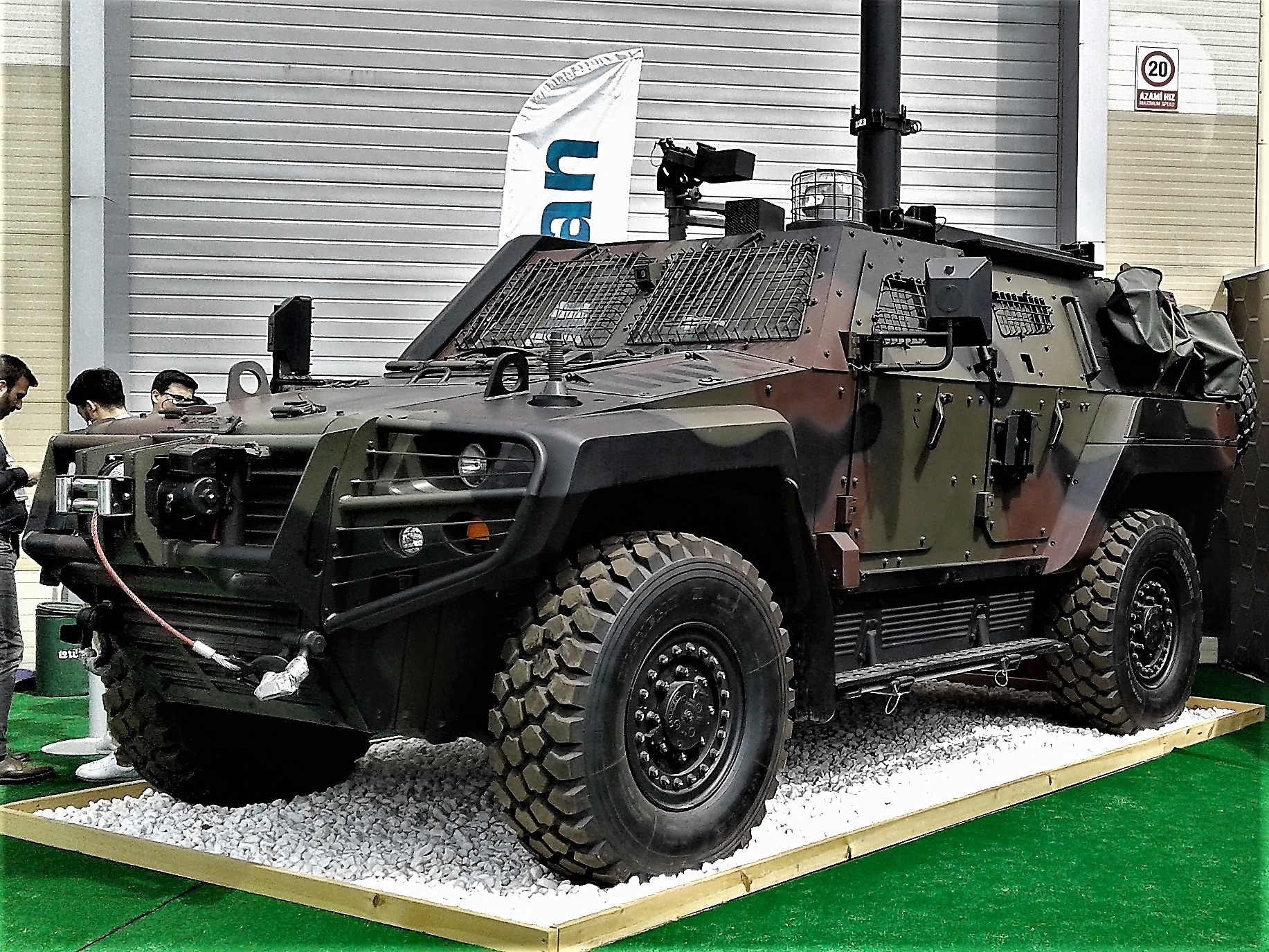
Otokar has signed an export contract worth $1,472,080,360 for wheeled armoured vehicles and integrated logistics support, the Turkish manufacturer disclosed to Borsa Istanbul’s Public Disclosure Platform (KAP) on October 1. It ranks among the largest single export contracts in the company’s history, though Otokar did not name the customer or specify which vehicle family is involved.
According to the filing, reported by Anadolu Agency, deliveries are scheduled to begin in 2027 and run in batches over three years, while the contract itself stays in force for seven years, covering spares, maintenance and follow-on support rather than a single vehicle batch. Otokar said it will issue the buyer letters of guarantee worth roughly $441.6 million, standard practice in state-to-state defence contracts to secure advance payments and performance obligations. The agreement only takes legal effect once the relevant government approvals are granted, the guarantee letters are arranged and an advance payment is received — conditions still pending as of the disclosure.
What Otokar Didn’t Say
Turkish defence exporters routinely withhold customer identities in KAP filings, citing confidentiality clauses that foreign militaries and procurement agencies often require, particularly in the Gulf and parts of Africa and Asia where arms purchases are not publicly announced. The same applies here: no country, no vehicle designation, no unit count. That leaves outside observers to judge the deal mostly by its size and structure rather than its content.
What can be inferred is limited but telling. A seven-year contract term with phased deliveries beginning in 2027 points toward either a large single order or a framework agreement covering multiple vehicle variants and years of logistics support — closer in structure to Otokar’s 2024 agreement with Romania than to the smaller, single-batch export contracts (worth $40–140 million) the company has periodically disclosed for African and Asian customers.
Otokar’s Export Track Record
Otokar, part of the Koç Group, builds the Cobra and Cobra II 4×4 light tactical vehicles, the ARMA 6×6/8×8 family, the tracked Tulpar infantry fighting vehicle and the Ural heavy truck line from its Sakarya plant. Its largest previously known export deal is the 2024 contract with Romania’s Ministry of National Defence for 1,059 Cobra II vehicles, a program valued at roughly $1 billion that legal advisers on the deal put at USD 1 billion, with part of production shifting to a Romanian assembly line. That contract made Romania, a NATO member, one of the most visible public references for Turkish wheeled-vehicle exports — a contrast with the anonymity of this new agreement.
Beyond Romania, Otokar’s Cobra and ARMA vehicles are in service with a range of African, Gulf and Southeast Asian militaries, part of a broader pattern in which Turkish armoured-vehicle manufacturers — Otokar, FNSS, BMC, Nurol Makina and Katmerciler among them — have displaced some Western and Russian suppliers in price-sensitive markets. Türkiye’s four wheeled and tracked vehicle makers between them now count customers on four continents, as detailed in DefenseTürkiye’s earlier look at why countries buy Turkish armoured vehicles.
Why It Matters Beyond Türkiye
The contract lands in a year when Türkiye’s defence and aerospace exports have already grown 16.2 percent year-on-year through August, to $6.3 billion, with trailing 12-month exports above $10.9 billion. A single $1.47 billion order — if and when it clears the pending approval conditions — would represent a meaningful share of that annual total concentrated in one company’s product line, underscoring how much of Turkey’s export growth now rests on a handful of large, often opaque government contracts rather than broad retail arms sales.
It also illustrates a structural feature of Turkish defence exports that is easy to miss from outside: offset arrangements, confidentiality clauses and multi-year logistics bundles, discussed in more detail in DefenseTürkiye’s explainer on what Turkish defence offsets actually give a buyer, mean that a contract of this scale can clear Turkey’s own stock exchange disclosure rules while revealing almost nothing to foreign competitors, analysts or even most of the Turkish public about who is buying and what they are getting.
Otokar’s broader push into licensed production abroad — detailed in DefenseTürkiye’s survey of Turkish defence factories built overseas — suggests the company may again look to localise part of this new order’s production, as it did in Romania, if the eventual customer requires it. Otokar has also been pitching its tracked Tulpar IFV, which recently passed live-fire trials with Leonardo’s Hitfact Mk.II turret, to export customers still without a confirmed order — a reminder that Otokar’s wheeled vehicle line, not its newer tracked platform, remains the company’s commercial mainstay.
DefenseTürkiye has asked Otokar for comment on the customer’s identity and vehicle type and will update this article if the company responds or if the contract’s pending approval conditions are met.


