
What an AKINCI Really Costs and Why Nobody Publishes the Number

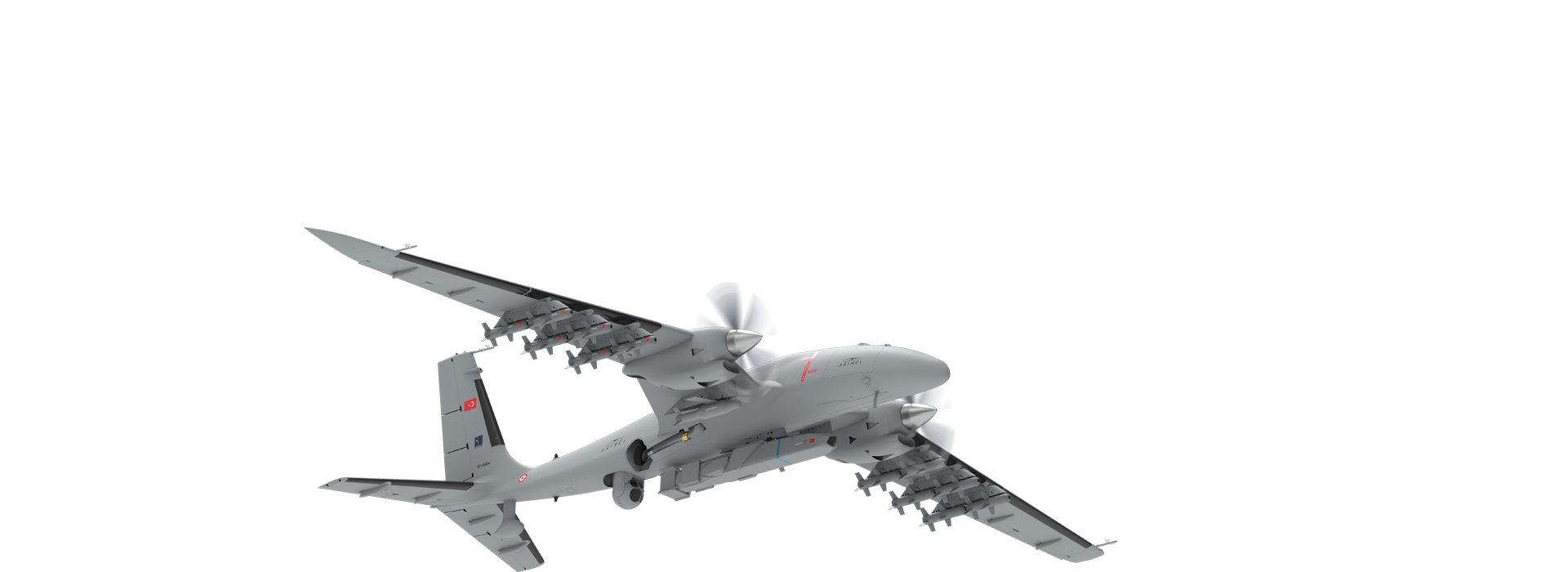
Search for the AKINCI drone price and you will find numbers anywhere from $25 million to more than $100 million per aircraft. They do not contradict each other so much as measure different things. Baykar has never published a price list for its heavy combat drone, and the contracts that have leaked or been estimated bundle far more than an airframe.
This piece sorts what is known from what is guesswork, using Baykar’s own specifications, deal announcements and published estimates.
Is There an Official Price for the AKINCI?
No. Baykar does not list a unit price on its product page, and neither the company nor Turkish procurement authorities have released a per-aircraft figure. When Baykar announced its Saudi Arabia agreement in July 2023, Breaking Defense noted the company gave no details on cost or the number of aircraft involved. Baykar CEO Haluk Bayraktar called it the biggest defence and aviation export contract in the history of the Republic of Turkey.
That silence is normal for a government-to-government weapons sale. Prices depend on configuration, spares, training and offsets, and buyers rarely want them public.
What Do Analysts Estimate One Aircraft Costs?
Public estimates vary with the method. Shephard Defence Insight’s AKINCI entry is reported to put the flyaway cost at roughly $25 million per aircraft, with a gross unit cost near $31 million. Those are analyst estimates, not company numbers.
Early press coverage guessed lower. When the drone was new, some outlets assumed it would land in a price band similar to the TB2, a view that did not survive a look at the aircraft’s size. Baykar lists a maximum take-off weight of 6,000 kg, a payload of 1,500 kg, a wingspan of 20 metres and twin turboprop engines in three power options (2×450, 2×750 or 2×850 hp), plus a national AESA radar and satellite communications. That is a much larger and more capable airframe than a TB2.
| Item | What is known |
|---|---|
| Manufacturer | Baykar |
| Maximum take-off weight | 6,000 kg (Baykar) |
| Payload | 1,500 kg (Baykar) |
| Wingspan / length | 20 m / 12.2 m (Baykar) |
| Endurance | 20+ hours (Baykar) |
| Engines | Twin turboprop, 450, 750 or 850 hp options (Baykar) |
| Published unit price | None. Analyst flyaway estimate about $25 million (reported) |
Why Do Contract Values Imply Higher Per-Aircraft Costs?
Because a contract is not an airframe. A typical AKINCI export package is a system: several aircraft, ground control stations, data links, spare engines and parts, weapons integration, and training for pilots, sensor operators and maintainers. Some deals add local assembly or technology transfer.
Shephard Defence Insight is reported to have inferred implied per-unit figures of roughly $30 million to $100 million across export contracts, depending on what each package included. Its examples are said to include an estimated $180 million for six aircraft for Pakistan and $90 million for three for Azerbaijan. Treat those as estimates, not confirmed contract values. Dividing a total by the number of airframes always overstates the cost of the aircraft itself.
The same effect shows up with the smaller TB2. Our breakdown of what a Bayraktar TB2 actually costs shows how an aircraft estimated at roughly $5 million turns into a nine-figure national programme once ground stations, munitions and support are counted.
What Did the Big AKINCI Deals Cost?
Few values are confirmed, so the picture is partial.
- Saudi Arabia (2023). Widely reported in the press as a deal worth around $1 billion, though Baykar disclosed neither a value nor a quantity. It covers the Royal Saudi Air Force and Navy, with training, logistics, joint production and technology transfer. Our report on the first Saudi naval crews to finish AKINCI training at Baykar shows the training side of that package is already moving.
- Indonesia (2025). Baykar signed a joint-venture agreement with Republikorp in February 2025 covering UAV manufacturing, assembly and maintenance. Reporting at the time cited 60 TB3 and nine AKINCI drones. Breaking Defense reported no value. Co-production changes the cost picture again, because part of the work happens in the buyer’s country.
- Pakistan, Azerbaijan, Kyrgyzstan. Order sizes of six, three and three aircraft appear in open-source trackers. Contract values were not published.
For the wider Gulf picture, see how Gulf capitals moved from buying Turkish drones to building them.
How Does the AKINCI Compare With Other Drones on Price?
It sits between the light Turkish drones and Western heavy-class aircraft. A TB2 is commonly estimated at about $5 million per aircraft, and Turkish ANKA-class drones have been cited at $15 to 20 million depending on configuration, according to Turkish aviation press. The AKINCI’s estimated figure sits above both, which fits its weight and payload class.
The US MQ-9 Reaper is its nearest rival in role. Comparing sticker prices is risky for the same reason as above, since Western and Turkish deals count different things. Our AKINCI and MQ-9 comparison goes through the trade-offs.
Against the TB2 the question is less about price than about mission. The AKINCI carries more, flies higher and brings its own radar. If you only need persistent surveillance with a few light munitions, the cheaper aircraft may be enough. Our AKINCI versus TB2 comparison covers where each makes sense.
What Else Drives the Final Bill?
Several choices move the total more than the airframe does.
- Engine option. The 450, 750 and 850 hp configurations change performance and, presumably, cost.
- Sensors and radar. The national AESA radar and the electro-optical and infrared payload would be separate line items in any realistic package.
- Weapons. Munitions are bought separately and can add up over a fleet’s life.
- Ground segment and satellite links. Beyond-line-of-sight operation needs control stations and communications.
- Training and support. Crew training, spares and maintenance are usually part of the contract.
- Local production. Co-production and offset terms shift cost and work share between supplier and buyer.
Our AKINCI programme article has the service history and operators.
So What Number Should You Use?
For a single aircraft, an analyst estimate of $25 to $30 million is the most defensible public starting point, flagged as an estimate. For a national purchase, assume a system price well above that once ground stations, weapons and training are included, and expect the real figure to stay confidential. Any article quoting one exact price as fact has either picked a number from one contract or divided a bundled total by a headcount of airframes.


