How CTech Took an Anti-Jam Satcom Modem From Turkish Units to NATO’s Approved List

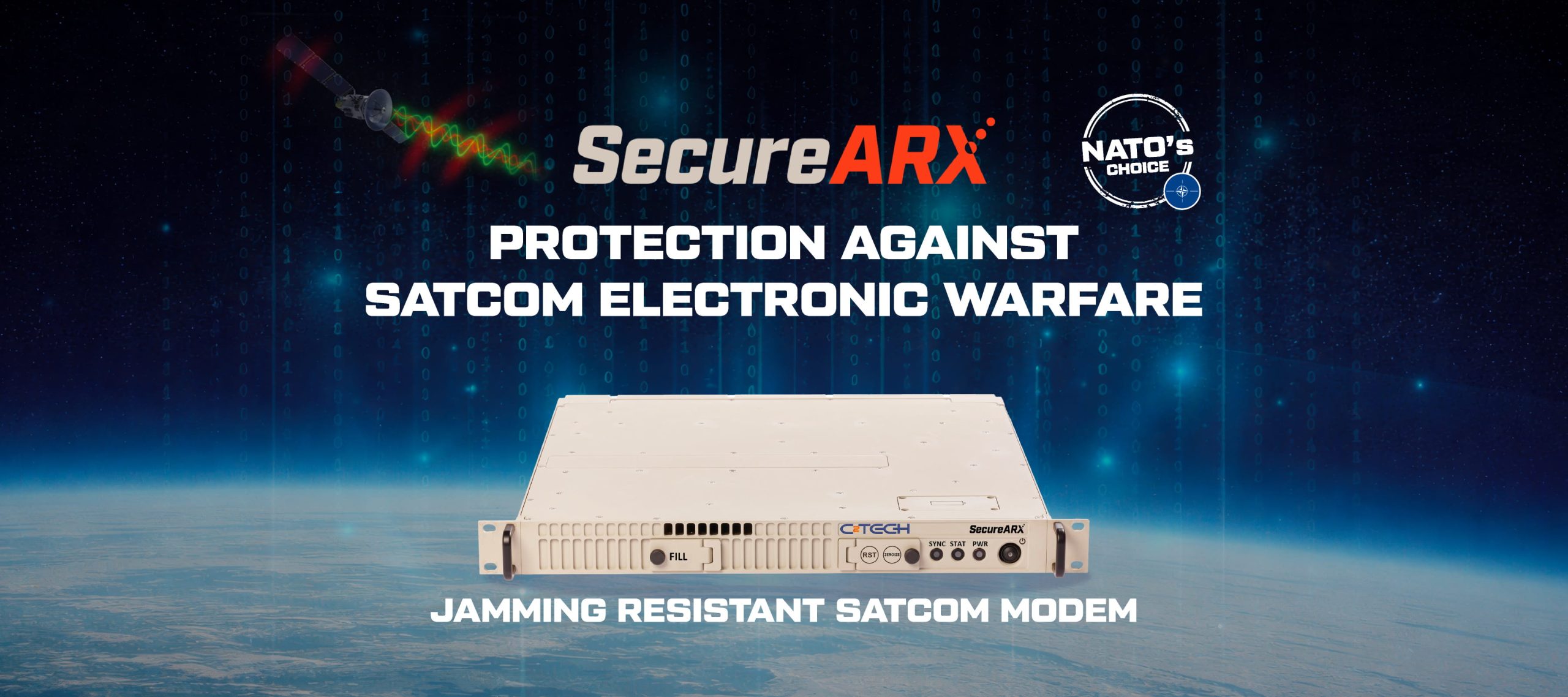
Most of Türkiye’s defence electronics story is told through large names: ASELSAN, Turkish Aerospace, Roketsan. CTech sits a level below them, and that is partly the point. It is a communications subsidiary of Turkish Aerospace (TUSAŞ) that makes satellite and line-of-sight radios, and its best-known product has ended up somewhere few Turkish electronics have: on NATO’s own approved equipment list.
The company is small enough that basic corporate data is thin. It does not publish a founding year or headcount on its website. What it does publish, and what third parties have reported, is a fairly clear picture of a niche business: links that keep working when someone is trying to jam them.
| Company | CTech |
|---|---|
| Ownership | Subsidiary of Turkish Aerospace (TUSAŞ) |
| Headquarters | Teknopark Istanbul, Pendik |
| Branch office | Cyberpark, Çankaya, Ankara |
| General manager | Dr. Cüneyd Fırat |
| Main activities | SATCOM terminals and modems, line-of-sight radios, gateways, satellite telemetry hardware, flight data recorders |
| Key products | SecureARX, SkyARX, AquaARX, TerraARX, HeliARX, UfukLink, SCOFUS, UfukAvio |
| Website | ctech.com.tr |
What Does CTech Actually Make?
The catalogue splits into three groups. The first is communications: satellite terminals named by platform (SkyARX for air, AquaARX for naval, TerraARX for land, HeliARX for helicopters), the SecureARX anti-jam modem, and the UfukLink family of line-of-sight radios. A gateway product, SCOFUS, ties satellite, radio and cellular paths into a single connection.
The second group is space hardware: telemetry transmitters, command receivers and RF components such as filters, couplers and antennas. The third is aviation, where the company sells cockpit voice and flight data recorders under the UfukAvio name.
That last line is easy to overlook, but it is a good example of how a niche supplier grows with its parent. According to an interview with CTech’s Ankara office manager, Mustafa Düzgün, the first recorder contract came with the HÜRKUŞ trainer, and requirements from HÜRJET and KAAN followed. His argument was that relying on foreign recorders creates risk, including when investigators need to access data after an accident.
Why Is SecureARX the Product That Matters?
SecureARX is a satellite modem that uses frequency hopping and other protections to keep a link alive under jamming and to resist eavesdropping. It is designed for fixed and mobile installations on land, sea and air platforms. CTech says it has been a supplier to the Turkish Armed Forces with this line since 2014, and reports describe the modem as developed to NATO’s STANAG 4606 standard for jam-resistant satellite waveforms.
The technical idea is straightforward even if the engineering is not. A satellite link is only as robust as its weakest leg, and the ground-to-satellite uplink is easy to target from a distance. A modem that hops across frequencies and recognises interference gives operators a chance to keep talking while the jammer keeps transmitting.
That is why the product has gained relevance outside Türkiye. Jamming of satellite-linked systems has become routine on the eastern flank of the alliance, and buyers who once treated anti-jam capability as a premium option now tend to treat it as a baseline.
How Did a Turkish Modem Reach NATO?
Two separate steps stand out. First, CTech was nominated by Turkish national authorities to compete in a NATO procurement. The company then won a contract from the NATO Communications and Information Agency (NCIA) to supply Electronic Protective Measure Systems for the alliance’s SATCOM ground segment, according to reporting by EDR Magazine. Under the contract, SecureARX is integrated into NATO satellite ground systems. Contract value has not been published in the sources reviewed.
Second, SecureARX was tested at CWIX 2026, the Coalition Warrior Interoperability eXercise led by NATO Allied Command Transformation. CTech says the modem’s interoperability with systems from NATO and allied nations was validated there. CWIX is a technical validation event rather than a purchase, so the result is a credential, not an order.
At MSPO 2026 in Kielce, Poland, the company used that credential directly. It pitched the modem to alliance representatives, describing it as already listed in NATO’s approved equipment inventory, and General Manager Fırat said the aim was to support broader market expansion among member states. The full show report is in our MSPO 2026 coverage.
What Else Has CTech Shown Recently?
Three recent announcements show where the company wants to go.
A flat antenna for aircraft and drones. At MSPO, CTech first showed the SkyARX E-Ku, an electronically steered phased-array antenna. It points its beam without a rotating dish, which matters for manoeuvring aircraft and for low-observable designs that cannot carry a radar-reflective bump. The company has not named a customer or platform, describing the show as a market introduction. It also demonstrated a short-range radio, the UfukLink Mini Pro, for the first time.
A swarm of drone boats with one satellite dish. In September CTech described a concept in which only one unmanned surface vessel in a group carries the AquaARX satellite terminal. That vessel receives commands from a distant command centre and relays them by UfukLink Mini Pro to the others, including cheap attack boats with no satellite gear. The company reports data rates up to 100 Mbps over roughly 200 km for the radio. More detail is in our report on the USV swarm link. The idea builds on a public demonstration in March, when CTech controlled a boat in Istanbul from its stand at the World Defense Show in Riyadh, about 1,400 km away.
A software partner from Estonia. Also at MSPO, CTech signed a memorandum of understanding with Wayren, an Estonian startup whose software builds a mesh network across whatever links are available. The agreement is a framework to explore joint development, with no timeline or funding disclosed. See the Wayren MoU story.
Where Does CTech Fit in Türkiye’s Satellite Communications Picture?
It helps to be precise about scope. CTech does not build satellites and it does not operate a constellation. Those jobs belong to the space programmes around Türksat and the GÖKTÜRK series, which we cover in our look at military satellite communication after Türksat 6A. CTech supplies the terminals and modems at the edges: the hardware that sits on a ship, an aircraft or a vehicle and talks to whichever satellite is overhead.
As a Turkish Aerospace subsidiary, it also has a built-in customer in the group’s aircraft and unmanned programmes, which explains the recorder contracts and the focus on air platforms. The SkyARX line is credited by the company with more than 200,000 flight hours, a figure CTech itself published and which we have not independently verified.
The export record is still early. Beyond NATO’s ground segment and the Estonian MoU, the company signed a cooperation memorandum with Azerbaijan’s Azercosmos at ADEX 2024 in Baku, where it also showed SkyARX, SecureARX and SCOFUS. Those are intentions and validations more than large deliveries.
What Are the Open Questions?
Several things are not public. The company has not released revenue, employee numbers or export volumes. The NCIA contract value is undisclosed. The SkyARX E-Ku has no named launch customer. And the USV swarm link is a proposed architecture built from existing products, not a fielded system.
What is on the record is narrower but real. A Turkish firm has built a product that an alliance of thirty-plus countries looked at, tested and listed. For a company of this size, in a field where trust in the supply chain counts for as much as the specification sheet, that is a meaningful foothold, and the next signal to watch is whether MSPO conversations turn into named member-state orders.