Qatar Turned a Crisis Alliance Into a Standing Turkish Force

Few defence relationships in the Gulf are as visible as the one between Doha and Ankara. Turkish soldiers have been stationed in Qatar since 2015, Turkish fighter jets now fly from a Qatari air base, and two Turkish patrol vessels sit in a Qatari port. The Qatar Turkey defence relationship has moved well past arms sales. It now looks like a shared force structure.
That did not happen in one step. It grew in layers: a defence agreement, a land presence, a wave of Qatari orders from Turkish factories and shipyards, and, more recently, air and naval components. The 11th session of the bilateral Supreme Strategic Committee on 22 October 2025 added a new defence cooperation memorandum on top of that base.
How Did Turkish Troops End Up in Qatar?
The legal basis is a defence cooperation framework agreed in 2014. Under it, the Qatar-Turkey Combined Joint Force Command began operating in October 2015 at the Tariq bin Ziyad military base outside Doha. Early reporting described a mechanised battalion-sized group of roughly 300 Turkish personnel, with commando, engineering, fire-support and liaison elements.
The turning point came in 2017. When Saudi Arabia, the UAE, Bahrain and Egypt cut ties with Doha and imposed a blockade, an end to Turkish-Qatari military cooperation appeared among the demands the quartet put to Qatar. Doha refused, and Turkey sent more troops. Regional outlets reported that additional contingents arrived at Al Udeid and joined the Tariq bin Ziyad group.
In November 2019, at the fifth meeting of the High Strategic Committee, President Erdoğan called the combined command a symbol of sincerity and solidarity, and a second Turkish post named Khalid bin Walid was reported as completed. Reports have also put the long-term planned Turkish presence in the low thousands, though official figures are rarely published, so treat any headcount as an estimate.
What Has Qatar Bought From Turkish Manufacturers?
The industrial side took shape quickly after the 2017 blockade. At the Doha International Maritime Defence Exhibition (DIMDEX) in March 2018, Qatar signed a cluster of contracts with Turkish companies, according to The Defense Post and other reports from that show.
| Area | Supplier | Reported scope |
|---|---|---|
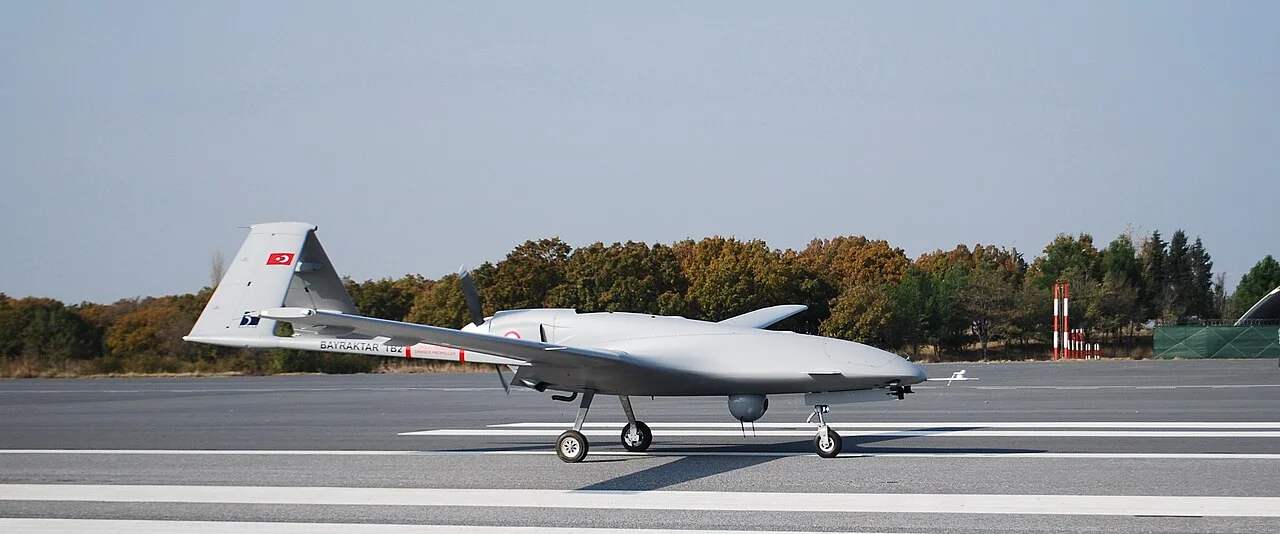
| Armed drones | Baykar | Six Bayraktar TB2 aircraft, three ground control stations, a simulator and training |
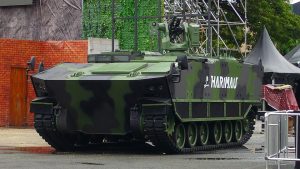
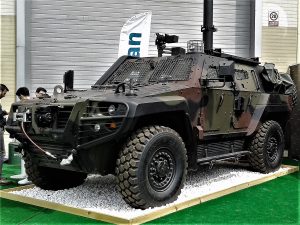
| Armoured vehicles | BMC | 85 vehicles, split between 50 Kirpi MRAPs and 35 Amazon 4×4 vehicles |
| Light armour | Nurol Makina | A memorandum of understanding covering 214 NMS 4×4 vehicles |
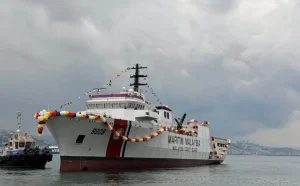
| Training ships | Anadolu Shipyard | Two cadet training ships for the Qatari navy |
| Patrol craft | Ares and Yonca-Onuk shipyards | Additional vessels carrying ASELSAN weapon systems |
Not every item moved at the same pace, and some figures come from announcement-stage reporting rather than final contract documents. What can be confirmed from delivery reporting is more limited, and more useful.
Was the Bayraktar TB2 Sale to Qatar the First Export?
Yes. Reporting from 2018 describes the Qatari order as the first export contract for the Bayraktar TB2. By February 2019, Gulf Times reported that the six aircraft had passed factory quality tests and were ready for hand-over. A team of 55 Qatari personnel had completed a four-month training course in Edirne, and Baykar had committed to two years of technical and logistical support.
The size of the order was small by later standards. Its value was strategic. A Gulf state with deep pockets and access to Western suppliers chose a Turkish unmanned system before the type had built its later export record. Our TB2 programme overview follows how that record grew, and the explainer on how countries buy Turkish weapons covers the credit and contract mechanics that sit behind deals like this one.
What Did the Navy Deals Deliver?
The naval track is the clearest example of an order that reached delivery. Anadolu Shipyard (ADIK) launched and then delivered the first cadet training ship, Al Doha, in August 2021, according to Naval News. The vessel is about 90 metres long and displaces roughly 1,950 tonnes. It has a helicopter deck and accommodation for crew, students and instructors. The sister ship, Al Shamal, was launched in December 2020 with delivery expected the following year, though we did not find a delivery report that we could confirm.
The 2018 package also included an agreement for Piri Reis University to help set up a naval academy for Qatar. Training, in other words, was written into the commercial deal from the start. It is a pattern seen across Turkish exports, from armoured vehicles to drones.
Which Turkish Units Are Based in Qatar Now?
The Combined Joint Force Command now has three components.
- Land. Turkish ground forces have been in place since 2015, with the Tariq bin Ziyad base as the anchor.
- Air. Six Turkish F-16s deployed to Dukhan Air Base on 30 July 2024. By the end of May 2025 the air element reported its 1,000th flight hour, flying training missions with Qatari Eurofighter Typhoons, Rafales and F-15s, according to Türkiye Today.
- Naval. Two Tuzla-class patrol vessels, TCG Kumkale and TCG Kuşadası, arrived at Umm al-Houl Naval Base. Janes reported them as the start of a permanent Turkish naval presence, with Defence Minister Yaşar Güler describing a role in supporting Qatar’s defence and training Qatari forces.
The air element is the interesting one. The Qatari air arm operates three Western fighter types, and Turkish pilots fly alongside all of them. That gives the Turkish Air Force routine exposure to Rafale and Typhoon operations while Qatar gets a larger local fleet to train against. It also connects to Ankara’s own fighter planning, which we cover in our piece on Türkiye’s Eurofighter purchase and the Qatar link.
Is This a Buyer-Seller Relationship or Something Else?
Both, and that is the point. A normal arms customer buys equipment and keeps its own force structure. Qatar has done that, with Baykar, BMC, Nurol and Anadolu Shipyard contracts. But it has also invited a foreign command into its territory with land, air and naval parts, which a pure customer would not do.
The industrial links keep growing in both directions. Turkish armoured vehicle makers are building export histories that include Qatar, as in our look at the Ejder Yalçın export record. And across the region, Gulf governments increasingly want local production and partnership rather than simple imports, a shift we cover in our analysis of Gulf capitals and Turkish drones.
What Changed at the October 2025 Committee Meeting?
Emir Sheikh Tamim bin Hamad Al Thani and President Erdoğan co-chaired the 11th meeting of the Supreme Strategic Committee in Doha on 22 October 2025. The two governments signed a joint declaration and a series of agreements, including a memorandum of understanding on defence cooperation, according to Anadolu Agency and Qatari media. Erdoğan listed military cooperation and the defence industry among the areas where ties were advancing.
Public documents give few operational details. The memorandum does not by itself tell us about new equipment orders, new deployments or changes to troop numbers, and none have been confirmed in the sources we reviewed. What the meeting did show is institutional continuity: the same committee that met in 2019 was still meeting, and defence stayed on its agenda.
What Should Observers Watch Next?
The honest answer starts with what is not public. Neither government publishes a full order book for Qatari purchases from Turkey, and the 2018 announcements were made at an exhibition, where headline numbers often run ahead of signed paperwork.
Three things are worth tracking. First, whether Qatar places new orders with Turkish firms beyond the 2018 batch, since public contract data is thin. Second, whether the air element grows beyond six F-16s or changes type. Third, how the naval component develops, since a base in a Qatari port is a different kind of commitment from a one-off port visit.
For Turkish industry, Qatar remains a small order book but a high-trust reference customer. For Ankara, it is a place where Turkish forces train and live alongside a host military every day.