How Ares Shipyard Became Qatar’s Go-To Builder of Fast Patrol Craft

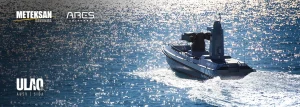
Most shipyards spend decades chasing a single flagship contract. Ares Shipyard, based in the Antalya Free Zone on Türkiye’s Mediterranean coast, built its name on something less glamorous: a steady stream of fast, well-armed patrol craft for coast guards that need boats quickly. Its biggest customer has been Qatar, and in December 2025 the same customer took delivery of the yard’s most unusual product, an armed unmanned surface vessel.
What Is Ares Shipyard?
Ares was established in 2006 by the Kalafatoğlu family, who come from a seafaring background in Sürmene, Trabzon. Kerim Kalafatoğlu serves as chairman. The yard sits inside the Antalya Free Zone and, according to a Maritime Executive interview with the chairman, runs several separate construction halls for steel, aluminium and composite hulls, with more than 400 employees at the time of the interview. Other profiles describe five covered buildings totalling roughly 40,000 square metres.
The company works in two broad lines. One is naval and law-enforcement craft. The other is yachts and superyachts, which it markets under the Ares Yachts name. The defence side is what matters here.
| Item | Detail |
|---|---|
| Headquarters | Antalya Free Zone, Türkiye |
| Founded | 2006 |
| Founder family / chairman | Kalafatoğlu family / Kerim Kalafatoğlu |
| Main activities | Patrol boats, coast guard vessels, unmanned surface vessels, yachts |
| Craft families | Harpoon, Hercules, ULAQ (plus other FPB and utility designs) |
| Reported customers | Qatar, Oman, Bahrain, Türkiye, Northern Cyprus, Bangladesh |
| Website | ares.global |
Which Patrol Craft Does Ares Build?
Two families carry most of the yard’s reputation. The Harpoon series covers small, fast interceptors. The Hercules series stretches from coastal patrol boats to offshore patrol vessels, and the names carry the length in decimetres, so an Ares 75 Hercules is about 24 metres and an Ares 110 Hercules about 34 metres.
The largest of the line, the Ares 150 Hercules offshore patrol vessel, is about 48 metres long. The company says it was named the world’s best offshore patrol ship by an international maritime body in 2018. That is a company claim, and the awarding organisation’s weight is hard to judge from outside.
Ares also works with the UK design house BMT on some patrol boat designs, according to published company profiles. Composite construction is a recurring theme in its marketing, with the ARES 40 interceptor described as having an advanced composite hull built to IACS classification.
How Did Qatar Become the Anchor Customer?
Qatar’s relationship with the yard goes back at least to DIMDEX 2014, when the Qatar Coast Guard signed for 17 high-speed vessels, reported by Shephard Media. Ares chairman Kerim Kalafatoğlu said at the time the boats would be designed in cooperation with the Qatari Ministry of Interior and tailored to coast guard needs.
The company’s own delivery announcement, carried by Defence Turkey, breaks the package down:
- Five Ares 75 Hercules craft, about 24 m, reaching 40 knots with a 12.7 mm remote-controlled weapon station, all commissioned in early 2017.
- Ten Ares 110 Hercules craft, about 34 m, with 32 knots and a quoted endurance of 800 nautical miles. Seven had been delivered by the end of 2017.
- Two Ares 150 Hercules vessels, about 48 m, quoted at 37 knots and 1,600 nautical miles. One had been delivered at that point.
The yard said it finished the programme roughly 20 months ahead of schedule, with the last boats due in early 2018. The weapon fit on the larger hulls included a 30 mm Muhafız remote weapon station and twin 12.7 mm mounts, plus a small Harpoon intervention boat carried onboard.
By 2022, a company statement carried by Maritime Executive said the yard had delivered 31 vessels to the Qatar Coast Guard over six years. That same year Qatar’s Ministry of Interior ordered three ARES 40 Fast Interceptor Craft, announced around the MILIPOL exhibition in Doha, with delivery expected in early 2023. Published figures for that boat are a top speed of 60 knots and a range of more than 250 nautical miles, with a stabilised 12.7 mm remote weapon station. Those numbers come from the company.
What Sets These Boats Apart From Ordinary Patrol Craft?
Coast guard boats are rarely judged on glamour. Buyers ask how fast the boat reaches a suspect vessel, how long it can stay out, and whether the crew can fire accurately in a seaway. The figures Ares quotes answer those questions directly: 32 to 40 knots on the Hercules hulls, endurance from 360 to 1,600 nautical miles depending on size, and stabilised remote weapon stations so gunners need not stand exposed on deck.
The ARES 40 pushes the same logic further. The company describes it as a boat for fast interception, boarding and escort work, plus anti-smuggling and anti-human-trafficking missions across the exclusive economic zone around the Qatar Peninsula. It is a narrow role, but a narrow role done repeatedly is how a mid-sized yard builds a reference list.
The weapon stations on these boats tie the yard into Türkiye’s wider supply chain. Remote-controlled 12.7 mm and 30 mm mounts come from Turkish defence electronics houses, which lets a small yard offer a complete armed boat rather than a bare hull. That integration is part of the sales pitch in Gulf markets that want one contractor to answer for the whole craft.
Where Does the ULAQ Come In?
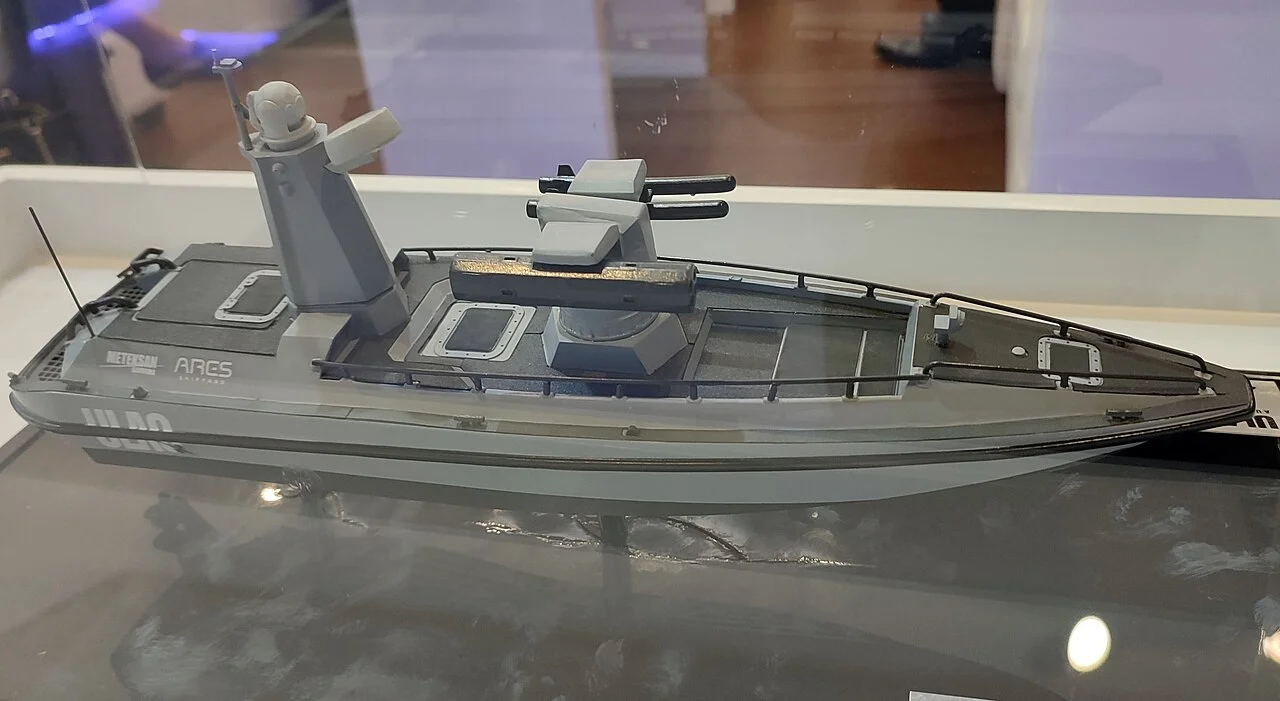
The ULAQ is the yard’s break from conventional boats. Ares and Meteksan Defence began developing the family in 2019, finished prototype sea trials in 2020, and now offer variants between roughly 6 and 15 metres, according to Naval News. Meteksan supplies the autonomous navigation software and the command-and-control side, while Ares builds the hull and integrates the craft. Aselsan provides the weapon station on the export version.
For a closer look at the vessel itself, see our report on the armed ULAQ entering service.
What Did Qatar Actually Buy?
Qatar signed for its first ULAQ at DIMDEX 2024 in October of that year, making it the first export customer for the type. Reports put the value of the Ministry of Interior contract at QAR 21.3 million, about USD 5.85 million, a figure that should be treated as reported rather than officially confirmed in detail.
The vessel delivered to the Qatar Coast Guard Command in December 2025 is the ULAQ 11 ISR/PSV variant, built for intelligence, surveillance, reconnaissance and port security.
| ULAQ 11 ISR/PSV (Qatar) | Reported value |
|---|---|
| Length / beam / draft | 11 m / 2.6 m / 0.6 m |
| Propulsion | Twin diesel engines |
| Maximum speed | 35 knots |
| Range | About 400 km |
| Endurance at cruise | Up to 10 hours |
| Weapon | Aselsan SARP-DUAL, 12.7 mm |
| Sensors | Naval radar, EO/IR, encrypted communications |
| Control modes | Autonomous, semi-autonomous, remote from a shore station |
The coast guard reportedly operates the boat from a shore-based control station, which also manages weapon engagement. In other words, a human decides on any shot; the autonomy is aimed at navigation and patrol routines. The Qatari buy looks like an evaluation as much as an operational purchase, and reporting suggests the results will shape follow-on orders.
Why Does the Yard Matter Beyond Qatar?
Ares is only one of several Turkish builders in the patrol and corvette business. Our overview of who builds Türkiye’s warships shows how the work is split between state yards, large private groups and specialist boat builders like this one.
The company’s chairman has described a five-year plan built around automated production, unmanned solutions, zero-emission vessels and recycled materials. The ULAQ is the most concrete step in that direction. The chairman also cited, in the same interview, 14 Hercules vessels for Oman and 165 Harpoon interceptors for the Turkish Coast Guard, though the interview carries no date and the figures are the company’s own.
Combat management is the other piece worth watching on Turkish warships of this class. The software side is covered in our piece on HAVELSAN’s ADVENT system, while the weapons side includes the GÖKDENİZ close-in weapon on larger hulls.
What to look for next is simple. A second ULAQ customer would show the Qatari deal was more than a one-off, and Naval News notes that more export contracts are anticipated in 2026. Until one is announced, Ares remains a patrol boat builder with a drone boat in service, and an unusually well-documented customer in Doha.