Thailand Voids Korean Frigate Deal, ASFAT and TAIS Back in Contention

Thailand’s navy has been ordered to scrap the preferred-bidder award it made to South Korea’s Hanwha Ocean for a new frigate and run the roughly 17-billion-baht ($530 million) tender over again, after a government appeals panel found that a complaint from a rival consortium had “a significant impact” on the process. The ruling does not hand the contract to anyone else. But it reopens a competition in which two Turkish state-linked shipbuilders, ASFAT and TAIS, had already been eliminated once — and gives both a second chance to bid for a Royal Thai Navy warship.
Thailand’s Appeals and Complaints Consideration Committee reviewed objections from five companies after the navy named Hanwha Ocean preferred bidder on 8 September. Four of those appeals — from Singapore’s ST Engineering, South Korea’s Hyundai Heavy Industries, and the two Turkish bidders, Askeri Fabrika ve Tersane İşletmeleri A.Ş. (ASFAT) and TAIS Gemi İnşaat ve Teknoloji A.Ş. — were rejected for lacking sufficient grounds, according to Thai press reports citing the committee’s findings. The fifth complaint, from the Thai Frigate Building Consortium, a partnership between a Thai yard and Spain’s Navantia, was upheld. Citing Section 119 of Thailand’s 2017 Public Procurement and Supplies Administration Act, the committee ordered the navy to cancel the current procurement and restart it in compliance with proper procedure.
Royal Thai Navy commander Admiral Naret Wongtrakun said on 16 November that he had not yet seen the committee’s formal order and that officials would review it before deciding how to proceed. By 18 November, Thai outlets were reporting the tender as under review rather than cancelled outright, and a navy source told local media a fresh procurement process could take around six months.
A contract Türkiye had already lost once
The reversal matters because the original outcome had already been recorded as a Turkish defeat. The Royal Thai Navy opened the tender in 2025, inviting eleven shipyards and narrowing the field before Hanwha Ocean was named the sole compliant bidder and preferred supplier in September at a price about 1.6% below the project’s budget. For ASFAT and TAIS, the loss fit a pattern this publication has documented before: Turkish shipbuilders routinely reach the final rounds of foreign frigate and corvette competitions, only to lose on industrial package, financing, or an established builder’s track record rather than on the merits of the ship itself.
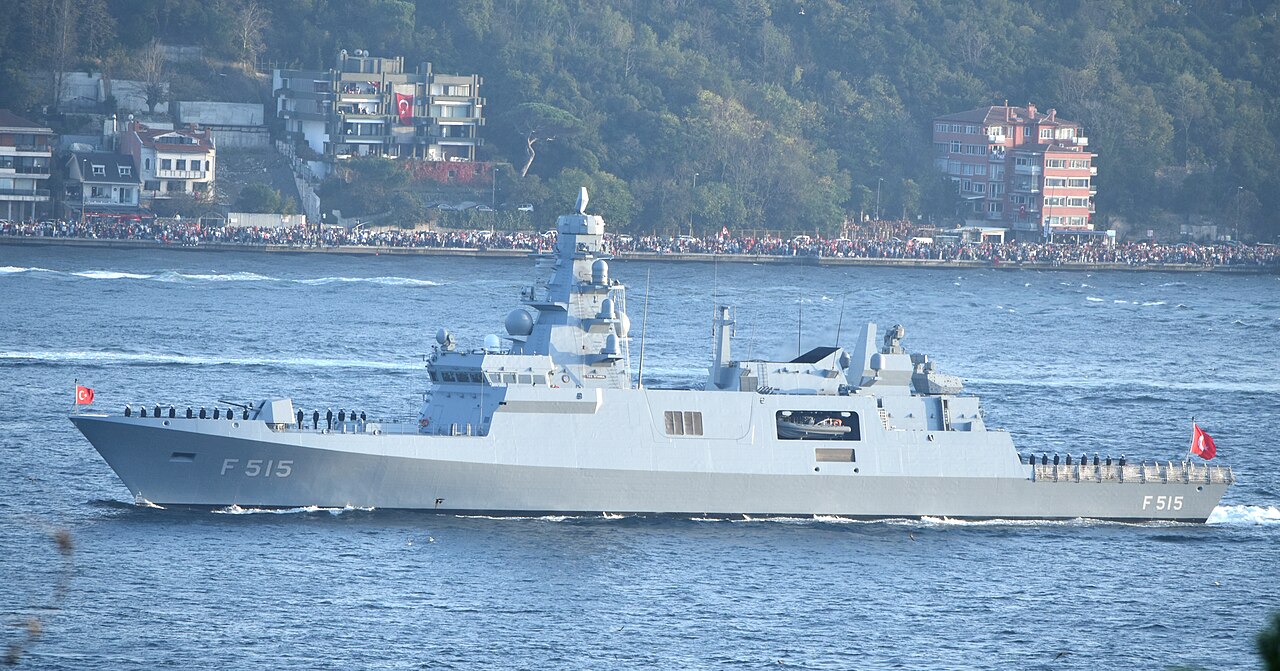
The two companies did not offer the same product. ASFAT’s bid proposed building the entire vessel in Thailand, with design rights that would let the Thai navy construct further ships of the same class on its own afterward, plus an investment offset programme. TAIS put forward Türkiye’s İstif-class (also known as the Istanbul-class) frigate, the lead ship of which, TCG İstanbul, has been in Turkish Navy service since 2023 and has since drawn an export order from Indonesia — the first for the class. Neither offer has changed as a result of the ruling; what has changed is that both are back in a competition the navy must now run again almost from scratch.
Why the loss, and the reopening, matter beyond Thailand
A single frigate order is a modest prize next to the billions Türkiye’s defence exporters have signed elsewhere this year, but Southeast Asia has become one of the more credible growth markets for Turkish naval programmes precisely because of the İstif/MILGEM family’s growing export record — Indonesia’s order being the clearest proof point, and Pakistan’s earlier MILGEM-based corvettes another. A second Turkish win in the region, even a modest one, would reinforce the case Turkish yards make to other navies: that the class is not just combat-proven at home but exportable and locally buildable abroad, the same pitch ASFAT has used in other recent deals.
The reopening also lands against an unusually charged regional backdrop. Türkiye signed a military cooperation agreement with Cambodia in Istanbul on 16 October, witnessed by President Recep Tayyip Erdoğan and Cambodian Prime Minister Hun Manet, at a time when Thailand and Cambodia remain at odds over their shared border. Thai commentary on the frigate review has noted the timing, though the Royal Thai Navy has given no indication that the cancellation was driven by anything beyond the Thai Frigate Building Consortium’s successful procedural complaint, and nothing in the public record ties the two events. Türkiye’s ambassador to Thailand, Jülide Kayıhan, said after the original award that Ankara respected Thailand’s decision and hoped Turkish companies would find future opportunities with the Thai armed forces — a measured statement from a country that had just lost, not one claiming vindication.
What happens next
Nothing is decided. The appeals committee’s order addresses a procedural flaw in how the September award was reached; it does not evaluate ASFAT’s or TAIS’s technical offers, and neither company’s appeal was found to have merit in its own right. A new tender, if the navy proceeds as instructed, would likely take months to draft, issue, and evaluate, and Hanwha Ocean, ST Engineering, and Hyundai Heavy Industries are all free to bid again alongside the Turkish pair and the Thai-Spanish consortium whose complaint restarted the process. Whether Ankara’s shipbuilders fare any better the second time will depend on the same industrial-package and financing questions that cost them the first round — not on the cancellation itself.
Sources: Royal Thai Navy and Thai government appeals committee findings as reported by Nation Thailand, Pattaya Mail, and The Star (Malaysia); Naval News; Khaosod English; Shephard Media.