ASELSAN in Talks to Fill Gaps Left by Spain’s Canceled Israeli Contracts

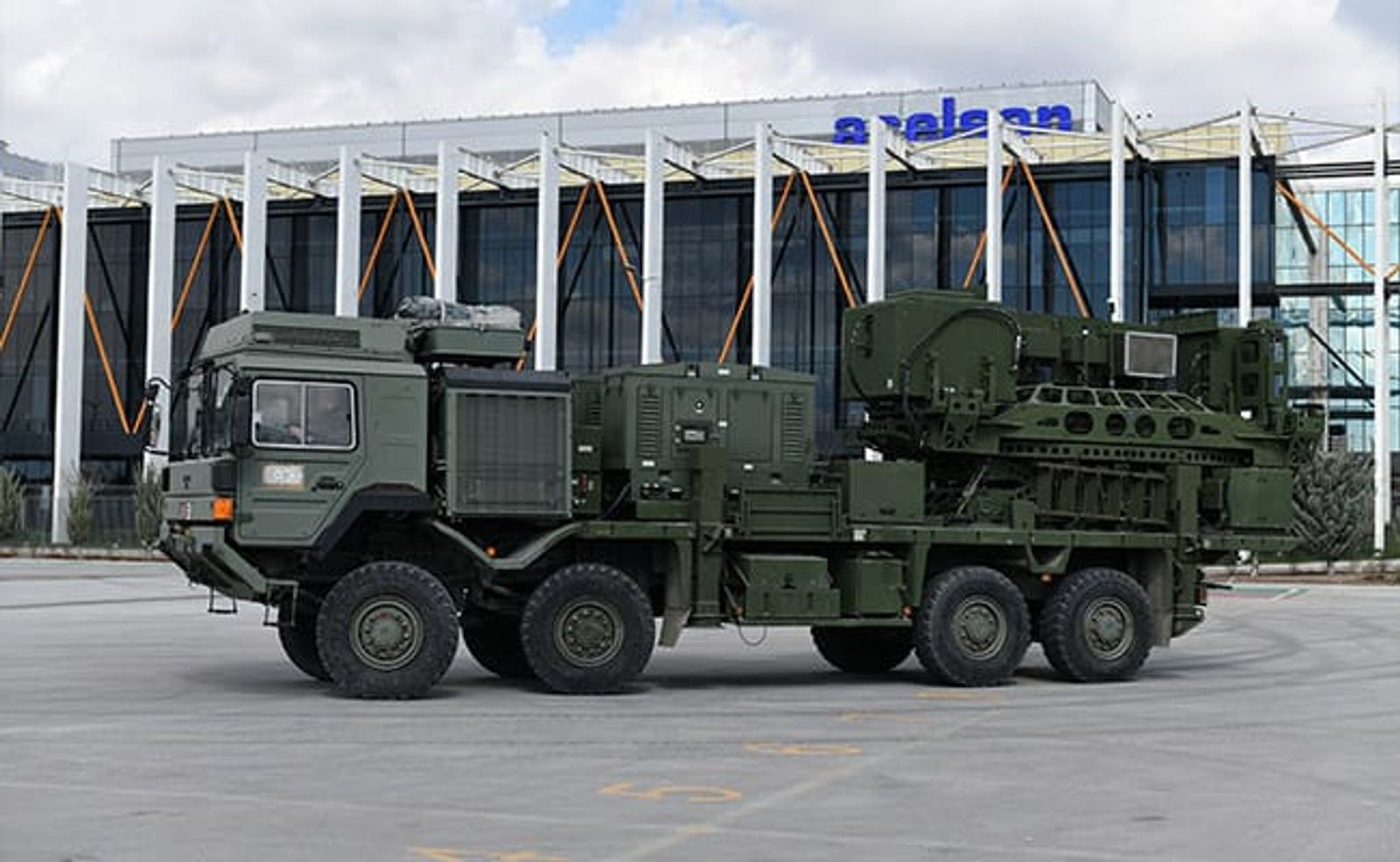
ASELSAN is in talks with Spain’s Ministry of Defence about supplying replacement capabilities for programmes Madrid lost when it canceled a string of contracts with Israeli defence companies, a company representative told the Spanish trade outlet Infodefensa during a visit to ASELSAN’s headquarters in Türkiye. The comments, relayed by Türkiye Today on October 19, are one of the clearest public signals yet that Turkish industry is positioning itself to benefit from Spain’s break with Israeli suppliers over the war in Gaza.
What Spain Canceled
Spain’s parliament approved an arms embargo on Israel in October 2025, barring new defence and dual-use trade with Israeli companies over the war in Gaza. The fallout has already reached programmes central to the Spanish armed forces, including the Silam rocket launcher (built around Israel’s PULS system), Litening targeting pods, and Spike LR2 anti-tank missiles — all previously sourced from Israeli suppliers.
Those cancellations left Spain short of specific capabilities its military still wants, and ASELSAN’s outreach is aimed at part of that gap, though not all of it.
What ASELSAN Can and Cannot Offer
According to the report, ASELSAN sees room to supply electronic warfare pods, AESA radars, electro-optical systems, thermal cameras, laser guidance equipment and tactical radios — categories where the company already has NATO reference sales through products such as the KORAL electronic warfare system and the İHTAR counter-drone system. What ASELSAN does not have is a direct equivalent to the Silam/PULS rocket launcher or to the Spike LR2 anti-tank missile itself.
For a Spike replacement, Spain has reportedly looked instead at Roketsan’s missile line — a separate Turkish company, and not part of ASELSAN’s discussions with Madrid.
A company representative framed the approach as relationship-building rather than a sales pitch: “We are not there to push products; we are there to establish long-term partnerships,” according to comments relayed by Infodefensa. The representative also said ASELSAN works with Spain’s Indra and other local firms “because it is necessary to have national capabilities” — language that points toward co-production and technology transfer rather than straightforward import contracts.
A Foothold Already in Place
ASELSAN is not arriving in Spain from a cold start. The company has already signed a contract to supply payloads for the Spanish Air Force’s HÜRJET jet-trainer programme, under which Spain is buying 30 Turkish Aerospace HÜRJET trainers to replace its ageing F-5 fleet, with talk of 15 more. ASELSAN has also run coastal-surveillance demonstrations on Spanish territory and has reportedly supported Spanish authorities during an irregular-migration incident, which the company said was provided without a contractual commitment.
“We are also talking with Spain about some specific payloads,” the representative said, without naming the systems or putting a timeline on any resulting agreement.
Why It Matters Beyond Spain
Nothing reported so far amounts to a signed contract, and Türkiye Today’s report is explicit that the comments do not indicate Spain has awarded ASELSAN anything to replace the canceled Israeli systems. But the episode fits a pattern that has become increasingly visible across Poland, Romania and Spain this year: European NATO members looking for alternative suppliers are finding a willing, NATO-interoperable option in Turkish industry, often with fewer political complications than Israeli or some US vendors carry right now.
For ASELSAN specifically, Spain would be another entry on a European customer list the company has been trying to lengthen as part of a broader push — ASELSAN has said it wants exports to reach 50 percent of revenue by 2030, with new markets in both Asia and Europe in its sights.
Whether talks with Madrid turn into contracts is still an open question, and the systems under discussion, their value and any timeline all remain undisclosed. What is already clear is that Spain’s decision to cut ties with Israeli suppliers created an opening, and a Turkish company is moving to be in the room when Madrid decides how to fill it.
Sources: Türkiye Today, relaying reporting by the Spanish defence outlet Infodefensa.