Vestel Savunma’s KARAYEL Drone Went From Turkish Army Trials to Saudi Production Lines

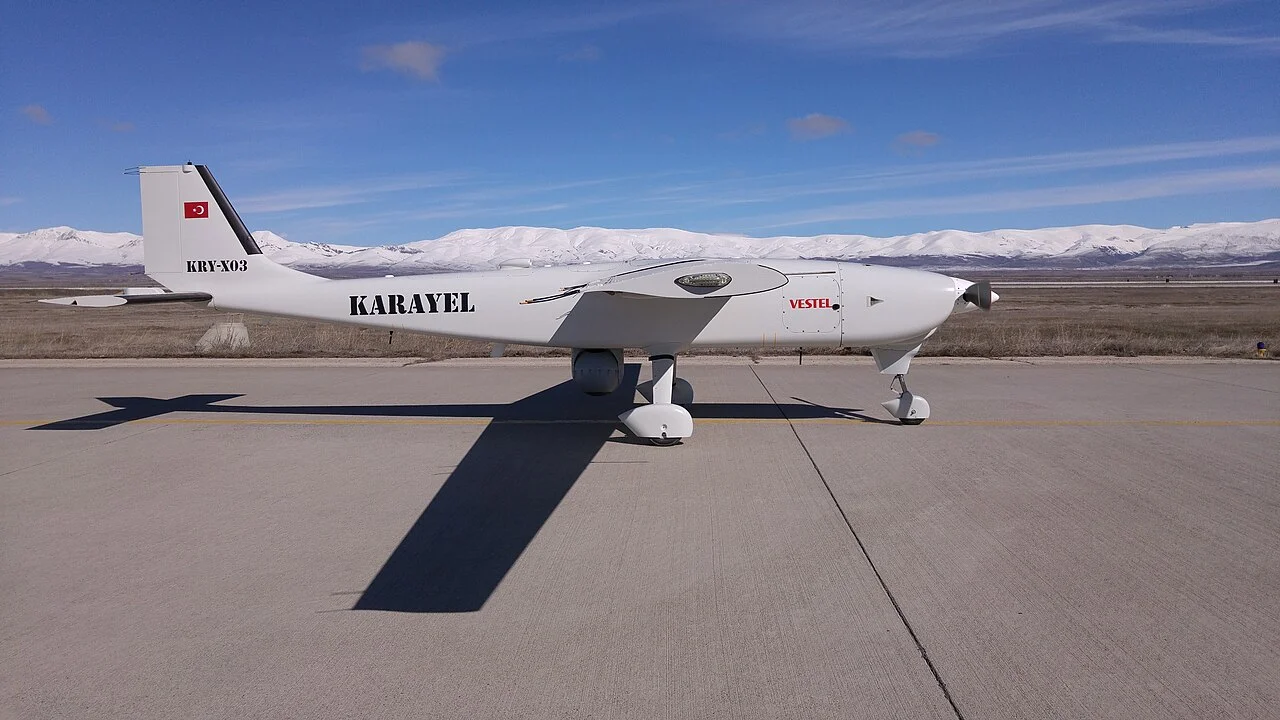
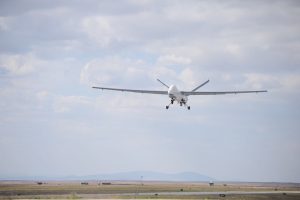
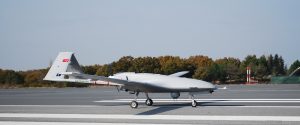
Ask most people to name a Turkish drone and the answer is a Bayraktar. Ask a Saudi procurement officer and the answer may be a different aircraft entirely. KARAYEL, a tactical drone built by Vestel’s defence arm, did something its louder rivals took longer to do: it was licensed for local production in the Gulf.
The company behind it is Vestel Savunma Sanayi, the defence subsidiary of the Zorlu Group’s Vestel electronics business. It has since been renamed Lentatek, but KARAYEL remains the programme the firm is known for. This article covers where the aircraft came from, what it can carry, and what is actually documented about its Saudi connection.
| Item | Detail |
|---|---|
| Manufacturer | Vestel Savunma Sanayi (renamed Lentatek in 2022), Zorlu Group |
| Type | Medium-altitude, long-endurance tactical UAV, armed and unarmed versions |
| First flight | 30 April 2014 (reported) |
| KARAYEL-SU wingspan | 13 m |
| Max takeoff weight (SU) | 630 kg (reported) |
| Endurance | Up to 20 hours unarmed, about 8 hours with 120 kg of munitions |
| Ceiling (SU) | 18,000 ft |
| Data link range | Over 150 km (reported) |
| Weapons | Roketsan MAM-L and MAM-C micro munitions |
| Known operators | Turkish Armed Forces, Saudi Arabia |
Who is Vestel Savunma and why does it build drones?
Vestel is better known for televisions and white goods than for weapons. The group moved into defence in the early 2000s, and its engineers have worked on unmanned aircraft since 2005, according to material the company has published. That was a period when Turkish ground forces were looking for a domestic tactical drone and few private firms were willing to bet on one.
The first formal step came in January 2011, when Vestel announced a contract with the Turkish Army. As reported at the time, the deal was worth $24 million over two years and covered six KARAYEL aircraft and three control stations. Vestel said it had already put more than $25 million of its own money into the field. Later company statements, cited by GlobalSecurity, put total Zorlu Group investment in the KARAYEL family above $100 million by 2019.
That self-funded approach matters for the story. KARAYEL was a private group’s gamble that the army and an export customer would eventually follow.
What does KARAYEL actually do?
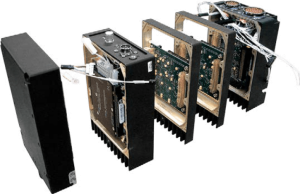
The baseline KARAYEL flew for the first time in April 2014, per Wikipedia’s account of the programme. It was designed for surveillance and reconnaissance, with a triple-redundant distributed avionics architecture and a design standard Vestel describes as compliant with NATO’s STANAG 4671 airworthiness rules.
The armed step came with the KARAYEL-SU, an extended-wing variant with a 13-metre span. Defense News reported in 2017 that Vestel developed it in under a year. The earlier, shorter-winged aircraft had by then logged more than 3,000 flight hours under a lease arrangement with the Turkish Armed Forces, according to that report.
The numbers that define the SU version:
- Up to 20 hours aloft with a 50 kg sensor package and no weapons, at altitudes up to 18,000 feet.
- Around 8 hours when carrying the full 120 kg load of munitions.
- Four wing hardpoints, each rated at roughly 30 kg.
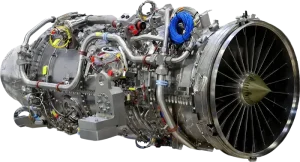
- A 97-horsepower engine and cruise speeds in the 60 to 80 knot range, reported.
It is a small aircraft by the standards of Bayraktar AKINCI or ANKA. The sensible comparison is with a TB2-class platform, which is also why it attracts buyers who want a lighter, cheaper armed drone. For readers weighing the big names against each other, our AKINCI and TB2 comparison shows how different drone classes answer different jobs.
Which weapons can it carry?
Roketsan’s miniature smart munitions are the headline payload. Defense News reported that the MAM-L, a laser-guided micro munition, and the MAM-C were integrated across the aircraft’s wing stations, each with a quoted range of about 8 kilometres. Test firings with the armed variant were scheduled for early 2018 using two of the four hardpoints.
Open-source compilations also list other options such as the L-UMTAS anti-tank missile and TÜBİTAK SAGE’s Bozok laser-guided rocket for the platform. Those entries come from secondary sources and company marketing, so treat them as integration claims rather than confirmed service loadouts.
Is KARAYEL really flown by Saudi Arabia?
Yes, though the paper trail is thinner than for some Turkish export deals. The first public sign came at the November 2017 Dubai Airshow. Defense News reported that Vestel signed a memorandum of understanding there with Saudi Arabia’s Advanced Electronics Company (AEC) on collaboration and localisation, and the company’s general manager said Vestel was aiming its marketing at the Middle East and Africa while seeking a first export customer.
In March 2021, Defense News reported that two Saudi firms, Intra Defense Technologies and AEC, had begun co-producing the KARAYEL-SU under licence from Vestel, with Roketsan as munitions supplier. The plan reported was a batch of 40 aircraft between 2021 and 2025, with the Saudi designation Haboob. Turkish President Recep Tayyip Erdoğan acknowledged Saudi demand for Turkish armed drones around the same time, without giving details.
Two caveats are worth stating plainly. First, the 40-aircraft figure is a planned batch reported by the press, not a delivery count confirmed by either government. Second, how many aircraft have actually been built or fielded has not been confirmed in the sources reviewed here. Wikipedia lists six aircraft in Saudi service plus the planned batch, which should be read as an estimate.
What do reported losses over Yemen tell us?
The earliest outside sign that Saudi Arabia was using the aircraft came from the Houthis, not Riyadh. Janes reported that on 30 December 2019 the Houthi movement claimed it had shot down a KARAYEL over Hodeidah province with a surface-to-air missile and released footage of the wreckage. The group said the drone belonged to Saudi Arabia. Janes noted that the aircraft may have been operated on Saudi Arabia’s behalf by Intra Defense Technologies, a Saudi company that advertises KARAYEL services.
Wikipedia’s operational history lists further Houthi claims in 2021 and 2022. These are claims by a party to the conflict, and none has been independently verified for this article. They do suggest the aircraft has operated in a contested air-defence environment, which is the hardest test any tactical drone gets.
Where does it sit among Türkiye’s drone makers?
Baykar dominates the headlines and the export numbers, and TUSAŞ holds the ANKA and AKSUNGUR lines. Vestel’s position is smaller: a private group building a lighter MALE aircraft and licensing it abroad. Our overview of who else builds Türkiye’s drones places the company within the wider industrial field.
The Saudi arrangement also fits a pattern that has become clearer since. Riyadh does not only want to buy aircraft; it wants to build them. That logic runs through the Gulf localisation trend, the Saudi naval crews who trained on AKINCI at Baykar, and the broader appeal described in why countries buy Turkish drones. KARAYEL was an early example of the licence-and-localise model.
Whether Lentatek can turn that Saudi foothold into a second customer is the open question. Hungary reportedly tested the system at Pápa Air Base in November 2021, and a joint production plan was floated in press accounts, but no sale has been confirmed in the sources checked here.