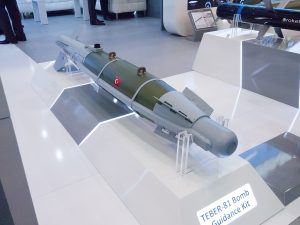
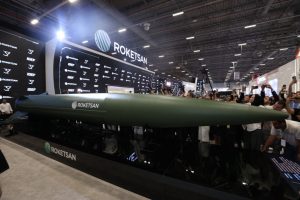
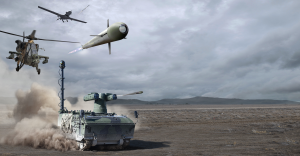
Turkish Missiles Now Fill Nearly Every Range Band From 2 km to Beyond 500 km

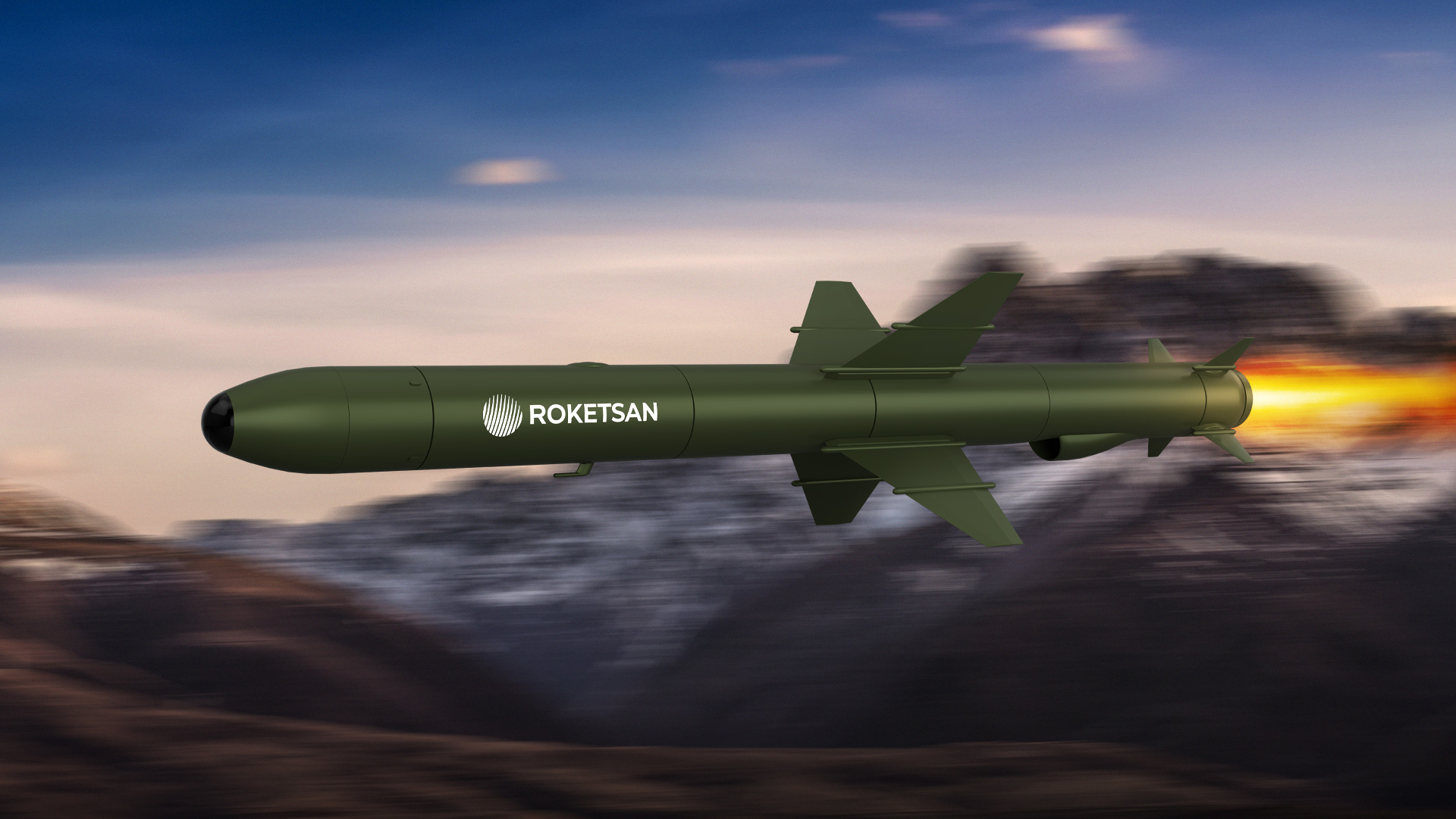
Ten years ago, a list of Turkish missiles was a short one. Today it is easier to ask which range band Türkiye does not yet cover. Turkish missile systems now run from shoulder-level anti-tank rounds that reach a couple of kilometres to ballistic missiles that official and press accounts place well beyond 500 km.
Most of the ladder is built by ROKETSAN, with TÜBİTAK SAGE doing design work behind several rungs and MKE filling gaps with guns and ammunition. This piece walks up the ladder band by band, using the manufacturer’s own figures where they exist and flagging reported numbers where they do not.
How Do Turkish Missile Systems Line Up by Range?
| Band | System | Role | Range |
|---|---|---|---|
| Under 10 km | KARAOK | Man-portable anti-tank | 2.5 km (ROKETSAN) |
| Under 10 km | OMTAS | Medium-range anti-tank | 0.2 to 4 km (ROKETSAN) |
| Under 10 km | SUNGUR | Very short-range air defence | Up to 8 km (ROKETSAN) |
| 10 to 50 km | HİSAR-A and HİSAR-O | Low and medium-altitude air defence | 15+ km and 25+ km interception range (ROKETSAN) |
| 100 to 300 km | ÇAKIR | Low-cost cruise missile | 150+ km (ROKETSAN) |
| 100 to 300 km | ATMACA | Anti-ship cruise missile | 250 km (ROKETSAN) |
| 100 to 300 km | KARA ATMACA | Land-attack cruise missile | 280 km (ROKETSAN) |
| 100 to 300 km | BORA / KHAN | Tactical ballistic missile | 80 to 280 km (ROKETSAN) |
| Beyond 500 km | TAYFUN | Ballistic missile | Reported 500 to 800 km for Blok-1 and Blok-2, not officially published |
Two caveats. SOM, the air-launched stand-off cruise missile, sits in the same 250 km neighbourhood as ATMACA but is fired from aircraft, so it belongs to a different column. And the longest-range figures are the least certain, which is normal for ballistic missiles anywhere.
What Sits at the Bottom of the Ladder?
The short end is where Turkish production is most mature. KARAOK is a fire-and-forget anti-tank weapon in a launch tube weighing under 16 kg, according to ROKETSAN. OMTAS steps up to roughly 4 km with a heavier tube of about 35 kg. UMTAS and its laser-guided L-UMTAS variant reach out to around 8 km and ride on helicopters and armed drones.
Between those and unguided rockets sits CİRİT, a laser-guided 70 mm round that lets a helicopter or drone hit light targets without spending an anti-tank missile. It shows how the portfolio fills price gaps as well as range gaps.
The same logic applies at the bottom of the air-defence stack. SUNGUR is a man-portable and vehicle-mounted missile with a maximum range of 8 km and a ceiling of up to 4 km, according to its manufacturer. It is the lowest layer under the Steel Dome concept, and we covered it in our SUNGUR explainer.
Where Do the Air-Defence Missiles Take Over?
The next layer is the HİSAR family. ROKETSAN lists HİSAR-A with an interception range above 15 km and HİSAR-O above 25 km. Both are fired from truck-based launchers paired with ASELSAN radars and fire-control equipment. Details on the variants are in our guide to the HİSAR missile family.
Above them, long-range interceptors such as SİPER are meant to cover the upper layer of the national air shield. Public figures for SİPER vary by block and are reported rather than confirmed, so this piece leaves them out of the table.
Why Is the 150 to 300 km Band So Crowded?
Because that is where the missile business is. ÇAKIR, ATMACA and KARA ATMACA are close relatives in range, which lets ROKETSAN share seekers, navigation technology and manufacturing know-how.
ATMACA is the sea-launched version, rated at 250 km by ROKETSAN. It serves on Turkish frigates and corvettes and has found export buyers. KARA ATMACA takes the same concept ashore with a 280 km range, a 6 m missile and a weight of 890 kg, according to the manufacturer. Our profile of KARA ATMACA covers the launcher and customers.
ÇAKIR was designed as the cheaper, smaller option. ROKETSAN lists a range of more than 150 km and a weight of about 275 kg without its booster. The idea is volume: a missile that costs less than the target it threatens can be bought in larger numbers.
The same band holds the BORA and its export version KHAN. ROKETSAN lists KHAN at 80 to 280 km, with a 610 mm diameter, 2,500 kg weight and GPS and GLONASS aided inertial guidance. It is a tactical ballistic missile, closer in role to a very long-range rocket than to a strategic weapon.
From the air, SOM and its variants, designed at TÜBİTAK SAGE and produced by ROKETSAN, cover the stand-off role at roughly 250 km for the B-family and about 275 km for SOM-J, according to published accounts. İHA-300, a supersonic missile tested from the AKINCI drone, was reported to have hit a target 250 km away. The design institute’s role is explained in our piece on TÜBİTAK SAGE.
What Changes Beyond 500 Kilometres?
This is the TAYFUN band. The first test flight on 20 October 2022 was widely reported at about 561 km, and that is why people say TAYFUN “reaches past 500 km”. It is a demonstrated distance, not a published maximum. Reports have put Blok-1 and Blok-2 at roughly 500 to 800 km and the heavier Blok-4 at around 1,000 km or more, but ROKETSAN has not released an official range table.
That uncertainty is also what makes TAYFUN politically significant. A ballistic missile of that class changes how regional planners think about Türkiye’s reach, and Ankara has chosen not to settle the debate with numbers. Our TAYFUN range guide separates what has been flown from what has only been claimed.
How Should Readers Treat the Range Numbers?
Not all kilometres are equal. A 250 km figure for a sea-skimming cruise missile describes distance flown along a planned route. An interception range of 25 km for an air-defence missile describes where a target can be engaged, which depends on its speed, altitude and approach angle. An anti-tank range of 4 km assumes a clear line to the target. Placing these in one table is useful for orientation, but they are not interchangeable.
Variants add another layer. ATMACA has a land-attack sibling, a submarine-launched version has been tested, and a longer-range version has been confirmed as in testing, so the base figure on the product page is a floor for the family rather than a ceiling. Likewise, KHAN is an export designation of BORA, and the minimum range of 80 km in its listing reminds us that ballistic missiles cannot hit close targets.
Official sheets from ROKETSAN list length, weight, guidance and range, but rarely warhead details, speed or accuracy. Where those figures appear in the press, they are usually reported rather than confirmed, and this article avoids them.
What Does Full Range Coverage Mean for Türkiye?
The practical point is independence. A country that buys its anti-tank missiles, air-defence interceptors and cruise missiles from separate foreign suppliers negotiates each one. A country that builds them domestically negotiates only with itself, and can tune ranges, seekers and production volumes to its own needs. That is a large part of the reasoning behind the Steel Dome air-defence concept and the push for domestic propulsion.
It also gives exporters something to sell. KHAN, ATMACA and KARA ATMACA are listed as export products, and the shorter anti-tank and air-defence rounds travel well with helicopters and drones that Türkiye already sells. Whether the longer rungs, TAYFUN above all, ever see export approval is a political question, not a technical one.
Who Else Builds Missiles, and Who Builds the Motors?
ROKETSAN dominates, but it is not alone. MKE does not make long-range missiles. Its role is in gun-based and ammunition-heavy answers, such as the TOLGA short-range air defence system, which pairs a radar and electro-optical sensors with 35 mm, 20 mm and 12.7 mm guns and has drawn interest from Egypt and Poland. ASELSAN also produces missile systems of its own, including the GÖKSUR point-defence round, and acts as the radar and fire-control partner for many ROKETSAN launchers.
Underneath all of it is propulsion. Every missile above needs a motor, and in most cases it is a solid rocket motor. ROKETSAN has been investing in propellant production capacity for that reason, as we describe in our look at the solid rocket motors behind Türkiye’s missile output. For the company itself, see the ROKETSAN company profile.
The gaps that remain are mostly at the high end: interceptors for ballistic-missile defence, and any verified information on the longest TAYFUN variants. Those are the figures to watch as serial production numbers and test announcements come in.